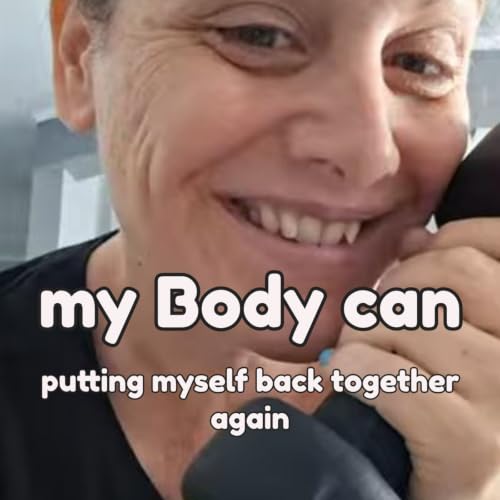
『my Body can』のカバーアート

my Body can

my Body can

著者: Stephanie Fuccio
無料で聴く

After years of illness, injury and well, the menopausal transition, I'm taking the reins back on my strength, balance and flexibility. I'm experimenting with some weights, exercise bands, and more in order to find exercises that fit my life and help me feel strong.

Copyright 2025-2026 D. Stephanie Fuccio. All right reserved.
エクササイズ・フィットネス フィットネス・食生活・栄養 心理学 心理学・心の健康 衛生・健康的な生活
エピソード
  • Why I Stopped Stretching (and What a Massage Taught Me About My Body): S1E14
    2026/07/09

    What's the right ratio of stretching to exercise? How much, how often, and why is it so easy to forget entirely?

    Stephanie found out the hard way, through a foot massage. In this solo episode of mBc, she talks through the moment a masseuse told her, "you really need to stretch more," and the uncomfortable realization that followed: she genuinely could not remember the last time she'd stretched on purpose.

    But this isn't just a story about a forgotten habit. Stephanie traces it back to a head injury a few years ago that triggered years of on and off vertigo, and how that experience quietly pushed floor based stretching and yin yoga out of her routine entirely. It wasn't laziness. It was her body protecting itself from a very real trigger, and it took real work, including EMDR therapy, to even get to where she is now.

    This episode is a reminder that the parts of a movement routine we drop aren't always dropped by accident, and that rebuilding doesn't mean going back to exactly what worked before. Sometimes it means finding a new way in, standing instead of on the floor, small instead of overhauled.

    Key Takeaways

    • Stretching and exercise are not the same thing, and it's easy to keep doing one while completely forgetting the other.
    • A body can quietly drop a habit for reasons that have nothing to do with motivation or discipline. Trauma and fear can do it too.
    • Floor based stretches and vertigo don't mix for everyone, and that's a legitimate reason to change how you move, not a failure.
    • EMDR therapy can reduce trauma responses significantly, even if some triggers (like being on the floor or mat) take longer to fully resolve.
    • You don't need to overhaul a whole routine to fix a gap. A few minutes of standing stretches can matter more than an all or nothing plan.
    • Sometimes the body remembers what it needs before the mind consciously notices.

    In This Episode

    • The foot massage that turned into a full leg release, and the comment that started it all
    • Realizing stretching had quietly disappeared from a packed movement calendar
    • How a head injury and months of vertigo changed Stephanie's relationship with the floor and the mat
    • Why yin yoga stopped feeling like exposure therapy and started feeling like a trigger
    • The role EMDR therapy played in reducing (but not fully erasing) that trauma response
    • Standing stretch alternatives that don't require getting on the ground
    • The "cute gym clothes" paradox: questioning why modern life replaced natural movement with scheduled workouts
    • A callback to Golden Spa Relax in Tirana, Albania, the place that started this whole realization

    Notable Quotes

    "I couldn't for the life of me think of what I was doing to stretch."

    "It's just been attached to a whole lot of stress, that's the reason."

    "Sometimes our bodies remember before our minds do."

    "I don't need to overhaul my movement plan. I just need to make room for what used to come naturally."

    Join the Conversation

    Have you ever dropped a key part of your wellness or self care routine without realizing it, until something reminded you how much you needed it? What brought you back to it?

    Leave a comment on Instagram @mybodycan to share your experience.

    mBc is a project about rebuilding strength and mobility in your 50s after illness, injury, and hormonal change, one honest, unfiltered day at a time.

    続きを読む 一部表示
    9 分
  • Soreness vs. Pain: How to Know the Difference When You Exercise in Midlife: S1E13
    2026/07/09

    Where's the line between soreness and pain? It's a question Stephanie has been wrestling with her entire adult life and this week it hit hard again.

    In this solo episode of my Body can, Steph talks through a "ring of soreness" wrapping from her mid-back to her upper abs, even after reducing her workout time. She unpacks how being neurodivergent (likely autistic, though undiagnosed) means physical sensations, including pain, can feel amplified, sometimes up to ten times more intense than for neurotypical people. That amplification cuts both ways: movement feels incredible, but recovery can feel brutal.

    This episode is a real-time example of the start-stop paradox so many people face with exercise: when do you push through discomfort to get stronger, and when do you back off before you get hurt? Stephanie walks through her own working definitions of soreness, pain, and injury, the small adjustment that made an immediate difference (cutting a set from 45 seconds down to 20), and why she thinks the answer is different for every body , not one-size-fits-all advice from the fitness industry.

    If you've ever quit an exercise routine because the soreness afterward wasn't worth it, or you've never been sure whether to rest or push through, this episode will feel like a conversation with a friend who gets it.

    Key Takeaways

    • Soreness, pain, and injury are three different things — and learning to tell them apart takes practice and self-awareness, not a fitness certification.
    • Neurodivergent and autistic people may experience physical sensation, including pain, far more intensely than neurotypical people.
    • Doing less exercise doesn't always mean less soreness — recovery depends on sleep, stress, illness, posture, and dozens of other factors working together.
    • Small adjustments (like shortening a set from 45 seconds to 20) can make an immediate, noticeable difference without abandoning the workout entirely.
    • Progress in midlife often looks like pulling back, not pushing harder — and that's not the same as giving up.

    In This Episode

    • Why Stephanie is inside doing gentle movement instead of at the park
    • A 10-minute check-in workout, done live during recording
    • The "ring of soreness" from upper back to upper abs and where it likely came from
    • How being neurodivergent affects the way pain and sensation are experienced
    • The push-pause paradox: when to keep going vs. when to stop
    • Steph's working definitions of soreness vs. pain vs. injury
    • The small dumbbell adjustment that eased the pain without stopping the workout
    • Why "no pain no gain" and "just rest" can't both be right — and why the real answer depends on the individual
    • An honest moment of needing support instead of giving it

    Notable Quotes

    "I love movement, but I keep hurting. And that's the part that really pisses me off."

    "My body can do a lot more than we think it can — when it hurts, it sucks."

    "Taking a break isn't the same as quitting."

    Join the Conversation

    Where do you draw the line between soreness and pain? Do you listen to your body — or try to outsmart it?

    Leave a comment on Instagram to share your experience.

    my Body can is a project about rebuilding strength and mobility in your 50s after illness, injury, and hormonal change -one honest, unfiltered day at a time.

    続きを読む 一部表示
    17 分
  • What I Think About While Exercising In Midlife: S1E12
    2026/07/08

    There’s a moment in every workout where my attention turns from the movement to me.

    When I film these sessions, I see my body from angles I don’t usually look at: my stomach, my arms, the curve of my back, and it’s easy to slip into judgment. I catch myself thinking, “I feel stronger, so why don’t I look stronger yet?”

    That disconnect between the inside and the outside is real. I wish they matched more often. But I also know that the “inside” changes first, like the steadiness, the confidence, the sense that I’m getting better at showing up.

    Sometimes that’s enough.

    A Little Gear Talk

    Quick break from philosophy for something practical.

    If you’ve followed this project for a while, you know I’ve been using fabric resistance bands lately, and I’m obsessed. The cloth kind don’t roll up or pinch like the thin plastic ones do. They stay in place even during the most awkward side-kicks, and they don’t stick to my skin.

    They make the whole process a little more colorful—literally and emotionally.

    What I Learned from Recording My Thoughts

    1. The brain doesn’t stay quiet just because the body is busy.
    2. Boredom breeds distraction. I focus best when things are complex.
    3. Filming myself helps and hurts. It’s a mirror and a motivator.
    4. The smallest physical routines uncover big emotional patterns.
    5. It’s okay if not everything has a lesson. Sometimes movement is just movement.

    続きを読む 一部表示
    15 分
adbl_web_anon_alc_button_suppression_t1
まだレビューはありません