エピソード

  • The Great Diamond Hoax of 1872: The Fortune That Never Existed
    2026/09/21

    THE GREAT DIAMOND HOAX OF 1872

    What if you traveled hundreds of miles into the American West, discovered genuine diamonds with your own hands, and still got scammed?

    In 1872, Philip Arnold and John Slack convinced some of California's wealthiest businessmen that they had discovered an enormous diamond field. Their evidence was convincing. They had real gemstones, a secret location, and a mining engineer who personally inspected the site.

    But the entire discovery was a carefully constructed fraud.

    The two prospectors had purchased genuine diamonds and other gemstones, buried them in remote Western terrain, and guided investors directly to the planted treasure. Even Charles Lewis Tiffany examined the gemstones as the investors prepared for what they believed would be an extraordinary mining fortune.

    Then geologist Clarence King arrived.

    A strange pattern involving gemstones, disturbed anthills, and an empty trench exposed what everyone else had missed. The diamonds were real, but the supposed mineral deposit was not.

    In this episode, Matt and Megh uncover:

    • How two prospectors convinced wealthy investors they had discovered an American diamond field.
    • Why genuine gemstones made the deception so convincing.
    • How the investors unknowingly financed the evidence used to fool them.
    • Why the Tiffany appraisal and mining inspection failed to establish the truth.
    • How Clarence King and his team exposed the fraud.
    • What happened to the men behind the Great Diamond Hoax.

    Hundreds of thousands of dollars changed hands, and an even larger proposed stock offering was stopped before it could move forward.

    The diamonds were real. The field was real. The fortune was not.

    ABOUT YORE TOWN

    Yore Town explores the strange, dark, and unbelievable true stories of real places. Join Matt and Megh as they uncover the history hiding behind extraordinary locations, forgotten events, and stories that sound too unbelievable to be true.

    Subscribe or follow Yore Town so you never miss an episode.

    QUESTION OF THE WEEK

    If you personally found diamonds in the ground and an expert confirmed they were genuine, would you have invested your money?

    Share your answer with us!

    Yore Town is part of the Bleav Network.


    Hosted by Simplecast, an AdsWizz company. See pcm.adswizz.com for information about our collection and use of personal data for advertising.

    続きを読む 一部表示
    32 分
  • The Burning: The Movie Night That Devastated Dromcollogher
    2026/09/14

    On Sunday night, September 5, 1926, the people of Dromcollogher, County Limerick, gathered for something special: a night at the movies.

    There was no cinema in the village, so roughly 150 people climbed into a wooden loft above a hardware store where a traveling film show had been set up. The room had a narrow staircase, barred windows, highly flammable nitrate film and candles being used near the projector.

    Then one of those candles fell.

    Within moments, the nitrate film ignited. Fire spread through the loft, the main staircase became impassable, and desperate moviegoers turned toward the windows. Some managed to escape. Others found themselves trapped as one possible way out after another disappeared.

    By the following morning, 46 people had died in the ruins. Two more later died from their injuries.

    48 people were dead in a village of roughly 500. Fifteen of them were children.

    In this episode of Yore Town, Matt and Megh tell the story of the Dromcollogher cinema fire, the families devastated by the disaster, the questions over how such a dangerous screening was allowed to happen, the bizarre fate of organizer William "Babe" Ford, and what became of the site afterward.

    Because this story has one remarkable final chapter.

    The place where dozens of people died while gathering to watch stories eventually became a place where the village could gather for stories again.

    A library.

    One hundred years later, Dromcollogher still remembers September 5, 1926.

    They call it The Burning.

    Yore Town tells the strange, dark, and unbelievable true stories of real places.

    New episodes weekly.


    Hosted by Simplecast, an AdsWizz company. See pcm.adswizz.com for information about our collection and use of personal data for advertising.

    続きを読む 一部表示
    31 分
  • The Buffalo World's Fair Where a President Was Assassinated
    2026/09/07

    In 1901, Buffalo, New York, built a city that wasn't supposed to last.

    The Pan-American Exposition was a spectacular World's Fair designed to show millions of visitors what the new century could become. Enormous buildings surrounded illuminated fountains, hundreds of thousands of electric lights transformed the grounds after dark, and the power of nearby Niagara Falls helped create a spectacle unlike anything many Americans had ever experienced.

    Then the President of the United States walked into the Temple of Music.

    On September 6, 1901, William McKinley stood inside the exposition greeting members of the public. One man approached with a handkerchief wrapped around his right hand. McKinley apparently assumed the hand was injured and reached out to greet him.

    Hidden beneath the handkerchief was a revolver.

    Two shots changed American history.

    McKinley survived the initial shooting, and for several days it appeared that he might recover. The news became optimistic enough that Vice President Theodore Roosevelt eventually left Buffalo for the Adirondacks.

    Then McKinley's condition suddenly collapsed.

    In this episode of Yore Town, Matt and Meg uncover the incredible story of the 1901 Pan-American Exposition, the assassination of President William McKinley, the medical battle to save his life, Theodore Roosevelt's frantic journey back to Buffalo, and the private home where a 42-year-old Roosevelt unexpectedly became the youngest person ever to assume the presidency.

    We also dig into the strange Robert Todd Lincoln connection, what happened to McKinley's assassin, how the assassination helped change presidential security, and the bizarre fate of the World's Fair itself.

    Because just weeks after one of the most important moments in American history unfolded there, Buffalo's spectacular temporary city began to disappear.

    The Temple of Music vanished. The Electric Tower vanished. Most of the exposition grounds were dismantled and eventually replaced by Buffalo neighborhoods.

    But not everything disappeared.

    More than a century later, Buffalo still holds pieces from both sides of the story: the place where one presidency ended and the home where another began.

    Yore Town explores the strange, dark, and unbelievable true stories of real places.

    Big towns. Small towns. Big stories.


    Hosted by Simplecast, an AdsWizz company. See pcm.adswizz.com for information about our collection and use of personal data for advertising.

    続きを読む 一部表示
    30 分
  • The Great Hinckley Fire: The Town That Couldn't Outrun the Flames
    2026/08/31

    On September 1, 1894, Hinckley, Minnesota was a booming lumber town surrounded by forests dried by months of drought and littered with highly combustible logging debris.

    By the next morning, much of the town was gone.

    In this episode of Yore Town, Matt and Megh revisit the Great Hinckley Fire and the terrifying hours when an ordinary Saturday became a fight for survival.

    As the firestorm closed in, residents had almost no warning and no reliable way of knowing which direction offered safety. Some climbed into wells and root cellars. Others fled toward rivers, swamps and a gravel pit. Hundreds raced toward the railroad.

    One evacuation train carrying roughly 400 refugees was forced to cross a bridge that was already burning. Minutes after the train made it across, the bridge collapsed.

    Another train picked up more than 300 people before being struck by an explosion and catching fire. Its crew somehow kept the burning train moving until reaching Skunk Lake — which turned out to be little more than a shallow marsh. Hundreds of survivors climbed into roughly 18 inches of muddy water and waited while the fire burned around them.

    By the time the disaster was over, Hinckley and surrounding communities had been devastated, hundreds of square miles had burned, and at least 418 people were dead. The true death toll may have been even higher.

    We also explore how Hinckley's lumber industry helped create the conditions for disaster, why seemingly sensible escape routes became deadly traps, the incredible role of the railroads, the aftermath of the fire, and how the catastrophe helped change Minnesota's approach to wildfire prevention.

    Episode Chapters

    00:00 — The Horizon Is on Fire
    02:28 — Hinckley Before the Disaster
    07:17 — The Forest Becomes Fuel
    09:42 — The Warning Everyone Got Used To
    12:06 — A Firestorm Is Born
    14:31 — Hinckley Starts Running
    16:27 — Every Escape Could Kill You
    18:43 — The Train and the Burning Bridge
    20:58 — Trapped in 18 Inches of Water
    22:54 — Hinckley Is Gone
    25:20 — Burying the Dead
    27:23 — How the Fire Changed Minnesota
    29:27 — Would We Have Survived?
    31:34 — Hinckley Comes Back

    More than 130 years later, Hinckley still exists. The town rebuilt after a disaster that took only hours to nearly erase it.

    Yore Town tells the strange, dark and unbelievable true stories of real places.

    If you enjoy forgotten disasters, strange history and unbelievable stories hiding in real towns, follow Yore Town so you don't miss the next episode.


    Hosted by Simplecast, an AdsWizz company. See pcm.adswizz.com for information about our collection and use of personal data for advertising.

    続きを読む 一部表示
    31 分
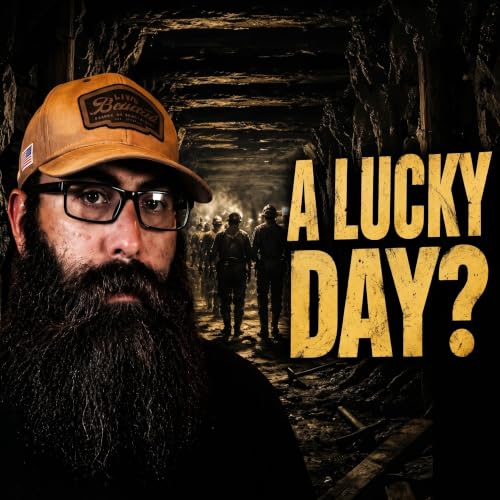
  • The Clymer Mine Disaster: 44 Men Went to Work and Never Came Home
    2026/08/24

    On the afternoon of August 26, 1926, 57 men were working underground at the Clymer No. 1 coal mine near the small Pennsylvania community of Clymer.

    At exactly 1:00 PM, the mine exploded.

    Five or six minutes later, it exploded again.

    The second blast ripped through the already-damaged underground workings, destroyed parts of the ventilation system and sent flame and coal dust more than 100 feet into the air.

    Outside, families ran toward the mine while rescue crews headed underground. Smoke, debris and poisonous gases repeatedly forced rescuers back, but amid the destruction came incredible stories of survival.

    One miner was forced to leave his own father behind after his father realized that trying to save him could kill them both. Another group crawled roughly a mile and a half through smoke and toxic gas, passing dead and dying coworkers as they searched for a way back to daylight.

    By the end of the disaster, 44 men were dead.

    Some families lost more than one loved one. In several homes around the community, two or even three coffins were placed together in the same front room.

    And somehow, the death toll could have been far worse.

    Clymer No. 1 normally employed hundreds of workers, but the mine was operating on reduced “slack time” that day. Only 57 men happened to be underground when the explosions occurred.

    Nearly a century later, the Clymer Mine Disaster has largely disappeared from American memory, but not from Clymer. A memorial outside the borough building still carries the names of the 44 men who never came home.

    In this episode of Yore Town, Matt and Megh travel back to August 26, 1926, to uncover what happened beneath Clymer, Pennsylvania, the miners who fought their way out, the families waiting above, and how one terrible afternoon changed a small coal town forever.

    Because the explosion happened underground.

    The disaster happened to the town.

    Yore Town Podcast

    The strange, dark, and unbelievable true stories of real places.

    New episodes weekly.


    Hosted by Simplecast, an AdsWizz company. See pcm.adswizz.com for information about our collection and use of personal data for advertising.

    続きを読む 一部表示
    32 分
  • Lake Nyos: The Night a Lake Killed 1,700 People
    2026/08/17

    On the night of August 21, 1986, families living beneath Lake Nyos in Cameroon went to sleep with no reason to believe they were in danger.

    By morning, roughly 1,700 people were dead.

    There was no massive fire. No flood had swept through the villages. No lava had destroyed their homes. In many places, almost everything was still standing.

    The killer was the air itself.

    Lake Nyos had suddenly released an enormous amount of carbon dioxide stored deep beneath its surface. Invisible and heavier than the surrounding air, the gas traveled downhill into valleys and villages, displacing the oxygen people and animals needed to survive.

    In this episode of Yore Town, Matt digs into the unbelievable true story of the Lake Nyos disaster, including:

    • How a peaceful crater lake became a massive natural reservoir of carbon dioxide
    • What may have triggered the catastrophic release
    • Why victims had almost no warning and little chance to escape
    • The similar disaster that had occurred in Cameroon just two years earlier
    • How scientists discovered Lake Nyos was slowly becoming dangerous again
    • The remarkable degassing system designed to prevent another catastrophe
    • Why scientists still monitor Lake Nyos today
    • The mystery about August 21, 1986 that still hasn't been completely settled

    Forty years after the disaster, Lake Nyos is still there. It's still beautiful. And deep beneath its surface, carbon dioxide continues to enter the lake.

    That's what makes this story so unsettling.

    Yore Town explores the strange, dark, and unbelievable true stories of real places.

    Follow Yore Town so you don't miss next week's story.


    Hosted by Simplecast, an AdsWizz company. See pcm.adswizz.com for information about our collection and use of personal data for advertising.

    続きを読む 一部表示
    27 分
  • Owensboro and America’s Last Public Execution
    2026/08/10

    On August 14, 1936, thousands of people arrived in Owensboro, Kentucky before sunrise.

    They came to watch a man die.

    Rainey Bethea's hanging would become known as the last fully public execution in American history. Estimates placed the crowd between 10,000 and 20,000 people, nearly the size of Owensboro itself at the beginning of the decade.

    But what happened that morning, and what America remembers happening, may not be exactly the same thing.

    In this episode of Yore Town, Matt and Megh uncover the murder of Lashia Edwards, the evidence that led authorities to Rainey Bethea, the strange legal distinction that allowed his execution to happen publicly, and Sheriff Florence Thompson, whose role turned the case into a national media sensation.

    Then came the crowd.

    Reporters described Owensboro as a carnival built around a man's death. Local residents and newspapers pushed back, arguing that the national press exaggerated the spectacle and unfairly branded their city.

    Ninety years later, the photographs remain, along with an uncomfortable question:

    Why did thousands of ordinary people want to watch?

    This is the story of Owensboro, Kentucky, the place where America held its last fully public execution and then stopped inviting the public to watch.

    Yore Town: The strange, dark, and unbelievable true stories of real places.


    Hosted by Simplecast, an AdsWizz company. See pcm.adswizz.com for information about our collection and use of personal data for advertising.

    続きを読む 一部表示
    31 分
  • Philadelphia’s Bellevue Hotel Gave a Killer Its Name
    2026/08/03

    In July 1976, thousands of American Legion veterans gathered at Philadelphia’s luxurious Bellevue-Stratford Hotel. They came to celebrate America’s bicentennial, reconnect with old friends, and attend their annual convention.

    Then they went home.

    Within days, previously healthy men began developing high fevers, confusion, breathing problems, and a severe form of pneumonia. Some died shortly after reaching the hospital. Others became sick despite never staying inside the hotel.

    As the death toll climbed, investigators searched for a connection. Was it contaminated food? Swine flu? Poisoning? Sabotage? Biological warfare? Or was something inside the Bellevue-Stratford spreading an invisible killer through the air?

    For months, every theory seemed to lead nowhere. Then CDC microbiologist Dr. Joseph McDade returned to evidence that had already been examined and discovered a previously unknown bacterium: Legionella pneumophila.

    The illness would become known around the world as Legionnaires’ disease.

    In this episode of Yore Town, Matt and Megh uncover:

    • The extraordinary history of the Bellevue-Stratford Hotel
    • Why thousands of American Legion veterans gathered there in 1976
    • How the mysterious outbreak spread across Pennsylvania
    • The theories that fueled fear and national panic
    • The scientist who finally identified the invisible killer
    • The suspected connection to the hotel’s cooling system
    • Evidence of an earlier outbreak inside the same hotel
    • What ultimately happened to the Bellevue-Stratford

    Yore Town uncovers the strange, dark, and unbelievable true stories of real places.

    Follow Yore Town so you never miss a new episode.


    Hosted by Simplecast, an AdsWizz company. See pcm.adswizz.com for information about our collection and use of personal data for advertising.

    続きを読む 一部表示
    33 分