エピソード

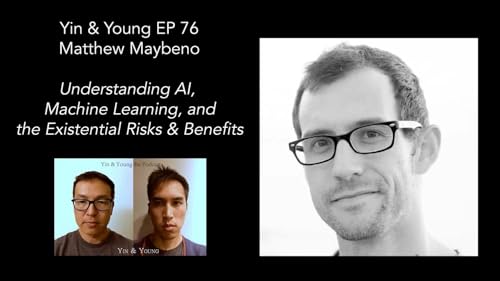
  • Yin & Young Podcast EP 76: Matt Maybeno - AI, Machine Learning, Existential Risks & Benefits
    2025/12/09
    Hope everyone had an amazing Thanksgiving! What a better way to enter the holiday season than to discuss with my ol’ college friend Matthew Maybeno how artificial intelligence will take away all our jobs (or not). It was great to reconnect with Matt and to see how he’s moved from biology into the tech space and thrived. His conversation with Dan and I is a great primer in understanding these new technologies and how to make better use of them. Dan also raises good questions about hallucinations and privacy concerns. Matt and I also reminisce about our dorm days and using high speed internet for educational purposes : ). Enjoy! - James Highlights 00:00:06 Intro. Disclaimer: Large shifts in the field since recording earlier this year, but key principles remain the same. 00:02:08 Matt’s use cases for artificial intelligence (AI) and his preferred Large Language Models (LLMs). 00:08:40 AI hallucinations. 00:11:23 Zero-shot prompting (get it right the first try), LLMs: subjective experience and training. 00:16:34 Pluses and minuses to different types of prompting. 00:21:49 Using AI as a tool to be more productive. 00:26:39 Matt’s early interests, working in biology, overcoming frustrations with math, now in the tech space. 00:45:10 Early internet memories: DC++, dorm networks, IRC, and the suite mate with a terabyte of adult videos. 00:48:28 What is intelligence? Consciousness? 00:55:46 Human-like AIs, Sci-fi parallels: Ex Machina, Cylons. 01:03:25 Defining AI, machine learning (ML), natural language processing (NLP) in simple terms. 01:07:32 Explaining LLMs 01:15:02 How to survive in an AI-driven world. 01:33:26 What are weights in AI. Current risks in AI: the weights used by humans to create malicious AI, jailbreaks, security threats. Potential existential risks (à la Terminator, The Matrix, etc…). 01:43:44 Language Corner: Japanese: 進化(shinka)- evolution English (GenAlpha slang): glazed - favored, skibidi - weird, odd Taunting phrases: Japanese - そーそーみーみー (sō sō mī mī), にゃー (nyah) cat sound. English - nananabooboo (trademarked by Matt’s daughter) Spanish - Lero lero, candelero (sucks to be you) 01:48:28 Staying balanced: marathon experiences, running, indoor soccer, Kung Fu forms (horse bench). Closing remarks. Article/Movies/Show referenced: - Ted Chiang’s “Why A.I. Isn’t Going to Make Art”: https://www.newyorker.com/culture/the-weekend-essay/why-ai-isnt-going-to-make-art - Ex Machina: https://www.imdb.com/title/tt0470752/ - Her: https://www.imdb.com/title/tt1798709/ - The Matrix: https://www.imdb.com/title/tt0133093/ - Terminator: https://www.imdb.com/title/tt0088247/ - Battlestar Galactica: https://www.imdb.com/title/tt0407362/ Note about the transcript/subtitles: AI transcription (Adobe Premiere) was used, so there may be errors. Follow and connect with us on: YouTube: https://www.youtube.com/@yinyoungpodcast Instagram: https://www.instagram.com/yinyoungpodcast Facebook: https://www.facebook.com/yinyoungpodcast If you enjoyed this episode, please like and subscribe. It helps us continue doing this podcast and reach more people. Thank you! Inquiries: yinyoungpodcast[at]gmail.com
    続きを読む 一部表示
    1分未満
  • Yin & Young Podcast EP 75: Eight Years in Review
    2025/05/27
    Looking back at these past eight years of Yin & Young, we have grown so much. In this episode we reflect back on what has changed and what has stayed the same—exploring the past, how it informs the present, and how we might move into the future. Thank you everyone for these past eight years! Highlights: 00:00:00 Intro: Taking a look back at 8 years of Yin & Young, starting in 2016. 00:01:45 Trump back in office and Trump supporters (people we know). Episode 2: Election Blues was recorded and posted shortly after Trump was inaugurated for his first term. 00:09:33 The rights of private companies, Elon Musk, and free speech. 00:15:47 Politics: Tariffs, how to reach young men, campaign messaging (Trump, Warren, Yang), and lessons from Star Trek. 00:27:48 The bird singing is James' pet Java sparrow Ming Ming. 00:28:27 Healthcare, taxes, individualism (U.S.) vs collectivism (Japan). 00:35:01 Causes of death U.S. vs Japan vs World. 00:40:50 Looking back at past episodes: a shift in tone from casual dating to how to maintain a relationship. 00:44:04 How to deal with boredom and doubt in a relationship. 00:47:03 Episode 20: Seng Chen: "I want to hear myself when I suffer." 00:51:41 My Own Worst Enemy - getting in your own way, sexual regret, and being better. 00:55:34 Episode 36: Don't just settle. Where James was and where he is now. 00:57:59 Discussed our most popular episode so far, Episode 28 with Teo Yoo. Also chatted about movies and musicals (Past Lives, Wicked, The South Park Movie, Book of Mormon). 01:04:02 Reflecting on Yin & Young the Podcast so far. 01:06:44 Martial Arts: Choy Li Fut, Brazilian Jiu-Jitsu, Taichi, Baji. Exercises: Yi Jin Jing, Zhan Zhuang. 01:09:54 *Correction: Yi Jin Jing (易筋經) is linked to Bodhidharma, not the Book of Changes (I Ching 易經). 01:14:04 Outro: What matters. Follow and connect with us on: YouTube: https://www.youtube.com/@yinyoungpodcast Instagram: https://www.instagram.com/yinyoungpodcast Facebook: https://www.facebook.com/yinyoungpodcast If you enjoyed this episode, please like and subscribe. It helps us continue doing this podcast and reach more people. Thank you! Inquiries: yinyoungpodcast[at]gmail.com
    続きを読む 一部表示
    1 時間 33 分
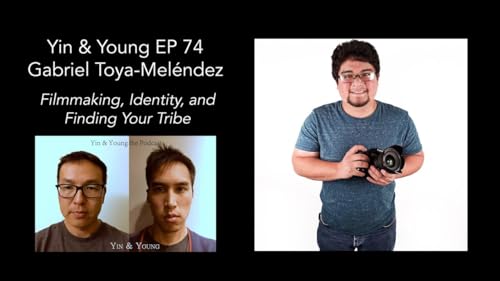
  • Yin & Young Podcast EP 74: Gabriel Toya-Meléndez - Filmmaking, Identity, and Finding Your Tribe
    2025/02/11
    In this episode of Yin & Young, we chat with Gabriel Toya-Meléndez, an LA-based filmmaker of Puerto Rican and Japanese heritage. Gabriel shares with us his experiences growing up in San Francisco vs Florida, how he got into filmmaking, and how he navigates difference spaces as someone with a mixed background. Gabriel’s links: - Instagram: https://www.instagram.com/japorican1/ - “Han” - Short film (Gabriel was the Director of Photography and Editor): https://www.amazon.com/gp/video/detail/B08CZ4J3GP/ref=atv_dp_share_cu_r Highlights: 00:00:00 Introductions and discussion of Gabriel's background: of Japanese and Puerto Rican descent, grew up in San Francisco and Florida, his exposure to both his Japanese and Puerto Rican heritage. 00:05:53 Conservatism in Japanese Americans post WWII. Dad was trying to figure out his identity growing up. 00:07:33 Cultural heritage passed down through food and cooking. 00:09:47 Background on Gabriel’s Japanese grandparents and their relationship. 00:15:01 Gabriel and James share stories about the reluctance of their grandparents generation to talk about WWII. 00:18:11 Connecting to his Puerto Rican heritage through Spanish. 00:20:13 Contrasted his time between Florida and California: in Florida, felt his ethnicity and race was highlighted even more. 00:24:55 Making friends through similar interests: broadcasting, filmmaking. Issues being the token “Asian,” Puerto Rican heritage being disregarded. 00:29:45:13 Florida's different communities and cultural pockets. 00:32:45:21 Tokenization and coming into your own identity. 00:35:35:08 Answering the "where are you from?" question. 00:37:40:09 First steps into filmmaking. 00:42:43:19 Life after college: looking for work in film production. 00:45:26:04 Figuring out what he wants to do in film. 00:49:18:03 Thoughts on film school. 00:52:52:04 Film set life. 00:54:14:13 Gabe moves to LA and reconnects with filmmaking thanks to James. 00:57:36:06 Advice for those that want to pursue filmmaking. 00:58:58:08 The filming process for the short film "Han" (link above) and some of the creative influences Gabriel 01:02:59:08 Working with actor Earl T. Kim. 01:08:45:04 Enjoying the process. 01:10:58:09 Advice for young filmmakers. 01:16:41:13 Some of our favorite films and TV shows. 01:23:26:20 What's something that helps you keep balanced? James - Walks in the park. Gabriel - Training Kendo. 01:26:30:18 Language Corner: * つけ麺 (tsukemen) is a Japanese dish of dipping noodles. The “tsuke” part of the word means to dip. * いただきます (itadakimasu) is a Japanese phrase said before eating a meal to give thanks. It comes from the verb いただく(itadaku), which means to accept/to receive. * “China” in Puerto Rican Spanish means “oranges” due to the historical link of oranges coming from China. * Chintan ramen (清湯ラーメン) is a Japanese term, derived from Mandarin, meaning “clear broth ramen.” 01:31:41:15 Advice to those who have mixed backgrounds and may have a hard time fitting in. Gabriel found his people when taking an interest in the arts ——— Follow and connect with us on: YouTube: https://www.youtube.com/@yinyoungpodcast Instagram: https://www.instagram.com/yinyoungpodcast Facebook: https://www.facebook.com/yinyoungpodcast Remember to like/comment to helps others find our work! Inquiries: yinyoungpodcast[at]gmail.com
    続きを読む 一部表示
    1 時間 33 分
  • Yin & Young Podcast EP 73: Paul Hoi #2 - Japan Stories, Skiing, Solo Traveling
    2024/11/25
    After a long hiatus, Yin & Young are back with Paul Hoi, the sequel! Paul is a on a year-long sabbatical traveling the world and has spent the past few months traveling Japan. Earlier this year, James had the privilege of meeting up with him in Tokyo and we got to catch up about his travels, his new passions like skiing and scuba diving, and the reality of solo traveling. Apologies for the poor audio, especially for my mic, this was our first time trying an outdoor recording. Did our best to correct it in post, so hopefully it’s listenable! Catch our 1st interview with Paul here: https://www.jamesyshih.com/yin-young-podcast/2021/4/19/yin-and-young-ep56-paul-hoi Paul Hoi’s photography and other works: https://linktr.ee/paul_hoi Highlights: 00:01:05 Introductions & Overview: meeting up in Japan, visited Junji Ito exhibit. 00:03:53 What brought Paul to Japan. Been finding new loves: scuba diving, skiing, riding around on a moped. 00:07:27 Transitioning from working in a high stress environment to solo traveling. 00:10:08 Each of us talk about our different experiences visiting Japan and feelings about travel. 00:17:04 Driving in Japan. 00:20:02 Dan shares his experience traveling to Sasebo in Kyushu. 00:23:22 The reality of traveling: dealing w/ loneliness, language barriers, anxiety, addiction to solitude, feeling like an outsider. 00:32:33 Making friends in Japan. Dan shares Japan stories of ghost hunting, shooting fireworks, and drifting (Initial D). 00:37:41 Old-school Japan (Showa Era). See CORRECTIONS below. 00:40:20 Paul’s interests have been his north stars for traveling. Shares his story of falling in love with skiing and the differences between American and Japanese skiing. 00:48:10 The need for physical expression. Short cut to the Presence. Wordlessness. 01:00:13 Dan shares stories about what physical activities his kids enjoy doing. Language corner (01:02:23): Japanese 蟻 - ari - ants. James Shares a story about Japanese school children walking to school in an orderly fashion like ants. おじゃまします - Ojamashimasu - thank you for having me. Lit. sorry for being a hinderance. 亀 - kame - turtle. The basis for Goku’s finishing attack, Kamehamaha, which is also the name of a Hawaiian king. 迷惑 - meiwaku - to be troubled or bothered (by). Japanese culture emphasizes that one should not be a nuisance (meiwaku). お待たせしました - Omatase shimashita - sorry to have kept you waiting What you’re doing to stay balanced/present (01:11:54): James: Brazilian Jiu-Jitsu Paul: Art, skiing, scuba diving Dan: Surfing, Kung Fu ——— CORRECTIONS: 00:37:41 James incorrectly claims that 1992/93, when Dan was in Japan, was the Showa Era but actually that era was the Heisei Era (1989~2019) in Japan. The Showa Era was 1926~1989. 00:38:27 Dan and James mix up the dates about the Showa Era. The Showa Era was 1926~1989, and is generally divided into pre-war Showa Era (1926~1945), and post-war Showa Era (1945~1989). ——— Follow and connect with us on Facebook, Instagram, Youtube: @yinyoungpodcast YT: https://www.youtube.com/@yinyoungpodcast IG: https://www.instagram.com/yinyoungpodcast FB: https://www.facebook.com/yinyoungpodcast Like/comment to helps others find our work! Yin & Young is produced by James Y. Shih and Daniel Yin. Inquiries: yinyoungpodcast@gmail.com
    続きを読む 一部表示
    1 時間 13 分
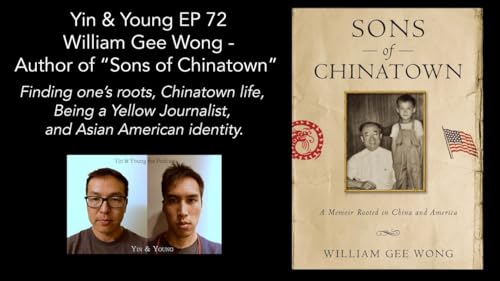
  • Yin & Young Podcast EP 72 : William Gee Wong - Author of "Sons of Chinatown"
    2024/06/28
    William Gee Wong (Bill) is a prominent figure in the realm of Chinese-American journalism and literature, recognized for his insightful contributions to the understanding of Asian American experiences. Born and raised in Oakland Chinatown in California, Bill's work often reflects his deep connection to his heritage and the diverse cultural landscape of his upbringing. Bill's narratives provide a vital perspective on the Asian American community's struggles and triumphs. Bill’s most recent endeavor is a memoir chronicling his own family’s immigration story as well as his life and career. Bill shares deep, personal insight into the Chinese American immigration experience during the early 20th century, the era of the Chinese Exclusion Act, and its impact on American society. Bill’s website: https://www.williamgeewong.com/ Highlights: 00:00 Introduction to William Gee Wong (Bill) and his recent memoir, “Sons of Chinatown.” 03:40 Bill’s father, mother, and sisters’ migration story. 11:02 Angel Island and the paper sons, paper marriage scheme. 16:23 Bill’s father’s “altercation” with his paper brother over losing money in the lottery business. 22:20 Bill’s father and mother really wanted a son. Some favoritism for sons. 25:47 We share our connections to the Bay Area. Bill’s “Chinatown bubble.” 33:05 Cultural separation from Hoishan-wa and his father. A connection to the Chinatown mindset. 36:40 Chinatown Tongs 45:50 Los Angeles Tong/Benevolent Association. 49:00 Bill’s identity search as he moved from Chinatown to bigger, whiter America and navigating these spaces in the journalism world. 01:00:57 Returns to writing and starts a weekly column highlighting Asian American issues at the Oakland Tribune. 01:05:12 What does it mean to be Asian American? Bill highlights the many different groups and histories this label encompasses. 01:16:50 James shares stories about being asked about his identity. 01:20:25 Dan shares his thoughts on the “Asian American” label and Hollywood casting. 01:22:30 Bill’s conversation with his son when they visited Bill’s father’s ancestral home (spoiler alert for those who plan to read the book). 01:30:40 Angel Island is depicted in Berkeley Rep’s: Far Country. 01:33:00 What do you to stay balanced? - Walk around the neighborhood. - Weightlifting. 01:36:00 Language corner: Taiwanese Hokkien (Reference: Mandarin and Taiwanese dictionary: https://itaigi.tw) - 免客氣 mián kheeh-khì - You’re welcome. (lit. Don’t be so polite). - 緣投 iân-tâu - handsome, good looks. - 無共款 bô-kāng-khuán - not the same, different Hoishan-wa/Taishanese - 哎呀/哎吔 aiya - oh my god! Japanese - おもろい omoroi - interesting [in the Kansai dialect]. ——— Follow and connect with us on Facebook, Instagram, Youtube: @yinyoungpodcast FB: https://www.facebook.com/yinyoungpodcast IG: https://www.instagram.com/yinyoungpodcast YT: https://www.youtube.com/@yinyoungpodcast Like/comment to helps others find our work! Yin & Young is produced by James Y. Shih and Daniel Yin. Support us on Patreon: patreon.com/yinyoungpodcast Email: yinyoungpodcast@gmail.com
    続きを読む 一部表示
    1 時間 42 分
  • Yin & Young Podcast EP 71 Aileen Cho - Intergenerational Trauma, Marriage, and Healing
    2024/04/18
    We’re so happy to have Aileen Cho, a licensed therapist based in the Southern California area, as our guest this episode! Aileen is a 2nd generation Korean-American clinician that offers psychotherapeutic services in both English and Korean. In this podcast (a first for Aileen) she shares her personal and professional insight into intergenerational trauma, marriage challenges, and the various ways she helps individuals to find their own way to heal. Aileen’s website: https://www.aileenbcho.com/ Contact Aileen (currently not accepting new clients until Sept. 2024): aileen@aileenbcho.com Highlights: 00:00 James gives a brief intro of Aileen. They met at the Asian American Theater Festival at UCSD. 01:45 We do a check-in. Aileen is very pregnant. 04:25 Born in LA, her mother's family were North Korean refugees and shares a story about her paternal grandfather who was sold as a child slave to a Japanese family. 07:00 Discusses how she was born into intergenerational trauma due to her family’s history. She is the keeper of stories for her family. 09:45 Started off in acting and theater in college, while also going to therapy. 11:25 After college: Her shift to the mental health field and eventually getting her Master’s in Drama Therapy. 12:40 Intergenerational trauma: Separation of North and South Korea. The way we rear children is influenced by our own trauma. 16:00 Advice to young people deciding about whether to go to therapy. 20:20 How were your first steps into therapy? 23:11 Finds that Korean American therapists are rare in her field and overall there’s a dearth of Asian American therapists. 25:25 More Asian Americans are going into clinical practice as well as seeking therapy. Most of her clients are now Asian Americans. 28:27 Mental health issues particular to Asian Americans. 31:55 Aileen’s Time Capsule Theory in regards to immigrants and the children of immigrants. 36:10 How to get boomer parents into family therapy. 37:35 How has being a therapist and going to therapy affected your own relationships? 40:50 Challenges with married life. 48:05 Communication issues with couples. 49:50 In the current social climate, the pressures of expectations of marriage has never been higher. Recommends Mating in Captivity by Esther Perel. 57:27 Collective grief and drama therapy. What do you to stay balanced? (59:40) Language corner (01:02:27): Circumstances that bring people meant for each other together; destiny; connection. - Mandarin: 緣分 (yuánfèn) - Korean: 인연 (inyeon) Empathy* - Korean: 공감 (gong-gam). From the hanja 共感, gung6gam2 in Cantonese, gònggǎn in Mandarin. *Aileen shares that the word “empathy” comes from the Greek words “in” (em) and “feeling” (pathos). Compare this to Korean, empathy = 공감, which is “communal" (공/共) + “feeling” (감/感). Shows individualistic vs collectivist cultural differences in the languages. 01:09:17 Aileen and her husband have inherited her mom’s secret kimchi recipe. ——— Follow and connect with us on Facebook, Instagram, Youtube: @yinyoungpodcast FB: https://www.facebook.com/yinyoungpodcast IG: https://www.instagram.com/yinyoungpodcast YT: https://www.youtube.com/@yinyoungpodcast Like/comment to helps others find our work! Yin & Young is produced by James Y. Shih and Daniel Yin. Support us on Patreon: patreon.com/yinyoungpodcast Email: yinyoungpodcast@gmail.com
    続きを読む 一部表示
    1 時間 12 分
  • Yin & Young Podcast EP 70 - Writer Peter Kageyama returns with MIDNIGHT CLIMAX
    2024/02/21
    Writer Peter Kageyama joins Yin & Young again to talk about MIDNIGHT CLIMAX the second novel of the Kats Takemoto series. Peter joined us last time (EP 66) discussing HUNTERS POINT the first Kats Takemoto novel and in this book we delve more into Kats wartime past, Chinatown gangs, and secret government mind control experiments. Peter shares insight into the writing process of this novel and what is important to him as a writer. Highlights: - 00:11 Intro: photo of Peter’s dad by Dorothea Lange and Feodor Chin is the voice actor for Peter’s novels. - 03:35 Reintroducing Peter and his first novel Hunters Point which podcasted about a year ago. - 07:00 Yokohama is one of Dan's favorite places and Peter’s family origins are from the area. - 07:55 Midnight Climax is Peter's latest book. Promoting a book runs contrary to the writing process. - 10:00 Peter’s process for writing. Peter has places where he feels comfortable writing. - 11:45 Thoughts on “writer’s block.” Writing the 3rd book has been more challenging. - 15:40 In the process of moving in Florida. - 17:00 “No-No Boy” by John Okada as testament to conscientious dissent. - 19:20 Kats is not anti-government, but he doesn’t like bullies. - 21:45 Officer Blackstone in the book is a real person and Kats is drawn to other principled characters like him. - 23:13 How to write about historical figures. Peter connected with a relative of Shig Murao via Instagram. - 26:54 Fell in love with the characters. Researched PTSD to flesh out the characters better. - 30:05 Tours of Chinatown helped inspire the writings of the place in the book. - 32:00 Learning about languages for the book. Utilized Wikipedia for some different terms of the time. Distinctions between Mandarin & Cantonese. - 36:00 How to write about ethnic characters without playing into stereotypes, particularly the Chinese prostitute character. - 42:17 The guys talk about why they started studying martial arts - 46:20 Peter discusses the CIA experiments of the 1960s - 51:10 Themes of love and friendship. - 52:57 Dorothea Lange’s picture of Peter’s father who was an inspiration for Kats. - 57:58 Discussion of sports leagues that came from internment camps. Repercussions of Japanese internment. - 01:05:25 Staying balanced: Board games and exercise. Language corner (01:17:20) Cantonese - 鬼婆 gwei po - devil old lady. Derogatory term for white women. - 鬼佬 gwei lo - foreigner Scottish - Hurkle-Durkle - to lay about in bed long after the time to get up. Mandarin - 舊金山 - jiùjīnshān - literally: old gold mountain which means San Francisco. Peter Kageyama’s links: - Website: https://peterkageyama.com/ - Peter’s non-fiction work on urban planning and communities: https://www.fortheloveofcities.com Other links: - Peter’s 1st appearance on the Yin & Young Podcast EP66 discussing HUNTERS POINT - https://youtu.be/el10M-hBdVI?si=2bKzcRffOm2CDhdW - Feodor Chin returns to voice MIDNIGHT CLIMAX - https://peterkageyama.com/audiobook-now-available-feodor-chin-returns/ - Our podcast with Feodor: https://www.jamesyshih.com/yin-young-podcast/2017/12/3/yin-young-ep24-feodor-chin - San Francisco City Guides (tours of San Francisco): https://sfcityguides.org/ - Thai artist featured on Peter’s wall, Ummarid “Tony” Eitharong: https://tonyeitharong.com/ ——— Follow and connect with us on Facebook, Instagram, Youtube: @yinyoungpodcast FB: https://www.facebook.com/yinyoungpodcast IG: https://www.instagram.com/yinyoungpodcast YT: https://www.youtube.com/@yinyoungpodcast Like/comment to helps others find our work! Yin & Young is produced by James Y. Shih and Daniel Yin. Support us on Patreon: patreon.com/yinyoungpodcast
    続きを読む 一部表示
    1 時間 14 分
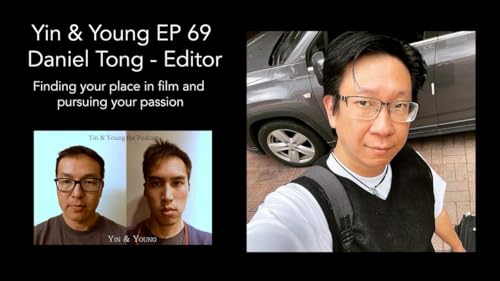
  • Yin & Young Podcast EP 69 Daniel Tong - Editor: Finding your place in film and pursuing your passion
    2024/02/09
    Welcome back Yin & Young listeners! It’s been a long time since our last episode; Young was busy with his wedding (congrats!) but now that’s done, we’re happy to be back with guest Daniel Tong! Daniel is an editor based in Los Angeles, CA, U.S. Daniel has a passion for editing and shares his journey finding his place in the filmmaking industry. Highlights: 01:56 Young ran into Daniel at a high school reunion. 05:50 Daniel’s family is ethnically Chinese from Burma. 07:15 Shares the start of his love for movies and the arts. 10:04 Young and Daniel rehash one of their early film projects in high school for French class (Godzilla appears). 12:07 Shares the initial push back he got from his immigrant parents about wanting to pursue filmmaking. 14:10 His start in film as an undergrad and then grad school. 21:55 Discusses his thoughts on film school and how he found his place in film there. 28:30 The importance of networking. 32:30 Gives insight into working at Pixar as a contractor. 42:40 Becoming a Pixar Online Editor during the pandemic. 44:30 The difference between an online and a offline editor. 47:40 Issues using different editing programs in the workflow. 52:20 Daniel's preferred editing application and the benefits/drawbacks of each of them. 57:04 Editing in the gaming industry. 01:01:00 His desire for leadership experience and his first leadership role at Blizzard. 01:02:50 Getting through the Blizzard interviews having not played the games, but now obsessed with them (World of Warcraft, Diablo, etc…). 01:05:40 His experience working on the documentaries for “Coco” and “Turning Red” and why he connected with them deeply. 01:13:49 Yin’s plans for his kids going to college. 01:14:43 Discussion about famous editor Walter Murch’s book “In a Blink of an Eye” and Daniel’s own approach to editing and assistant editing. 01:28:29 Language corner (see below). We also go over the origin of KFC popularity in Japan during Christmas and chat about Del Taco ramen and Donald Glover’s boba shop. 01:34:01 Projects that Daniel is working on (see below for links). 01:35:23 Shout outs. Pursue your passion. Language corner: * Young - KFC is "Kenta” (ケンタ) for short in Japanese. * Yin - 渋滞 (じゅうたい juutai) - traffic jam 残業 (ざんぎょう zangyo) - overtime Daniel Tong’s links: Website: https://danieltongeditor.weebly.com/ Instagram: https://www.instagram.com/danieltongeditor Recent and current projects Daniel Tong has edited/assistant edited on: * No Room For Love - Filipino American web series, https://www.instagram.com/noroom_forlove * Creature Comforter - a short horror comedy mockumentary, https://www.instagram.com/bravemakerorg * Release the Beast by Ryzo Studios - An artistic but timid boy who learns to defend himself against bullies from the characters he creates for his video games. https://www.ryzo.studio/ * Junho - a former theater actor from Korea tries to outrun his past: https://youtu.be/FShHTubEpkI?si=3SfXAK01tab4-h0_ * “Always in My Head” - music video by Filipino American music artist Garth Garcia: https://youtu.be/nv7fuOCBX_k ——— Follow and connect with us on Facebook, Instagram, Youtube: @yinyoungpodcast FB: https://www.facebook.com/yinyoungpodcast IG: https://www.instagram.com/yinyoungpodcast YT: https://www.youtube.com/@yinyoungpodcast Like/comment to helps others find our work! Yin & Young is produced by James Y. Shih and Daniel Yin. Support us on Patreon: patreon.com/yinyoungpodcast
    続きを読む 一部表示
    1 時間 37 分