エピソード

  • Bonus D. Left Behind
    2026/07/16

    What was happening inside the Persian royal camp while the Battle of Issus raged beyond the hills?

    Through the eyes of a lady-in-waiting to Queen Stateira, experience the fear, rumors, and uncertainty that gripped Darius III's family as Alexander the Great closed in. This immersive historical podcast reveals the human side of one of history's most decisive victories through those left behind.

    Narrator: Mitra, Lady-in-Waiting to Queen Stateira

    Setting: Persian Royal Camp, Battle of Issus, 333 BCE

    1. Historical Sources

    a. Ancient Sources

    • Arrian, Anabasis of Alexander
    • Curtius Rufus, History of Alexander
    • Diodorus Siculus, Library of History
    • Plutarch, Life of Alexander

    b. Modern Sources

    • Peter Green, Alexander of Macedon
    • Adrian Goldsworthy, Philip and Alexander
    • Robin Lane Fox, Alexander the Great
    • Philip Freeman, Alexander the Great

    2. Author's Notes

    a. Historical Facts

    • Darius III brought members of the royal family on campaign before Issus.
    • The Persian royal camp contained not only soldiers but a large civilian and administrative population.
    • The Battle of Issus occurred out of sight of much of the royal camp.
    • News and rumors spread rapidly during the battle.
    • Darius fled the battlefield after the Persian collapse.
    • The Persian royal family was left behind and subsequently captured by Alexander.

    b. Reconstructed

    • Mitra and her role in the royal household.
    • All dialogue, emotions, and observations.
    • The scenes inside the tent.
    • The sequence of rumors and personal reactions.
    • The specific interactions among attendants and servants.

    This bonus episode is designed to place the audience inside the Persian royal camp during the hours of uncertainty between Darius' defeat and Alexander's arrival, creating a bridge between Episode 9 (The King's Flight) and Episode 10 (Thunder at Issus).


    続きを読む 一部表示
    7 分
  • 1.9. The King's Flight
    2026/07/13

    Why did Darius III flee the Battle of Issus?

    Through the eyes of a royal bodyguard, witness one of the most controversial moments in Alexander the Great's campaign against the Persian Empire. This immersive historical podcast explores the chaos of battle, the burden of kingship, and the split-second decision that changed the fate of Persia forever.


    Narrator: Artabazos, Royal Bodyguard of Darius III

    Setting: The Persian camp before and during the Battle of Issus, 333 BCE

    1. Historical Sources

    a. Ancient Sources

    • Arrian, Anabasis of Alexander
    • Plutarch, Life of Alexander
    • Curtius Rufus, History of Alexander
    • Diodorus Siculus, Library of History

    b. Modern Sources

    • Adrian Goldsworthy, Philip and Alexander
    • Peter Green, Alexander of Macedon
    • Robin Lane Fox, Alexander the Great
    • Philip Freeman, Alexander the Great

    2. Author's Note

    a. Historical:

    • Darius III personally led the Persian army at Issus.
    • The royal family accompanied the campaign.
    • The battlefield at Issus was unusually narrow.
    • Alexander led a decisive attack toward Darius' position.
    • Darius fled the battlefield.
    • The royal family was left behind and captured.
    • Darius later learned they had survived and were treated well.

    b. Reconstructed:

    • Artabazos the bodyguard.
    • Personal observations and dialogue.
    • Internal thoughts.
    • Specific scenes around the royal position.

    This episode intentionally portrays Darius as neither hero nor coward, but as a king whose survival was essential to the survival of his dynasty and empire. The next episode will reveal what happened to the family left behind and how Alexander's actions transformed his reputation across the Persian world.

    続きを読む 一部表示
    9 分
  • 1.8. The Hunter Becomes the Hunted
    2026/07/10

    How did Alexander the Great become the hunted before the Battle of Issus?

    Through the eyes of a Companion cavalryman, follow the Macedonian army as confidence gives way to uncertainty after an unexpected move by Darius III. This immersive historical podcast explores the strategy, suspense, and turning point that brought two of history's greatest kings face to face for the first time.

    Narrator: Amyntas, a Companion Cavalryman

    Setting: Cilicia, 333 BCE, days before the Battle of Issus

    1. Historical Sources

    a. Ancient Sources

    • Arrian, Anabasis of Alexander
    • Plutarch, Life of Alexander
    • Curtius Rufus, History of Alexander
    • Diodorus Siculus, Library of History

    b. Modern Sources

    • Adrian Goldsworthy, Philip and Alexander
    • Peter Green, Alexander of Macedon
    • Robin Lane Fox, Alexander the Great
    • Philip Freeman, Alexander the Great

    2. Author's Note

    a. Historical:

    • Alexander's illness at Tarsus.
    • The Macedonian advance through Cilicia.
    • Darius moving behind Alexander.
    • The capture of Issus and Macedonian wounded left there.
    • The strategic surprise before the battle.
    • The armies turning toward one another before Issus.

    b. Reconstructed:

    • Amyntas the narrator.
    • Campfire conversations.
    • Personal observations.
    • Emotional reactions and dialogue.

    This episode intentionally ends before the Battle of Issus begins, creating anticipation for the next episode, which will reveal the Persian side of the same events through the eyes of a royal bodyguard serving Darius III.

    続きを読む 一部表示
    10 分
  • Ledger II. The Gold of Sardis
    2026/07/08

    How did Alexander the Great finance his conquest after the Battle of the Granicus? Through the eyes of a royal treasury clerk, discover why the peaceful surrender of Sardis proved as valuable as any battlefield victory. This immersive historical podcast explores the economics of empire, revealing how taxes, administration, and gold, not just swords, helped turn Alexander's invasion into a sustainable campaign.


    Narrator: Menon, Clerk of the Royal Treasury

    Setting: Asia Minor, after Granicus and the surrender of Sardis, 334 BCE

    1. Historical Sources

    a. Ancient Sources

    • Arrian, Anabasis of Alexander
    • Diodorus Siculus, Library of History
    • Plutarch, Life of Alexander

    b. Modern Sources

    • Adrian Goldsworthy, Philip and Alexander
    • Philip Freeman, Alexander the Great
    • Peter Green, Alexander of Macedon

    2. Author's Notes

    a. Historical Facts

    • Alexander defeated Persian forces at the Battle of Granicus.
    • Sardis surrendered to Alexander and its treasury was captured intact.
    • Alexander appointed local administrators, military commanders, and tax officials after taking the city.
    • The existing Persian administrative structure was largely preserved.
    • Captured resources helped finance the continuing campaign and pay the army.
    • Sardis was one of the most important cities in western Asia Minor.

    b. Reconstructed

    • Menon and his role as treasury clerk.
    • All dialogue and conversations.
    • Menon's personal calculations and observations.
    • The treasury scenes and descriptions of his daily work.
    • The theme of Menon questioning whether Alexander's success is skill or luck.

    Ledger II explores the moment when Alexander's invasion first begins to look financially sustainable. Through the eyes of a treasury clerk, the episode examines an often-overlooked reality of conquest: A surrendered city can be worth far more than a conquered one.

    続きを読む 一部表示
    7 分
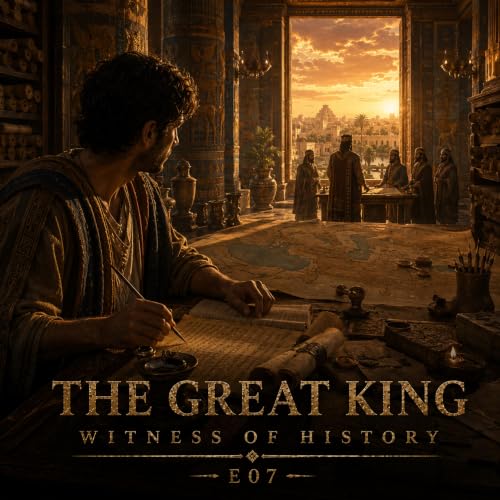
  • 1.7. The Great King
    2026/07/06

    Who was Darius III before he faced Alexander the Great?

    Through the eyes of a royal scribe in Babylon, step inside the Persian court as reports of a young Macedonian conqueror grow impossible to ignore. This immersive historical podcast explores the power, complexity, and humanity of the Persian Empire and the moment the Great King chose to lead his army into history himself.

    Narrator: Bel-iddin, a royal scribe in the court of Darius III

    Setting: Babylon and the Persian Royal Court, 334–333 BCE

    1. Historical Sourcesa. Ancient Sources

    • Arrian, Anabasis of Alexander
    • Diodorus Siculus, Library of History
    • Plutarch, Life of Alexander
    • Curtius Rufus, History of Alexander

    b. Modern Sources

    • Adrian Goldsworthy, Philip and Alexander
    • Peter Green, Alexander of Macedon
    • Philip Freeman, Alexander the Great
    • Robin Lane Fox, Alexander the Great
    • The Landmark Arrian

    2. Author's Note

    a. Historical:

    • Darius III's rule over the Persian Empire.
    • The Persian court structure.
    • The aftermath of Granicus.
    • Alexander's continued advance through Asia Minor.
    • Darius' decision to personally lead the next major campaign.
    • Babylon's role as one of the empire's principal centers.

    b. Reconstructed:

    • Bel-iddin the scribe.
    • Personal observations.
    • Conversations with couriers.
    • Court atmosphere and daily life.
    • Family scenes and emotional reflections.

    This episode is designed to humanize Darius before he meets Alexander. The goal is not to introduce a villain, but a ruler attempting to preserve the largest empire in the known world against an unexpected challenger from the west.

    続きを読む 一部表示
    10 分
  • Bonus C. The Persian Greek
    2026/07/03

    What did the Greek cities of Asia Minor think of Alexander the Great?

    Through the eyes of a vineyard owner from Miletus, explore the uncertain world between Persia and Greece, where identity was more complicated than history often suggests. This immersive historical podcast examines loyalty, empire, and why many ordinary Greeks saw Alexander not as a liberator or conqueror, but as another unknown king.


    Narrator: Nikandros, a Greek vineyard owner from Miletus

    Setting: Western Asia Minor, shortly after Granicus, 334 BCE


    1. Historical Sources

    a. Ancient Sources

    • Herodotus (background on Greek cities under Persian rule)
    • Arrian, Anabasis of Alexander
    • Diodorus Siculus
    • Plutarch

    b. Modern Sources

    • Peter Green, Alexander of Macedon
    • Adrian Goldsworthy, Philip and Alexander
    • Philip Freeman, Alexander the Great
    • Robin Lane Fox, Alexander the Great


    2. Author's Note

    a. Historical:

    • Greek cities of Asia Minor had lived under Persian rule for roughly two centuries.
    • These cities retained Greek language, religion, and culture while being politically part of the Persian Empire.
    • Reactions to Alexander varied greatly from city to city.
    • After Granicus, many communities were uncertain whether Alexander represented liberation, conquest, or simply another ruler.

    b. Reconstructed:

    • Nikandros and his family.
    • The vineyard.
    • Conversations and tavern scenes.
    • Personal reflections.
    • Specific reactions to the news.


    This episode is intended to challenge the modern assumption that all Greeks naturally supported Alexander. For many Greek-speaking inhabitants of Asia Minor, Persia was not a foreign power but the political reality under which their families had lived for generations.

    続きを読む 一部表示
    9 分
  • Bonus B. The Traitor
    2026/07/02

    Were the Greeks who fought for Persia really traitors? Through the eyes of a captured Greek mercenary after the Battle of the Granicus, explore one of Alexander the Great's most thought-provoking moral dilemmas. This immersive historical podcast challenges the meaning of loyalty, identity, and patriotism in the ancient Greek world where victory often decides who gets to tell the story.


    Narrator: Timon, a Greek mercenary captured after the Battle of the Granicus

    Setting: A prisoner column marching west after Granicus, 334 BCE


    1. Historical Sources

    a. Ancient Sources

    • Arrian, Anabasis of Alexander
    • Diodorus Siculus, Library of History
    • Plutarch, Life of Alexander

    b. Modern Sources

    • Adrian Goldsworthy, Philip and Alexander
    • Peter Green, Alexander of Macedon
    • Philip Freeman, Alexander the Great
    • The Landmark Arrian

    2. Author's Note

    a. Historical:

    • Presence of Greek mercenaries in Persian service at Granicus.
    • Defeat and capture of many surviving Greek mercenaries.
    • Alexander's decision to send many prisoners in chains to Macedonia.
    • Alexander's justification that they had fought against the common Greek cause.

    b. Reconstructed:

    • Timon and his family.
    • Conversations with guards.
    • Personal motivations.
    • Emotional reactions and reflections.
    • Specific encounters with Macedonian soldiers.

    This episode is intentionally designed as the first major moral gray area of the season. Every major fact is historical, but the narrator's perspective challenges the audience to consider how the same event can look completely different depending on who is telling the story.

    続きを読む 一部表示
    10 分
  • 1.6. The King
    2026/07/01

    How close did Alexander the Great come to dying at the Battle of the Granicus? Through the eyes of a Companion cavalry officer, relive the charge that nearly ended the Macedonian invasion before it began. This immersive historical podcast explores the courage, chaos, and split-second decisions that changed the course of Alexander's conquest of the Persian Empire forever.


    Narrator: Philotas, a Companion Cavalry officer

    Setting: The Battle of the Granicus, 334 BCE

    1. Historical Sourcesa. Ancient Sources

    • Arrian, Anabasis of Alexander
    • Plutarch, Life of Alexander
    • Diodorus Siculus, Library of History
    • Curtius Rufus, History of Alexander

    Modern Sources

    • Adrian Goldsworthy, Philip and Alexander
    • Peter Green, Alexander of Macedon
    • Philip Freeman, Alexander the Great
    • The Landmark Arrian

    2. Author's Note

    a. Historical:

    • The Battle of the Granicus.
    • Parmenion's advice to delay the attack.
    • Alexander's immediate crossing.
    • Alexander's near death.
    • The attack by Persian nobles.
    • Cleitus the Black saving Alexander's life.
    • The presence of Greek mercenaries fighting for Persia.
    • Macedonian victory and capture of many surviving Greek mercenaries.

    b. Reconstructed:

    • Narrator and personal experiences.
    • Campfire conversations.
    • Internal thoughts and emotions.
    • Dialogue and descriptions not preserved in sources.

    This episode intentionally mirrors Episode 5 from the opposite side, revealing that the "unknown Macedonian officer" seen by the Persian cavalryman was Alexander himself, while also introducing the Greek mercenaries whose story will be explored in the following bonus episode.

    続きを読む 一部表示
    12 分