エピソード

  • The Bill Came Due at Midsummer" The 130 Children of Hamelin
    2026/09/03
    Whispers from the Dark — The Pied Piper of Hamelin, Germany In 1284, something happened in the German town of Hamelin that would become one of the darkest legends in European history. According to the story, a mysterious stranger dressed in strange, colorful clothing arrived with an extraordinary promise: he could rid Hamelin of its rats. With nothing more than a pipe and an eerie melody, he supposedly led the animals out of town. But when the townspeople refused to pay him, the Piper returned. This time, the rats weren't the ones who followed. More than a hundred children were said to have walked behind the mysterious musician—and vanished. For centuries, the Pied Piper has been treated as a fairy tale. But buried beneath the folklore are disturbing historical clues suggesting that something very real may have happened in Hamelin. Medieval records mention the disappearance of the town's children. A centuries-old inscription remembered the event. And strangely, the rats weren't even part of the earliest versions of the story. So who—or what—was the Pied Piper? A recruiter? A symbol of disease or disaster? A murderer? A supernatural figure? Or the distorted memory of a real tragedy so terrible that Hamelin transformed it into legend? On this episode of Whispers from the Dark, Jeremy Hanson follows the story back through more than seven centuries of history, separating the fairy tale from the surviving evidence and exploring the theories surrounding one of history's strangest disappearances. The music stopped centuries ago. But Hamelin never forgot the children who followed it.

    This has been a Fuzzy LIfe Production
    続きを読む 一部表示
    34 分
  • The Man Nobody Missed: The Disappearance of James Tedford
    2026/08/11
    On the first of December, 1949, a sixty-eight-year-old World War One veteran named James Tedford boarded a bus in Burlington, Vermont, bound for the Vermont Soldiers' Home in Bennington. Snow was falling across Route 7. The trip ran long. And when the bus finally pulled into Bennington that night, Tedford's suitcase was still riding in the luggage rack above an empty seat, with a bus timetable lying open on the cushion below it.That is the version of this story that has traveled for seventy-seven years. Fourteen passengers and a driver. A man who was there and then simply was not. A disappearance that seems to violate the basic physics of a moving vehicle with two doors. It has made James Tedford a permanent fixture of the Bennington Triangle, the stretch of southwestern Vermont around Glastenbury Mountain where five people vanished between 1945 and 1950.This episode takes that version apart.Jeremy Hanson walks the actual documentary record of the Tedford case, and what emerges is stranger and considerably darker than the legend. The last confirmed sighting of Tedford was not on a rural highway at the edge of Bennington but in a bus depot in Burlington at approximately six fifteen in the evening, in a brief conversation with an acquaintance. The bus driver later told police that a man resembling Tedford may have gotten off seventy miles short of his destination, in the village of Brandon. That same night, Brandon police received a report of a man matching Tedford's description behaving strangely in the downtown.And James Tedford was not reported missing for eight days.Not by his relatives in St. Albans, who had walked him to the bus station and watched him board. Not by the driver. Not by any passenger. The first official report came from the superintendent of the soldiers' home on December eighth, doing a headcount.Everything the world believes it knows about the empty seat was gathered from witnesses more than a week after an unremarkable bus ride they had no reason to remember, by investigators whose questions had already told them a man had vanished.The episode traces Tedford's life before the mystery: a man born in 1881, old for the trench war he volunteered into, who came home to a country with no vocabulary yet for what that war did to people. It examines the accounts, poorly sourced but persistent, of a wife named Pearl who disappeared from his life without explanation years before he disappeared from the world. It places his case inside the full Bennington Triangle sequence, from hunting guide Middie Rivers in 1945 to Bennington College student Paula Welden in 1946, to eight-year-old Paul Jepson and hiker Frieda Langer in 1950. And it argues, carefully and without flinching, for a conclusion that offers no comfort at all.Because if James Tedford stepped down into the snow at Brandon that night, then nothing supernatural took him. Something far more ordinary did. He walked into a village where nobody knew his name, in a December storm, and for eight days the world did not register that he was gone, because there was no one whose life had a hole in it where he had been.The empty seat is not a portal. It is just an empty seat. And that is so much worse.Raven is here for all of it, and he does not accept a word of it.

    This has been a Fuzzy LIfe Production
    続きを読む 一部表示
    45 分
  • 64: WHISPERS FROM THE DARK The Girl Who Walked Into the Storm: The Disappearance of Asha Degree
    2026/06/02
    WHISPERS FROM THE DARK The Girl Who Walked Into the Storm: The Disappearance of Asha Degree Host: Raven Vale | Fuzzy Life Studios On the night of February 13th, 2000, nine-year-old Asha Degree went to bed in her home in Shelby, North Carolina. Her family had watched the Super Bowl together. The storm was outside. Sometime in the early hours of February 14th — Valentine's Day — Asha got up. She dressed herself, packed a backpack, and walked out the front door. Into the rain. Into the dark. Alone. Drivers on U.S. Highway 18 spotted a small figure walking in the predawn dark. One turned around to check on her. When the headlights swept back down the road, Asha ran — not toward the car, but away from it, into the tree line, into the woods. She has never been found. More than a year later, her backpack was discovered buried in a field in Turner County, South Carolina — twenty-six miles from where she was last seen, wrapped in plastic, placed there deliberately by someone who was not a nine-year-old girl. In this episode of Whispers from the Dark, Raven Vale examines one of the most haunting missing child cases in American history. A case that doesn't begin with an abduction or a disappearance — it begins with a question no one has been able to answer for twenty-five years. Why did she leave? If you have any information about the disappearance of Asha Degree, please contact the Cleveland County Sheriff's Office at 704-484-4822, or the FBI at 1-800-CALL-FBI. Whispers from the Dark explores the unseen forces shaping human experience — psychological, historical, and deeply personal. New episodes drop weekly. Subscribe wherever you listen. Episode Length: ~30–35 minutes Content Advisory: Missing child case, discussion of possible child predation — content suitable for mature audiences Series: Whispers from the Dark | Fuzzy Life Studios Asha Degree disappearance Asha Degree missing North Carolina Asha Degree backpack found South Carolina Asha Degree what happened Asha Degree cold case solved nine year old girl walked into storm Asha Degree 2000 unsolved case Shelby North Carolina missing child Asha Degree Highway 18 why did Asha Degree leave her house in the middle of the night Asha Degree backpack buried South Carolina Turner County Asha Degree ran from car Highway 18 February 2000 who buried Asha Degree backpack in South Carolina Asha Degree grooming theory trusted adult Asha Degree books running away before disappearance Cleveland County Sheriff Asha Degree case update Asha Degree sports connection basketball coach theory missing child Valentine's Day 2000 North Carolina cold case whispers from the dark Asha Degree podcast episode #WhispersFromTheDark #AshaDegree #MissingChild #ColdCase #NorthCarolina #Highway18 #UnsolvedMystery #TrueCrime #MissingPersons #RavenVale #FuzzyLifeStudios #ColdCasePodcast #NeverFound #TrueCrimePodcast #HelpFindAsha What happened to Asha Degree? Asha Degree, a nine-year-old girl from Shelby, North Carolina, disappeared in the early hours of February 14th, 2000 — Valentine's Day. She left her home sometime after midnight during a storm, walking alone along U.S. Highway 18. Drivers reported seeing a child walking in the dark and rain. One driver turned back to check on her; Asha ran into the tree line and disappeared. Items believed to belong to her were found in a nearby shed. In June 2001, her backpack was discovered buried and wrapped in plastic in a field in Turner County, South Carolina, approximately twenty-six miles from where she was last seen. She has never been found. Her case remains open. Why did Asha Degree leave her house? The reason Asha Degree left her home in the middle of the night has never been definitively established and remains the central unanswered question in her case. The primary theories are that she was lured from her home by an adult who had established some form of inappropriate contact with her — possibly framed around her interest in sports — or that she was fleeing something in her home environment. The first theory is more consistent with her behavior on the highway, where she ran from a car that appeared to be offering help, suggesting she was committed to reaching a specific destination. Her family and the investigation found no evidence of abuse or a reason to flee. Where was Asha Degree's backpack found? Asha Degree's backpack was discovered in June 2001 by a construction crew working on a highway project in Turner County, South Carolina — approximately twenty-six miles from where Asha was last seen in Shelby, North Carolina. The backpack had been buried underground and wrapped in plastic. It contained items belonging to Asha. The deliberate burial of the backpack in a location that far from the original disappearance site confirmed the involvement of at least one adult and transformed the case from a missing child investigation into one with clear evidence of criminal concealment. Who buried Asha Degree's backpack? The ...
    続きを読む 一部表示
    36 分
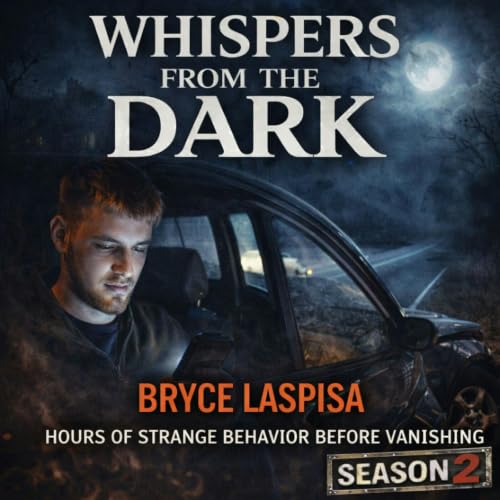
  • 63: WHISPERS FROM THE DARK The Slow Unraveling: The Disappearance of Bryce Laspisa
    2026/05/26
    WHISPERS FROM THE DARK The Slow Unraveling: The Disappearance of Bryce Laspisa Host: Raven Vale | Fuzzy Life Studios He was nineteen years old. He was driving home. His mother was on the phone with him. And for hours — while she listened, while law enforcement checked on him, while a roadside worker confirmed he seemed fine — Bryce Laspisa sat parked on the side of a California highway, not moving, not speaking much, somewhere his mother could hear but couldn't reach. Then, just after 2 AM on August 30th, 2013, he started driving again. Minutes later, his car went down an embankment near Castaic, California. The car was found. His wallet was there. His phone was there. His belongings were there. Bryce was not. He has never been found. In this episode of Whispers from the Dark, Raven Vale examines a case defined not by a sudden vanishing but by a dissolution — a slow, visible, documented unraveling across hours and weeks that no one around Bryce was able to interrupt in time. The behavioral signs in the weeks before. The final drive that covered almost no distance in almost no time. The hours of stillness on the side of the road. The controlled descent off the embankment. The belongings left behind. And the hardest question this case asks: what does it mean when someone slips away not in an instant, but one quiet decision at a time? If you or someone you love is struggling, please reach out to the 988 Suicide and Crisis Lifeline by calling or texting 988. Whispers from the Dark explores the unseen forces shaping human experience — psychological, historical, and deeply personal. New episodes drop weekly. Subscribe wherever you listen. Episode Length: ~30–35 minutes Content Advisory: Missing persons case, discussion of mental health crisis, suicidal ideation warning signs, substance use — content suitable for mature audiences. If you are personally struggling, please contact the 988 Suicide and Crisis Lifeline. Series: Whispers from the Dark | Fuzzy Life Studios His mother was on the phone. He said he was fine. Then he drove off an embankment and walked away into the dark. Bryce Laspisa has never been found. Bryce Laspisa disappearance Bryce Laspisa missing California Bryce Laspisa Castaic crash Bryce Laspisa what happened missing college student California 2013 Bryce Laspisa found Bryce Laspisa case update California missing persons cold case mental health crisis missing person what happened to Bryce Laspisa in 2013 Bryce Laspisa car crash Lake Hughes Road Castaic why did Bryce Laspisa sit on the highway for hours Bryce Laspisa behavioral signs before disappearance Bryce Laspisa voluntary disappearance or foul play mental health warning signs in missing persons cases Bryce Laspisa mother Karen phone call night he disappeared giving away possessions warning sign suicidal ideation California college student missing found abandoned car whispers from the dark Bryce Laspisa podcast episode #WhispersFromTheDark #BryceLaspisa #MissingPersons #ColdCase #Castaic #California #MentalHealthAwareness #TrueCrime #UnsolvedMystery #RavenVale #FuzzyLifeStudios #ColdCasePodcast #NeverFound #TrueCrimePodcast #988 What happened to Bryce Laspisa? Bryce Laspisa, a 19-year-old student at Sierra College in Rocklin, California, disappeared on the night of August 29–30, 2013. He was driving from Rocklin to his parents' home in Laguna Niguel, Orange County, when he stopped on the side of a highway near Castaic for several hours. At approximately 2:20 AM on August 30th, his car went down an embankment on Lake Hughes Road. His wallet, phone, and belongings were found in the car. Bryce was not at the scene. He has never been found. His case remains an open missing persons investigation. Why did Bryce Laspisa stop on the highway for hours? Bryce Laspisa's hours of stillness on the side of the highway near Castaic have never been definitively explained. His mother Karen remained on the phone with him throughout much of this period and noticed his voice was flat and detached. A California Highway Patrol officer checked on him and found him coherent. A roadside assistance worker also made contact and reported no obvious distress. In the weeks leading up to the drive, Bryce had been exhibiting behavioral changes consistent with mental health crisis, including giving away possessions, social withdrawal, irregular sleep, and combining alcohol with prescription medication. Was Bryce Laspisa's car crash an accident? The physical evidence at the crash scene — damage consistent with a low-speed controlled descent rather than a high-speed loss of control — has led many investigators and case followers to conclude that the car going off the embankment was not a conventional accident. The vehicle was drivable-off rather than crashed-into. No serious blood evidence indicated life-threatening injury from the impact. His belongings, including wallet and phone, were left behind in the car. The specific circumstances have fueled ...
    続きを読む 一部表示
    37 分
  • 62: WHISPERS FROM THE DARK The Door That Didn't Exist: The Disappearance of Brian Shaffer
    2026/05/19
    WHISPERS FROM THE DARK The Door That Didn't Exist: The Disappearance of Brian Shaffer Host: Raven Vale | Fuzzy Life Studios On the night of April 1st, 2006, a 27-year-old Ohio State medical student named Brian Shaffer walked into a bar in Columbus, Ohio. A security camera captured him at the entrance. He paused. He smiled at two women nearby. He walked through the door. He was never seen again. Every other person who entered the Ugly Tuna Saloona that night was captured on footage leaving. Every one. Except Brian. No exit. No second sighting. No confirmed trace of any kind in the nearly two decades since. In this episode of Whispers from the Dark, Raven Vale examines one of the most documented and least explained disappearances in modern missing persons history. A case where we have the before — clear, recorded, verified — and a complete absence where the after should be. Was Brian's disappearance voluntary? Was he processing the grief of losing his mother just two weeks earlier in a way no one around him could see? Did he leave through a construction entrance the primary camera didn't cover and walk into something that left no trace? Or is there something about the specific way this case refuses to resolve that points toward an answer none of the available categories accommodate cleanly? Brian's father Rich spent two years searching before he died without finding his son. The footage still plays. The question still stands. Whispers from the Dark explores the unseen forces shaping human experience — psychological, historical, and deeply personal. New episodes drop weekly. Subscribe wherever you listen. Episode Length: ~30–35 minutes Content Advisory: Missing persons case, discussion of potential foul play and voluntary disappearance, content suitable for mature audiences Series: Whispers from the Dark | Fuzzy Life Studios 3. SHORT DESCRIPTION (150 characters — Platform Teasers / Cards) Use for: Spotify card text, Apple Podcasts subtitle, social preview He walked into a bar in Columbus. The camera caught him going in. It never caught him coming out. Nearly 20 years later, Brian Shaffer has never been found. Brian Shaffer disappearance Brian Shaffer missing Columbus Ohio Ugly Tuna Saloona surveillance footage Brian Shaffer what happened Brian Shaffer case solved Ohio State medical student missing Brian Shaffer 2006 cold case missing persons surveillance camera Columbus Ohio cold case what happened to Brian Shaffer in Columbus Ohio Brian Shaffer Ugly Tuna surveillance footage explained why was Brian Shaffer never found after entering bar Brian Shaffer voluntary disappearance theory Brian Shaffer foul play theory evidence did Brian Shaffer leave through a construction exit Brian Shaffer father Rich Shaffer death cell phone ping Brian Shaffer case Ohio State medical student disappeared bar 2006 whispers from the dark Brian Shaffer podcast episode #WhispersFromTheDark #BrianShaffer #ColdCase #MissingPersons #UglyTuna #ColumbusOhio #SurveillanceFootage #TrueCrime #UnsolvedMystery #RavenVale #FuzzyLifeStudios #ColdCasePodcast #NeverFound #TrueCrimePodcast #OhioStateMissing What happened to Brian Shaffer? Brian Shaffer, a 27-year-old Ohio State University medical student, disappeared on the night of April 1–2, 2006, in Columbus, Ohio. He was last seen on surveillance footage entering the Ugly Tuna Saloona bar on High Street at approximately 1:55 AM. He was never recorded leaving. No confirmed sighting of him has been established since that night. His father Rich Shaffer, who spent two years searching for him, died in 2008. Brian's remains have never been found. The case remains officially open as a missing persons investigation. What does the Ugly Tuna surveillance footage show? The Ugly Tuna Saloona surveillance footage shows Brian Shaffer approaching the bar entrance at approximately 1:55 AM on April 2, 2006. He pauses briefly near two women at the entrance, exchanges a few words, appears relaxed and unremarkable, and then walks through the door. He does not appear on the footage again. Every other patron who entered the bar that night can be accounted for on the exit footage. Brian cannot. The footage has been reviewed extensively by law enforcement and independently by online investigative communities and has never been made to yield a subsequent sighting. How did Brian Shaffer disappear without being seen leaving? The most structurally supported explanation is that the Ugly Tuna Saloona building, which was partially under construction in 2006, contained one or more exits not covered by the primary security camera. Investigators identified the possibility of a service or construction access point through which Brian could have left without appearing on the main entrance footage. This remains unconfirmed. No one witnessed Brian exiting through any alternate route, and no subsequent camera in the Columbus area captured him after he entered the bar. Did Brian Shaffer voluntarily disappear? ...
    続きを読む 一部表示
    37 分
  • 61: WHISPERS FROM THE DARK - The Last Call in the Dark: What Happened to Brandon Lawson?
    2026/05/12
    WHISPERS FROM THE DARK Episode: The Last Call in the Dark: What Happened to Brandon Lawson? Host: Raven Vale | Fuzzy Life Studios On the night of August 8th, 2013, a 26-year-old man named Brandon Lawson left his home in San Angelo, Texas after an argument. His truck ran out of gas on Highway 277 near Bronte. He called his brother for help. And then he called 911. The call lasted one minute and forty-nine seconds. In it, Brandon described being chased into the woods, men pursuing him, someone bleeding, someone passed out. His words fragmented and circled. The dispatcher tried to follow. Brandon's brother Kyle was already driving toward him. By the time Kyle arrived, the truck was there. Both doors open. Engine off. Brandon's phone rang when Kyle called it — somewhere in the brush off the shoulder of the road. But Brandon was gone. He has never been found. In this episode of Whispers from the Dark, Raven Vale examines one of the most haunting missing persons cases in modern history — a case that centers not on a crime scene or a confirmed suspect, but on a single recording. One hundred and nine seconds of a man trying to describe something that was happening to him in real time. Something he was never able to finish describing. What was Brandon experiencing that night? Was there a genuine external threat — people in those fields, a confrontation that left no trace? Was a medical crisis turning his perception against him? Was it something else entirely? More than a decade later, the questions remain exactly where they were the night Brandon Lawson walked off Highway 277 and did not come back. Whispers from the Dark explores the unseen forces shaping human experience — psychological, historical, and deeply personal. New episodes drop weekly. Subscribe wherever you listen. Episode Length: ~30–35 minutes Content Advisory: Missing persons case, discussion of potential foul play and medical crisis, content suitable for mature audiences Series: Whispers from the Dark | Fuzzy Life Studios He called 911 from a dark Texas highway. One minute and forty-nine seconds. Then he was gone. Raven Vale on the Brandon Lawson case — still unsolved after a decade. Brandon Lawson missing Brandon Lawson 911 call Brandon Lawson disappearance Brandon Lawson Highway 277 unsolved missing persons Texas Brandon Lawson what happened Brandon Lawson case explained Texas missing persons cold case mysterious disappearance podcast what happened to Brandon Lawson on Highway 277 Brandon Lawson 911 call transcript and analysis Brandon Lawson missing person case unsolved 2013 what did Brandon Lawson say on the 911 call was Brandon Lawson a victim of foul play Brandon Lawson medical crisis theory explained Kyle Lawson brother missing persons search Texas cold case missing persons podcast whispers from the dark why was Brandon Lawson never found Bronte Texas missing man 2013 unsolved case #WhispersFromTheDark #BrandonLawson #MissingPersons #ColdCase #911Call #UnsolvedMystery #TrueCrime #DarkPsychology #RavenVale #FuzzyLifeStudios #TexasMissingPerson #Highway277 #ColdCasePodcast #TrueCrimePodcast #NeverFound What happened to Brandon Lawson? Brandon Lawson, a 26-year-old father of four from San Angelo, Texas, disappeared on the night of August 8–9, 2013, after his truck ran out of gas on State Highway 277 near Bronte, Texas. He made a fragmented and difficult-to-understand 911 call describing being chased and pursued before going silent. When his brother Kyle arrived at the scene, Brandon's truck was found abandoned with both doors open, but Brandon was nowhere to be found. Despite extensive searches by family and law enforcement, he has never been located. His case remains officially classified as a missing persons case. What did Brandon Lawson say on his 911 call? Brandon Lawson's 911 call, logged at approximately 12:57 AM on August 9, 2013, lasted one minute and forty-nine seconds. In the call, Brandon identified himself and attempted to give his location. His speech was fragmented and difficult to follow. He described being in the middle of a field, said he had been chased into the woods, referenced men pursuing him, mentioned someone bleeding, and mentioned a person who was passed out. The dispatcher repeatedly attempted to clarify his location and situation. The call ended without resolution. The audio has been analyzed extensively, but its meaning remains disputed. Was Brandon Lawson the victim of foul play? No definitive determination has been made. Brandon Lawson's case remains an open missing persons investigation. The foul play theory holds that Brandon encountered one or more individuals on or near Highway 277 and that his 911 call was an accurate description of a real external threat. Supporters point to the genuine urgency in his voice and specific details in the call. However, no physical evidence of foul play has been publicly confirmed, no person of interest has been identified by law enforcement, and no remains have...
    続きを読む 一部表示
    39 分
  • 60: WHISPERS FROM THE DARK The Loneliness Algorithm: How Isolation Is Quietly Engineered
    2026/05/05
    WHISPERS FROM THE DARK Episode: The Loneliness Algorithm: How Isolation Is Quietly Engineered Host: Raven Vale | Fuzzy Life Studios There are more people alive today than at any point in human history. More communication. More access to each other than any civilization before us could have imagined. And yet people have never felt more alone. In this episode of Whispers from the Dark, Raven Vale examines the architecture behind the loneliness epidemic — and asks the question most conversations carefully avoid: is this an accident, or is it the design? From the moment social media shifted human behavior from being with people to broadcasting to them, something essential began to erode. The skills of genuine intimacy. The tolerance for unmanaged presence. The willingness to sit in a room with another person without an agenda or an audience. What replaced those things was something efficient, scalable, and extraordinarily profitable — a simulation of connection calibrated not to satisfy the human need for belonging, but to keep the need just unsatisfied enough to ensure you keep returning. Raven Vale traces the full mechanism: the engagement algorithm that optimizes for outrage and anxiety over genuine connection, the filter bubble that slowly makes difference feel like threat, the internal research that platforms buried rather than acted on, the biological consequences of chronic loneliness that rival fifteen cigarettes a day, and the quiet disappearance of the third places where community actually formed. This episode does not end in despair. It ends in something more useful — a clear-eyed understanding of the system, and a direction back toward what it replaced. Whispers from the Dark explores the unseen forces shaping human behavior — psychological, historical, philosophical. New episodes drop weekly. Subscribe wherever you listen. Episode Length: ~30–35 minutes Content Advisory: Psychological themes, discussion of social media, mental health, and institutional behavior Series: Whispers from the Dark | Fuzzy Life Studios More connected than ever. More alone than ever. Raven Vale examines the algorithm quietly engineering your isolation — and whether it was ever really an accident. loneliness epidemic social media algorithm and isolation attention economy mental health filter bubble psychology social comparison and depression third places decline engineered loneliness why does social media make you feel more alone how the attention economy profits from loneliness the psychology of social comparison on social media why people feel isolated despite being constantly connected how algorithms create filter bubbles and division the decline of third places and community connection social media engagement loop and mental health effects is loneliness engineered by social media platforms how digital connection replaced genuine human presence whispers from the dark psychology podcast Raven Vale #WhispersFromTheDark #LonelinessEpidemic #SocialMediaPsychology #AttentionEconomy #FilterBubble #DarkPsychology #RavenVale #FuzzyLifeStudios #MentalHealth #EngineeredIsolation #ThirdPlaces #HumanConnection #SocialComparison #PsychologyPodcast #DigitalWellbeing Why does social media make people feel lonely? Social media produces loneliness through several compounding mechanisms. It replaces the depth of genuine human presence with the performance of connection — shifting people from being with others to broadcasting to them. Algorithms optimize for emotional engagement rather than genuine connection, prioritizing content that triggers outrage, anxiety, and insecurity because those emotions produce more sustained attention. Filter bubbles gradually eliminate exposure to difference, eroding the capacity for genuine empathy and deepening social division. And the social comparison inherent in digital platforms — where every user is measured against a global highlight reel of curated excellence — generates a persistent background sense of inadequacy that chronic, low-level loneliness feeds on. Is the loneliness epidemic caused by social media? Research consistently links increased social media use with elevated rates of loneliness, anxiety, and depression, particularly among young adults and teenagers. Internal research conducted by major social platforms has reportedly documented these correlations, though that research has not always been acted upon. The relationship is structural rather than incidental: platforms are designed to maximize engagement, and the emotional states most effective at producing engagement — outrage, insecurity, social comparison — are also the states most correlated with social isolation. The loneliness epidemic cannot be attributed solely to social media, but the architecture of digital platforms has accelerated and deepened a trend already in motion. What is the attention economy and how does it affect mental health? The attention economy is the commercial model in which digital ...
    続きを読む 一部表示
    42 分
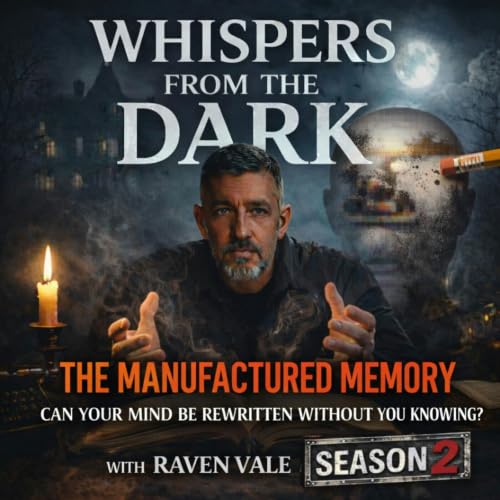
  • 59: The Manufactured Memory: Can Your Mind Be Rewritten Without You Knowing?
    2026/04/28
    WHISPERS FROM THE DARK Episode: The Manufactured Memory: Can Your Mind Be Rewritten Without You Knowing? Host: Raven Vale | Fuzzy Life Studios Think about your earliest memory. Hold it. Now ask yourself — how do you know it's real? Not that it feels real. Not that you believe it. That it actually happened the way you remember it. In this episode of Whispers from the Dark, Raven Vale examines one of the most unsettling findings in the history of psychology: that human memory is not a recording. It is a reconstruction. And reconstructions can be altered, distorted, and — under the right conditions — built entirely from scratch. In the early 1990s, cognitive psychologist Elizabeth Loftus ran a series of experiments that proved ordinary people could be induced to form vivid, detailed, emotionally convincing memories of events that never happened. Between 20 and 40 percent of participants developed full false memories after simple suggestion, repetition, and emotional reinforcement. When told the truth, many refused to believe it. The memory felt real. To the brain that built it — it was. From Loftus's laboratory to the recovered memory controversy of the 1980s and 90s — where false memories destroyed families and sent innocent people to prison — to declassified government programs that explored psychological conditioning, to the algorithm-driven information architecture of the modern world, this episode traces the full arc of what happens when the mechanism of memory is understood not just as a curiosity… But as a tool. Memory is the foundation of identity. It is the ground beneath everything you believe about who you are and what happened to you. This episode asks what it means to live on ground that can be quietly rearranged. Whispers from the Dark explores the unseen forces shaping human behavior — psychological, historical, philosophical. New episodes drop weekly. Subscribe wherever you listen. Episode Length: ~30–35 minutes Content Advisory: Psychological themes, discussion of false memory, institutional manipulation Series: Whispers from the Dark | Fuzzy Life Studios Your memory isn't a recording. It's a reconstruction. And reconstructions can be rewritten. Raven Vale on the science — and the danger — of manufactured memory. Elizabeth Loftus false memories can memories be implanted how memory is reconstructed recovered memory controversy memory manipulation psychology eyewitness testimony reliability manufactured memory dark psychology podcast can you implant a false memory in someone's mind how did Elizabeth Loftus prove false memories exist why eyewitness testimony is unreliable psychology recovered memory therapy and false memory syndrome how algorithms manipulate memory and belief what is the difference between a real and false memory psychology podcast about memory and identity can your past be rewritten without you knowing how does suggestion create false memories in the brain whispers from the dark psychology podcast Raven Vale #WhispersFromTheDark #FalseMemory #ElizabethLoftus #MemoryPsychology #ManufacturedMemory #DarkPsychology #RavenVale #FuzzyLifeStudios #CognitivePsychology #PsychologyPodcast #MindControl #MemoryManipulation #TruePsychology #HumanNature #WhoAmI Yes. Research by cognitive psychologist Elizabeth Loftus demonstrated that false memories can be reliably induced in a significant percentage of people through suggestion, repetition, emotional reinforcement, and the framing of a trusted authority. In her landmark studies, between 20 and 40 percent of participants developed fully formed, emotionally convincing memories of events — including being lost in a shopping mall as a child — that had never occurred. Many participants continued to insist the memories were real even after being told they were fabricated. Neurologically, there is no reliable internal difference. The brain does not tag memories as true or false — it tags them as familiar. False memories, once formed, exhibit the same emotional weight, sensory detail, and subjective certainty as genuine recollections. Confidence in a memory has been shown repeatedly to have almost no relationship to its accuracy. The primary distinction between real and false memories is external — it lies in whether the event occurred, not in how the memory feels from the inside. During the 1980s and 1990s, certain therapeutic practices encouraged patients to retrieve repressed memories of trauma through suggestion, hypnosis, and guided visualization. While genuine trauma can affect memory encoding and retrieval, research later demonstrated that many of the "recovered" memories produced in these sessions were false — constructed through the same mechanisms of suggestion and repetition documented in false memory research. In a number of cases, these false memories were used as the basis for criminal accusations, resulting in destroyed families and wrongful imprisonments. The controversy led to significant ...
    続きを読む 一部表示
    44 分