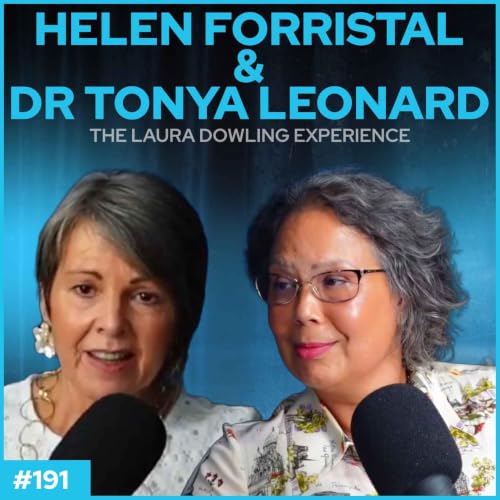
『What Advanced Breast Cancer Really Looks Like with Helen Forristal & Dr Tonya Leonard #191』のカバーアート

What Advanced Breast Cancer Really Looks Like with Helen Forristal & Dr Tonya Leonard #191

What Advanced Breast Cancer Really Looks Like with Helen Forristal & Dr Tonya Leonard #191

無料で聴く

ポッドキャストの詳細を見る

【Amazonプライム会員限定】今ならプレミアムプランが4か月 月額99円。

10月19日まで。※適用条件あり
#AD - This episode is sponsored by AstraZenecaDr Tonya Leonard was a GP when she found a lump she was sure was a cyst. By half past nine that morning, she was being told it was breast cancer and asked to decide by the following week whether she had finished her family. Her twin boys were just 18 months old.Sixteen years, a second primary cancer and a diagnosis of advanced breast cancer later, Tonya joins Laura alongside Helen Forristal, Director of Nursing Services at the Marie Keating Foundation, for an honest conversation about living with advanced breast cancer.They discuss metastatic or secondary breast cancer, breast cancer recurrence and the signs and symptoms women should be aware of, alongside treatment, scans, scanxiety, cancer fatigue and the difficulty of planning life beyond the next result.Helen explains why advanced breast cancer remains largely invisible in Ireland, with no official count of how many women are living with it, and discusses the importance of specialist cancer support. Tonya shares the reality of living life in three-month segments, navigating mental health after diagnosis and learning that palliative care does not only mean end-of-life care.The conversation is part of Living Loudly, Dying to be Heard, a campaign by AstraZeneca and supported by the Marie Keating Foundation, highlighting the experiences of people living with advanced breast cancer.🔑 Key PointsAdvanced breast cancer means it has spreadThe cancer has moved from the breast to another organ; in Tonya's case, to lesions on her lung and under her arm.Life in three-month segmentsWith a scan every three months, Tonya finds it hard to plan past the next result, the anxiety Laura calls scanxiety.Fatigue is not the same as tirednessTonya describes cancer fatigue as like an injection of horse tranquilliser: once she feels it rising, she has minutes to lie down.Women are living longer with itHelen calls it the long middle, moving through lines of treatment; one woman in her group has lived with advanced breast cancer for 21 years.Nobody is countingRecurrences aren't recorded the way first diagnoses are; Helen's estimate is around 30% of women with primary breast cancer, and a University of Limerick project has started counting.Know the signs of a recurrenceSymptoms depend on where it spreads, from a cough and breathlessness to weight change or bone pain; if something hasn't settled in three weeks, ask your doctor, "Could this be cancer?"Mental health support needs to be specialistTonya waited eight weeks to see a psychologist; psycho-oncology services now run in Ireland's eight cancer centres.Palliative care is not only for the end of lifePalliative teams help manage symptoms and support families, and the CLIMB programme supports children aged 5 to 12 who have a parent with cancer.📚 ResourcesLiving Loudly. Dying to be HeardA campaign by AstraZeneca and supported by the Marie Keating FoundationPositive LivingThe Marie Keating Foundation's support programme for people with advanced cancerCLIMBThe HSE programme for children aged 5 to 12 affected by a parent's cancer⏱️ Timestamps00:00 — Welcome01:52 — Helen Forristal and the Marie Keating Foundation02:51 — Dr Tonya Leonard’s breast cancer diagnosis06:21 — Advanced cancer support and Positive Living09:28 — Scanxiety and living between results12:08 — Living longer with advanced breast cancer17:14 — Cancer fatigue22:58 — Fertility and “Have you finished your family?”29:17 — How many women are living with advanced breast cancer?30:41 — Signs and symptoms of recurrence37:57 — Mental health and psycho-oncology46:45 — What palliative care really means51:40 — Family, milestones and living with uncertainty56:28 — Advice for young peopleThanks for listening! You can watch the full episode on YouTube here. Don’t forget to follow The Laura Dowling Experience podcast on Instagram @lauradowlingexperience for updates and more information. You can also follow our host, Laura Dowling, @fabulouspharmacist for more insights and tips. If you enjoyed this episode, please subscribe and leave a review—it really helps us out! Stay tuned for more great conversations. Hosted on Acast. See acast.com/privacy for more information.
adbl_web_anon_alc_button_suppression_t1
まだレビューはありません