エピソード

  • Shemot - Ki Tisa (Exodus 30:11–34:35)
    2026/03/01

    All recordings are created by copying Sefaria using the Kehot Chumash from Chabad english translation. The Text to Voice is using English AI... sorry for any weird speech.


    Please note that release schedule is based on the year 5786. Some weeks do not have a Parsha. You can always look up the current Parsha ⁠Here⁠.


    If you like the recording please consider donating to ⁠⁠⁠⁠Chabad⁠⁠⁠⁠ to help continue their effort to make resources like this more accessible to the Jewish population!


    Shemot
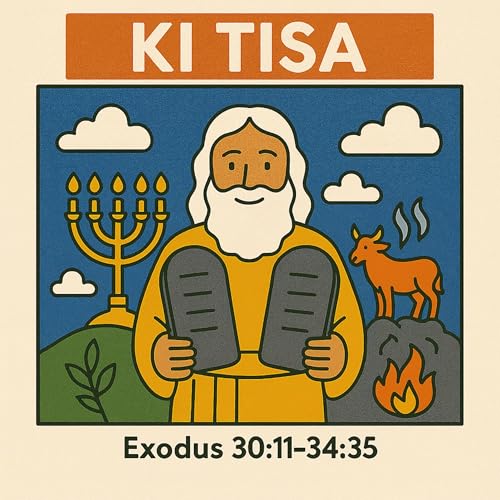
    Ki Tisa (Exodus 30:11–34:35)

    A census is taken by each Israelite giving a half-shekel “ransom,” warding off plague and supporting the sanctuary. Instructions follow for the copper basin, the unique anointing oil and incense (not to be replicated), and the appointment of Bezalel and Oholiav—artisans “filled with the spirit of God” to craft the Mishkan. Shabbat is sealed as an eternal sign between God and Israel. Meanwhile, at the mountain’s foot, the people press Aaron, who fashions a golden calf; revelry erupts. Moses descends with the tablets, shatters them upon seeing the sin, burns the calf, and confronts Aaron. The Levites rally to Moses—judgment falls, and a plague strikes the camp.

    Moses intercedes with breathtaking courage—“Erase me from Your book if You will not forgive them”—and God agrees to continue with the people. In a tent outside the camp, the cloud descends and God speaks with Moses “as one speaks to a friend.” Moses pleads, “Show me Your glory,” and God shelters him in the cleft of a rock, proclaiming the Thirteen Attributes of Mercy. New tablets are carved; the covenant is renewed with core terms against idolatry and with rhythms of time—firstborn, festivals, and Shabbat. Moses returns radiant, his face shining so brightly that he wears a veil when speaking to the people. Themes to listen for: leadership that breaks and rebuilds, the danger of impatience and the lure of substitutes, holiness guarded by boundaries, artistry as sacred service, mercy stronger than failure, and second chances carved in stone.

    続きを読む 一部表示
    50 分
  • Shemot - Tetzaveh (Exodus 27:20–30:10)
    2026/02/22

    All recordings are created by copying Sefaria using the Kehot Chumash from Chabad english translation. The Text to Voice is using English AI... sorry for any weird speech.


    Please note that release schedule is based on the year 5786. Some weeks do not have a Parsha. You can always look up the current Parsha ⁠Here⁠.


    If you like the recording please consider donating to ⁠⁠⁠⁠Chabad⁠⁠⁠⁠ to help continue their effort to make resources like this more accessible to the Jewish population!


    Shemot
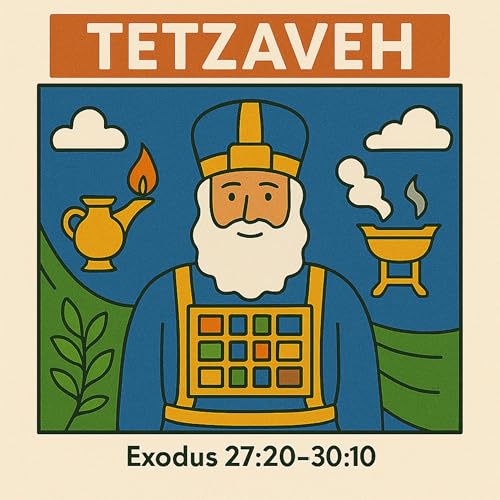
    Tetzaveh (Exodus 27:20–30:10)

    Pure olive oil keeps the menorah’s light burning “from evening to morning,” and Moses is told to appoint Aaron and his sons as priests. Their garments are described in rich detail: the ephod woven of gold, blue, purple, crimson, and fine linen; onyx shoulder-stones engraved with the tribes; the choshen (breastplate) set with twelve precious stones and the Urim and Tumim; the blue me’il (robe) trimmed with pomegranates and bells; the tunic, sash, and headdress; and the golden tzitz inscribed “Holy to the Lord.” Through beauty and precision, clothing becomes vocation—bearing Israel before God.

    A seven-day consecration follows: washing, dressing, anointing, and offerings—a bull as sin offering, two rams (one as burnt offering, one for ordination), with blood placed on the right ear, thumb, and big toe of the priests, and portions waved before God. The daily tamid—two lambs, morning and twilight, with grain and wine—establishes continual service, as God promises to dwell among Israel. The portion concludes with the golden altar of incense, placed before the curtain, where aromatic incense is offered each morning and evening, with an annual atonement upon its horns. Notably, Moses’ name never appears in Tetzaveh; the commands address him as “you,” centering the priestly role and the community’s ongoing service. Themes to listen for: holiness woven into craft, constancy in daily worship, leadership clothed in responsibility, and sacred presence sustained by steady light and fragrance.

    続きを読む 一部表示
    35 分
  • Shemot - Terumah (Exodus 25:1–27:19)
    2026/02/15

    All recordings are created by copying Sefaria using the Kehot Chumash from Chabad english translation. The Text to Voice is using English AI... sorry for any weird speech.


    Please note that release schedule is based on the year 5786. Some weeks do not have a Parsha. You can always look up the current Parsha ⁠Here⁠.


    If you like the recording please consider donating to ⁠⁠⁠⁠Chabad⁠⁠⁠⁠ to help continue their effort to make resources like this more accessible to the Jewish population!


    Shemot
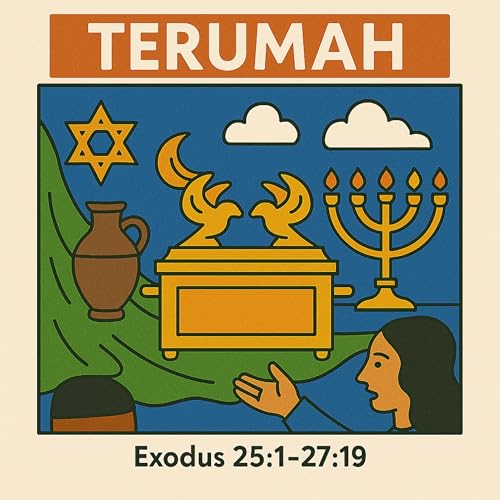
    Terumah (Exodus 25:1–27:19)

    God invites the people to bring freewill gifts—gold and silver, yarns of blue, purple, and crimson, fine linen and skins, wood and oil—so a sanctuary can be made “that I may dwell among them.” What follows is a detailed blueprint for the Mishkan, a portable meeting place where heaven touches earth. At its heart stands the Ark of the Covenant, overlaid with gold, with cherubim facing one another above the cover; there, between the wings, God’s voice will meet Moses. The table holds the bread of presence, signaling a continual offering of sustenance, and the seven-branched menorah is hammered from a single piece of pure gold, its cups shaped like almond blossoms to cast light inward.

    The portion then steps outward from holy core to holy space: curtains of fine linen embroidered with cherubim, layered coverings, and upright acacia boards fitted with silver sockets form the Tabernacle’s structure. A richly woven veil separates the Holy of Holies from the Holy, and a screen at the entrance marks the threshold. Finally, the bronze altar for burnt offerings, with its grating and horns, stands in the courtyard surrounded by linen hangings and pillars. Terumah shows holiness built from generous hearts and careful craftsmanship—beauty, order, and precise measurements turning everyday materials into a dwelling for the Divine. Themes to listen for: giving that becomes presence, light that reveals sacred work, and a holiness that radiates from the innermost center out into the camp.

    続きを読む 一部表示
    37 分
  • Shemot - Mishpatim (Exodus 21:1–24:18)
    2026/02/08

    All recordings are created by copying Sefaria using the Kehot Chumash from Chabad english translation. The Text to Voice is using English AI... sorry for any weird speech.


    Please note that release schedule is based on the year 5786. Some weeks do not have a Parsha. You can always look up the current Parsha ⁠Here⁠.


    If you like the recording please consider donating to ⁠⁠⁠⁠Chabad⁠⁠⁠⁠ to help continue their effort to make resources like this more accessible to the Jewish population!


    Shemot
    Mishpatim (Exodus 21:1–24:18)

    Fresh from Sinai’s revelation, Israel receives a detailed civil and moral code that brings holiness into daily life. Laws address the treatment and release of the Hebrew bondsman; protections for the vulnerable; penalties for injury, theft, and negligence (including the goring ox and unsafe property); responsibilities of lenders and guardians; and the demand for truthful testimony and fair courts. The text insists on justice with compassion: do not oppress the stranger, widow, or orphan; return lost property; refuse bribes; give workers rest on Shabbat; let the land rest in the seventh year so the poor and animals may eat. Ritual rhythms also take shape: first fruits, prohibitions against idolatry and sorcery, the command not to cook a kid in its mother’s milk, and the three pilgrimage festivals—Pesach, Shavuot, and Sukkot.

    God promises an angel to lead Israel to the land if they heed His voice and dismantle idolatry. The covenant is then formally sealed: Moses writes the “Book of the Covenant,” builds an altar with twelve pillars, and young men offer sacrifices. The people respond, “We will do and we will hear,” as Moses sprinkles the blood of the covenant upon the altar and the people. Moses, Aaron, Nadav, Avihu, and seventy elders ascend, behold a vision of the Divine, and eat and drink. Finally, Moses climbs into the cloud atop Sinai for forty days and nights to receive the tablets and further instruction. Themes to listen for: justice that protects the powerless, responsibility for harm even without intent, sacred time as social equality, and a covenant embraced first by action and then by understanding.

    続きを読む 一部表示
    59 分
  • Shemot - Yitro (Exodus 18:1–20:23)
    2026/02/01

    All recordings are created by copying Sefaria using the Kehot Chumash from Chabad english translation. The Text to Voice is using English AI... sorry for any weird speech.


    If you like the recording please consider donating to ⁠Chabad⁠ to help continue their effort to make resources like this more accessible to the Jewish population!


    Shemot
    Yitro (Exodus 18:1–20:23)

    Jethro (Yitro), Moses’ father-in-law and priest of Midian, arrives in the wilderness with Zipporah and Moses’ sons after hearing how God rescued Israel. He rejoices, offers sacrifices, and then observes Moses judging the people alone from morning to evening. Jethro counsels a sustainable system: teach the laws and appoint capable, God-fearing judges over thousands, hundreds, fifties, and tens—leaders who handle routine disputes while Moses addresses the hardest cases. Strengthened by delegated justice, Moses sends Jethro home in peace.

    In the third month, Israel encamps before Mount Sinai. God offers a covenantal identity: “You have seen what I did to Egypt… I bore you on eagles’ wings… you shall be to Me a kingdom of priests and a holy nation.” The people answer, “All that the Lord has spoken we will do.” After days of preparation and setting boundaries around the mountain, thunder, lightning, a dense cloud, and the shofar’s blast announce the revelation. God speaks the Ten Commandments: exclusive loyalty to God, the prohibition of idols, honoring God’s Name, Shabbat rest, honoring parents, and bans on murder, adultery, theft, false testimony, and coveting. Overwhelmed, the people stand at a distance while Moses draws near. The portion concludes with instructions for a simple earthen altar—no hewn stone, no steps—signaling that holiness depends not on grandeur but on faithful approach. Themes to listen for: leadership through shared responsibility, freedom anchored by law, and a nation formed not just by escape from Egypt but by a calling at Sinai.

    続きを読む 一部表示
    39 分
  • Shemot - Beshalach (Exodus 13:17–17:16)
    2026/01/25

    All recordings are created by copying Sefaria using the Kehot Chumash from Chabad english translation. The Text to Voice is using English AI... sorry for any weird speech.


    Please note that release schedule is based on the year 5786. Some weeks do not have a Parsha. You can always look up the current Parsha ⁠Here⁠.


    If you like the recording please consider donating to ⁠⁠⁠⁠Chabad⁠⁠⁠⁠ to help continue their effort to make resources like this more accessible to the Jewish population!


    Shemot
    Beshalach (Exodus 13:17–17:16)

    Israel marches out at last, guided by a pillar of cloud by day and fire by night, carrying Joseph’s bones and taking a longer route to avoid immediate war. Pharaoh gives chase; the people panic at the sea—until God parts the waters, Israel crosses on dry land, and the Egyptian chariots are swept away. On the far shore, Moses leads the Song at the Sea, while Miriam and the women answer with timbrels and dance, turning survival into praise and memory.

    Freedom brings its first tests in the wilderness. Bitter water at Marah is sweetened; at Elim, palms and springs offer respite. Manna and quail teach daily trust and the rhythm of Shabbat, with a double portion before the seventh day and none falling on it. At Rephidim, water flows from the rock amid doubt—Massah and Merivah—then Amalek attacks: Joshua fights in the valley while Moses, supported by Aaron and Hur, lifts his hands until victory. Themes to listen for: fear giving way to faith, song as a weapon against forgetfulness, Shabbat as freedom’s weekly anchor, and the shift from rescued slaves to a people learning covenantal responsibility.

    続きを読む 一部表示
    50 分
  • Shemot - Bo (Exodus 10:1–13:16)
    2026/01/18

    All recordings are created by copying Sefaria using the Kehot Chumash from Chabad english translation. The Text to Voice is using English AI... sorry for any weird speech.


    Please note that release schedule is based on the year 5786. Some weeks do not have a Parsha. You can always look up the current Parsha ⁠Here⁠.


    If you like the recording please consider donating to ⁠⁠⁠⁠Chabad⁠⁠⁠⁠ to help continue their effort to make resources like this more accessible to the Jewish population!


    Shemot
    Bo (Exodus 10:1–13:16)

    Three final plagues break Egypt’s will. Locusts devour what hail spared; a palpable darkness falls for three days; and at midnight the firstborn die—judgment against Egypt’s gods and Pharaoh’s stubbornness. In the midst of dread, God inaugurates hope: this month becomes the first of the year; each household sets aside a lamb, slaughters it at twilight, marks doorposts with blood, and eats the meat with matzah and bitter herbs—ready to move, belts fastened and staffs in hand. Staying indoors as the destroyer passes, Israel is spared. Cries rise in Egypt; Pharaoh drives them out; a “mixed multitude” joins, and Israel departs in haste with dough not yet leavened.

    Bo establishes Passover as a story to be told across generations and a practice to be lived: removing chametz, eating matzah for seven days, and excluding outsiders from the korban unless they join the covenant. The portion closes with sanctifying every firstborn to God and binding memory to the body—“as a sign on your hand and as a remembrance between your eyes”—so that liberation is never merely recalled but worn, spoken, and taught. Themes to listen for: stubbornness that blinds vs. ritual that opens eyes, time reshaped by redemption, the home as a sanctuary of faith, and how memory becomes freedom’s nightly bread.

    続きを読む 一部表示
    48 分
  • Shemot - Va'era (Exodus 6:2–9:35)
    2026/01/11

    All recordings are created by copying Sefaria using the Kehot Chumash from Chabad english translation. The Text to Voice is using English AI... sorry for any weird speech.


    Please note that release schedule is based on the year 5786. Some weeks do not have a Parsha. You can always look up the current Parsha ⁠Here⁠.


    If you like the recording please consider donating to ⁠⁠⁠⁠Chabad⁠⁠⁠⁠ to help continue their effort to make resources like this more accessible to the Jewish population!


    Shemot
    Va'era (Exodus 6:2–9:35)

    God reveals Himself to Moses with a deeper Name and a fourfold promise of redemption—“I will bring out, save, redeem, and take you as My people”—and pledges the land sworn to the patriarchs. The people, crushed by labor and “shortness of spirit,” struggle to hope. A brief genealogy situates Moses and Aaron within the tribe of Levi, then the mission resumes: they confront Pharaoh, Aaron’s staff becomes a serpent that swallows the magicians’ staffs, and the first seven plagues begin.

    The Nile turns to blood; frogs swarm the land; dust becomes lice that the magicians cannot replicate. With the fourth plague, swarms strike Egypt while Goshen is spared—God now “sets a distinction.” A devastating pestilence kills Egyptian livestock; boils afflict people and animals; and hail—thunder, fire, and ice—shatters crops and trees. Each time, Pharaoh’s heart hardens (or is hardened), mercy flares and then recedes, and the demand remains unchanged: “Let My people go that they may serve Me.” Themes to listen for: the power of God’s Name as faithful presence, hope rekindled under oppression, the unraveling of a false god (the Nile) and an empire’s control, and how judgment and mercy together prepare the way for freedom.

    続きを読む 一部表示
    37 分