

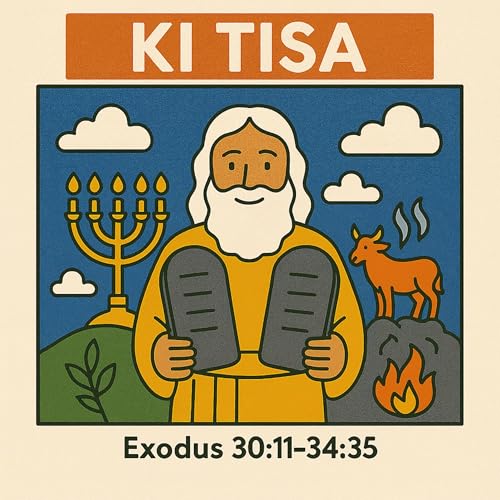
Shemot - Ki Tisa (Exodus 30:11–34:35)
カートのアイテムが多すぎます
カートに追加できませんでした。
ウィッシュリストに追加できませんでした。
ほしい物リストの削除に失敗しました。
ポッドキャストのフォローに失敗しました
ポッドキャストのフォロー解除に失敗しました

Shemot - Ki Tisa (Exodus 30:11–34:35)
-
ナレーター:
-
著者:
概要
All recordings are created by copying Sefaria using the Kehot Chumash from Chabad english translation. The Text to Voice is using English AI... sorry for any weird speech.
Please note that release schedule is based on the year 5786. Some weeks do not have a Parsha. You can always look up the current Parsha Here.
If you like the recording please consider donating to Chabad to help continue their effort to make resources like this more accessible to the Jewish population!
Shemot
Ki Tisa (Exodus 30:11–34:35)
A census is taken by each Israelite giving a half-shekel “ransom,” warding off plague and supporting the sanctuary. Instructions follow for the copper basin, the unique anointing oil and incense (not to be replicated), and the appointment of Bezalel and Oholiav—artisans “filled with the spirit of God” to craft the Mishkan. Shabbat is sealed as an eternal sign between God and Israel. Meanwhile, at the mountain’s foot, the people press Aaron, who fashions a golden calf; revelry erupts. Moses descends with the tablets, shatters them upon seeing the sin, burns the calf, and confronts Aaron. The Levites rally to Moses—judgment falls, and a plague strikes the camp.
Moses intercedes with breathtaking courage—“Erase me from Your book if You will not forgive them”—and God agrees to continue with the people. In a tent outside the camp, the cloud descends and God speaks with Moses “as one speaks to a friend.” Moses pleads, “Show me Your glory,” and God shelters him in the cleft of a rock, proclaiming the Thirteen Attributes of Mercy. New tablets are carved; the covenant is renewed with core terms against idolatry and with rhythms of time—firstborn, festivals, and Shabbat. Moses returns radiant, his face shining so brightly that he wears a veil when speaking to the people. Themes to listen for: leadership that breaks and rebuilds, the danger of impatience and the lure of substitutes, holiness guarded by boundaries, artistry as sacred service, mercy stronger than failure, and second chances carved in stone.