エピソード

  • Sports, Sovereignty, and Reconciliation
    2025/12/15

    Today marks the tenth anniversary of the Truth and Reconciliation Commission’s final report. We’ve seen significant albeit imperfect progress since and there’s much more for us to do together.

    On this episode of Uncommons, I’m joined by Ava Hill and Willie Littlechild, two incredible Indigenous leaders. We talk about the state of reconciliation and what real partnership could and should look like, with a specific focus on their work to advance Indigenous participation in sport.

    Ava Hill is a former Six Nations Chief, and Willie Littlechild is a former TRC commissioner, former MP, and residential school survivor.


    This is a public episode. If you would like to discuss this with other subscribers or get access to bonus episodes, visit www.uncommons.ca
    続きを読む 一部表示
    1 時間 4 分
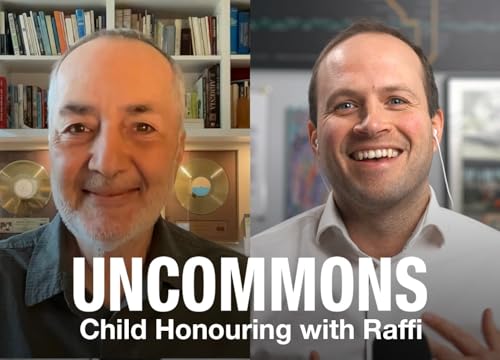
  • Child honouring with the one and only Raffi
    2025/12/10

    Like many Canadians, Nate grew up on Raffi’s music. On this episode, Raffi joins Nate to discuss his musical journey, his ongoing advocacy for the peace and the planet, and why we need to centre children in our decision-making through his philosophy of child honouring. You can learn more about that philosophy via the “Raffi Foundation for Child Honouring”, but the idea is to emphasize the importance of respect, joy, and purpose in children’s lives and its potential to transform society.

    They also touch on Raffi’s advocacy against fascism, the power of music in activism, the urgent need for climate mobilization, protecting children from digital harm and his belief in having courage to speak out and be engaged in democracy.

    Raffi is a global troubadour, children’s entertainer, author and founder of the Raffi Foundation for Child Honouring. Called by the Washington Post as “the most popular children’s singers in the English-speaking world”.


    This is a public episode. If you would like to discuss this with other subscribers or get access to bonus episodes, visit www.uncommons.ca
    続きを読む 一部表示
    33 分
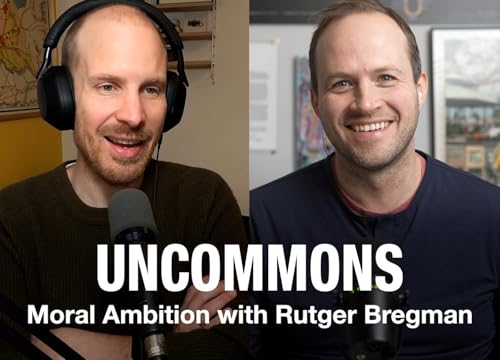
  • Moral Ambition with Rutger Bregman
    2025/12/03

    Rutger Bregman is a Dutch historian, best-selling author, and co-founder of the School for Moral Ambition. His recent book and school both encourage us to spend our time and talent by making a difference on the greatest challenges and injustices of our time, rather than solely personal comfort and financial gain.

    Rutger joins me in this episode to explore how his ideas on moral ambition connect to social change, the big challenges we need your talent to solve, and what he hopes to accomplish with his new school.


    This is a public episode. If you would like to discuss this with other subscribers or get access to bonus episodes, visit www.uncommons.ca
    続きを読む 一部表示
    58 分
  • The Knowing with Tanya Talaga
    2025/11/27

    Tanya Talaga is an award-winning author and journalist and a powerful voice for Indigenous rights and education in Canada.

    She’s also a constituent, which is how we happened to connect again recently when she was hosted by the House Speaker together with other finalists for the Shaugnessy Cohen Prize in political writing.

    Talaga joined me a number of years ago at the Fox Theatre to talk about her 2017 award-winning book Seven Fallen Feathers.

    This conversation focuses on her recent book, The Knowing. It is a deeply personal story in which she traces her own family’s history, and it is a story of Indigenous people in Canada, injustice, reclamation, and outlasting.

    With her own background one of both Anishinaabe and Polish descent, Talaga writes: “From the legacies of these dual branches of genocide, one on Turtle Island and one far off in eastern Europe - comes my knowing.”

    I recommend reading the book and you can also watch her docuseries at CBC Gem.


    This is a public episode. If you would like to discuss this with other subscribers or get access to bonus episodes, visit www.uncommons.ca
    続きを読む 一部表示
    47 分
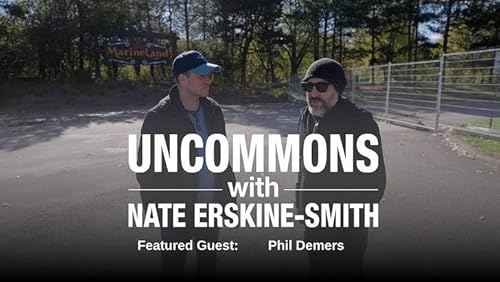
  • “Pay Up Or We'll Kill The Whales": Inside Marineland's Collapse
    2025/10/29
    Phil Demers joins me outside the gates of Marineland for this episode- a return to a conversation we began seven years ago at the Fox Theatre.Back then, we were fighting to pass Bill S-203 to end whale captivity in Canada. The law passed in 2019.Now, the fight is to save the remaining 30 beluga whales and 500 other animals who remain trapped inside as the park has ceased to exist. At one point, recently, Marineland even threatened to euthanize the whales if governments didn’t provide emergency financial support.Phil “The Walrus Whisperer” Demers was a trainer at Marineland turned whistleblower. He spent over a decade fighting Marineland in court after leaving his job there in 2012. After 13 years of legal battles and public advocacy, Marineland is finally on its last legs. But the fight to save the remaining animals isn’t over.We discussed what happens next, short-term and long-term solutions, and why governments should lead on this instead of playing only a reactive role.Chapters:0:00 Standing Outside Marineland6:21 Why China Might Actually Be Better10:04 The Sanctuary Myth & Rescue Reality14:08 30 Dead Whales18:13 500 Forgotten Animals19:30 13 Years of Legal Hell24:37 Conclusion: The Divorce AnalogyRead further:The Walrus and the Whistleblower - Documentary (CBC Gem) https://www.cbc.ca/documentarychannel/docs/the-walrus-and-the-whistleblower7 years ago with Phil: Transcript: [00:00:00] Nate Erskine-Smith: All right, well, welcome to Uncommons. It’s an interesting episode because I’m joined by Phil Demers, who actually joined me at the Fox Theater many years ago, four years ago before we started the podcast actually. And it was just a, a local town hall event. We showed Blackfish. Right. And you were there to talk about your experience as a whistleblower at this horrible place behind us.[00:00:19] Uh, it is interesting how far we’ve come, but also that the issue is so acute still. Uh, at the time we were talking about a bill that had to be passed. To end this kind of production and make sure we were protecting institutions in captivity. And you were adamant we had to get this bill passed. Hmm. Well we got the bill passed.[00:00:37] Yeah. And yet we’ve got marineland, uh, beside us now, and it was grandfathered through in a way. And now we’ve got 30 beluga whales. We’ve got 500 other animals that are, that are in here. Mm-hmm. And all of which, all, all of whom need to be saved in, in, in one way or another. And, uh, it didn’t [00:01:00] have to come to this, really did it.[00:01:02] Phil Demers: Well, we’ve, what, what has glossed over in much of, of your story is we’ve got a unwilling marine land in all of that. Yes. To evolve in any way, shape or form to be a, financially viable, uh, you know, for the security of their own future. Uh, but b, to adhere to any of the laws that we essentially passed, both provincially and, uh, and federally, although we did ban the breeding of the whales. Yep. Had we not banned the breeding of the whales. So, so currently there’s 30 belugas remaining. There’s four dolphins. Uh, we got two sea lions and a, and a host of, uh, land animals there. Had we not banned the breeding of belugas in 2019?[00:01:41] Nate Erskine-Smith: Yep.[00:01:42] Phil Demers: And albeit, the pregnant belugas of 2019 were grandfathered in.[00:01:47] So there were some whale birth births there. On average, Marineland had five to seven belugas born per year. A couple would die. But there’s, you know, it’s conceivable to say that whereas [00:02:00] we have 30 right now in there, we would have had an excess of 50. Right. They would’ve kept probably 60.[00:02:05] Nate Erskine-Smith: Yes, of course they would’ve kept the business model broke down with that law.[00:02:08] But if they would’ve kept going otherwise, I mean, they’re, they were the bad actors. It’s the, it just wants to keep it active [00:02:12] Phil Demers: At this point. It’s the only, it’s the only part of the law that they’ve, ad they’ve adhered to outside of importing, of course, which, which, uh, we ban. So it’s, it’s beyond their control, but.[00:02:21] Um, you know, the breeding, they, they stopped, but had they not, we’d be talking about 50 to 60 whales in those tanks. It, it was, uh, you know, that’s something to really hang our hat on. That was a huge, uh, and super progressive, uh, lawsuit. But it does interestingly, take us to this place now where marine land is, you know, we essentially bankrupt.[00:02:39] I, but we should stress owns a lot of land sitting on 700 acres of prime land meant to fuel or feed the, uh, the whole family trust. That’s, those are the heirs to it. You know, the operation is essentially sucking the money out of that. And so they’re looking for the, be it most lucrative or least expensive [00:03:00] way to get outta this thing.[00:03:01] The sale to China was to be a profitable one. Uh, should be stressed that here in North America, none of ...
    続きを読む 一部表示
    27 分
  • Grand bargains and running like a girl with Catherine McKenna
    2025/10/07
    Catherine McKenna joined me in person for a live recording of this episode at the Naval Club of Toronto here in our east end. We discussed her new book ‘Run Like a Girl’, lessons learned from her six years in federal politics, the reality of political harassment, the tension between party loyalty and telling it like it is, and why we should be wary of “grand bargains” on climate with oil and gas companies.Catherine served as Environment and Climate Change Minister from 2015-2019 and Infrastructure Minister from 2019-2021. She’s now the founder and CEO of Climate and Nature Solutions and chairs a UN expert group advising the Secretary General on net zero commitments.Read further:Run Like A Girl - Catherine McKenna (2025)https://www.catherinemckenna.caChapters:00:00 Introduction & Run Like A Girl Book05:32 Lessons from Politics: Hard Work & Balance08:52 Climate Barbie & Political Harassment15:26 Running for Office in Ottawa Centre23:17 Being a Team Player vs. Speaking Truth32:05 Leaving Politics40:30 Climate Policy & the Oil & Gas “Grand Bargain”48:24 Supporting Others in Politics52:56 Carbon Pricing Communication Failures59:13 Gender Balance, Feminism & Cabinet01:04:04 Final Thoughts & ClosingTranscript:Nate Erskine-Smith00:02 - 00:38Well, thank you everyone for joining. This is a live recording of the Uncommon’s podcast, and I’m lucky to be joined by Catherine McKenna, who has a very impressive CV. You will know her as the former Environment Minister. She is also the founder and CEO of Climate and Nature Solutions, a consultancy focused on all things environment and nature protection. And you may or may not know, but she’s also the chair of a UN expert group that gives advice to the Secretary General on net zero solutions. So thank you for coming to Beaches East York.Catherine McKenna00:38 - 00:56It’s great to be here. Hello, everyone. And special shout out to the guy who came from, all the way from Bowmanville. That’s awesome. Anyone from Hamilton, that’s where I’m originally found. All right. Nice, we got a shout out for Hamilton. Woo-hoo.Nate Erskine-Smith00:57 - 01:19So I ran down a few things you’ve accomplished over the years, but you are also the author of Run Like a Girl. I was at, you mentioned a book launch last night here in Toronto, but I attended your book launch in Ottawa. And you can all pick up a book on the way out. But who did you write this book for?Catherine McKenna01:21 - 02:58So, I mean, this book has been a long time in the making. It’s probably been five years. It was a bit of a COVID project. And you’ll see, it’s good, I’ve got my prop here, my book. But you’ll see it’s not a normal kind of book. So it has a lot of images of objects and of, you know, pictures, pictures of me getting ready to go to the state visit dinner that was hosted by Obama while I’m trying to finalize the text on climate. So it’s got like random things in it, but it’s intended for a much broader audience. It’s really intended to inspire women and girls and young people. And I think that’s particularly important right now because I work on climate and I think it’s really hard. Do people here care about climate? Yes, I imagine here you care about climate. I mean, I actually think most Canadians do because they understand the wildfires and they see the smoke and people are being evacuated from communities and you can’t get insurance if you’re in a flood zone. But I do think in particular we need to bolster spirits. But also it’s a book, it’s really about how to make change. It’s not like people think it’s like a political memoir. So I think, you know, fancy people in politics will look at the end of the book to see if their name is there and maybe be disappointed if it isn’t. But it’s not really that kind of book. It’s like I was a kid from Hamilton. I didn’t want to be a politician. That wasn’t my dream when I grew up. I wanted to go to the Olympics for swimming. And spoiler alert, I did not make the Olympic team, but I went to Olympic trials.Nate Erskine-Smith02:59 - 02:59You’re close.Catherine McKenna03:00 - 04:05I was, well, closest, closest, but, but it wasn’t, I mean, you know, life is a journey and that wasn’t, it wasn’t sad that I didn’t make it, but I think it’s just to hopefully for people to think I can make change too. Like I didn’t come as a fully formed politician that was, you know, destined to be minister for the environment and climate change. So in particular for women and young people who are trying to figure out how to make change, I think it’s a little bit my story. I just tried to figure it out. And one day I decided the best way to make change was to go into politics and get rid of Stephen Harper. That was my goal. He was my inspiration, yes, because we needed a new government. And yeah, so I really, really, really am trying to reach a much broader audience because I think we often are ...
    続きを読む 一部表示
    1 時間 7 分
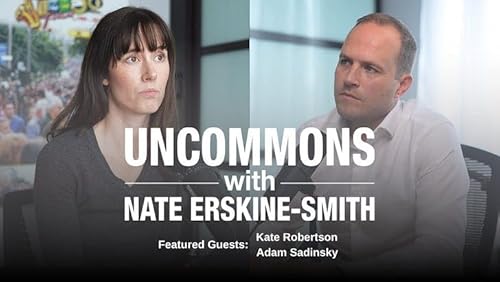
  • The Strong Borders Act? with Kate Robertson and Adam Sadinsky
    2025/10/01
    ** There are less than 10 tickets remaining for the live recording of Uncommons with Catherine McKenna on Thursday Oct 2nd. Register for free here. **On this two-part episode of Uncommons, Nate digs into Bill C-2 and potential impacts on privacy, data surveillance and sharing with US authorities, and asylum claims and refugee protections.In the first half, Nate is joined by Kate Robertson, senior researcher at the University of Toronto’s Citizen Lab. Kate’s career has spanned criminal prosecutions, regulatory investigations, and international human rights work with the United Nations in Cambodia. She has advocated at every level of court in Canada, clerked at the Supreme Court, and has provided pro bono services through organizations like Human Rights Watch Canada. Her current research at Citizen Lab examines the intersection of technology, privacy, and the law.In part two, Nate is joined by Adam Sadinsky, a Toronto-based immigration and refugee lawyer and co-chair of the Canadian Association of Refugee Lawyers’ Advocacy Committee. Adam has represented clients at every level of court in Canada, including the Supreme Court, and was co-counsel in M.A.A. v. D.E.M.E. (2020 ONCA 486) and Canadian Council for Refugees v. Canada (2023 SCC 17).Further Reading:Unspoken Implications A Preliminary Analysis of Bill C-2 and Canada’s Potential Data-Sharing Obligations Towards the United States and Other Countries - Kate Robertson, Citizen LabKate Robertson Chapters:00:00 Introduction & Citizen Lab03:00 Bill C-2 and the Strong Borders Act08:00 Data Sharing and Human Rights Concerns15:00 The Cloud Act & International Agreements22:00 Real-World Examples & Privacy Risks28:00 Parliamentary Process & Fixing the BillAdam Sadinsky Chapters:33:33 Concerns Over Asylum Eligibility in Canada36:30 Government Goals and Fairness for Refugee Claimants39:00 Changing Country Conditions and New Risks41:30 The Niagara Falls Example & Other Unfair Exclusions44:00 Frivolous vs. Legitimate Claims in the Refugee System47:00 Clearing the Backlog with Fair Pathways50:00 Broad Powers Granted to the Government52:00 Privacy Concerns and Closing ReflectionsPart 1: Kate RobertsonNate Erskine-Smith00:00-00:01Kate, thanks for joining me.Kate Robertson00:01-00:01Thanks for having me.Nate Erskine-Smith00:02-00:15So I have had Ron Debert on the podcast before. So for people who really want to go back into the archive, they can learn a little bit about what the Citizen Lab is. But for those who are not that interested, you’re a senior researcher there. What is the Citizen Lab?Kate Robertson00:16-01:00Well, it’s an interdisciplinary research lab based at University of Toronto. It brings together researchers from a technology standpoint, political science, lawyers like myself and other disciplines to examine the intersection between information and communication technologies, law, human rights, and global security. And over time, it’s published human rights reports about some of the controversial and emerging surveillance technologies of our time, including spyware or AI-driven technologies. And it’s also really attempted to produce a thoughtful research that helps policymakers navigate some of these challenges and threats.Nate Erskine-Smith01:01-02:50That’s a very good lead into this conversation because here we have Bill C-2 coming before Parliament for debate this fall, introduced in June, at the beginning of June. And it’s called the Strong Borders Act in short, but it touches, I started counting, it’s 15 different acts that are touched by this omnibus legislation. The government has laid out a rationale around strengthening our borders, keeping our borders secure, combating transnational organized crime, stopping the flow of illegal fentanyl, cracking down on money laundering, a litany of things that I think most people would look at and say broadly supportive of stopping these things from happening and making sure we’re enhancing our security and the integrity of our immigration system and on. You, though, have provided some pretty thoughtful and detailed rational legal advice around some of the challenges you see in the bill. You’re not the only one. There are other challenges on the asylum changes we’re making. There are other challenges on lawful access and privacy. You’ve, though, highlighted, in keeping with the work of the Citizen Lab, the cross-border data sharing, the challenges with those data sharing provisions in the bill. It is a bit of a deep dive and a little wonky, but you’ve written a preliminary analysis of C2 and Canada’s potential data sharing obligations towards the U.S. and other countries, unspoken implications, and you published it mid-June. It is incredibly relevant given the conversation we’re having this fall. So if you were to at a high level, and we’ll go ahead and some of the weeds, but at a high level articulate the main challenges you see in the legislation from the standpoint ...
    続きを読む 一部表示
    53 分
  • The Future of Online Harms and AI Regulation with Taylor Owen
    2025/09/26
    After a hiatus, we’ve officially restarted the Uncommons podcast, and our first long-form interview is with Professor Taylor Owen to discuss the ever changing landscape of the digital world, the fast emergence of AI and the implications for our kids, consumer safety and our democracy.Taylor Owen’s work focuses on the intersection of media, technology and public policy and can be found at taylorowen.com. He is the Beaverbrook Chair in Media, Ethics and Communications and the founding Director of The Centre for Media, Technology and Democracy at McGill University where he is also an Associate Professor. He is the host of the Globe and Mail’s Machines Like Us podcast and author of several books.Taylor also joined me for this discussion more than 5 years ago now. And a lot has happened in that time.Upcoming episodes will include guests Tanya Talaga and an episode focused on the border bill C-2, with experts from The Citizen Lab and the Canadian Association of Refugee Lawyers.We’ll also be hosting a live event at the Naval Club of Toronto with Catherine McKenna, who will be launching her new book Run Like a Girl. Register for free through Eventbrite. As always, if you have ideas for future guests or topics, email us at info@beynate.ca Chapters:0:29 Setting the Stage1:44 Core Problems & Challenges4:31 Information Ecosystem Crisis10:19 Signals of Reliability & Policy Challenges14:33 Legislative Efforts18:29 Online Harms Act Deep Dive25:31 AI Fraud29:38 Platform Responsibility32:55 Future Policy DirectionFurther Reading and Listening:Public rules for big tech platforms with Taylor Owen — Uncommons Podcast“How the Next Government can Protect Canada’s Information Ecosystem.” Taylor Owen with Helen Hayes, The Globe and Mail, April 7, 2025.Machines Like Us PodcastBill C-63Transcript:Nate Erskine-Smith00:00-00:43Welcome to Uncommons, I’m Nate Erskine-Smith. This is our first episode back after a bit of a hiatus, and we are back with a conversation focused on AI safety, digital governance, and all of the challenges with regulating the internet. I’m joined by Professor Taylor Owen. He’s an expert in these issues. He’s been writing about these issues for many years. I actually had him on this podcast more than five years ago, and he’s been a huge part of getting us in Canada to where we are today. And it’s up to this government to get us across the finish line, and that’s what we talk about. Taylor, thanks for joining me. Thanks for having me. So this feels like deja vu all over again, because I was going back before you arrived this morning and you joined this podcast in April of 2020 to talk about platform governance.Taylor Owen00:43-00:44It’s a different world.Taylor00:45-00:45In some ways.Nate Erskine-Smith00:45-01:14Yeah. Well, yeah, a different world for sure in many ways, but also the same challenges in some ways too. Additional challenges, of course. But I feel like in some ways we’ve come a long way because there’s been lots of consultation. There have been some legislative attempts at least, but also we haven’t really accomplished the thing. So let’s talk about set the stage. Some of the same challenges from five years ago, but some new challenges. What are the challenges? What are the problems we’re trying to solve? Yeah, I mean, many of them are the same, right?Taylor Owen01:14-03:06I mean, this is part of the technology moves fast. But when you look at the range of things citizens are concerned about when they and their children and their friends and their families use these sets of digital technologies that shape so much of our lives, many things are the same. So they’re worried about safety. They’re worried about algorithmic content and how that’s feeding into what they believe and what they think. They’re worried about polarization. We’re worried about the integrity of our democracy and our elections. We’re worried about sort of some of the more acute harms of like real risks to safety, right? Like children taking their own lives and violence erupting, political violence emerging. Like these things have always been present as a part of our digital lives. And that’s what we were concerned about five years ago, right? When we talked about those harms, that was roughly the list. Now, the technologies we were talking about at the time were largely social media platforms, right? So that was the main way five years ago that we shared, consumed information in our digital politics and our digital public lives. And that is what’s changing slightly. Now, those are still prominent, right? We’re still on TikTok and Instagram and Facebook to a certain degree. But we do now have a new layer of AI and particularly chatbots. And I think a big question we face in this conversation in this, like, how do we develop policies that maximize the benefits of digital technologies and minimize the harms, which is all this is trying to do. Do we need new tools for AI or...
    続きを読む 一部表示
    39 分