

UI PRESENTS: The Tree That Nearly Started a War
カートのアイテムが多すぎます
カートに追加できませんでした。
ウィッシュリストに追加できませんでした。
ほしい物リストの削除に失敗しました。
ポッドキャストのフォローに失敗しました
ポッドキャストのフォロー解除に失敗しました

UI PRESENTS: The Tree That Nearly Started a War
-
ナレーター:
-
著者:
In August 1976, two U.S. Army officers were murdered by North Korean guards in the Korean Demilitarized Zone while supervising a routine tree-trimming crew. What followed was Operation Paul Bunyan: an extraordinary display of coercive military force built around a pair of chainsaws. I break down how a poplar tree at the Bridge of No Return nearly triggered World War III—and how deterrence, restraint, and sheer presence prevented full-scale conflict.
Episode Breakdown
[Cold Open]
The Murder in the DMZ: Two American officers killed in the most heavily armed border zone on Earth.
The immediate geopolitical dilemma: Airstrikes vs. diplomacy vs. Operation Paul Bunyan.
The 42-minute operation that centered an international crisis around a set of chainsaws.
[Beginning] - The Spark at the Bridge of No Return
Why sightlines in the Joint Security Area (JSA) meant the difference between life and death.
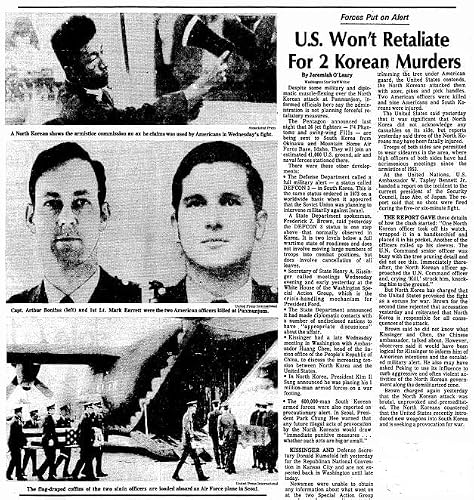
August 18, 1976: The attack on Captain Arthur Bonifas and First Lieutenant Mark Barrett.
The ideological excuse: North Korean claims over Kim Il-sung's "personally planted" tree.
The dangerous gap between the Korean Armistice Agreement and actual peace.
[Middle] - Overwhelming Force & Coercive Signaling
Raising readiness to DEFCON 3 and managing the risk of runaway escalation.
The military machine: Aircraft carriers, B-52 bombers, commandos, and heavy artillery on standby.
Back-channel diplomacy: How U.S. outreach to Beijing and Moscow helped contain the crisis.
August 21, 1976: 23 vehicles, 42 minutes, and a 20-foot stump left behind.
[End] - The Logic of Deterrence
How deterrence works when violence is visibly possible, but restrained.
Permanently altering the JSA: Ending shared movement across the Military Demarcation Line.
Remembering Captain Bonifas and Lieutenant Barrett beyond the spectacle of the response.
Key Historical Takeaways
Symbolism as Strategy: In an unresolved armistice zone, ordinary objects—checkpoints, flagpoles, sightlines, and trees—become high-stakes territorial markers.
Calculated Deterrence: Operation Paul Bunyan succeeded not by firing first, but by demonstrating such absolute military readiness that North Korea chose to observe rather than interfere.
Structural Aftermath: The incident permanently ended the practice of guards from both sides freely mixing within the Joint Security Area.
Resources & Further Reading
Command History: United Nations Command archives on the 1976 Ax Murder Incident.
Memorial Information: Camp Bonifas and the DMZ memorial honoring CPT Arthur Bonifas and 1LT Mark Barrett.
Get full access to Uncovered Investigates at uncoveredinvestigates.substack.com/subscribe