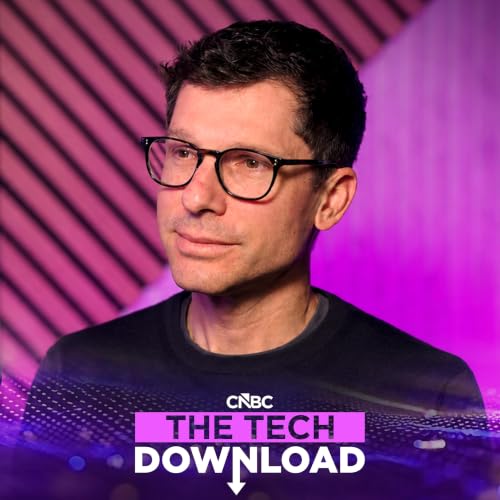
エピソード

  • How BlackBerry found a second life inside cars and robots
    2026/08/24

    BlackBerry may be best known for its QWERTY-keyboard smartphones, but the company today is building its next chapter around software for cars, robots and secure communications.

    BlackBerry CEO John Giamatteo joins CNBC’s Arjun Kharpal to explain how the company has reinvented itself around QNX, BlackBerry’s operating system used in software-defined vehicles.

    He discusses why BlackBerry sees physical AI as a major growth opportunity, from autonomous vehicles and warehouse robots to surgical systems and industrial automation. As more machines become connected, Giamatteo argues that safety-certified software will become increasingly important.

    The conversation also covers how AI is changing the cybersecurity threat landscape, why Giamatteo sees governments’ use of consumer messaging apps as a security risk, and how BlackBerry is adapting its encryption technology as threats from AI and quantum computing evolve.

    See Privacy Policy at https://art19.com/privacy and California Privacy Notice at https://art19.com/privacy#do-not-sell-my-info.

    続きを読む 一部表示
    36 分
  • Europe has startups. Why not more tech giants?
    2026/08/10

    Europe has no shortage of technology ideas or startups. Its challenge is turning them into global companies — and keeping more of its most successful businesses in Europe.

    Arm co-founder Hermann Hauser, who also co-founded Amadeus Capital, joins CNBC’s Arjun Kharpal to explain why Europe struggles to scale its technology companies. He discusses the need for growth capital and experienced management to help European companies scale, as well as access to critical technologies if Europe is to avoid becoming what he calls a U.S. “technology colony.”

    The conversation also covers AI and quantum computing. Hauser explains why some AI valuations have moved ahead of the fundamentals, where AI’s long-term value could be created and why quantum’s encryption-breaking “Q Day” could arrive as early as 2029.

    Hauser also examines new chip architectures designed to reduce AI’s energy demands and recounts Arm’s early history and its relationship with Apple.

    See Privacy Policy at https://art19.com/privacy and California Privacy Notice at https://art19.com/privacy#do-not-sell-my-info.

    続きを読む 一部表示
    40 分
  • How Silicon Valley is changing warfare
    2026/07/28

    Anduril has become one of the fastest-growing defense technology companies. CEO Brian Schimpf joins CNBC’s Arjun Kharpal to discuss how AI is transforming modern warfare, why autonomous weapons still require human oversight, and how Anduril is scaling defense manufacturing. They also examine U.S.-China competition, supply chains, and the future of defense technology.

    See Privacy Policy at https://art19.com/privacy and California Privacy Notice at https://art19.com/privacy#do-not-sell-my-info.

    続きを読む 一部表示
    39 分
  • AI agents face the ROI test
    2026/07/14

    AI agents are designed to do more than answer questions. They are meant to complete tasks.

    Sierra co-founder Clay Bavor joins CNBC’s Arjun Kharpal to discuss how AI agents are moving from demos into real business workflows, especially in customer service, sales and support.

    Bavor explains how Sierra builds and tests customer-facing AI agents before they go live, why companies want clearer ways to measure AI’s return on investment and how outcome-based pricing could challenge the way software companies get paid.

    The conversation also covers coding agents, rising AI token costs and why the hardest part of enterprise AI may be the “last mile” of deployment.

    See Privacy Policy at https://art19.com/privacy and California Privacy Notice at https://art19.com/privacy#do-not-sell-my-info.

    続きを読む 一部表示
    44 分
  • Amazon’s AI plan goes beyond Alexa
    2026/07/02

    CNBC’s Arjun Kharpal speaks to Amazon devices chief Panos Panay about the future of AI hardware, from Alexa Plus and smart home devices to wearables, driverless cars and satellites. Panay discusses how AI assistants could become more personal and ambient, why the next device race may not be won by a single gadget, and how Amazon is thinking about the future beyond screens and apps.

    See Privacy Policy at https://art19.com/privacy and California Privacy Notice at https://art19.com/privacy#do-not-sell-my-info.

    続きを読む 一部表示
    45 分
  • AI agents are coming to your devices
    2026/06/16

    Qualcomm CEO Cristiano Amon says artificial intelligence is set to change the way people use smartphones, even if the devices themselves are not going away.

    Speaking to CNBC’s Arjun Kharpal on “The Tech Download,” Amon said phones will increasingly be operated by AI agents that can carry out tasks on behalf of users, from managing apps to interacting with services across the internet. He described agents as a major shift for the mobile industry, comparing their emergence to the rise of apps in the smartphone era.

    Amon also said new categories of personal AI devices are beginning to take shape, including smart glasses, pins, pendants and other wearables. He said glasses are a natural fit for AI because they sit close to a user’s eyes, ears and mouth, allowing models to process what people see and hear in real time.

    The Qualcomm chief also discussed what the shift means for the semiconductor industry, including the need for more powerful and efficient chips in phones, PCs, glasses, cars and other connected devices. He said AI is forcing a rethink of chip architecture as devices increasingly rely on a mix of CPUs, GPUs and neural processing units to run models across both the device and the cloud.

    Amon also pointed to memory shortages and wider supply-chain constraints as key challenges for the industry, while arguing that the rise of AI devices could bring new players into consumer electronics.

    Subscribe to “The Tech Download” wherever you get your podcasts.

    See Privacy Policy at https://art19.com/privacy and California Privacy Notice at https://art19.com/privacy#do-not-sell-my-info.

    続きを読む 一部表示
    50 分
  • Europe wants an AI champion. Can Mistral deliver?
    2026/06/03

    Mistral CEO Arthur Mensch joins CNBC’s Arjun Kharpal to discuss AI infrastructure, the race for computing power, and why access to AI “tokens” is becoming a strategic priority. He also shares his views on AI sovereignty, enterprise adoption, custom chips and the future of AGI.

    See Privacy Policy at https://art19.com/privacy and California Privacy Notice at https://art19.com/privacy#do-not-sell-my-info.

    続きを読む 一部表示
    46 分
  • How AI gets stress-tested before release
    2026/01/29

    Two of Google DeepMind’s leaders—Dawn Bloxwich (Responsible Development & Innovation) and Tom Lue (VP, Frontier AI Global Affairs)—open the playbook on frontier safety and policy. Bloxwich explains how DeepMind blends structured evaluations with red‑teaming by experts and jailbreakers, and how its Frontier Safety Framework addresses severe risks (from CBRN and cyber to loss of control and socio‑affective concerns). Lue maps the regulatory landscape across the EU, US and Asia, arguing for harmonized standards that safeguard without stifling innovation. Together, they show what responsible development looks like before and after deployment—model cards, third‑party testing and the industry forums trying to align best practices.

    See Privacy Policy at https://art19.com/privacy and California Privacy Notice at https://art19.com/privacy#do-not-sell-my-info.

    続きを読む 一部表示
    44 分