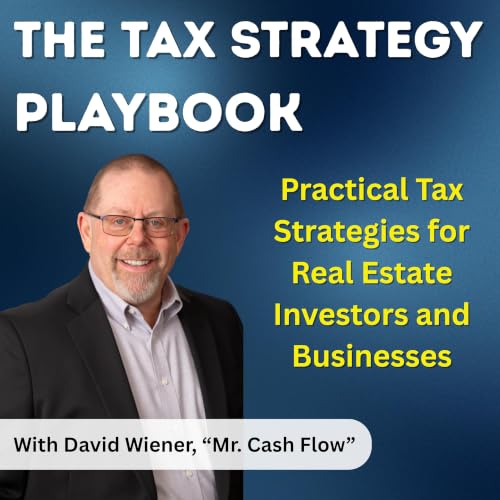
『The Tax Strategy Playbook』のカバーアート

The Tax Strategy Playbook

The Tax Strategy Playbook

著者: David Wiener "Mr. Cash Flow"
無料で聴く

The Tax Strategy Playbook is where real estate investors and business owners learn how to stop overpaying the IRS and turn taxes into an opportunity center instead of an annual pain point.

Each episode, host David Wiener (“Mr. Cash Flow”) sits down with CPAs, tax attorneys, cost segregation experts, and top investors to break down complex tax rules into clear, step‑by‑step strategies you can actually use.

You’ll hear real case studies, before‑and‑after numbers, and practical checklists on things like cost segregation, bonus depreciation, real estate professional status, short‑term rental strategies, entity structure, and more—without legalese or fluff. Expect straight talk, tactical advice you can hand to your CPA, and simple action items at the end of every show so you always know what to do next.

2026 David Wiener, "Mr. Cash Flow"
個人ファイナンス 経済学
エピソード
  • Tax Trouble: What To Do When Things Go Sideways
    2026/08/04

    Got an unopened IRS letter in a drawer? Tax attorney Jason Wiggam breaks down exactly what to do when you owe the IRS and can't pay.

    We cover the first 3 things to do after any IRS notice, how installment agreements and offers in compromise actually work, when currently not collectible status makes sense, and why bankruptcy can sometimes wipe out tax debt. Jason Wiggam, founding partner of Wiggam Law in Atlanta, has helped hundreds of individuals and businesses resolve IRS and state tax debt without panic or shame.

    What you'll learn in this episode:

    - Why tax trouble happens to smart, successful people, not just "reckless" ones

    - The exact documents to gather before your first call with a tax attorney

    - How the IRS decides between an installment agreement, currently not collectible status, or an offer in compromise

    - Why only 15% of offers in compromise get accepted, and how to know if you'd qualify

    - Whether bankruptcy can legally discharge income tax debt

    - The 4-step Tax Strategy Playbook for going from IRS notice to full resolution

    If you're a real estate investor, business owner, or self-employed professional worried about an IRS letter, audit, or tax debt, this episode gives you a clear, no-shame plan.

    0:00 Intro: What to Do When You Get an IRS Letter

    2:17 Meet Jason Wiggam, Atlanta Tax Resolution Attorney

    4:37 Who Really Ends Up in IRS Tax Trouble

    7:21 Common Pathways Into IRS Tax Debt and Audits

    8:59 The Danger of TikTok Tax Hacks and Bad Advice

    11:48 Step 1: Open Your IRS Notice — Don't Ignore It

    14:37 Documents to Gather Before Calling a Tax Attorney

    18:04 IRS Installment Agreements: Full Pay vs Partial Pay

    21:19 Currently Not Collectible Status Explained

    22:53 Offer in Compromise: When It's Real vs Wishful Thinking

    28:19 IRS Audits, Appeals, and US Tax Court

    30:16 Should a CPA or Tax Attorney Handle Your Audit

    35:08 Habits to Stay Off the IRS's Radar

    38:15 Will You Go to Jail for Owing the IRS? (No)

    40:20 The 4-Step Tax Resolution Playbook

    44:06 Where to Reach Jason Wiggam / Wiggam Law

    🎙️ Listen to the full podcast: https://taxstrategyplaybook.com

    📩 Get the free Tax Strategy Playbook newsletter: http://taxstrategyplaybook.com/newsletter

    💰 Book a free cost segregation consultation: https://calendly.com/david-weiner/cs

    📧 Contact David Wiener directly: david.wiener@cashflowstrategies.us or call 770-224-8504 ext. 2

    🔗 Learn more about Jason Wiggam: wiggamlaw.com

    New episodes of The Tax Strategy Playbook drop every Tuesday — subscribe so you never miss a strategy that protects your cash flow.

    #IRSTaxDebt #TaxStrategyPlaybook #OfferInCompromise

    続きを読む 一部表示
    45 分
  • The Wealth Elevator: What Happens When You Actually Run the Numbers?
    2026/07/28

    Most investors think they’re buying cash flow, but the ones who really build wealth know the deal either works after taxes, depreciation, and the exit… or it never worked at all. In this episode of The Tax Strategy Playbook, David Wiener (“Mr. Cash Flow”) and Lane Kawaoka (founder of The Wealth Elevator) rip apart the myths that keep real estate investors stuck in mediocre deals and show how high‑net‑worth investors really structure portfolios using syndications, alternative assets, and smarter underwriting.

    If you’ve ever looked at a proforma and thought, “This looks too good to be true,” this conversation will change how you read pitch decks, how you underwrite deals, and how you balance cash flow today against long‑term upside. You’ll hear why chasing a few thousand dollars a month in cash flow at a million‑dollar net worth is often a distraction, how to stop mistaking “activity” for “progress,” and how to build a portfolio that actually supports financial freedom instead of just more headaches.

    Lane shares his journey from engineer with 11 single‑family rentals to accredited investor allocating across large apartment syndications, private equity, oil and gas, and even T‑bills once you hit “critical mass.” You’ll hear exactly why he sold off his small rentals, reduced legal liability exposure, shifted into LP positions, and began underwriting deals using conservative, reality‑based assumptions instead of rosy operator spreadsheets.

    Inside this episode you’ll learn:

    • Why most “cash flow” deals fall apart after taxes, depreciation, and realistic expenses.
    • How accredited investors rebalance from small rentals into diversified commercial and alternative assets.
    • The difference between activity vs. progress in your investing journey.
    • How to underwrite syndication deals using PLs, rent rolls, and your own analyzer instead of trusting glossy pitch decks.
    • When it makes sense to prioritize cash flow today vs. long‑term upside across dozens of deals.
    • Why you may be better off in T‑bills or savings accounts than owning paid‑off rentals with low returns and full liability exposure.
    • How the “Wealth Elevator” framework changes your strategy at each net‑worth floor—from under $1M to $4–5M+.

    🎁 FREE BOOK – THE WEALTH ELEVATOR
    Lane is giving away copies of his book “The Wealth Elevator” to listeners of this episode. Listen through for David’s instructions on how to claim your copy.

    Chapters:
    00:00 – Why most investors overestimate cash flow and underestimate taxes
    02:15 – Meet Lane Kawaoka: from engineer to accredited investor
    05:11 – The Wealth Elevator: floors of the wealth game
    05:51 – How beginners should underwrite single‑family rentals
    10:21 – Legal liability and why many millionaires sell small rentals
    10:57 – Shifting into LP positions and institutional assets
    11:27 – Why pitch decks lie: PLs, rent rolls, and your own analyzer
    13:02 – Balancing cash flow vs. long‑term upside in syndications
    32:25 – Why “traction” in saving matters more than any single deal
    33:19 – The one skill new investors must master: spreadsheet underwriting
    35:26 – Redefining financial freedom at higher net‑worth levels

    If you care about what happens after the spreadsheet—and you want tax‑smart, risk‑aware strategies for building long‑term wealth—subscribe and turn on notifications so you never miss an episode of The Tax Strategy Playbook.

    #RealEstateInvesting #SyndicationDeals #PassiveIncome #TaxStrategy #AdvancedTaxPlanning #AccreditedInvestor #WealthBuilding #CashFlowInvesting #BonusDepreciation #CostSegregation #TheTaxStrategyPlaybook #WealthElevator #AlternativeInvestments #ApartmentSyndication #FinancialFreedom #AfterTaxCashFlow

    続きを読む 一部表示
    41 分
  • Cost Segregation Myths vs Reality | Which Owner Pays More?
    2026/07/21

    Cost segregation myths could be costing you tens of thousands of dollars in taxes you don't actually owe. In this episode of the Tax Strategy Playbook, David Wiener (Mr. Cash Flow) puts 5 of the most common cost segregation myths up against the actual numbers — and shows exactly which owners end up paying more simply because they never checked.

    You'll get the exact cost basis threshold, $150,000, that determines whether an engineering-based cost segregation study is worth running on your property — and why it applies to residential long-term rentals, short-term rentals, commercial, and industrial properties alike, not just large commercial buildings. David also breaks down why a properly documented, engineering-based study isn't the audit risk people assume: the real risk is the cheap, calculator-based shortcut version, not the strategy itself. CSSI, the cost segregation partner behind this show, has completed more than 65,000 engineering-based studies nationwide without ever triggering an audit.

    You'll learn why your tax professional isn't already running this analysis automatically as part of a normal tax return (it takes a separate engineering-based study to unlock it), and why a look-back study means you haven't missed your window even if you've owned the property for years — it can capture missed depreciation going back as far as 15 years without amending a single prior return.

    You'll also hear why short-term rentals often qualify even more cleanly than long-term rentals thanks to faster-depreciating furniture, appliances, and finishes, how a 1031 exchange or long-term hold can address depreciation recapture before it becomes a problem, and the exact question David recommends bringing to your tax professional this week — worded so it actually gets you a real answer instead of a shrug.

    ⏱️ CHAPTERS

    00:00 Introduction

    01:49 The Promise

    03:15 Who This Episode is For

    04:16 Why This, Why Now

    05:48 Myth #1 - The Big Building Myth

    14:31 Myth #2 - The Audit Magnet Myth

    19:10 Myth #3 - The Tax Pro Myth

    21:08 Myth #4 - The "Too Late" Myth

    23:41 Myth #5 - The "Long-Term Rental" Myth

    26:44 FAQ

    28:43 The Playbook

    31:57 Conclusion

    If a myth in this episode has been quietly costing you money, share it with one investor or business owner who needs to hear it.

    Subscribe to the newsletter for free resources, including the current 2026 tax planning guide: https://www.taxstrategyplaybook.com/newsletter

    And before you go, send this to one more person in your circle who owns real estate or a business — a rumor is only expensive until somebody sends them the truth.

    Contact David directly to discuss your situation or to receivee a free preliminary analysis of your property at David.wiener@cashflowwstrategies.us

    #CostSegregation #RealEstateInvesting #TaxStrategy #BonusDepreciation #ShortTermRentals

    続きを読む 一部表示
    35 分
adbl_web_anon_alc_button_suppression_t1
まだレビューはありません