エピソード

  • Theory vs. Practice: Regenerative Farming, Corporate Sustainability and AI - with Vighnesha Adiga
    2026/08/21

    Welcome back to the Sustainable Commodities Podcast! In this episode, Barnaby Patchett and Judith Murdoch sit down with entrepreneur, agritech strategist, and regenerative farmer Vighnesha (Vig) Adiga.

    Vig brings a uniquely grounded perspective to the sustainability conversation. Splitting his time between lecturing and advising global corporations in Switzerland and virtually managing his own regenerative farm in India, he bridges the disconnect between corporate boardrooms and the farmers working the land.

    Vig strips away the industry buzzwords to reveal the harsh financial and emotional realities of transitioning to regenerative agriculture, and explains why current corporate commitments are leaving smallholder farmers behind.

    Key Takeaways:

    • Virtual Regeneration: How Vig remotely manages his farm in India - a thriving, biodiverse ecosystem of over 3,000 plants!
    • The Transition Dip: The 2-to-3-year financial gap farmers face when switching to regenerative practices, and why they cannot shoulder this risk alone.
    • The Smallholder Reality: Why corporate supply chain demands are fundamentally misaligned with the realities of the millions of smallholder farmers who produce our food.
    • Practical Steps for Corporates: Vig shares five actionable strategies for businesses to genuinely support supply chains, emphasising the need to pay the true cost of production and the importance of real farm visits.

    If you want to understand what it takes to implement regenerative agriculture beyond the corporate pledges and marketing spinthis is a must-listen episode.

    Useful Links:

    • Follow Vig on LinkedIn
    • Check out his book: Slow: A Conversation with Speed
    • Visit Murdoch Associates and 199 Agency
    続きを読む 一部表示
    55 分
  • Coconut, Palm and Soya - A Debrief on June’s Sustainable Commodities Conferences
    2026/06/22

    Hosts Barnaby Patchett and Judith Murdoch catch up on a whirlwind few weeks of back-to-back commodity conferences across the UK, giving their thoughts from events at Chester Zoo and in London.

    With no guests this week, it's a direct conversation between the co-hosts as they unpack the latest developments in forest risk commodities discussed at Sustainable Coconut Gathering Europe, Sustainable Palm Oil Dialogue 2026 and the UK Sustainable Commodities Initiative.

    Key Discussion Points

    • The Sustainable Coconut Gathering Europe: Barnaby gives his thoughts on the Sustainable Coconut Partnership's (SCP) first major European event. He discusses the differences in the standard, and the focus on smallholder finances, aging plantations, and structural supply chain issues. Judith details some of the critical, overlooked social risks inherent to coconut farming, including harvesting hazards and regional worker welfare.
    • Sustainable Palm Oil Dialogue (SPOD) 2026: Held at the Chester Zoo under the theme "Resilience in Palm Oil: Thriving in a Turbulent World," the co-hosts dissect the event's biggest themes, from resilience and certification to legislation and smallholder inclusion.
    • Shifting the Palm Oil Narrative: Barnaby outlines his experience moderating SPOD's first-ever communications panel, featuring representatives from Ferrero, the Little Soap Company, and the World Association of Zoos and Aquariums. The panel confronted why "palm oil-free" marketing remains successful and called for the industry to move from a defensive position into more proactive comms.
    • The Closing of Chester Zoo's Sustainable Palm Oil Communities Program: Judith and Barnaby reflect on the sudden, disappointing news that Chester Zoo is winding down its flagship sustainable community campaign. They deliberate on the broader messaging this sends to the market just as global supply chains face maximum regulatory pressure.
    • UK Sustainable Commodities Initiative Update: Judith gives an insider look into the latest Efeca-chaired meeting in London. The update reveals ongoing delays regarding UK domestic regulations for forest risk commodities, issues with funding, and discussion about the direction of travel on palm oil, soya, certification and oleochemicals.

    What are your thoughts on how the industry should communicate sustainability to everyday consumers? If you have ideas on keeping local palm oil campaigns alive or want to weigh in on the coconut supply chain, reach out!

    Don't forget to like, share, and subscribe to help support the show!

    Links

    Sustainable Coconut Partnership
    Sustainable Palm Oil Dialogue
    UK Sustainable Commodities Initiative

    One Nine Nine
    Murdoch Associates

    続きを読む 一部表示
    46 分
  • FutureChain 2026: The Hard Reality of Supply Chain Resilience
    2026/06/01

    In this special solo edition of the Sustainable Commodities Podcast, host Barnaby Patchett delivers an honest debrief on the FutureChain 2026 conference. Reflecting on the April event in London, Barnaby cuts through the corporate noise to examine the programme, and look at the hard economic truths driving the sector.

    Across both the Regenerative Agriculture and Raw Materials Risk tracks, the overriding message was clear: sustainability is now intrinsically linked to supply chain resilience.

    Please note, the opinions expressed in this episode are Barnaby’s – co-host Judith did not attend the event!
    Key talking points include:

    • Geopolitical Threats: The ongoing conflicts in Iran and Ukraine and the resulting global supply chain vulnerabilities. The Procurement Gap: A panel featuring Mars, Procter & Gamble, and AstraZeneca highlighting the disconnect between sustainability and procurement incentives.
    • Regulatory Red Tape: A session featuring the EU Commission and Barnaby’s thoughts on whether new legislation, such as the EUDR and CSDDD, is driving progress or simply creating more administrative burden.
    • The Finance Catch-22: The expense of the transition to regenerative agriculture and the challenge of who pays. Farmers need upfront finance to make the change, but investors and corporates demand data and proof of outcomes before they will pay.
    • On-the-Ground Success: A standout presentation from Lush and Alowan showcased a successful landscape approach to coconut sourcing in Indonesia. The project was praised for focusing on tangible impact and securing better financial terms for smallholders. A massive thank you to Kisaco Research for organising the event and providing the platform to record these insights.

    FutureChain 2026
    One Nine Nine
    Murdoch Associates

    続きを読む 一部表示
    18 分
  • FutureChain 2026: Supply Chain Resilience & Regenerative Agriculture
    2026/05/26

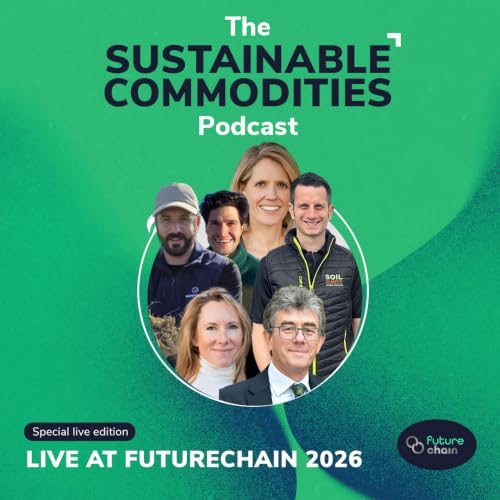
    Welcome to a special FutureChain 2026 edition of the Sustainable Commodities - featuring six short interviews recorded live with expert panellists and delegates at the conference, which was held in London in April 2026.

    The interviews focus on strengthening ingredient supply chain resilience, taking a practical look at the challenges and opportunities within regenerative agriculture and raw materials risk.

    In This Episode

    • Sébastien Roumegous (Biospheres): Sébastien shares his experiences implementing regenerative practices across 30 countries. He emphasises the psychological and financial transformations farmers face and the crucial need to rebuild farmer trust to make these systems profitable.

    • Lindsey Crompton (RegenAgri): Lindsey discusses the global push for regenerative certification and supply chain traceability. She highlights the importance of matching supply with demand through brand engagement, and discusses RegenAgri’s work delivering regenerative projects, including a new partnership with Walmart.

    • Richard Anscombe (xFarm Technologies): Richard talks about the challenges facing farmers, and explains how connecting fragmented farm data can drastically improve efficiency. His farm management system serves over 600,000 farmers globally, helping them manage input costs and accurately measure scope 3 emissions.

    • Pedro de Liñán (Earthworm Foundation): Pedro provides a non-profit perspective on building scalable solutions for nature and people. He details corporate collaboration strategies aimed at preventing deforestation and fostering systemic change.

    • Annie Leeson (Agricarbon): Annie dives into the exact science of carbon measurement, and why it’s so important. She advocates for direct, ground-level testing of soil organic carbon to ensure high-integrity data and combat greenwashing in carbon markets.

    • Dr. Paul O'Hora (SoilWorx): Dr. O'Hora talks about fertiliser, and explores the critical transition away from fossil fuel-dependent farming as a solution for supply chain resilience. He discusses the benefits of organic fertilisers and the broader impact of adopting circular economic models in agriculture.

    If you enjoy these interviews from the conference, please be sure to subscribe, leave a review, and share the episode with your network on LinkedIn.

    One Nine Nine

    続きを読む 一部表示
    1 時間 27 分
  • From Smallholders to Soil: A New Vision for Sustainable Palm Oil – Reza Azmi, Wild Asia
    2026/05/18

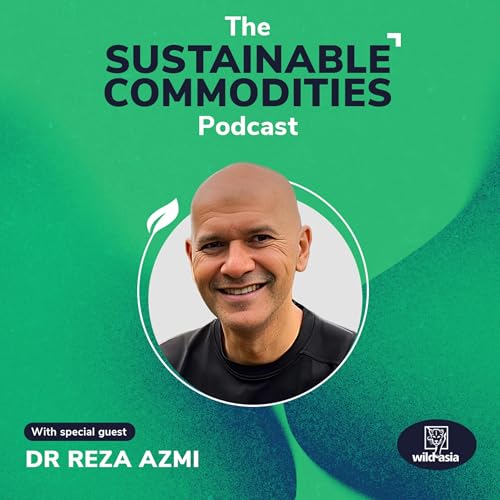
    On this edition of The Sustainable Commodities Podcast, hosts Barnaby Patchett and Judith Murdoch are joined by Reza Azmi, Executive Director of Wild Asia.

    Wild Asia is a Malaysian social enterprise that takes a profoundly different approach to sustainable palm oil. Reza and his team work directly with independent smallholder farmers to build trust, improve soil health and prove that sustainable agriculture is not only possible but financially rewarding.

    In this episode, we discuss.

    • The Reality of Certification: Why focusing solely on the 20% of palm oil that is currently certified ignores majority of the industry, and how the biggest impact can be made by supporting the remaining 80% of uncertified farmers.
    • Spiral and WAGS: How the Wild Asia Group Scheme (WAGS) builds a vital, on-the-ground support network for farmers, while the 'Spiral' initiative acts as an 'Intel inside' model for mills, ensuring buyers can directly fund and source from regenerative smallholder projects.
    • Bio-Farms and Soil Health: Why returning to a focus on soil biology, using artisanal ferments and natural processes instead of expensive synthetic inputs, is the key to resilient, high-yielding and profitable smallholder farms.
    • The Buyer's Role: Why corporations need to rethink their approach to sustainable procurement, moving beyond compliance checks to actively supporting farmers through direct investment and long-term partnerships.

    If you want to understand what true grassroots sustainability looks like and how we can effectively support smallholders in the transition to regenerative agriculture, this is a must-listen!

    Links
    Reza Azmi
    Wild Asia
    One Nine Nine
    Murdoch Associates

    続きを読む 一部表示
    1 時間 8 分
  • Transforming Landscapes, Not Just Commodities – Alejandro Diaz, Commonland
    2026/05/11

    Welcome to the latest episode of the Sustainable Commodities Podcast! This week, hosts Barnaby Patchett and Judith Murdoch sit down with Alejandro Diaz, Landscape Finance Manager at Commonland.

    Commonland is an international NGO pioneering large-scale, long-term landscape restoration. Unlike traditional conservation efforts that focus solely on nature, Commonland treats landscapes as holistic systems where the environment, local communities, and businesses must thrive together. Alejandro takes us through the complex world of landscape finance and explains what it really takes to fund the transition to regenerative agriculture.

    In this episode, we unpack:

    • The 4 Returns Framework: How Commonland measures success through four key metrics: Return of Inspiration, Social Returns, Natural Returns, and Financial Returns.

    • Moving Beyond Short-Term Funding: Why standard three-year grants hold conservation back, and why restoring a landscape actually requires 20-year, flexible, and patient capital.

    • De-risking Regenerative Agriculture: The massive financial and operational hurdles farmers face when changing their practices, and why they cannot be expected to shoulder that risk alone.

    • The AlVelAl Success Story: A look at Commonland’s work in southeastern Spain, where a cooperative of over 600 farmers is regenerating a million hectares of almond and olive production using shared resources like machinery banks and premium pricing.

    • Landscapes vs. Supply Chains: Why corporations and investors need to look beyond their narrow commodity supply chains and start investing in the broader resilience of the regions they source from.

    If you are interested in blended finance, regenerative agriculture, and how we can practically fund a more resilient food system, this is a must-listen.

    Links
    Commonland
    One Nine Nine
    Murdoch Associates

    続きを読む 一部表示
    44 分
  • Not All Palm Oil is Created Equal – Mark Wong, SD Guthrie International
    2026/04/07

    Welcome to the latest episode of the Sustainable Commodities Podcast! This week, hosts Barnaby Patchett and Judith Murdoch sit down with a true palm oil industry heavyweight: Mark Wong, Head of Downstream Sustainability at SD Guthrie International (formerly Sime Darby).

    As the world's largest producer of certified sustainable palm oil, operating in over 90 countries, SD Guthrie is at the forefront of the industry's transformation. Mark takes us behind the curtain to explore the realities of driving sustainability at a massive global scale.

    In this episode, we unpack:

    • The Evolution of Palm Oil Sustainability: From pioneering zero-burning replanting techniques in 1985 to the RSPO and beyond.
    • Tackling Forced Labor Allegations How SD Guthrie responded to the 2020 US Customs and Border Protection Withhold Release Order by completely overhauling their labor practices, including reimbursing recruitment fees and improving worker dialogue.
    • EUDR: Why data management and sharing are the biggest hurdles to compliance, and how the regulation's strict requirements risk excluding vulnerable smallholder farmers.
    • The Traceability Challenge: The crucial difference between direct and indirect smallholders and why mapping the full supply chain is so incredibly complex.
    • The Future of the Industry: Why we need to stop treating palm oil as a uniform commodity, and how regenerative agriculture and science-based targets will shape the next decade of production.

    If you work in forest-risk commodities or want to understand the reality of making palm oil sustainable, this is a must-listen.

    SD Guthrie International
    One Nine Nine
    Murdoch Associates

    続きを読む 一部表示
    49 分
  • The New Roadmap for Responsible Supply Chains - Dr. Jeff Milder (AFi)
    2026/02/23

    Welcome to the first episode of the Sustainable Commodities Podcast for 2026! After a short break, hosts Barnaby Patchett and Judith Murdoch are back to tackle the pressing question facing businesses this year: What comes next?

    With the 2025 deforestation targets now in the rearview mirror, companies are under increasing pressure to demonstrate not just ambition, but tangible results. To help navigate this shifting landscape, we are joined by Dr. Jeff Milder, Director of the Accountability Framework Initiative (AFi).
    In this episode, Jeff walks us through the AFi’s recently published Operational Guidance on Commitments and Progress Pathways – a new roadmap for setting, achieving, and reporting on goals to eliminate deforestation, conversion, and human rights abuses in agricultural/forestry supply chains.
    We explore what new guidance means for your business and how it can help you at every step of the journey – from making high-level pledges to ongoing monitoring.

    Key topics discussed:

    • The "Why Now": Understanding the new AFi guidance released in December and why it’s so useful for businesses in 2026.
    • Commitments vs. Reality: How to set credible time-bound targets and what to do if you’ve missed them.
    • Engagement vs. Exclusion: How to handle non-compliance in the supply chain—is it better to cut them loose or help them improve?
    • The Regulatory Landscape: How the AFi framework aligns with and supports compliance for major regulations like the EUDR (EU Deforestation Regulation).
    • Building Trust: Avoiding "greenwashing" and the danger of "greenhushing" by communicating your progress (and failures) transparently. Whether you are struggling with traceability, worried about compliance, or just trying to set your next set of sustainability goals, Dr. Milder explains how AFi can provide the practical roadmap you need.

    Useful Links:
    The Guidance - Operational Guidance: Commitments and Progress Pathways
    Accountability Framework initiative
    One Nine Nine
    Murdoch Associates

    続きを読む 一部表示
    40 分