エピソード

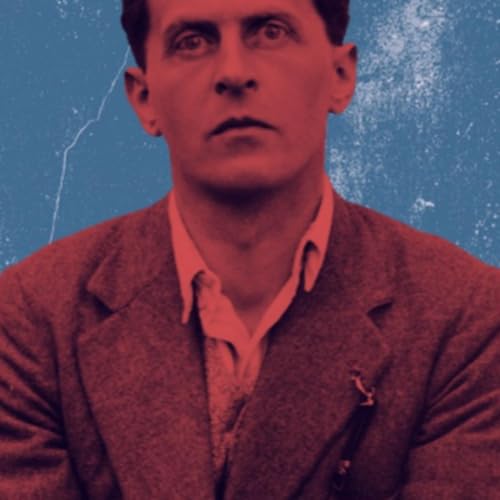
  • Wittgenstein: The difficulty of Language and Meaning
    2026/03/11

    In this conversation, the John Gibbs, Dr Richard Miller and Dan Rowland delve into Wittgenstein's 'Tractatus Logico-Philosophicus', exploring its complex themes surrounding language, meaning, and the limitations of expression. They discuss Wittgenstein's philosophical ambitions, the structure of language, and how his ideas have influenced modern philosophy. The conversation highlights the challenges of interpreting Wittgenstein's work and the significance of what cannot be said in philosophical discourse.

    • Wittgenstein's 'Tractatus' is structured around seven propositions.
    • The book explores the relationship between language and reality.
    • Wittgenstein argues that many philosophical problems stem from misunderstandings of language.
    • The famous opening line states that 'the world is everything that is the case.'
    • Wittgenstein's work is often misunderstood and not widely read outside philosophical circles.
    • He believed that what cannot be spoken about must be passed over in silence.
    • Philosophy should clarify language rather than add new truths.
    • Wittgenstein's ideas have influenced various branches of modern philosophy.
    • The importance of silence in expressing the inexpressible is a key theme.
    • Wittgenstein's pursuit of truth leads to the conclusion that many things are unknowable.


    続きを読む 一部表示
    38 分
  • Psycho-Politics Byung-Chul Han
    2026/03/04

    In this episode of the Spinoza Triad, John Gibbs and Richard Miller delve into the themes of Byung-Chul Han's 'Psycho-politics', exploring the shift from a disciplinary society to one driven by emotions and individualism. They discuss the implications of neoliberalism on personal identity, the rise of emotional capitalism, and the gamification of life and work. The conversation also touches on the impact of big data and the quantified self, examining how these elements shape our understanding of happiness, success, and personal agency in a data-driven world.

    "You're worth it."

    "Just do it."

    "Data is the new faith."

    • The shift from a disciplinary society to one focused on emotions is significant.
    • Neoliberalism emphasizes individualism and personal achievement.
    • Emotional capitalism manipulates feelings to drive consumer behavior.
    • Gamification blurs the lines between work and play, affecting productivity.
    • The quantified self movement reflects a culture obsessed with measurement.
    • Big data is seen as a new form of faith, replacing traditional narratives.
    • The digital unconscious influences our desires and behaviors without our awareness.
    • Statistics can dehumanize individuals, reducing them to mere data points.
    • The pursuit of efficiency in data can lead to irrational outcomes.
    • True happiness and meaning cannot be quantified or measured.

    続きを読む 一部表示
    1 時間 1 分
  • Vita Contemplativa Byung-Chul Han
    2026/02/25

    In this conversation, John Gibbs and Dr. Richard Miller delve into the first half of Byung-Chul Han book, 'Vita Contemplativa,' exploring the concept of inactivity as a vital aspect of human experience. They discuss the oppressive nature of a performance-driven society, the distinction between leisure and true inactivity, and the importance of boredom as a precursor to creativity. The dialogue also touches on the role of community and festivals, the ethics of inactivity, and the impact of technology on our ability to engage in contemplative thought. Ultimately, they argue for the necessity of embracing inactivity to foster creativity and a deeper understanding of the human condition.

    "Inactivity has a logic of its own."

    "Inactivity is a threshold for great deeds."

    "Creativity often comes out of inactivity."

    • Inactivity is not a weakness but a capacity in itself.
    • Leisure is often commodified and tied to productivity.
    • Boredom is essential for creativity and mental relaxation.
    • Community and festivals are crucial for shared experiences.
    • Technology disrupts our ability to engage in inactivity.
    • Contemplative inactivity allows for deeper thought and creativity.
    • The pursuit of goals often undermines the value of inactivity.
    • AI lacks the capacity for true human experience and mood.
    • Inactivity can lead to new ideas and insights.
    • Mindfulness and wonder are integral to appreciating inactivity.

    続きを読む 一部表示
    46 分
  • Burnout Society Byung-Chul Han
    2026/02/18

    In this podcast episode, John Gibbs and Dr. Richard Miller delve into Byung-Chul Han's 'The Burnout Society,' exploring the transition from a disciplinary society to one focused on achievement. They discuss the implications of this shift, including the suffocating nature of freedom, the crisis of gratification, and the impact of societal pressures on mental health. The conversation also touches on themes of authenticity, narcissism, creativity, and the pervasive nature of bureaucratic positivity in modern life.

    "Narcissism is the new threat in society."

    "Creativity is often defined by achievement."

    "The silence of boredom is deafening."


    • The Burnout Society critiques the shift from discipline to achievement.
    • Positivity in society can lead to anxiety and suffocation.
    • Hyper attention results in passive consumption and lack of depth.
    • Mental health issues are influenced by societal expectations and pressures.
    • Authentic tiredness connects individuals, while inauthentic tiredness isolates them.
    • Narcissism arises from self-relation and comparison with others.
    • Creativity is often measured by achievement, leading to anxiety.
    • Bureaucratic positivity creates pressure to conform to corporate values.
    • The silence of boredom can be overwhelming in a hyper-connected world.
    • The Burnout Society offers valuable insights into contemporary life.


    続きを読む 一部表示
    31 分
  • Plato's Gorgias and the problem of persuasion.
    2025/01/20

    In this episode of The Spinoza Triad, Dr. Richard Miller, Dan Rowland, and John Gibbs discuss the philosophical underpinnings of Plato's dialogues, particularly focusing on the Socratic method, the art of rhetoric, and the moral implications of persuasion. The discussion explores how these themes relate to modern education, the concept of virtue, and the challenges posed by cancel culture in contemporary debates. We reflect on the nature of the good life and the responsibilities that come with the power of persuasion, ultimately questioning how society defines and pursues virtue today. We discuss the philosophical themes of pleasure, happiness, virtue, and power, drawing on the dialogues of Socrates and Calicles. We discuss the implications of pursuing pleasure, the nature of morality, and the role of power in politics, ultimately questioning the modern interpretations of virtue and the societal values prioritizing wealth and success over genuine fulfillment.

    続きを読む 一部表示
    42 分
  • The Dark City: Gotham's Symbolism Decoding Society: The Role of Semiotics
    2024/10/22

    This conversation delves into the representation of Gotham City as a text, exploring its origins, meanings, and the semiotic analysis of its imagery. Dan, Richard, and John discuss the historical context of the term 'Gotham', its connections to urban design, and the dualities present in its narrative, particularly through the lens of Batman. They examine the architectural symbolism of Gotham, the role of myths and archetypes, and how these elements reflect societal fears and cultural codes. This conversation delves into the semiotic analysis of Gotham and the character of Batman, exploring how narratives reflect and critique capitalism and ideology. The discussion highlights the evolution of Batman's character from a simplistic hero to a complex figure grappling with moral ambiguity and psychological struggles. We also examine the cultural significance of urban environments and the authenticity of narratives within them, ultimately connecting these themes to broader societal reflections and the role of pop culture in shaping our understanding of the world.

    • Gotham's name originates from a folk tale about fools.
    • Semiotics helps decode the meanings behind signs.
    • The imagery of Gotham is dark and layered.
    • Binaries of good and evil are central to Gotham's narrative.
    • Myths and archetypes play a significant role in storytelling.
    • Gotham reflects societal fears and corruption.
    • The architecture of Gotham symbolizes its dual nature.
    • Light and dark imagery are crucial in Gotham's representation.
    • Cultural codes shape our understanding of symbols.
    • Gothic elements in Gotham connect to historical narratives. Roland Barthes' levels of signification help us understand meaning.
    • Gotham's narrative naturalizes capitalism through Batman's wealth.
    • The ideological critique of capitalism is often masked in narratives.
    • Batman evolves from a simplistic hero to a morally ambiguous figure.
    • Cultural reflections in media reveal societal anxieties and psychopathy.
    • Authenticity in urban narratives is tied to historical context.
    • Semiotics allows us to decode the meanings behind cultural symbols.
    • Pop culture serves as a mirror reflecting contemporary issues.
    • Understanding the language of semiotics enhances cultural analysis.
    • Decoding the world can become an engaging intellectual pursuit.

    続きを読む 一部表示
    46 分
  • Searching for the sublime and the beauty problem.
    2024/10/07

    In this conversation, The Spinoza Triad John Gibbs& Dr. Richard Miller discuss the film 'The Uglies' and its implications on contemporary culture, beauty standards, and the influence of technology on identity. The discussion delves into themes such as transhumanism, the motif of the frontier in storytelling, and the philosophical debates surrounding beauty and the sublime. They also examine the role of social media in shaping perceptions of beauty and the ethical dimensions of aesthetic experiences. Key ideas

    • The Uglies reflect contemporary beauty standards and societal pressures.
    • The motif of the frontier symbolizes the quest for freedom in storytelling.
    • Transhumanism raises questions about identity and body modification.
    • Technology increasingly shapes our self-perception and identity.
    • Beauty is often subjective and culturally specific, not universal.
    • Cultural capital influences perceptions of beauty across social classes.
    • Historical standards of beauty have evolved significantly over time.
    • Philosophical debates on beauty often contrast subjective and universal perspectives.
    • Romanticism emphasizes the importance of the sublime in human experience.
    • The ethical dimension of the sublime can lead to transformative experiences.

    続きを読む 一部表示
    54 分
  • Sartre and the Search for Authenticity
    2024/10/01

    In this episode, the Spinoza Triad, Dan Rowland, Dr. Richard Miller, and John Gibbs discuss Existentialism and some of the ideas of Jean-Paul Sartre. We explore how Existentialism emphasizes individual freedom and responsibility and how the anguish of existence is a central theme in Sartre's work. We conclude that while freedom can be both empowering and anxiety-inducing Existentialism offers insights into living in contemporary society. 00:00 Setting the Scene: Existentialism and Café Culture

    02:28 Exploring Jean-Paul Sartre: Life and Influence

    06:03 The Nature of Freedom: Positive and Negative

    11:09 The Burden of Freedom: Anxiety and Authenticity

    20:13 Existentialism in Popular Culture: Reflections and Parables

    30:11 The Relevance of Sartre Today: Authenticity in Modern Life

    続きを読む 一部表示
    40 分