『The Snooze Button』のカバーアート

The Snooze Button

The Snooze Button

著者: Neil Hedley
無料で聴く

In North America alone, there are about 100 million people with sleep issues. Maybe you’re one of them. Every week, veteran broadcaster Neil Hedley sits down with celebrities, high achievers and the world’s top neuroscientists to try and find answers to his own 30-year battle with sleep issues in the hope that he might find an answer that works for you, too.

All rights reserved.
心理学 心理学・心の健康 衛生・健康的な生活
エピソード
  • All-Star Panel on Wearable Sleep Trackers
    2024/06/17
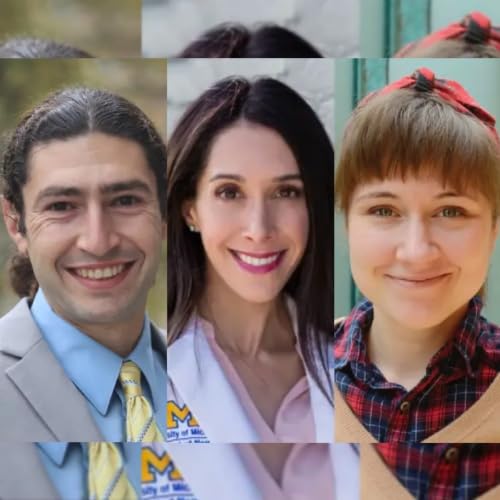
    In this episode:Jesse Cook, Cathy Goldstein and Olivia Walch grade their own sleep Why the answer to “Do most people need granular sleep-stage data?” is no Clinical sleep definitions versus consumer wearable outputs Why an EEG headband has an advantage over a motion-only tracker — but still is not a polysomnogram Sleep sensitivity, wake specificity and the trap hidden inside a 90% accuracy claim Why REM and deep-sleep staging are harder than basic sleep/wake detection What quiet wakefulness does to wrist-based algorithms Why actionability can matter more than precision Orthosomnia and the risks of sleep perfectionism Why one bad nightly score should not become a crisis How tracker validation changes across populations and sleep disorders Why proprietary algorithm updates can age a validation study overnight The case for access to raw sensor data and shared validation datasets What the World Sleep Society and National Sleep Foundation now recommend for consumer sleep technology Why healthy sleep includes more than duration Sleep regularity, rhythmicity, continuity, timing and daytime functioning Why a low consumer deep-sleep score cannot be translated directly into dementia risk What glymphatic research actually says about sleep stages Neil’s Dreem 2 data and which numbers catch the panel’s attention Temperature, awakenings and using wearable trends to test practical hypotheses Why mainstream trackers may be enough for most behavioral goals The importance of comfort, adherence and battery life FTC and FDA oversight of consumer health and wellness claims What seven-to-nine-hour recommendations actually mean Why trying too hard to sleep can become part of the problemAbout Jesse CookJesse Cook, PhD, is a sleep researcher and clinical psychologist at the University of Wisconsin–Madison. His work has examined sleep and mental health, hypersomnolence, athletes and the performance of wearable sleep technology. Cook previously joined The Snooze Button for a full episode devoted to the question of who validates the trackers themselves.About Dr. Cathy GoldsteinDr. Cathy Goldstein is a Clinical Professor of Neurology at the University of Michigan and a sleep physician whose work includes consumer and clinical sleep technology, circadian rhythm disorders and the use of wearable data. Her research has included efforts to improve and openly evaluate algorithms used to characterize sleep from wearable sensors.About Dr. Olivia WalchOlivia Walch, PhD, is a mathematician and circadian scientist whose research focuses on biological rhythms, sleep timing and mathematical models of the human circadian system. She is affiliated with the University of Michigan Center for Sleep Science and is CEO of Arcascope, which develops circadian-health technology.Archive update, 2026: At the time of this conversation, Walch’s book was still on the way. Sleep Groove: Why Your Body's Clock Is So Messed Up and What To Do About It was published January 28, 2025 by Andrews McMeel. The book uses comics and circadian science to explain why sleep timing goes wrong and what people can realistically do about it.MENTIONEDJesse Cook — University of Wisconsin–Madison Cathy Goldstein — University of Michigan Medical School University of Michigan Center for Sleep Science faculty Olivia Walch and Arcascope Sleep Groove: Why Your Body's Clock Is So Messed Up and What To Do About It Selecting a sleep tracker: EEG-based, multisensor and actigraphy-only devices 2025 validation of six commercial wrist-worn sleep trackers 2026 rapid review: real-world use of consumer sleep devices World Sleep Society recommendations for wearable consumer health trackers that monitor sleep National Sleep Foundation position statement on consumer sleep technology Screening for orthosomnia and sleep-related preoccupation U.S. survey of consumer sleep technology use, trust and sleep-related worry Which sleep health characteristics predict all-cause mortality in older men? Sleep regularity as a predictor of mortality risk American Heart Association statement on multidimensional sleep health 2023 mouse study: sleep-cycle-dependent vascular dynamics and predicted CSF flow Norepinephrine-mediated slow vasomotion and glymphatic clearance during sleep FTC Health Products Compliance Guidance FDA General Wellness: Policy for Low Risk Devices — 2026 guidance AASM/SRS recommended amount of sleep for a healthy adult National Sleep Foundation sleep-duration recommendations
    続きを読む 一部表示
    58 分
  • Hello, Sleep! With Dr. Jade Wu
    2024/06/10

    In this episode:

    • Why Jade Wu had just woken from a nap before the interview
    • Why she thinks of naps as snacks
    • What happens when trying to make sleep happen becomes the problem
    • Why Wu wrote Hello Sleep
    • The access problem surrounding Cognitive Behavioral Therapy for Insomnia
    • Who CBT-I is actually for — and what it does not treat
    • Why an overnight sleep study is not routinely necessary for uncomplicated insomnia
    • Neil's periodic limb movements and the case for treating comorbid sleep problems together
    • What happened when a sleep psychologist became a severely sleep-deprived new parent
    • Sleep disruption, postpartum depression and the danger of single-cause explanations
    • Why sleep can be foundational without being the explanation for everything
    • How sleep optimization and sleep trackers can create pressure
    • Why melatonin is a timekeeping hormone rather than a sedative
    • The label-accuracy problem in commercial melatonin products
    • When melatonin may have legitimate circadian uses
    • Why chronotype can collide with school and work schedules
    • How social media and streaming services compete with sleep
    • Why daytime light changes the brain's sensitivity to evening light
    • What the evidence does — and does not — say about screens and blue-light blocking
    • Mindfulness without turning mindfulness into another performance task

    About Dr. Jade Wu

    Dr. Jade Wu, PhD, DBSM, is a board-certified sleep psychologist, researcher and author of Hello Sleep: The Science and Art of Overcoming Insomnia Without Medications. Duke University currently lists her as an Associate in Research whose work focuses on treating sleep disorders in people with chronic illness. Her own site describes her broader work in behavioral sleep medicine, public education and her company Thrive; it also lists her as a Clinical Assistant Professor at SUNY Upstate Medical University and says she will join Cornell University's Psychology Department faculty in Fall 2026.

    Wu earned her undergraduate degree at Cornell, her PhD at Boston University, and completed medical psychology residency and clinical fellowship training at Duke University School of Medicine.

    MENTIONED
    • Hello Sleep: The Science and Art of Overcoming Insomnia Without Medications — Jade Wu
    • Jade Wu — Duke Department of Neurology
    • Dr. Jade Wu
    • AASM guideline: behavioral and psychological treatments for chronic insomnia
    • 2025 systematic review: CBT for adult insomnia in routine clinical care
    • AASM practice parameters: evaluation of chronic insomnia and use of polysomnography
    • 2017 study: melatonin content variability and serotonin in commercial supplements
    • 2023 study: melatonin and CBD quantities in U.S. melatonin gummies
    • Health Canada: melatonin as a natural health product
    • AASM pharmacologic guideline: melatonin and chronic insomnia
    • The human circadian system adapts to prior photic history
    • 2024 National Sleep Foundation consensus statement on screens and sleep
    • 2025 systematic review and meta-analysis of blue-light blocking glasses and objective sleep
    • The Many Challenges of Insomnia — Dr. Jade Wu
    • Sex & Sleep: Was It Good For You?


    続きを読む 一部表示
    40 分
  • The Disconnect Between Scientific Evidence and The Real World with Dr. Michael Grandner
    2024/06/03

    In this episode:

    • Why major changes in sleep science often take years to become visible
    • How scientific knowledge becomes more nuanced instead of simply replacing “wrong” answers with “right” ones
    • Why no single sleep stage should automatically be treated as the only stage that matters
    • REM sleep, deep sleep and the brain's overnight fluid dynamics
    • What p-values are trying to tell us about uncertainty
    • Why replication and converging evidence matter
    • The problem with treating scientific revision as scientific failure
    • What “normal sleepers” means in device-validation research
    • Why sleep trackers may mistake motionless wakefulness for sleep
    • Why disagreement between a wearable, a sleep lab and your memory does not have a simple answer
    • How to think about consumer sleep technology as a measurement tool rather than a truth machine
    • The evidence for later middle- and high-school start times
    • Teen driving safety and later school schedules
    • Why sleep and circadian researchers favor permanent standard time
    • The conflict between circadian biology and our preference for brighter evenings
    • Where the idea of a 90-minute sleep cycle comes from
    • Why 90 minutes is an approximation, not a sleep-planning rule
    • How the human appetite for “secret knowledge” turns useful observations into rigid sleep hacks

    About Dr. Michael Grandner

    Dr. Michael Grandner is a licensed clinical psychologist and behavioral sleep medicine specialist at the University of Arizona. He directs the Sleep and Health Research Program and the Behavioral Sleep Medicine Clinic at Banner – University Medical Center Tucson, with appointments across psychiatry, medicine, psychology and related programs. His research spans insufficient sleep, sleep health, cardiometabolic and neurocognitive outcomes, social and environmental influences on sleep, health disparities and behavioral interventions.

    On the day this episode was released — June 3, 2024 — Grandner was receiving the Associated Professional Sleep Societies' Diversity, Equity and Inclusion Leadership Award, recognizing contributions to broadening access and representation and reducing sleep-health disparities. The award has since been renamed the APSS Inclusive Leadership Award.

    MENTIONED
    • Michael Grandner — University of Arizona College of Medicine
    • APSS Inclusive Leadership Award and past recipients
    • Dementia and Sleep: It's Not Just Deep Sleep That Counts with Dr. Laura Bojarskaitė
    • Bojarskaitė et al.: Sleep cycle-dependent vascular dynamics and predicted cerebrospinal-fluid transport
    • 2025 meta-analysis: consumer wrist-worn sleep trackers compared with polysomnography
    • 2026: Consumer sleep technologies — what we know and what comes next
    • AASM position statement on later middle- and high-school start times
    • Adolescent sleep, school start times and teen motor-vehicle crashes
    • AASM: Permanent standard time is the optimal choice for health and safety
    • Review of human sleep architecture and 90–110 minute NREM/REM cycles


    続きを読む 一部表示
    40 分
adbl_web_anon_alc_button_suppression_t1
まだレビューはありません