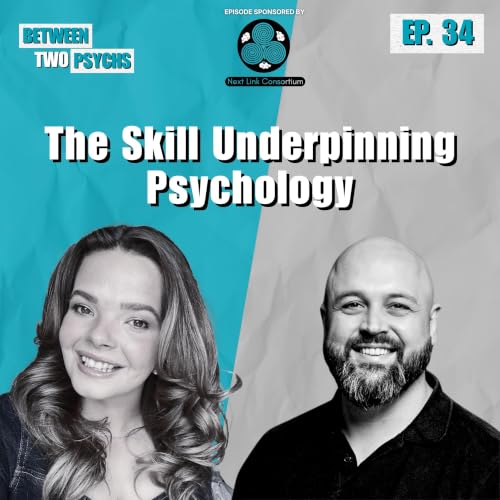
『The Skill Underpinning Psychology』のカバーアート

The Skill Underpinning Psychology

The Skill Underpinning Psychology

無料で聴く

ポッドキャストの詳細を見る

【Amazonプライム会員限定】今ならプレミアムプランが4か月 月額99円。

10月19日まで。※適用条件あり
What does reflective practice really look like, and how can psychology move from theory into everyday practice?In this episode of Between Two Psychs, I’m joined by Lois Harreld, a trainee educational psychologist, to explore her journey into educational psychology and why reflective practice has been such a core part of her experience.We discuss how Lois’s experiences across alternative provision, youth work, mainstream education and specialist SEND settings helped shape her passion for psychology, relationships and supporting the whole child. We explore how psychological theories can help us understand children and young people, their behaviour and their experiences, and how this understanding can bring more compassion and understanding.Lois shares her experience of developing and managing an alternative provision and explains how the team used reflective practice to think about their values, their setting and how theories such as Dan Hughes’ PACE model could be applied in practice. We also discuss the different ways reflective practice can happen, from conversations and written reflection to simply sitting with your own thoughts.A key part of the conversation is the relationship between reflective practice and identity. We explore how our own experiences, values and stories shape who we are as practitioners, and why reflection is not just about looking at what we do, but also how we think.In This Episode, We ExploreWhy relationships and understanding the whole child are so important.How psychological theory can be applied to everyday practice.How reflective practice was used within an alternative provision.The different approaches to reflective practice, including talking, writing and thinking.How reflective practice connects with professional identity, values and self-awareness.Why reflective practice should not become a tick-box exercise.How recognising strengths and positive moments is also part of reflection.Why aspiring educational psychologists should focus on authenticity, values and how they have applied psychology.Why This Episode MattersReflective practice isn't just about writing things down. As we discuss, it can be a conversation, a journal, a mind map, a voice note or simply taking time to think about what happened, how you felt and what you might do differently.For Lois, reflective practice has been about connecting psychological theory with real experiences, understanding her own identity and values, and continuing to learn. For aspiring psychologists, it also means showing not just what psychology you know, but how you embody it.🎧 Listen now for a conversation about psychology, reflective practice, identity, values and the journey into educational psychology.I’d love to hear your thoughts:What does reflective practice look like for you?Do you find talking, writing or thinking most useful when reflecting?How does your own identity and values influence the way you work?Sponsored by: Next Link ConsortiumNext Link Consortium is a tailored recruitment service connecting psychology and education specialists to high-impact opportunities with built-in CPD benefits. Whether your focus is targeted SEMH and crisis support, strategic SEND audits and consultations, or professional CPD delivery, you’re welcome to contact Matheos Maneli directly to understand where your skills are needed most right now.If you have questions about the service or would like to engage directly, please contact Matheos Maneli. https://www.nextlinkconsort.co.uk https://uk.linkedin.com/company/next-link-consortiumConnect with Me (Dr Adam McCartney)Instagram: @‌dradammcartneyWebsite: dradammccartney.comYouTube: @‌Dr.AdamMcCartneyConnect with Lois HarroldLinkedin: www.linkedin.com/in/lois-harrold-7b3bb019bInstagram: @loisthete
adbl_web_anon_alc_button_suppression_t1
まだレビューはありません