エピソード

  • Tiger Balm Empire: How Aw Boon Haw Turned a Tin Into a Fortune
    2026/07/18

    He didn't sell balm. He sold the name on the tin — and the name built an empire.

    Camphor and menthol, pennies a tin, on every shelf in Asia. What nobody else was selling was a name. So he became the name.


    Every stunt Aw Boon Haw pulled — the gold spectacles he didn't need, the car rebuilt around a snarling tiger's head, the two free theme parks — went in one column: advertising. And so did everything that looked nobler: the charity, the patriotism. This is the audit of a man who sold himself harder than his product, and turned a failing Rangoon medicine shop — and the salve his quiet brother had perfected — into one of Asia's biggest fortunes. His sharpest move was the newspapers: instead of renting space in other men's papers, he bought his own, Singapore to Rangoon to Hong Kong, most losing money by design, every page delivering his tins into the right hands. Charity bought a decoration from the British Empire. Patriotism bought Chiang Kai-shek's autograph on his own front page. When Japan occupied Southeast Asia, the same playbook bought business as usual under a new flag. The account runs clean until 1949, when the one buyer the playbook couldn't reach seized his China business and banned Tiger Balm from the country his father came from.

    続きを読む 一部表示
    15 分
  • He Built a Fortune in Rubber, Then Gave Away Every Cent
    2026/07/07

    Fifteen thousand acres of rubber. Thirty thousand men working for him.

    He gave away every cent of it — and left his own children nothing.


    In 1903, a young clerk in Singapore came home to find his father's rice business collapsed — and behind it, a debt he was under no legal obligation to touch. He shouldered it anyway. Within two decades, Tan Kah Kee (陈嘉庚) was the richest man in Southeast Asia. Fifteen thousand acres. Thirty thousand workers. Offices on five continents. Then the Great Depression took rubber from 35 cents a pound to 7, and the creditors took the rest.


    This is the part the obituaries skip. Broke, and drawing a salary from the men who had seized his company, Tan kept funding a teachers' college and a university in China. First from that salary. Then from the one business the collapse never touched. He had a theory about money: hoarded, it did nothing; spread, it grew things. Andrew Carnegie gave that idea a name. Tan reached it on his own, half a world away — and unlike most who preach it, he gave to the last cent.


    We read history through the ledger. Where a fortune came from. Where it went. What the allocation says about the man.


    The Silk Ledger: History, audited.

    続きを読む 一部表示
    14 分
  • The Emperor's Banker Who Went Bankrupt
    2026/06/21

    The men sent to seize Hu Xue Yan's fortune found an empty house. Two years earlier, he had bankrolled imperial China and cornered a global market.


    He started by sweeping the floor of a small bank in Hangzhou. An orphan with no name to trade on and one talent: he could count. He died the most powerful private banker in China — and then he died broke. In between, he built a network of nine banks, financed the official Wang You Ling and then the general Tso Tsung Tang's campaigns in the west, and channeled millions in foreign silver loans through his own vaults before the government ever saw a coin. The access bought him rank no merchant had ever held. Then, at the height of it, he reached for one last prize: control of a global commodity market. His agents bought up nearly an entire year's supply, cornering the market against the foreign trading houses of Shanghai — until, by one account, his rivals couldn't buy an ounce. For one season it held. Then the corner cracked, and the richest man in China was left holding a fortune no one would buy. This is the anatomy of the largest private bank collapse in 19th-century China — built on credit, trust, and silver, and undone in a single autumn. The Silk Ledger audits the record — because the money usually tells a story the textbooks leave out.


    ▬▬▬▬▬▬▬▬▬▬▬▬▬▬▬▬▬▬▬▬▬▬▬▬▬▬

    CHAPTERS

    ▬▬▬▬▬▬▬▬▬▬▬▬▬▬▬▬▬▬▬▬▬▬▬▬▬▬

    0:00 — The Empty House

    0:41 — From Orphan to Banker

    3:17 — Buying a Province

    4:12 — The Richest Man in China

    4:59 — The Empire's Banker

    7:01 — The Spread

    7:46 — The Minister

    8:38 — The Corner

    10:05 — The Crack

    12:14 — The Run

    13:38 — The Same Trap


    #EconomicHistory #ChineseHistory #QingDynasty


    🛑 DISCLAIMERS & LEGAL


    ▬▬▬▬▬▬▬▬▬▬▬▬▬▬▬▬▬▬▬▬▬▬▬▬▬▬▬▬▬▬▬▬▬▬▬▬▬▬▬▬


    Copyright Disclaimer: Under Section 107 of the Copyright Act 1976, allowance is made for "fair use" for purposes such as criticism, comment, news reporting, teaching, scholarship, and research. Fair use is a use permitted by copyright statute that might otherwise be infringing. Non-profit, educational, or personal use tips the balance in favor of fair use.


    Financial Disclaimer: The content on this channel is for educational and entertainment purposes only. I am not a financial advisor and nothing herein should be construed as financial, legal, or tax advice. Trading assets (crypto, stocks, gold) involves risk of loss. Always do your own research or consult a licensed professional before making investment decisions.

    続きを読む 一部表示
    20 分
  • The Pirate Who Built the Largest Navy — and Taxed the Sea
    2026/06/07

    He didn't sink the ships that crossed his waters. He charged them a toll. And the most powerful navy on earth was his enforcer. No ship from Japan to the South China Sea sailed through his waters without paying.

    Zheng Zhilong was born in 1604 to a minor official in Fujian who wanted a scholar for a son. He got a pirate instead — and then something stranger than a pirate. From a Macau trading desk, Zheng built a private maritime empire that did not raid the China seas so much as *tax* them: a toll on every ship that moved through the waters he controlled. When the imperial court could no longer afford a navy of its own, it did the only thing a bankrupt state could do with a monopoly it couldn't break — it licensed it, and made the pirate an admiral. In 1633 his fleet broke a Dutch squadron at Liaoluo Bay, and even the Dutch East India Company, the most powerful trading company on earth, began paying his tolls. This is the story of how one man turned the absence of a state into a business — charging the world for access to a sea he never owned. Call it monopoly rent, three centuries before the term existed — and the enterprise he built fired its own founder the moment he tried to sell it to the wrong buyer.

    The Silk Ledger: History, audited.

    続きを読む 一部表示
    21 分
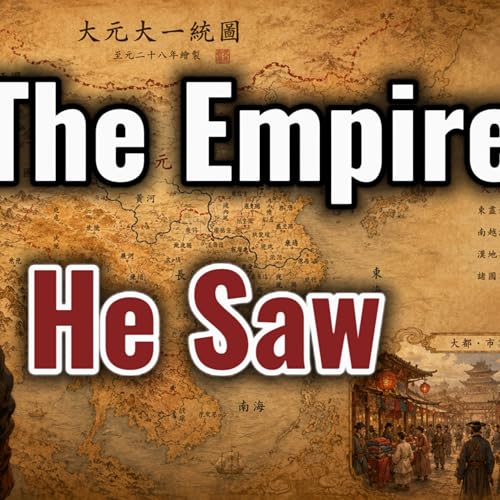
  • What Marco Polo Saw Bankrupted Kublai Khan's Empire
    2026/05/26

    Marco Polo walked into Peking in 1275 and saw something Europe wouldn't believe for 700 years. He went home a liar.

    Marco Polo walked into Kublai Khan's capital in 1275 and saw the first paper money in history. Mulberry bark, soaked and pressed, stamped with the Khan's red seal, declared the only money allowed across an empire stretching from the Pacific to the Volga. Refusal carried the death penalty. Polo recorded every detail in *Il Milione* and was called a liar for the next seven centuries. He was right. By the 1350s, late-Yuan emperors had printed too many notes to fund wars and palaces. One sack of rice that cost a single note under Kublai needed one hundred and fifty notes fifty years after his death. The empire fell in 1368. The paper trick didn't. Eighty years later, salt smugglers who had defied the monopoly that propped up the paper money founded the Ming dynasty — and copied the same trick. What Marco Polo saw in Kublai's capital is what every wallet on earth now carries. Europe took seven hundred years to believe him.

    続きを読む 一部表示
    9 分
  • Marco Polo and the Wood That Bankrupted Kublai Khan's Empire
    2026/05/24

    Marco Polo walked into Peking in 1275 and saw something Europe wouldn't believe for 700 years. He went home a liar.

    Marco Polo walked into Kublai Khan's capital in 1275 and saw the first paper money in history. Mulberry bark, soaked and pressed, stamped with the Khan's red seal, declared the only money allowed across an empire stretching from the Pacific to the Volga. Refusal carried the death penalty. Polo recorded every detail in *Il Milione* and was called a liar for the next seven centuries. He was right. By the 1350s, late-Yuan emperors had printed too many notes to fund wars and palaces. One sack of rice that cost a single note under Kublai needed one hundred and fifty notes fifty years after his death. The empire fell in 1368. The paper trick didn't. Eighty years later, salt smugglers who had defied the monopoly that propped up the paper money founded the Ming dynasty — and copied the same trick. What Marco Polo saw in Kublai's capital is what every wallet on earth now carries. Europe took seven hundred years to believe him.

    続きを読む 一部表示
    9 分
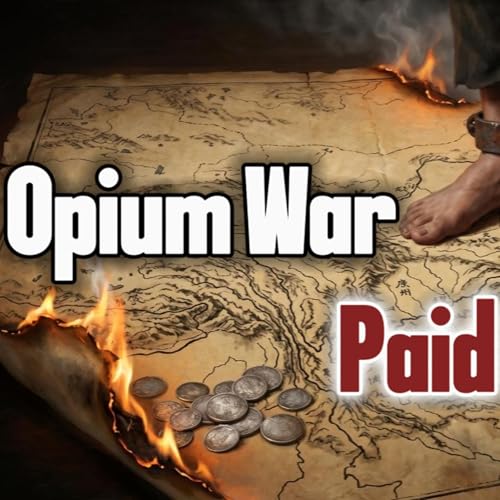
  • How the Opium War Bankrupted the Richest Man on Earth
    2026/04/24

    In 1834, one Chinese merchant was worth more than the entire United States government. Nine years later, he was dead — and his silver was building America.

    Howqua — Wu Bingjian — was the richest man on earth in the 1830s. This Chinese merchant ran the Cohong, the imperial guild that monopolized foreign trade through Canton (Guangzhou) for a century. His personal fortune of $26 million in silver was more than double the annual outlays of the United States federal government. Then the First Opium War brought down the system that made him. This episode of The Silk Ledger audits how Howqua's fortune was built, how the Treaty of Nanking abolished the Cohong in 1842, and how Howqua had already moved his capital offshore to Boston before the collapse came. The story covers the Canton System, the opium trade that passed through Howqua's ledgers, his arrest by imperial commissioner Lin Zexu in 1839, the ransom of Canton in 1841, and the silver Howqua entrusted to a young Boston merchant named John Murray Forbes — silver that outlived him by fifty years, financed American railroads and mines, and built the fortunes of the Forbes, Perkins, and Roosevelt dynasties. A 19th century China history explainer from a forensic financial angle.

    続きを読む 一部表示
    10 分
  • The Boxer Rebellion: How Trade Wars Destroyed China
    2026/04/11

    They were promised magic — that their bodies would stop bullets.

    Eight hundred million dollars later, the dynasty was dead.

    The Boxer Rebellion was not a rebellion. It was the final invoice for an empire destroyed by forced trade. After the Opium Wars, foreign goods flooded China — machine-made textiles, steel, and steamships priced local craftsmen out of existence. In Shandong province, millions of displaced workers joined a movement called the Boxers, demanding the foreigners be expelled. The Empress Dowager Cixi of the Qing Dynasty made them a deal: fight for the throne, and China would rise again.

    She lied.

    When eight nations invaded in 1900, Cixi fled Beijing in the night. The Boxers faced modern rifles with swords and spears. They were decimated. Then came the bill: the Boxer Protocol — 800 million silver dollars, the largest war indemnity in history. Four years of China's tax revenue, extracted from 400 million citizens. The Qing Dynasty collapsed within a decade.

    This is the story of how protectionism fails. How displaced workers become pawns. And how the people always pay twice: first their livelihoods, then their lives. The Boxer Rebellion explained — economics, not mythology.

    続きを読む 一部表示
    8 分