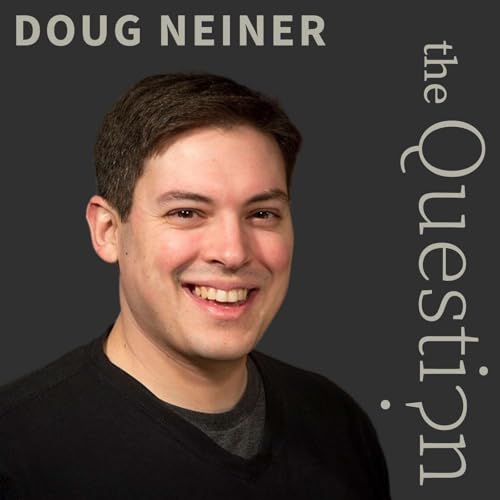
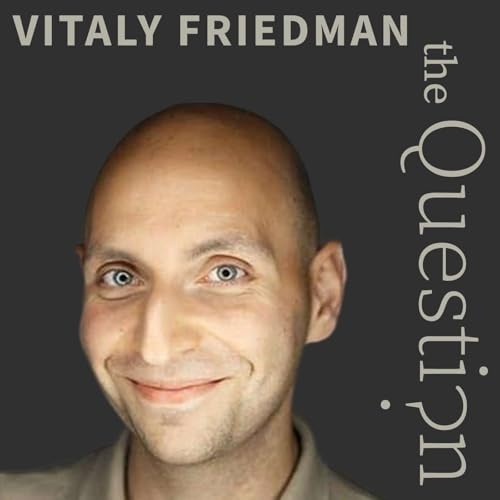
『The Question: Design System Collaborative Learning』のカバーアート

The Question: Design System Collaborative Learning

The Question: Design System Collaborative Learning

著者: Ben Callahan
無料で聴く

今ならプレミアムプランが3カ月 月額99円

2026年5月12日まで。4か月目以降は月額1,500円で自動更新します。

概要

The Question is a collaborative learning podcast about Design Systems. Smart people like you sign up, answer a few niche questions about design systems for each episode, and then we all get together to unpack the data we've gathered. Each week, I'll invite a new co-host to help facilitate the conversation. After the deep dive, the co-host and I record a recap of what we learned. That means, for each episode, you can listen to the recap and the full deep dive! If you're a design system practitioner, subscribe today (https://bencallahan.com/the-question) to receive an invitation to each episode. This only works if the community joins in! Stay in learning mode ❤️© Copyright 2026, Learning Mode, LLC
エピソード
  • Episode 072 Recap: Extreme Design System Support with Ben Callahan and Doug Neiner
    2026/04/13
    Episode 072 Recap: Extreme Design System Support with Ben Callahan and Doug NeinerHost Ben Callahan and co-host Doug Neiner, a design system practitioner at Planview, sit down immediately following the Episode 072 deep dive to reflect on what they heard from the community. The survey was sent to 1,081 design system practitioners and received 49 responses across four questions: what support do you currently offer; how would you change it without constraints; what prevents better support; and share a story of going above and beyond. The conversation covers the standout data points: the written vs. video documentation gap, the surprisingly high rate of dev environment access, embedding, private vs. public support channels, the balance between high-touch support and burnout, and the importance of being perceived as a helper rather than a blocker.Show Notes00:00 - Introduction and episode overview 01:46 - Q1 data highlights: written vs. video documentation gap 02:13 - Dev environment access: higher than expected at nearly 50% 02:48 - Lowering the bar for video production with modern tooling 03:15 - The perfectionist/design system practitioner Venn diagram 04:00 - Q3 data: unclear ownership is low; headcount and competing priorities dominate 04:30 - What "competing priorities" really means for system teams 05:46 - Doug's support approach at Planview: docs, Slack channels, onboarding, and local debugging 07:53 - Going beyond "access": running consumer products locally for deeper support 08:28 - The most extreme example: getting an org-issued PC to support a heavy product 09:42 - DMs vs. open channels: why private requests matter for trust 10:34 - Not everyone is comfortable asking publicly—meeting people where they are 11:20 - The problem with ticketing systems and over-streamlining support11:49 - How private support builds trust that eventually leads to public participation 13:25 - Prioritizing relationship over efficiency: creating tickets on behalf of consumers 14:10 - Scale vs. effort framework for thinking about support types 15:42 - Embedding: initially looks high-effort/low-scale, but the impact compounds 16:21 - Doug on embedding: modeling behavior, referencing docs together, building self-sufficiency 17:50 - The other side: high-touch support and the risk of design system team burnout 18:47 - How to gauge when a support request warrants deep mentorship vs. a quick fix 21:56 - Recap of embedding discussion: Sean's reverse embedding process from Spotify 23:28 - Doug's one experience with reverse embedding and its lasting impact 24:06 - Alexander's story: misaligned incentives can undermine embedding programs 25:08 - Rebecca's insight: being a helper vs. a blocker, and how hard trust is to rebuild 26:06 - What embedding teaches you about your own system's pain points 26:31 - Staying connected to product work keeps system teams grounded in consumer reality 27:31 - Mapping stakeholders: identifying high-influence non-advocates and converting them 28:35 - Doug: influence can come from the product, not just the person 29:57 - AI in design system support: useful for self-service, but reduce touch points with caution 31:01 - Closing reflections and thanks 31:39 - OutroWhere to Find the HostsBen Callahan is Founder of Sparkbox and Redwoods Design System Community. Read his writings, have him present at your event, or engage with him as a coach or consultant at https://bencallahan.comDoug Neiner is a Principal Software Engineer at Planview. Connect with him on LinkedIn.Get the Raw DataAccess the complete survey data from Episode 072 to conduct your own analysis: **https://bit.ly/41H6Tf7**Review the FigJam NotesDig into the collaborative notes we took as a community during the deep dive: **https://bit.ly/4mm3uLZ**Join the ConversationThe Question explores design systems topics through community research and deep-dive discussions. Participate in future episodes and contribute to the next survey: **https://bit.ly/answerTheQuestion**
    続きを読む 一部表示
    32 分
  • Episode 072 Deep Dive: Extreme Design System Support with Ben Callahan and Doug Neiner
    2026/04/13

    Episode 072 Deep Dive: Extreme Design System Support with Ben Callahan and Doug Neiner


    Host Ben Callahan is joined by co-host Doug Niner, a design system practitioner at Planview, to explore extreme design system support—what it looks like, what gets in the way, and what truly moves the needle with consuming teams. The survey was sent to 1,081 design system practitioners and received 49 responses across four questions: what support do you currently offer; how would you change your program if unconstrained; what prevents better support; and share a story of going above and beyond. The conversation covers the surprising prevalence of dev environment access, the rarity and outsized impact of embedding, the tension between high-touch support and burnout, and why building trust may matter more than any specific tactic.


    Show Notes

    00:00 - Introduction and welcome
    00:37 - Guest background: Doug Niner on getting into design systems at Planview
    01:38 - Topic framing: what is "extreme design system support"?
    02:07 - Survey overview: the four questions asked
    03:34 - Survey stats: 1,081 sent, 49 responses
    03:59 - Q1 findings: what support are teams currently offering?
    04:30 - Reactions: video vs. written docs, dev environment access
    05:27 - Video documentation: perfectionism vs. "good enough" screen recordings
    06:25 - Q3 findings: headcount, bandwidth, and competing priorities dominate
    07:17 - Key insight: teams know what good looks like but lack people and time
    09:10 - Embedding: high effort, but potentially exponential impact through advocacy
    10:10 - Community discussion: what does "embedding" actually mean?
    11:07 - Sean shares his team's embedding process: runbooks and buddy systems
    15:36 - Alexander: forward embedding failures vs. reverse embedding wins
    17:53 - Reverse embedding: consuming team members join the design system team
    19:50 - Disruption and ROI: is onboarding a stream of embeds worth it?
    21:16 - Turning embedded team members into lasting design system advocates
    23:09 - Rapid bug turnaround as a trust-building extreme support tactic
    24:57 - Embedded collaborators as a source of honest, continuous feedback
    25:53 - "Runners": rotating on-call support roles and AI-assisted quick fixes
    26:45 - Rebecca on trust: being a helper vs. a blocker
    27:14 - Supporting private requests alongside public channels
    28:35 - Over-systematizing support and why removing friction builds trust
    29:31 - Q4 stories: going above and beyond for consuming teams
    29:43 - Taylor's story: building buy-in for a generational system change at Fidelity
    33:12 - Doug's story: burning trust with a team and winning them back over 18 months
    34:37 - Mapping stakeholders from saboteur to advocate
    35:30 - Jane's perspective: extreme support drives adoption but risks burnout
    36:53 - Hand-holding vs. empowerment: when is high-touch support too much?
    37:19 - Transitioning from high-touch support to self-service empowerment
    43:51 - Live prototyping as a low-effort, high-value support approach
    45:15 - Figma detachable components and slots discussion
    45:50 - Christine's bi-weekly demo program at office hours
    47:56 - Closing reflections; encouragement to read Q4 survey answers
    48:25 - Community updates: Redwoods, Design System Triage, Converge in Newcastle
    50:09 - Outro


    Where to Find the Hosts

    Ben Callahan is Founder of Sparkbox and Redwoods Design System Community. Read his writings, have him present at your event, or engage with him as a coach or consultant at https://bencallahan.com

    Doug Neiner is a Principal Software Engineer at Planview. Connect with him on LinkedIn.

    Get the Raw Data
    Access the complete survey data from Episode 072 to conduct your own analysis: https://bit.ly/41H6Tf7

    Review the FigJam Notes
    Dig into the collaborative notes we took as a community during the deep dive: https://bit.ly/4mm3uLZ

    Join the Conversation
    The Question explores design systems topics through community research and deep-dive discussions. Participate in future episodes and contribute to the next survey: https://bit.ly/answerTheQuestion

    続きを読む 一部表示
    51 分
  • Episode 071 Deep Dive: The Criticality of Design Systems with Ben Callahan & Vitaly Friedman
    2026/03/29

    Episode 071 Deep Dive: The Criticality of Design Systems with Ben Callahan & Vitaly Friedman

    In Episode 071, host Ben Callahan is joined by co-host Vitaly Friedman—UX Lead, author, and founder of Smashing Conference—for a deep dive into the criticality of design systems. Vitaly brings experience from complex enterprise environments, including a multi-year engagement consolidating 199 European Parliament websites into one across 25 languages.

    The survey was sent to over 1,000 design system practitioners, yielding 61 responses. Participants were asked four questions through the lens of their single most critical product: (1) what level of impact would a product failure have on end users—loss of comfort, discretionary money, essential money, or life; (2) the size of their engineering team; (3) how they ensure their design system supports that criticality; and (4) whether anyone in their org is doing workflow analysis with users.

    Show Notes
    00:04 Introduction and episode overview
    01:48 Vitaly's background: complex systems, B2B, insurance, European Parliament
    03:01 The pressure of high-stakes work and measuring before/after impact
    05:19 Ben's upcoming book, published by Smashing Magazine
    05:44 Survey overview: methodology and FigJam data access
    06:11 Q1 Results: 57% selected "loss of essential money"; write-in responses
    07:08 Q2 Results: even distribution across team sizes; Cockburn's scale model
    08:03 Vitaly on loss of trust and reputation as missing modern categories
    09:29 Expanding the criticality framework for today's digital landscape
    10:52 Defining workflow analysis vs. task analysis
    14:33 Financial app example: importing a portfolio (task) vs. market analysis (workflow)
    15:56 Key finding: workflow analysis correlates with team size, not criticality
    17:23 Peter: using AI agents as a team of one to conduct workflow analysis
    19:41 Community discussion: respondents who selected "loss of life"
    20:09 David (Mayo Clinic): design system tokens and cascading patient-room risk
    21:32 Taylor: higher criticality means more questions and stakeholders, not a different process
    23:52 Vitaly: poor data visualization choices can cascade into financial loss
    24:20 Reference: The Fifth Discipline by Peter Senge (1990)
    25:08 Hattie (John Deere): autonomous vehicle safety warnings and multi-team sign-off
    26:41 Jesse (NAVA): public benefits delivery—if this fails, someone doesn't eat
    28:10 Vitaly: legacy systems as an underappreciated source of fragility and criticality
    30:06 Taylor: legacy is an iceberg—you don't know what you've got until you knock
    31:58 Kele: integrating a design system and AI tooling into existing enterprise SaaS
    33:17 Level-setting AI expectations with leadership
    35:42 Greg: AI tooling as a potential accelerator for legacy accessibility migration
    39:38 Vitaly: migrating away from legacy means designing the change, not just the UI
    40:06 Ben: FOMO-driven AI adoption decisions
    41:32 Taylor: legacy systems are often politically protected
    44:15 Ben: systems thinkers evaluated on product KPIs—structural misalignment
    46:35 Kele: reframing "healthy tension" as creative friction with different mandates
    49:22 Closing and thank-yous
    49:48 Redwoods membership, UX London, previous episode with Hannah

    Where to find the hosts
    Ben Callahan is Founder of Sparkbox and Redwoods Design System Community. Read his writings, have him present at your event, or engage with him as a coach or consultant at https://bencallahan.com

    Vitaly Friedman is a UX Lead and founder of Smashing Conference. Connect with him on LinkedIn: https://bit.ly/43Iig8B

    Get the Raw Data
    Access the complete survey data from Episode 071: https://bit.ly/4rYcRTk

    Review the FigJam notes
    Dig into the collaborative notes from the deep dive: https://bit.ly/4bKWSlt

    Join the conversation
    Participate in future episodes and contribute to the next survey: https://bit.ly/answerTheQuestion

    続きを読む 一部表示
    52 分
まだレビューはありません