In this episode:
From the operating room to one of Canada's first RN injectors, and the year it took to convince a surgeon
Why she built nurse training in 1994 when nothing existed, sold it, and started again in 2016
Inside THMA's foundation program: facial anatomy, assessment skills, medical history, skin quality, neuromodulators, fillers and PRP, and the business of practice
Advanced training, and why lip enhancement is taught one-on-one rather than in a group
The adverse events course, and the informed consent conversation most providers avoid having
The biggest obstacle for a newly qualified nurse, and why it isn't clinical skill
Social media and the colleges: what you can post, what you can't, and why self-injecting content is a problem
Why a curriculum that hasn't changed in five years is a red flag
As Tracey Hotta puts it, on informed consent: "If it's documented in the literature and something happens and you haven't told them, you're accountable." And on the Instagram version of the job: "They go, oh my God, there's so much to learn. It's like, yeah, it's medicine. There's a lot to learn."
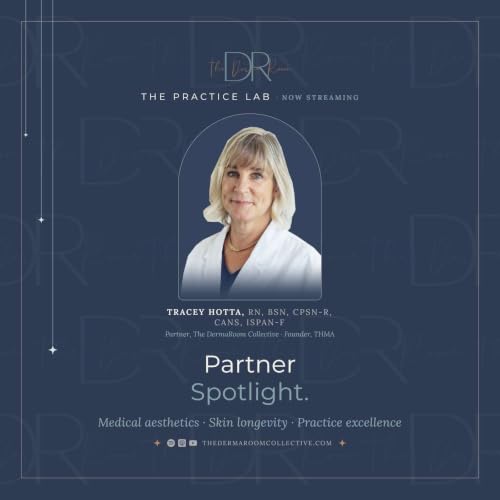
About the guest: Tracey Hotta, RN, BSN, CPSN-R, CANS, ISPAN-F, is the founder of THMA and a partner of The DermaRoom Collective. She began nursing in 1984 and moved into aesthetics in 1990, becoming one of the first registered nurse injectors in Canada. She is a past president of ISPAN, a founding member of the Canadian Society of Aesthetic Specialty Nurses, and a member of the Registered Nurses' Association's Quarter Century Club. She lectures on facial anatomy across North America.


 2026/09/0925 分
 2026/09/0825 分