エピソード

  • Fear of the People: The Conservative Reaction
    2026/07/08

    After the French Revolution, monarchies could return, but the obedience that had sustained them could not be fully restored. Joseph de Maistre rejected popular sovereignty and defended a final authority rooted in religious order. Edmund Burke answered abstract rights with tradition, inheritance, and gradual reform. François Guizot accepted representative government but sought to reserve political power for a minority considered capable of exercising it. These were different responses to the same fear: that popular mobilization would destroy stability, property, and institutions. This is the story of modern conservatism and the limits imposed on democracy in the name of order.

    See omnystudio.com/listener for privacy information.

    続きを読む 一部表示
    13 分
  • France: Liberty, Equality, and Revolution
    2026/07/08

    The French Revolution destroyed centuries-old privileges and proclaimed that human beings were born free and equal in rights. Sovereignty no longer belonged to the king but to the nation. Yet war, crisis, and popular mobilization radicalized the revolution until the defense of liberty became a justification for the Terror. Sans-culottes, Jacobins, and counterrevolutionaries fought over its meaning. Years later, Benjamin Constant warned against sacrificing individual independence to collective power. This is a story of universal rights, political exclusion, and a revolution that permanently transformed the language and institutions of modern politics.

    See omnystudio.com/listener for privacy information.

    続きを読む 一部表示
    12 分
  • America: A Republic Against the Majority
    2026/07/08

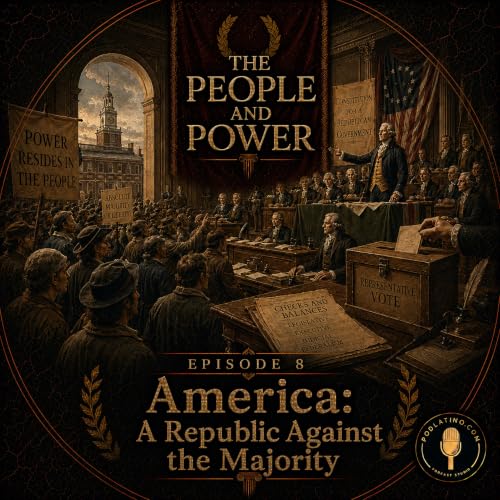
    The United States was founded on the claim that political power came from the people, yet its founders deeply distrusted an unchecked majority. The Declaration of Independence defended rights, consent, and the people’s authority to replace a tyrannical government. Madison proposed a large, representative, and federal republic to control factions and prevent majority tyranny. The separation of powers added further restraints on authority. Decades later, Andrew Jackson would demand fewer intermediaries and greater trust in the common man. This is the story of a republic built against kings, but also against the perceived dangers of popular rule.

    See omnystudio.com/listener for privacy information.

    続きを読む 一部表示
    12 分
  • The Elected: When the People Stopped Governing Directly
    2026/07/06

    Voting and governing have never meant exactly the same thing. The first representative systems allowed the people to choose their authorities, but they were also designed to select individuals considered wealthier, more educated, or more capable than ordinary citizens. In England, France, and the United States, representation combined popular consent with social distinction. Federalists and Anti-Federalists debated whether elected officials should resemble their voters or refine their opinions. This is the story of the elitist origins of representative government and its enduring tension: the people authorize political power, but a minority exercises it.

    See omnystudio.com/listener for privacy information.

    続きを読む 一部表示
    12 分
  • The Invention of the Sovereign People
    2026/07/06

    How can the people rule if they are never gathered in one place and rarely speak with a single voice? In seventeenth-century England, Parliament began to justify its authority by claiming to represent a sovereign people. Political representation helped replace the divine right of kings with the consent of the governed, but it also created a lasting contradiction: the people were declared the owners of power while others exercised it in their name. A story about the invention of popular sovereignty, its necessary political fictions, and the enduring problem of controlling those who claim to represent everyone.

    See omnystudio.com/listener for privacy information.

    続きを読む 一部表示
    12 分
  • Machiavelli: The Conflict That Protects Freedom
    2026/07/06

    Machiavelli observed an Italy divided by wars, conspiracies, and factional struggles and reached an unsettling conclusion: freedom does not always grow from harmony. Looking back at the Roman Republic, he argued that conflicts between the people and the powerful had produced laws, tribunes, and limits capable of restraining domination. The elites wanted to rule, while the people primarily wanted to avoid being ruled arbitrarily. This episode reveals a lesser-known side of Machiavelli’s political thought and explores how a republic can transform social divisions into institutions that defend liberty.

    See omnystudio.com/listener for privacy information.

    続きを読む 一部表示
    10 分
  • Free Cities: The Return of the Republic
    2026/07/06

    In a Europe dominated by kings, nobles, and religious authorities, several Italian cities began electing magistrates, writing laws, and defending their autonomy. Consuls, councils, guilds, and podestàs formed governments designed to prevent one family from permanently controlling the community. These were not modern democracies, and much of the population remained excluded. Yet the city-republics restored a decisive political idea: freedom required self-government, civic participation, and officials with limited terms. This is the story of cities that transformed hereditary power into a public responsibility and demonstrated that a community could govern itself through its own institutions.

    See omnystudio.com/listener for privacy information.

    続きを読む 一部表示
    11 分
  • The Long Night of Kings
    2026/07/06

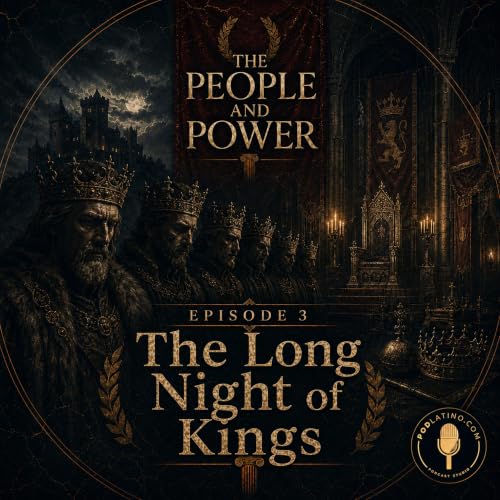
    After the fall of Rome, European power did not pass into a single pair of hands. It fragmented among kings, nobles, cities, emperors, and religious authorities. The Church provided continuity and legitimacy, while rulers depended on oaths, traditions, and alliances to preserve their authority. In this hierarchical world, politics revolved around a decisive question: when does a legitimate king become a tyrant? This journey reveals that the Middle Ages were not an empty pause in political thought, but a vast arena of disputes over obedience, justice, and the limits of power that prepared the ground for the return of the republic.

    See omnystudio.com/listener for privacy information.

    続きを読む 一部表示
    11 分