エピソード

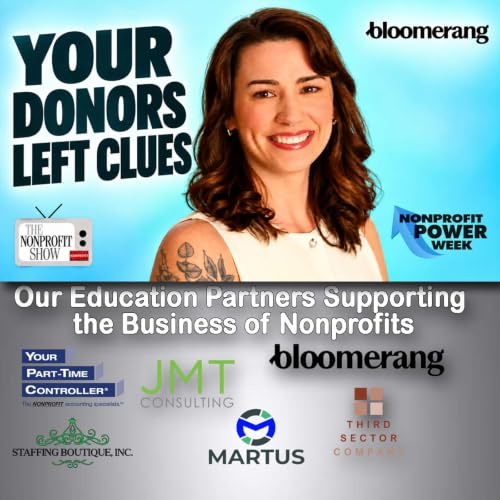
  • Stop Treating Your Donors Like Donors!
    2026/08/12

    Send us Fan Mail

    Nonprofit donor segmentation strategy may matter far more than most fundraising teams realize. New donor behavior research reveals that geography, household income, gender, trust, and communication preferences can dramatically change what motivates someone to give!

    Mary Crogan, Vice President of Brand Marketing at Bloomerang, returns with a deeper look at Bloomerang's ‘Giving Signals’ research with The Harris Poll. The original study surveyed more than 1,000 donors and several hundred fundraisers, then examined donor responses across demographic groups rather than treating supporters as one giant audience. The result challenges one of fundraising's most persistent habits.

    “There’s no such thing as the donor,” Mary says. “And the data proves that.”

    Consider geography. Only 45% of Midwest respondents expected to give more, compared with 62% in the West. Midwest donors were also considerably less responsive to identity and belonging language, suggesting that messages emphasizing concrete needs, transparency, and measurable outcomes may perform better with that audience.Trust creates another major business implication. The West registered 86% trust in nonprofits' effective use of funds, while 62% expected to increase giving. As Mary puts it, “You need to treat transparency as a fundraising activity, not just a compliance moment.”

    The data also challenges assumptions about major gift messaging. Among households earning $150,000+, 41% looked to third-party ratings compared with 29% overall. These high-capacity donors behaved more like evidence-driven buyers, responding to ratings, audited outcomes, measured impact, and proof—not simply another moving story.

    And donor trust does not develop identically. Women reported stronger responses to transparency, matching gifts, and proof of gift impact—with 93% citing information about their gift's impact—while men showed greater responsiveness to peer recommendations and preferred communication channels.

    The operational takeaway: segment, survey, test, measure, and adjust before assuming one appeal speaks to everyone.

    Key Takeaways:

    Build fundraising segments around meaningful donor differences instead of relying on one universal appeal.

    Treat transparency and closed-loop impact reporting as revenue-building activities.

    Test concrete outcome messaging versus belonging-oriented messaging by geography.

    Give high-capacity donors evidence: ratings, audited results, ROI, and measurable impact.

    Use peer and ambassador voices where personal endorsement strengthens trust.

    Survey your own donor base before turning national demographic patterns into fundraising assumptions.

    00:00:00 — Why There’s No Such Thing As “The Donor”
    00:01:46 — How Bloomerang Studies Donor Behavior
    00:04:24 — What 1,000+ Donors Told Researchers
    00:05:47 — Why Midwest Fundraising Messaging Is Different
    00:09:48 — Trust Sits Upstream Of The Ask
    00:12:16 — Income Changes What Motivates Donors
    00:13:27 — The Ethical Edge Of Urgency Messaging
    00:14:34 — The Problem With One-Size-Fits-All Appeals
    00:16:31 — What High-Capacity Donors Actually Want
    00:19:30 — Men, Women And Different Paths To Trust
    00:23:10 — Turning Donors Into Trusted Ambassadors
    00:25:15 — Survey Your Own Donor Community
    00:27:02 — Segment And Test Before Your Next Appeal

    #NonprofitFundraising #DonorEngagement #TheNonprofitShow

    Find us Live daily on YouTube!

    Find us Live daily on LinkedIn!

    Find us Live daily on X: @Nonprofit_Show

    Our national co-hosts and amazing guests discuss management, money and missions of nonprofits!
    12:30pm ET 11:30am CT 10:30am MT 9:30am PT

    Send us your ideas for Show Guests or Topics: HelpDesk@AmericanNonprofitAcademy.com
    Visit us on the web:The Nonprofit Show

    続きを読む 一部表示
    31 分
  • Your Nonprofit CEO Will Leave. Are You Actually Ready?
    2026/08/10

    Send us Fan Mail

    Nonprofit leadership transition planning should begin long before an executive announces a departure! Erin Rodenbiker and Joan Brown of Third Sector Company explain why professional interim leadership can help nonprofits protect mission continuity, strengthen operations, and prepare for a better permanent hire.

    For many nonprofit boards, “interim” still sounds like emergency management — somebody brought in because something went wrong. Joan challenges that assumption with three remarkably simple words: “Everybody leaves.” Leadership transition is not a possibility to avoid discussing. It is an eventual organizational reality worth planning for. Instead of scrambling after a resignation, retirement, sabbatical, or founder departure, nonprofit leaders can determine in advance when an interim executive makes sense, who has decision-making responsibility, and what the organization needs during the transition.

    Erin adds another important reality: “In reality, these tools can only get you so far. You need a person.” Succession plans, guides, and policies matter, but someone must still lead staff, maintain direction, communicate with stakeholders, and move the plan into operation.

    The numbers discussed are revealing. Third Sector Company describes a network of approximately 800 people trained for transitional leadership, while Erin notes that an interim assignment may span roughly six to nine months, depending on the organization.

    Most importantly, the interim is not there simply to “keep the lights on.” Joan says a successful engagement should leave the nonprofit positioned to attract, hire, and retain the right permanent leader. That begins with assessment: policies, HR records, organizational gaps, staff realities, board alignment, and the conditions the next executive will inherit.

    Key Takeaways:

    * Treat executive transition as a predictable governance responsibility, not an unexpected crisis.

    * Discuss interim leadership before a departure becomes imminent or emotionally charged.

    * Do not automatically assign already-stretched staff or board members to run the organization.

    * Begin an interim engagement with an organizational assessment before recruiting the permanent leader.

    * Measure interim success partly by the quality and retention of the organization’s next executive hire.

    * Use leadership transitions to challenge “we’ve always done it that way” and prepare the organization for what comes next.

    00:00:00 Interim Leadership and Nonprofit Transition
    00:03:01 Why Interim Leadership Still Carries a Stigma
    00:06:30 Everybody Leaves: Planning Before the Crisis
    00:08:09 Giving Boards the Language for Succession
    00:10:03 When Leadership Transition Planning Should Begin
    00:15:25 How Boards Explore Interim Leadership
    00:16:16 Corporate vs. Nonprofit Interim Leadership
    00:18:34 Turning Succession Plans Into Action
    00:22:34 An Interim Is More Than a Caretaker
    00:23:53 Why Every Interim Engagement Needs Assessment
    00:25:19 The Advantage of an Outside Interim Leader
    00:29:10 Making Interim Leadership the Norm


    #NonprofitLeadership #NonprofitSuccessionPlanning #TheNonprofitShow

    Find us Live daily on YouTube!

    Find us Live daily on LinkedIn!

    Find us Live daily on X: @Nonprofit_Show

    Our national co-hosts and amazing guests discuss management, money and missions of nonprofits!
    12:30pm ET 11:30am CT 10:30am MT 9:30am PT

    Send us your ideas for Show Guests or Topics: HelpDesk@AmericanNonprofitAcademy.com
    Visit us on the web:The Nonprofit Show

    続きを読む 一部表示
    32 分
  • Want the C-Suite? Stop Thinking Like “Just” a Fundraiser
    2026/08/07

    Send us Fan Mail

    How do fundraisers become nonprofit leaders? Moving from development into executive leadership takes more than raising money—it requires understanding the entire business of the nonprofit and becoming someone who can lead across departments, relationships, strategy, and mission.

    On this Fundraisers Friday edition, co-hosts Julia C. Patrick and Tony Beall examine how nonprofit professionals can deliberately increase their professional value and prepare themselves for broader leadership.

    Tony begins by pointing to one major advantage many development professionals already possess: relationships. Fundraisers work with donors, boards, community leaders, staff, and supporters, often developing credibility across an organization long before they enter the C-suite. But relationships alone are not enough. Future nonprofit leaders need to understand how the organization actually works: finance, operations, marketing, human resources, programs, and the processes that turn funding into outcomes.

    As Tony reminds us, “Your team members regardless of their job title come to you with a lot of lived experience.”

    The conversation also moves into communication, professional visibility, public speaking, LinkedIn, networking, body language, and thought leadership. Yet visibility comes with an important guardrail: “You have to maintain a level of humility in this work.”

    The bigger career question may not be, “How valuable do others think I am?” Instead, it may be: How am I becoming the strongest leader I can be for the work I want to accomplish?

    There is a fitting backdrop to the conversation: this marks the 1,600th edition of The Nonprofit Show, seven years into an ongoing exploration of the business decisions that make nonprofit missions possible!

    Key Takeaways:

    * Fundraising relationships can create a strong foundation for future nonprofit executive leadership.

    * C-suite readiness requires knowledge beyond development, including finance, operations, HR, marketing, and programs.

    * Understanding program delivery makes fundraisers stronger storytellers with donors and investors.

    * Leadership communication includes tone, timing, word choice, and nonverbal signals.

    * Public speaking and professional visibility can expand influence when paired with humility.

    * Professional value should be built around contribution and impact, not external validation.

    00:00:00 The Nonprofit Show Reaches 1,600
    00:01:21 Escalating Your Professional Value
    00:03:14 Why Fundraisers Can Become Nonprofit CEOs
    00:06:16 Learn the Business Beyond Fundraising
    00:10:25 Leadership Across Operations and Programs
    00:11:20 Understand How the Mission Actually Gets Delivered
    00:13:59 Communication as a Leadership Skill
    00:17:25 What Your Body Language Communicates
    00:18:45 Public Speaking and Professional Visibility
    00:20:05 Thought Leadership Without the Ego
    00:23:44 LinkedIn, Networking and Professional Presence
    00:26:16 Who Determines Your Professional Value?


    #NonprofitLeadership #FundraisingCareer #TheNonprofitShow

    Find us Live daily on YouTube!

    Find us Live daily on LinkedIn!

    Find us Live daily on X: @Nonprofit_Show

    Our national co-hosts and amazing guests discuss management, money and missions of nonprofits!
    12:30pm ET 11:30am CT 10:30am MT 9:30am PT

    Send us your ideas for Show Guests or Topics: HelpDesk@AmericanNonprofitAcademy.com
    Visit us on the web:The Nonprofit Show

    続きを読む 一部表示
    30 分
  • Changing 115,000 Lives: This Is What They Learned
    2026/08/06

    Send us Fan Mail

    How do you scale a nonprofit internationally without imposing outside assumptions on the people and communities you serve? John Molineux, founder and CEO of Love Justice International, shares a global nonprofit operating model built around local leadership, measurable impact, technology, and organizational humility.

    Love Justice International works to prevent human trafficking at the moment when a person is in transit but has not yet been exploited. Through a strategy known as transit monitoring, locally led teams identify warning signs at bus stations, train stations, airports, and border crossings.

    The organization now operates in 18 countries and reports more than 115,000 trafficking interceptions. Even more striking is the organization’s improvement in efficiency: its cost per interception declined from approximately $1,000 in 2021 to $112 today.

    That progress did not come from exporting a Western management system. John explains that Love Justice International learned, often through failed pilots, to identify trusted national champions, support locally selected leadership, adapt its tools to each context, and maintain clear operating standards.

    “Equip the right people for impact rather than command and control,” John says.

    He also describes humility as a formal management practice. “Admit your weaknesses is one of our values.” Teams are encouraged to criticize their own work, question reported impact, seek feedback, and remain alert to the possibility of unintended harm.

    This inspiring conversation also explores what John calls “impact engineering”: combining process improvement, data, artificial intelligence, social-media monitoring, and technology to produce more life-changing impact from every contributed dollar. Love Justice International now operates a technology team, a data-science team, and Searchlight, one of the world’s largest human-trafficking databases.

    Key Takeaways:

    * Recruit credible local champions before establishing programs, leadership teams, or boards.

    * Separate locally adaptable practices from the standards required to preserve program effectiveness.

    * Measure unit cost to show donors how resources translate into life-changing outcomes.

    * Build continual improvement through stakeholder feedback, failed-pilot analysis, and honest self-evaluation.

    * Treat technology, data science, and AI as mission infrastructure rather than administrative extras.

    * Scale by equipping local leaders—not by directing every decision from headquarters.

    00:00:00 Global Nonprofit Leadership Across Borders
    00:01:51 Preventing Human Trafficking in Transit
    00:03:06 The Origin of Love Justice International
    00:05:38 Prevention Versus Post-Trafficking Response
    00:06:39 Scaling Transit Monitoring to 18 Countries
    00:09:32 Learning From Local Teams and Failed Pilots
    00:10:33 Government Cooperation and Staff Security
    00:12:17 Navigating Language and Cultural Complexity
    00:14:59 Institutionalizing Humility and “Do No Harm”
    00:16:34 Recruiting Local Champions for Expansion
    00:18:34 Reducing Cost per Interception to $112
    00:20:25 Impact Engineering, AI, Data, and Technology
    00:24:03 Donor Motivation and Life-Changing Impact
    00:25:08 Scaling the Mission and Deterring Trafficking


    #humantrafficking #GlobalNonprofits #TheNonprofitShow

    Find us Live daily on YouTube!

    Find us Live daily on LinkedIn!

    Find us Live daily on X: @Nonprofit_Show

    Our national co-hosts and amazing guests discuss management, money and missions of nonprofits!
    12:30pm ET 11:30am CT 10:30am MT 9:30am PT

    Send us your ideas for Show Guests or Topics: HelpDesk@AmericanNonprofitAcademy.com
    Visit us on the web:The Nonprofit Show

    続きを読む 一部表示
    28 分
  • Equity That Survives Pressure, Politics, and Budget Cuts
    2026/08/05

    Send us Fan Mail

    A Nonprofit’s equity strategy becomes meaningful when it changes how an organization budgets, hires, evaluates performance, develops policy, and serves its community. Bernardo J. Ruiz of Bridging International explains how to embed equity in nonprofit operations amid political pressure, funding risk, and organizational fatigue. This fresh conversation offers a clear operating principle: lasting equity requires leadership courage, adequate resources, assigned ownership, and measurable institutional change!

    Many nonprofits have issued statements, held training sessions, and hosted thoughtful conversations. But Bernardo warns that these efforts can fade when no one owns the implementation, funding disappears, or leadership treats equity as separate from everyday operations.

    “Equity must be baked into the walls of the organization,” he explains.

    That means incorporating it into strategic plans, policy development, job descriptions, compensation, performance management, program design, and leadership accountability. Without those operating structures, even well-intended initiatives can remain trapped in binders, websites, or annual presentations.

    Drawing from his experience with Seattle Public Schools, Bernardo describes how an equity policy was activated across 101 schools serving approximately 65,000 students. The system used televised board meetings, school-level conversations, internal equity teams, and recurring decision-making tools to keep the policy visible and connected to daily work.

    The discussion also examines how nonprofits can sustain their commitments when public language creates political or financial risk. Bernardo shares how some organizations have shifted from external messaging toward internal systems that address health disparities, access barriers, workplace culture, and service outcomes.

    Rather than measuring success by the number of conversations held, nonprofit leaders should ask what will be visibly different three to five years from now.

    “How is the organization going to change to better serve their people and the clients coming into their care?” Bernardo asks.

    Key Takeaways:

    • Equity must be incorporated into budgets, strategic plans, job descriptions, compensation, and performance systems.

    • Every initiative needs accountable owners with the authority and resources to implement it.

    • Training without structural change may produce temporary progress followed by organizational regression.

    • Seattle Public Schools activated its policy across 101 schools serving about 65,000 students.

    • Internal systems can continue advancing equitable outcomes even when public terminology creates funding risks.

    • Leaders should define the organizational outcomes they expect to see within three to five years.

    00:00:00 Equity That Moves Nonprofit Systems
    00:02:41 What Equity Actually Means
    00:06:04 Moving Beyond Statements and Training
    00:07:00 Embedding Equity Into Organizational Operations
    00:09:54 How Seattle Public Schools Activated Policy
    00:13:24 Why Targeted Strategies Can Benefit Everyone
    00:16:12 Why Nonprofit Equity Initiatives Fall Flat
    00:18:40 Responding to Political and Funding Pressure
    00:22:26 Measurable Change Versus Performative Campaigns
    00:24:20 Leadership, Budgeting, and Equity Fatigue
    00:28:05 Building Stronger Institutions From Within

    #DEIB #NonprofitEquity #TheNonprofitShow

    Find us Live daily on YouTube!

    Find us Live daily on LinkedIn!

    Find us Live daily on X: @Nonprofit_Show

    Our national co-hosts and amazing guests discuss management, money and missions of nonprofits!
    12:30pm ET 11:30am CT 10:30am MT 9:30am PT

    Send us your ideas for Show Guests or Topics: HelpDesk@AmericanNonprofitAcademy.com
    Visit us on the web:The Nonprofit Show

    続きを読む 一部表示
    31 分
  • How to Make Your Nonprofit 'Investable'
    2026/08/04

    Send us Fan Mail

    How do you make a nonprofit ‘investable’ to today’s philanthropic donors? Carol Wick, president of Sharity, explains how stronger planning, financial discipline, outcome measurement, and revenue strategy can help nonprofits attract larger, longer-term investments.

    Traditional fundraising often sits apart from operations. Carol argues that this separation leaves organizations chasing gifts without building the infrastructure donors increasingly expect. Drawing on 40 years in the sector and Sharity’s work across 37 countries, she outlines five elements that help philanthropic investors—and boards—feel confident: a functional business plan, a multiyear budget, the right team, measurable outcomes, and a sustainable revenue strategy.

    Carol reports that roughly 75% of nonprofits do not have a strategic plan guiding daily operations. She also shares that Sharity clients following its model average a 200% revenue increase within 24 months. Those results begin with a shift in thinking: donors are not only asking whether the mission is inspiring. They want to know what the organization will accomplish, how success will be proven, what it will cost, whether the team can deliver, and who else is committed.

    "Nonprofit is a tax status, not a goal,” Carol says. That mindset requires leaders to understand the real cost of every program, identify funding gaps, and confront services that may be ineffective or financially unsustainable.

    The conversation also separates outputs from outcomes. Counting meals, bed nights, or counseling hours shows activity. Investors want evidence of what changed because those services were delivered. As Carol puts it, donors “do not want to just know that you were busy.”

    Key Takeaways:

    * Integrate fundraising with operations, outcomes, budgeting, and long-term strategy.

    * Build a three-year business plan, organizational chart, and budget—not a shelf-bound retreat document.

    * Measure the change programs produce, not merely the volume of services delivered.

    * Calculate the full cost of programs, including wages, benefits, overhead, and depreciation.

    * Cultivate both present-focused donors and future-focused investors seeking societal change.

    * Use strategic planning as the cultivation foundation for a comprehensive campaign.

    00:00:00 Making a Nonprofit a Smarter Investment
    00:01:24 Sharity’s Scaling Model and 200% Revenue Growth
    00:03:03 Why Fundraising Cannot Be Separated from Operations
    00:06:12 How Modern Philanthropic Investors Evaluate Nonprofits
    00:09:00 The Five Factors That Build Donor Confidence
    00:10:18 Teams, Outcomes, and Sustainable Revenue
    00:12:04 Confronting Programs That Lose Money or Miss the Mission
    00:16:16 Present-Focused Donors vs. Future-Focused Investors
    00:19:23 Turning Strategic Planning into Donor Cultivation
    00:22:31 Stop Chasing Dollars and Return to the Mission
    00:24:45 Nonprofit Inc.: Scaling with Purpose
    00:27:25 The Work Required to Scale Successfully


    #NonprofitStrategy #PhilanthropicInvestment #TheNonprofitShow

    Find us Live daily on YouTube!

    Find us Live daily on LinkedIn!

    Find us Live daily on X: @Nonprofit_Show

    Our national co-hosts and amazing guests discuss management, money and missions of nonprofits!
    12:30pm ET 11:30am CT 10:30am MT 9:30am PT

    Send us your ideas for Show Guests or Topics: HelpDesk@AmericanNonprofitAcademy.com
    Visit us on the web:The Nonprofit Show

    続きを読む 一部表示
    30 分
  • Corporate Partnerships for Nonprofits: Beyond the Check
    2026/08/03

    Send us Fan Mail

    Corporate sponsorship strategy for nonprofits should begin with mission alignment, not a funding request! Michael Medoro, Chief Operating Officer of Childhelp, explains how nonprofits can attract, retain, and grow corporate partnerships by treating sponsors as long-term investors in measurable community impact.

    Childhelp has operated for 67 years and delivers programs ranging from the National Child Abuse Hotline to prevention education, residential treatment, foster care, adoption services, and multidisciplinary advocacy centers. Its hotline serves every U.S. state, Canada, Guam, and U.S. territories 24 hours a day, 365 days a year. Its prevention curriculum reaches approximately 30 states and 13 U.S. military bases worldwide!

    That scale gives Michael a powerful perspective on what makes corporate partnerships flourish—and what causes them to fall apart. “Real alignment happens when the company’s core values naturally intersect with your mission,” Michael explains. That means researching businesses that care about the communities where their employees and customers live, rather than pursuing every company with a sponsorship budget.

    Michael also warns against partnerships that turn the nonprofit into an extension of a company’s marketing department. When expectations, success measures, and the shared “why” are unclear, both sides often leave disappointed. Instead, Childhelp connects corporate support to specific outcomes. A company supporting prevention education may learn exactly how many students it helped protect and how many disclosures resulted in children receiving assistance. As Michael tells us, “That type of return on investment is what true corporate partnership looks like.”

    The relationship does not end after the check arrives. Childhelp uses quarterly communication, tiered sponsor outreach, leadership calls, impact updates, and genuine expressions of gratitude. Its philanthropy team follows a simple framework: “keep, lift, promote” to retain supporters, deepen their involvement, and create pathways toward greater engagement.

    Key Takeaways:

    * Begin with the intersection between corporate values and nonprofit mission.

    * Define the partnership’s purpose and success measures before launching it.

    * Report outcomes that connect corporate investment to human impact.

    * Communicate quarterly rather than resurfacing only when funding is needed.

    * Segment sponsor stewardship by entry-level, mid-level, and major relationships.

    * Build volunteer opportunities around genuine organizational needs—not one-time appearances.

    00:00:00 Corporate Sponsorships Beyond the Check
    00:01:24 Scaling Childhelp’s National Operations
    00:03:07 How Two Hollywood Performers Built a Global Mission
    00:05:23 Operation Babylift and Childhelp’s Expansion
    00:07:43 Finding Authentic Corporate Mission Alignment
    00:09:10 Researching Potential Corporate Partners
    00:10:17 Why Transactional Sponsorships Often Fail
    00:12:28 Treating Corporate Sponsors Like Investors
    00:14:03 Reporting a Meaningful Return on Impact
    00:16:55 Sponsor Communication Is Relationship Management
    00:18:40 Building a Quarterly Stewardship Rhythm
    00:20:50 The Keep, Lift, Promote Framework
    00:24:52 Creating Meaningful Corporate Volunteer Opportunities
    00:27:39 Community Alignment and Sharing the Spotlight
    00:28:05 Are There Too Many Nonprofits?
    00:29:07 Lessons from Childhelp’s 67-Year Evolution


    #NonprofitSponsorship #CorporateSponsorship #TheNonprofitShow

    Find us Live daily on YouTube!

    Find us Live daily on LinkedIn!

    Find us Live daily on X: @Nonprofit_Show

    Our national co-hosts and amazing guests discuss management, money and missions of nonprofits!
    12:30pm ET 11:30am CT 10:30am MT 9:30am PT

    Send us your ideas for Show Guests or Topics: HelpDesk@AmericanNonprofitAcademy.com
    Visit us on the web:The Nonprofit Show

    続きを読む 一部表示
    32 分
  • The Personal Story That Changed Foster Care Adoption
    2026/07/29

    Send us Fan Mail

    Corporate philanthropy for foster care adoption becomes more powerful when personal conviction, business systems, and measurable outcomes work together!

    Denny Lynch, author of Call Me Dave, and Rita Soronen, president and CEO of the Dave Thomas Foundation for Adoption, share how Dave Thomas turned his own adoption story into a lasting model for corporate-nonprofit impact.

    This fascinating discussion explores founder legacy, cause alignment, franchise engagement, program design, capacity constraints, and the responsibility successful businesses have to give back. It is a powerful example of how one leader’s personal experience can become an enduring institution when passion is matched with structure, measurement, and shared ownership.

    Dave Thomas founded the foundation in 1992 after recognizing that children waiting in foster care were being overlooked. His approach went far beyond lending a famous name to a cause. He brought the same focus, urgency, and operating discipline that helped build Wendy’s, asking a direct question: How many children did we help move into permanent families?

    Rita explains how that expectation pushed the foundation from awareness-building toward measurable action. The Wendy’s Wonderful Kids program now funds adoption professionals across the United States and Canada who use an evidence-based, child-focused recruitment model. The goal is not simply to generate interest, but to strengthen the capacity needed to connect children, especially older youth, with safe, loving, permanent homes.

    As Rita tells us, “Behind that word dramatic is something measurable.” That mindset offers a valuable lesson for nonprofit executives, board members, funders, and corporate partners: a compelling mission must be supported by clear outcomes, sufficient infrastructure, and transparent reporting.

    Denny also describes the leadership traits that made Thomas’s commitment credible. “Find something that means something to you,” he advises business leaders, because authentic commitment attracts employees, franchisees, families, and communities in ways that transactional sponsorship cannot.

    00:00:00 Dave Thomas and the Mission of Foster Care Adoption
    00:01:38 Twenty Years of Stories Behind Call Me Dave
    00:03:29 Why Children Wait Years for Permanent Families
    00:04:36 How Adoption Shaped Dave Thomas
    00:07:08 The Values That Defined His Leadership
    00:09:35 A Final Mandate: Get This Job Done
    00:11:43 Finding the Courage to Share His Story
    00:13:19 The White House and Corporate Adoption Benefits
    00:14:45 Keeping a Founder’s Legacy Relevant
    00:18:39 Engaging Wendy’s Franchisees in the Mission
    00:22:29 Building an Evidence-Based Adoption Program
    00:24:35 Measuring Results Instead of Activity
    00:26:34 What Business Leaders Can Learn From Dave Thomas


    #CorporatePhilanthropy #FosterCareAdoption #TheNonprofitShow

    Find us Live daily on YouTube!

    Find us Live daily on LinkedIn!

    Find us Live daily on X: @Nonprofit_Show

    Our national co-hosts and amazing guests discuss management, money and missions of nonprofits!
    12:30pm ET 11:30am CT 10:30am MT 9:30am PT

    Send us your ideas for Show Guests or Topics: HelpDesk@AmericanNonprofitAcademy.com
    Visit us on the web:The Nonprofit Show

    続きを読む 一部表示
    31 分