『The New Generation Leader - Your Tools for Winning in the Digital World』のカバーアート

The New Generation Leader - Your Tools for Winning in the Digital World

The New Generation Leader - Your Tools for Winning in the Digital World

著者: Aaron Lee
無料で聴く

You are an expert at your business strategy, but now it's time to build your People Strategy.

Build your toolkit for high-performing teams, increase profits, and impact communities. Become the leader our world needs!

Subscribe today on your favorite platform and tune into our next episode.

2026 Aaron Lee
マネジメント マネジメント・リーダーシップ リーダーシップ 経済学
エピソード
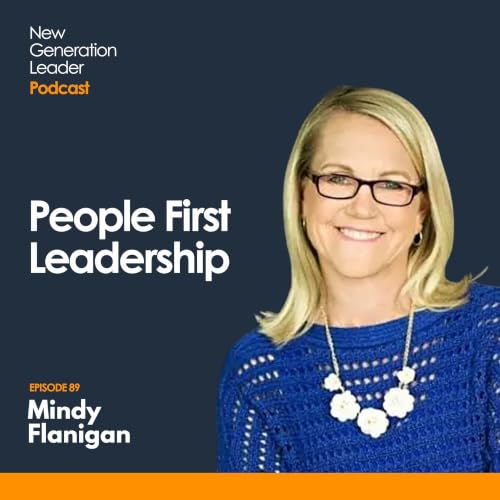
  • People First Leadership with Mindy Flanigan
    2026/10/13

    Small business owners are tired. The AI headlines tell them that if they're not talking about it they're not relevant in the room, and if they're not adopting it they're falling behind. Mindy Flanigan, founder of Inspiring HR, hears that worry every week, and she starts somewhere else: nobody is keeping up.

    Mindy and Aaron talk about picking technology that's worth it, what never to say to your team about AI, how to help an overwhelmed owner find the next step, and what happens when the tech stack starts making the work harder. Plus a book about pirates with more to say about HR than you'd expect.

    Show outline

    • 05:03 - The two times rule: which technology earns its keep
    • 08:00 - A disorienting time: when the innovation curve outruns everyone
    • 10:57 - Bite-sized pieces: coaching overwhelmed owners back to hope
    • 14:35 - The smallest next step, and why the big swing backfires
    • 16:32 - Too many hoops: shared logins, toggle fatigue, and one single truth
    • 23:52 - Quick hits: Be More Pirate and podcast picks

    Takeaways

    1. Stop grading yourself against the feed. Decide what you need technology to do before you pick a tool, and let that list settle the "should we switch?" debates. Mindy's team spent three months on theirs.
    2. If you've done a repetitive task more than twice and you don't enjoy it, hand it to a machine. The point is getting people back to the work that gets them up in the morning.
    3. Never sell AI to your team as a way to stop hiring. People who feel less safe don't do their best work.
    4. When a problem feels like a tornado, take the smallest next step and finish it before you start the second one. A supportive partner makes the long game easier to play.
    5. Check your tech stack on a regular rhythm: what's working, what's redundant, and where your one single truth lives. Shared logins and systems that don't talk to each other wear people down.

    Resources mentioned

    • Be More Pirate by Sam Conniff Allende
    • Firing Line: Ben McKenzie on Everyone Is Lying to You for Money
    • The Prof G Pod with Scott Galloway: owners vs. earners
    • Inspiring HR's quarterly newsletter (subscribe on their homepage)

    Connect with Mindy Flanigan

    • LinkedIn
    • Inspiring HR (contact form, or call 804-715-1920)

    Connect with Aaron Lee

    • LinkedIn
    • All episodes
    続きを読む 一部表示
    31 分
  • Solid Ground, Not Shifting Sand: Leading Through AI
    2026/09/17

    Aaron Baker never got a memo saying his job had changed. Between co-chairing the rvatech/Data + AI Summit and fielding a steady stream of "who should we put on this?" requests at CapTech, he went from doing the work to handing it out, and part of him still wonders if that counts as cheating.

    The two Aarons get into how a network becomes influence, why a handoff takes more than one conversation, and how to keep your footing while AI shifts every week.

    Show outline

    • 00:00 From doing the work to handing it out
    • 04:38 People know that you know people
    • 09:48 The first-job lesson about being right
    • 13:15 Why handing off feels like cheating
    • 17:08 Looking for a mentor, becoming one
    • 24:03 Solid ground when AI keeps shifting
    • 28:58 Let AI take the brainless work
    • 32:12 The growth goal for his 20-year-old self

    Takeaways

    1. Influence grows when people know that you know people. Aaron makes his network visible by sending colleagues a monthly list of Richmond networking events.
    2. When you bring hard news two levels up, the relationship counts at least as much as being right.
    3. A handoff is a process. Ask what this person needs to know from where they sit, and say whether you're offering an idea or setting a requirement.
    4. Anchor on what the AI news cycle won't wash away: the business process, the system design, your own expertise. Hand AI the brainless tasks, and stay sharp enough to catch it when it's wrong.
    5. Keep a concrete growth goal for every season, or you'll do whatever comes your way.

    Resources mentioned

    • Architected Intelligence by Jacob Miller and Jeremy Mumford
    • The AI Thinking Model by Liz B. Baker
    • rvatech/Data + AI Summit

    Connect with Aaron Baker

    • LinkedIn

    Connect with Aaron Lee

    • LinkedIn
    • All episodes
    続きを読む 一部表示
    39 分
  • Why Your Best People Aren't Working as Hard as You Think with Bryan Powell
    2026/08/25

    Bryan Powell was inside Wells Fargo when the fraud broke, watching leaders point to a word painted across the cafeteria wall that turned out to mean nothing.

    Bryan and Aaron get into what actually happens inside a high-performing team that looks aligned on paper, why the qualitative side of leadership gets dismissed as fluff until it isn't, and how Bryan's own shift from a command-and-control "whiteboard coach" to someone who trusts his team changed the way he leads.

    Show outline
    • 00:56 A team's slow erosion under command and control
    • 05:30 Why one offsite conversation never changes behavior
    • 09:29 Why your team isn't wired like you
    • 12:34 Inside The Efficient Frontier of Teaming
    • 15:49 What gets missed before you blame the person
    • 19:06 From whiteboard coach to team coach
    • 25:16 The mirror, reverse mentoring, and your first step
    Takeaways
    1. Command and control shows up as commitment to the leader, and as exhaustion to everyone else. The Chicago leader who worked every weekend couldn't understand why his team wouldn't match his hours.
    2. A personality assessment only earns its keep when it's mapped across the whole team, not filed in a drawer. The map reveals decision-making and process gaps a single offsite never surfaces.
    3. Before removing an underperformer, ask what expectations, coaching, and support were actually set. Most performance problems get blamed on the person instead of the onboarding that never happened.
    4. The most useful move a coach or leader can make is often not a solution, but a mirror. Helping someone see what they can't see about themselves changes behavior in a way telling them what to do never does.
    Resources mentioned
    • The Efficient Frontier of Teaming by Bryan Powell and Tom Reynolds
    • The Power of Habit by Charles Duhigg
    • Good to Great by Jim Collins
    • Bryan Powell's, "Are You a Whiteboard Coach?" [Forbes]
    Connect with Bryan Powell
    • Website
    • LinkedIn
    Connect with Aaron Lee
    • LinkedIn
    続きを読む 一部表示
    38 分
adbl_web_anon_alc_button_suppression_t1
まだレビューはありません