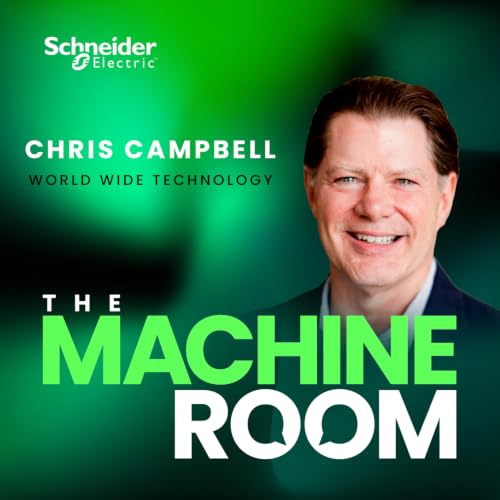
『The Machine Room』のカバーアート

The Machine Room

The Machine Room

著者: Schneider Electric
無料で聴く

【Amazonプライム会員限定】今ならプレミアムプランが4か月 月額99円。

10月19日まで。※適用条件あり
The Machine Room is a brand-new podcast series from Schneider Electric, exploring the challenges and trends facing the future of the global digital infrastructure industry. ​​ Led by Schneider Electric’s SVP and CMO for the Data Center business, Kevin Brown, hear senior leaders from key industry players for conversations that share insights into the heart of data centers and AI infrastructure - exploring the future of energy technology, and the power of digital innovation.Schneider Electric
エピソード
  • Behind the Meter: Powering AI at Gigawatt Scale
    2026/09/15

    AI infrastructure is increasing electricity demand at a speed and scale few industries have experienced before. In this episode, Kevin Brown speaks with Mandar Pandit, Chief Strategy and Growth Officer for Data Centers at GE Vernova, about how the energy sector is responding as individual data center campuses begin to require as much power as a small city.


    Mandar explains why limited grid capacity and lengthy interconnection timelines are leading more operators to consider behind-the-meter generation. By producing power on site, data centre developers can take greater control of their deployment schedules. However, this also means assuming responsibilities traditionally managed by utilities, from power generation and protection systems to grid stability and overall energy management.


    The conversation also explores the technologies that could support this growth more sustainably, including hydrogen-capable gas turbines, carbon capture and small modular nuclear reactors. Rather than viewing AI solely as a threat to the electricity system, Mandar argues that it is exposing existing weaknesses, accelerating innovation and encouraging data centre operators, utilities and technology providers to collaborate in new ways.


    Featured guest: Mandar Pandit, Chief Strategy and Growth Officer for Data Centers, GE Vernova


    Key quote: “The AI boom is highlighting the weaknesses in the system and showing us where, as an industry, we need to focus quickly.”


    Key takeaways:

    • AI data center campuses are increasingly requesting hundreds of megawatts or more than one gigawatt of power at a single location.

    • Grid infrastructure and data center development operate on very different timelines, creating an urgent need for alternative power strategies.

    • Behind-the-meter generation can help operators gain faster access to power by producing electricity on site.

    • Operating behind the meter is not a simple solution, as data centre operators must also manage protection, control, stability and other utility-like responsibilities.

    • Gas generation, hydrogen, carbon capture and small modular nuclear reactors could all contribute to a more diverse power mix for AI infrastructure.

    • Growing data centre demand is stress-testing the energy system, exposing weaknesses and accelerating investment, collaboration and innovation.


    Follow or subscribe to The Machine Room on your preferred podcast platform for more conversations with the people building the energy and infrastructure systems behind AI.

    続きを読む 一部表示
    20 分
  • Finding a Home for AI: From Use Case to Infrastructure
    2026/09/01

    Enterprise AI has moved rapidly from experimentation to implementation, but turning an idea into a secure, scalable and commercially viable solution remains complex. In this episode, Kevin Brown speaks with Chris Campbell, Senior Director, AI Solutions at World Wide Technology, about how organisations can identify valuable AI use cases, prepare their data and determine where their workloads should run.


    Chris shares lessons from WWT’s own AI adoption journey, including its evaluation of approximately 70 initial use cases and the development of tools designed to improve internal efficiency. He explains why successful AI projects require more than access to a model or computing power. Organisations also need strong executive sponsorship, clearly defined business outcomes, reliable data and an infrastructure strategy aligned with the needs of each workload.


    The conversation then turns to hybrid AI infrastructure and the growing role of neocloud providers. Chris explores the trade-offs between public cloud, private infrastructure, colocation and rented GPU capacity, as well as how neoclouds can provide a bridge while enterprises develop their longer-term facilities. With significant new data centre capacity under construction, he argues that the industry is still at the beginning of a much longer transformation.


    Featured guest: Chris Campbell, Senior Director, AI Solutions, World Wide Technology


    Key quote: “We’re in the first mile of a marathon that’s never going to end.”


    Key takeaways:

    • Successful enterprise AI programmes begin with clearly defined business problems and measurable outcomes, rather than technology alone.

    • A cross-functional AI centre of excellence can help organisations assess use cases, data readiness, risk and potential return.

    • Clean, accessible and well-governed data remains fundamental to moving AI projects from pilot to production.

    • AI workload placement should reflect factors such as security, data sovereignty, cost, performance, scalability and time to deployment.

    • Neocloud providers give organisations access to dedicated GPU capacity without requiring them to build and operate infrastructure immediately.

    • A hybrid approach can allow enterprises to use rented capacity as a bridge while developing longer-term private, hosted or on-premises AI environments.


    Follow or subscribe to The Machine Room on your preferred podcast platform for more conversations with the people turning AI ambition into operational infrastructure.

    続きを読む 一部表示
    23 分
  • Powering AI Faster: Turning Data Centers into Grid Assets
    2026/08/18

    As AI drives unprecedented demand for computing capacity, data centres are becoming larger, denser and more concentrated than anything the electricity grid has previously been designed to serve. In this episode, Kevin Brown speaks with Anuja Ratnayake, Emerging Technology Executive and DCFlex Lead at EPRI, about the growing gap between the speed at which AI infrastructure needs power and the time required to expand the grid.


    Anuja explains how flexibility could help close that gap. Rather than treating data centres as conventional demand-response participants, EPRI’s DCFlex initiative is exploring how they could connect through more flexible service agreements and operate as responsive grid resources. This could allow new facilities to access power sooner while longer-term transmission and generation upgrades are completed.


    The conversation also explores the collaboration required to make this possible. Utilities, data centre operators, technology providers, regulators and grid organisations need a common understanding of what flexibility means and how it can be delivered without compromising performance, reliability or affordability. While significant technical and operational questions remain, Anuja believes the industry has the innovation, motivation and partnerships needed to address this once-in-a-generation challenge.


    Featured guest: Anuja Ratnayake, Emerging Technology Executive and DCFlex Lead, EPRI


    Key quote: “The fundamental economic driver is not about making the marginal revenue in an hour. It’s about the opportunity cost of not having access, period.”


    Key takeaways:

    • AI data centers can represent loads of hundreds of megawatts or even gigawatts at a single grid connection point.

    • Providing firm, continuous power to facilities of this scale can require major transmission upgrades and significantly longer connection timelines.

    • Flexible or non-firm grid connections could help data centres access power sooner while wider infrastructure is developed.

    • The commercial value of flexibility comes primarily from accelerating time to power, rather than earning traditional demand-response payments.

    • Data centers can use a combination of computing workloads, auxiliary systems, energy storage and on-site generation to respond to grid requirements.

    • Collaboration across the data centre and electricity industries will be essential to protect grid reliability and affordability while supporting AI growth.


    Follow or subscribe to The Machine Room on your preferred podcast platform for more conversations with the people solving the power, cooling and infrastructure challenges behind AI.

    続きを読む 一部表示
    22 分
adbl_web_anon_alc_button_suppression_t1
まだレビューはありません