エピソード

  • Ep. 206 - IRS, Taxpayer Rights & Fighting Unfair Taxes w/Joe Bishop-Henchman
    2026/09/28

    Joe Bishop-Henchman, Executive Vice President of the National Taxpayers Union Foundation, joins Andrew Langer for a deep dive into taxpayer rights, tax enforcement and the legal battles shaping tax policy across the country.

    Bishop-Henchman discusses NTUF’s long-running lawsuit challenging IRS fees imposed on paid tax preparers, why taxpayers can face enormous obstacles when challenging the government, and the work of NTUF’s Taxpayer Defense Center. He also examines how artificial intelligence could change IRS enforcement and why protecting donor privacy remains an important legal issue.

    The conversation then turns to the states, including the lawsuit that helped spur reform of Louisiana’s complicated local sales tax system and the legal fight over Maryland’s first-in-the-nation digital advertising tax.

    Bishop-Henchman explains why Maryland’s tax has faced years of litigation, the arguments against taxing digital advertising differently from traditional advertising, and what the latest court ruling could mean for the future of the tax.

    00:00 — Introducing Joe Bishop-Henchman
    02:30 — Taking the IRS to Court
    05:00 — The IRS Tax Preparer Fee
    08:12 — Why Tax Cases Can Take Years
    10:09 — Defending Taxpayer Rights
    13:16 — AI & the Future of IRS Enforcement
    18:06 — Why Taxpayers Often Settle
    19:33 — The Fight Over Donor Privacy
    24:37 — Reforming Louisiana's Sales Tax System
    31:12 — Using Litigation to Change Tax Policy
    33:21 — Maryland's Digital Advertising Tax
    38:57 — The Legal Battle Over Maryland's Tax
    41:28 — Why the Court Struck It Down
    44:05 — What Happens Next?
    45:08 — Closing Thoughts

    Follow us on social media

    X: @TheLunchHourPod

    Instagram: the_lunchhour_pod

    LinkedIn: Lunch Hour Podcast

    TikTok: lunchhourpod

    Find more at Washington Signal

    Your source for policy, national security, and investigative journalism.

    https://washingtonsignal.com/

    続きを読む 一部表示
    47 分
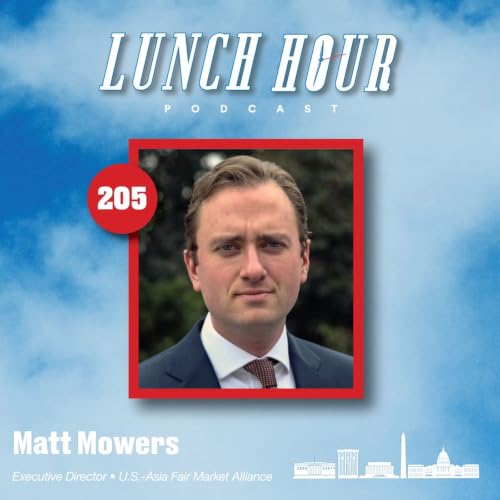
  • Ep. 205 - China, Trade Barriers & America’s Competition in Asia w/Matt Mowers
    2026/09/21

    Tariffs dominate the trade debate—but what about the barriers American companies face after entering a foreign market?

    On this episode of the Lunch Hour podcast, host Andrew Langer sits down with Matt Mowers, President of Valcour and Executive Director of the U.S.-Asia Fair Market Alliance, to examine the non-tariff barriers facing American businesses across Asia.

    Mowers discusses regulatory restrictions, market access, digital trade and enforcement practices that he argues can put U.S. companies at a disadvantage even when tariff rates appear fair. He explains why these issues are particularly important in countries such as South Korea, Japan, India and China—and how restrictions on American businesses can create opportunities for Chinese competitors.

    The conversation also explores China’s growing economic influence, international standards-setting, the Belt and Road Initiative, intellectual property and the competition for leadership in emerging technologies such as artificial intelligence and biotechnology.

    Finally, Mowers discusses the connection between economic strength and American foreign policy, and why he believes ensuring fair access for U.S. companies abroad is increasingly important to both economic competitiveness and national security.

    00:00 — Introducing Matt Mowers
    02:18 — What Are Non-Tariff Trade Barriers?
    04:37 — The U.S.-Asia Fair Market Alliance
    05:53 — How Trade Barriers Can Benefit China
    07:12 — American Tech Companies & Asian Regulations
    09:07 — China's Influence Across Asia
    12:59 — Free Trade, Tariffs & a Level Playing Field
    16:21 — The WTO & Bilateral Trade Negotiations
    17:44 — U.S.-South Korea Relations
    19:15 — China, Market Access & American Companies
    20:42 — China's Influence on International Standards
    23:00 — The Belt and Road Initiative
    26:45 — AI, Technology & the Competition With China
    28:18 — Pharmaceuticals, IP & American Innovation
    30:29 — What's Next for the U.S.-Asia Fair Market Alliance?
    32:30 — Chinese Technology, Data & Security
    34:13 — Mowers' Background in Foreign Policy
    37:12 — Closing Thoughts

    Follow us on social media

    X: @TheLunchHourPod

    Instagram: the_lunchhour_pod

    LinkedIn: Lunch Hour Podcast

    TikTok: lunchhourpod

    Find more at Washington Signal

    Your source for policy, national security, and investigative journalism.

    https://washingtonsignal.com/

    続きを読む 一部表示
    39 分
  • Ep. 204 - Natural Gas, LNG & America’s Energy Security w/Rob Jennings
    2026/09/14

    America has become the world’s largest producer of natural gas—but what does that mean for energy prices, electricity demand and U.S. energy security?

    On this episode of the Lunch Hour podcast, host Andrew Langer sits down with Rob Jennings, Vice President of Natural Gas Markets at the American Petroleum Institute, to discuss the transformation of America’s natural gas industry and its growing role at home and abroad.

    Jennings explains how the shale revolution dramatically increased U.S. natural gas production and helped reshape electricity generation, while providing a lower-cost alternative to coal. He and Langer also examine the surge in electricity demand from data centers and why natural gas-fired generation could play a major role in meeting those needs.

    The conversation turns to permitting reform, including API’s concerns with the National Environmental Policy Act and Clean Water Act, as well as the difficulties of building new pipelines and other energy infrastructure. Jennings discusses LNG exports, Europe’s reliance on imported natural gas, the importance of U.S. energy production during international conflicts and API’s American Energy Security Framework.

    Finally, Jennings shares how the United States can strengthen its energy infrastructure and maintain its position as a leading global energy producer.

    00:00 — Introducing Rob Jennings
    02:00 — America’s Natural Gas Revolution
    03:13 — Natural Gas & U.S. Electricity Generation
    07:30 — Pipelines, Infrastructure & Energy Transportation
    09:50 — Data Centers & Rising Power Demand
    11:06 — Natural Gas in American Homes
    15:23 — U.S. Natural Gas Production & Energy Security
    18:11 — Why Permitting Reform Matters
    20:24 — New England’s Natural Gas Problem
    23:26 — How Natural Gas Is Processed
    25:49 — LNG Exports & Global Energy Markets
    28:29 — Europe’s Dependence on Imported Energy
    31:10 — Strait of Hormuz & U.S. Energy Security
    32:04 — API’s American Energy Security Framework
    34:23 — Getting to Know Rob Jennings
    36:11 — Where to Learn More

    Follow us on social media

    X: @TheLunchHourPod

    Instagram: the_lunchhour_pod

    LinkedIn: Lunch Hour Podcast

    TikTok: lunchhourpod

    Find more at Washington Signal

    Your source for policy, national security, and investigative journalism.

    https://washingtonsignal.com/

    続きを読む 一部表示
    38 分
  • Ep. 203 - Patient Choice, Healthcare Reform & Government Regulation w/Dr. Jeffrey Singer
    2026/09/07

    How much control should the government have over the healthcare decisions of individual Americans?

    On this episode of the Washington Signal Lunch Hour Podcast, host Andrew Langer sits down with Dr. Jeffrey Singer, senior fellow at the Cato Institute and longtime general surgeon, to discuss patient autonomy, government regulation, and how America can expand competition and choice throughout the healthcare system.

    Singer explains the argument behind his book, Your Body, Your Health Care, and why he believes competent adults should ultimately make their own healthcare decisions. He and Langer examine the MAHA movement, the debate over ultra-processed foods, Medicare and government involvement in healthcare, and the consequences of allowing policymakers to determine which treatments and products people can access.

    The conversation also explores ways to increase the supply of healthcare in America, including expanding pharmacists' and other medical professionals' scopes of practice, eliminating certificate-of-need laws, reforming medical licensing and residency requirements, and making it easier for qualified foreign-trained physicians to practice.

    Finally, Singer discusses the emerging debate over psychedelic-assisted therapy and why psychedelics may require a different regulatory approach than conventional prescription drugs.

    00:00 — Introducing Dr. Jeffrey Singer
    01:40 — How American Medicine Has Changed
    03:28 — Patient Autonomy & the MAHA Movement
    07:16 — When Should Government Intervene?
    11:07 — Right to Try, CBD & Conflicting Health Policies
    14:10 — The Debate Over Ultra-Processed Foods
    20:11 — Government's Role in American Healthcare
    25:24 — Giving Pharmacists More Freedom to Practice
    29:13 — Certificate-of-Need Laws & Healthcare Competition
    34:06 — America's Physician Shortage
    37:35 — Medical Licensing & Foreign-Trained Doctors
    40:34 — Psychedelics & a Different Approach to Drug Regulation
    44:26 — Your Body, Your Health Care
    44:43 — Closing Thoughts

    Follow us on social media

    X: @TheLunchHourPod

    Instagram: the_lunchhour_pod

    LinkedIn: Lunch Hour Podcast

    TikTok: lunchhourpod

    Find more at Washington Signal

    Your source for policy, national security, and investigative journalism.

    https://washingtonsignal.com/

    続きを読む 一部表示
    不明
  • Ep. 202 - Property Rights, Energy & the Fight Against Regulatory Overreach w/Kole Kelley
    2026/08/31

    What happens when regulatory delays and federal land policies make it harder for farmers, ranchers, miners, and energy producers to use the land they depend on?

    On this episode of the Washington Signal Lunch Hour Podcast, host Andrew Langer sits down with Kole Kelley, Director and Senior Attorney of the Center for American Prosperity and Energy at Mountain States Legal Foundation, to discuss property rights, federal lands, agriculture, energy, and regulatory reform.

    Raised on his family’s cattle and show-pig farm in Colorado’s San Luis Valley, Kelley explains how growing up around agriculture, water rights, and land-use issues ultimately led him to law and his work defending farmers, ranchers, energy producers, and other property owners.

    The conversation covers:

    • Private property rights and responsible land stewardship
    • Federal land management, grazing, water, and multiple-use policies
    • How regulatory and permitting delays can kill projects
    • Mining, oil and gas, and American energy development
    • The Endangered Species Act and Clean Water Act
    • Regulatory reform and the future of the administrative state

    Kelley also explains why regulatory certainty matters for American competitiveness, particularly for smaller businesses that may not have the resources to survive years of administrative delays. The episode closes with a look at his continued involvement in agriculture, livestock showing, and mentoring the next generation through Colorado’s farming and ranching community.

    00:00 — Introducing Kole Kelley
    04:07 — Growing Up in Agriculture & Learning Stewardship
    06:31 — Private Property, Water Rights & the American West
    08:40 — Mountain States Legal Foundation & CAPE
    11:41 — Defending Farmers, Ranchers & Property Owners
    15:01 — Federal Lands, Grazing & Government Regulation
    17:02 — Natural Asset Companies & Multiple-Use Lands
    20:31 — How Permitting Delays Kill American Projects
    23:07 — Due Process & the Administrative State
    27:42 — Regulatory Reform After Chevron
    29:29 — Clean Water Act & Endangered Species Act Reform
    34:54 — Mining, Energy & American Competitiveness
    39:33 — Football, Agriculture & the Colorado State Fair
    44:42 — Closing Thoughts

    Follow us on social media

    X: @TheLunchHourPod

    Instagram: the_lunchhour_pod

    LinkedIn: Lunch Hour Podcast

    TikTok: lunchhourpod

    Find more at Washington Signal

    Your source for policy, national security, and investigative journalism.

    https://washingtonsignal.com/

    続きを読む 一部表示
    46 分
  • Ep. 201 - Online Speech, KOSA & the Push for Age Verification w/Elizabeth Nolan Brown
    2026/08/24

    Can laws designed to protect people online ultimately threaten privacy and free speech?

    On this episode of the Lunch Hour Podcast, host Andrew Langer sits down with Elizabeth Nolan Brown, Senior Editor at Reason, to discuss the growing debate over government regulation of online speech, social media, age verification, and internet privacy.

    Brown traces the debate back to government efforts targeting Craigslist and Backpage, explaining how controversies surrounding sex work and trafficking helped produce changes to Section 230. She argues that regulatory approaches initially applied to adult content have increasingly expanded toward social media, app stores, age-verification requirements, and other forms of online activity.

    The conversation covers:

    • Backpage, FOSTA, and the history of Section 230 regulation
    • Age verification, online privacy, and anonymous speech
    • KOSA and efforts to regulate social media for minors
    • Government access to phones and electronic devices at the border
    • European and Australian approaches to social media restrictions
    • The broader debate over government power and online speech

    Brown and Langer also discuss how moral panics can shape public policy, the dangers of creating large databases of personal identification, competing efforts from the political left and right to regulate technology, and why government powers created for one purpose can eventually be used for something very different.

    00:00 — Introducing Elizabeth Nolan Brown
    01:49 — How Sex Work Led to Tech Policy
    05:16 — Backpage, FOSTA & Section 230
    08:34 — From Adult Content to Broader Internet Regulation
    11:12 — Age Verification, Privacy & Identity Databases
    14:15 — Moral Panics and Government Regulation
    17:56 — Conservatives, Feminists & the Politics of Sex Work
    22:09 — Government Power, Phones & Border Searches
    27:07 — Social Media Restrictions in Europe & Australia
    29:09 — KOSA, Online Safety & Anonymous Speech
    35:27 — Tech Regulation, Antitrust & Government Power
    39:57 — Does Remote Work Make Us Miserable?
    42:23 — Outside Interests & Closing Thoughts

    Follow us on social media

    X: @TheLunchHourPod

    Instagram: the_lunchhour_pod

    LinkedIn: Lunch Hour Podcast

    TikTok: lunchhourpod

    Find more at Washington Signal

    Your source for policy, national security, and investigative journalism.

    https://washingtonsignal.com/

    続きを読む 一部表示
    46 分
  • Ep. 200 - Lunch Hour 200th Episode: The Greatest Rock Bands of All Time
    2026/08/17

    For the 200th episode of the Lunch Hour Podcast, host Andrew Langer puts public policy aside for a special conversation with Tim Lee, Senior Vice President of Legal and Public Affairs at the Center for Individual Freedom, and Jerry Rogers, editor of RealClearPolicy and RealClearHealth and host of The Jerry Rogers Show on WBAL NewsRadio.

    The three take on some of the great rock-and-roll debates: Were the Beatles better before or after they grew facial hair? Which era of the Rolling Stones was best? Are Led Zeppelin or The Who actually the greatest rock band of all time? And where do Elvis Presley and the Beach Boys fit into the history of popular music?

    Along the way, Andrew, Tim, and Jerry talk about the albums and artists that shaped their musical tastes, their first records, Casey Kasem and American Top 40, and what it was like discovering the music of the 1960s, ’70s, and ’80s.

    It's a different kind of Lunch Hour as the show celebrates 200 episodes with music, memories, disagreements, and plenty of rock-and-roll arguments.

    00:00 — Celebrating 200 Episodes
    01:17 — Introducing Tim Lee & Jerry Rogers
    03:01 — Were the Beatles Better Before or After Facial Hair?
    09:28 — Sgt. Pepper, Revolver & the Beatles' Best Era
    14:07 — Elvis, Led Zeppelin & the Greatest Rock Artists
    22:17 — The Beatles' Breakup & Solo Careers
    25:00 — How Influential Were the Beatles?
    29:36 — The Best Era of the Rolling Stones
    34:21 — Led Zeppelin, The Who & the Greatest Rock Songs
    38:38 — Casey Kasem & American Top 40
    40:32 — Growing Up with the Music of the '60s, '70s & '80s
    47:19 — Final Verdicts & Celebrating Episode 200

    Follow us on social media

    X: @TheLunchHourPod

    Instagram: the_lunchhour_pod

    LinkedIn: Lunch Hour Podcast

    TikTok: lunchhourpod

    Find more at Washington Signal

    Your source for policy, national security, and investigative journalism.

    https://washingtonsignal.com/

    続きを読む 一部表示
    50 分
  • Ep. 199 - SpaceX, Private Property & the Future of Space Capitalism w/Rainer Zitelmann
    2026/08/10

    Can capitalism take humanity farther into space than government ever could?

    On this episode of the Washington Signal Lunch Hour Podcast, host Andrew Langer sits down with historian, sociologist, journalist, and author Rainer Zitelmann to discuss his book New Space Capitalism and the dramatic transformation of space exploration from government-run programs to private enterprise.

    Zitelmann examines the economics of the Apollo and Space Shuttle programs, the rise of SpaceX, reusable rockets, and how changing NASA’s relationship with private companies helped dramatically reduce the cost of reaching space. He then tackles an even bigger question: If humanity is going to settle Mars and exploit resources in space, who gets to own them?

    The conversation expands into private property rights, entrepreneurship, and the role capitalism has played in reducing poverty around the world, with examples from Vietnam, China, Poland, and Sweden. Zitelmann also discusses the dangers of centralized economic planning and why he believes property rights will be essential to humanity’s future beyond Earth.

    The episode covers:

    • How SpaceX transformed the economics of spaceflight
    • Why reusable rockets changed the space industry
    • Private property rights on Mars and other celestial bodies
    • Capitalism’s role in reducing poverty and creating prosperity
    • China’s growing private space industry
    • The future of commercial space exploration

    From NASA and SpaceX to Mars, property rights, and economic freedom, Zitelmann makes the case that the next great era of human exploration may depend less on governments—and more on entrepreneurs.

    00:00 — Introduction
    02:45 — New Space Capitalism
    04:53 — From government spaceflight to private enterprise
    06:31 — The economics of the Space Shuttle
    08:17 — NASA takes a chance on private companies
    09:53 — The beginning of the second space age
    12:18 — How SpaceX changed the economics of spaceflight
    15:42 — What will drive the future of space exploration?
    17:12 — The problem with property rights in space
    21:04 — Who should own land on Mars?
    23:31 — Property rights and the American frontier
    26:12 — How capitalism helped Vietnam escape poverty
    29:41 — Could the same model work on Mars?
    32:19 — Property rights, socialism, and government power
    36:21 — Germany’s energy policies
    38:27 — SpaceX, Blue Origin, Rocket Lab & the new space economy
    41:08 — China’s private space industry
    43:24 — Zitelmann’s films and other work
    47:28 — Closing thoughts

    Follow us on social media

    X: @TheLunchHourPod

    Instagram: the_lunchhour_pod

    LinkedIn: Lunch Hour Podcast

    TikTok: lunchhourpod

    Find more at Washington Signal

    Your source for policy, national security, and investigative journalism.

    https://washingtonsignal.com/

    続きを読む 一部表示
    49 分