エピソード

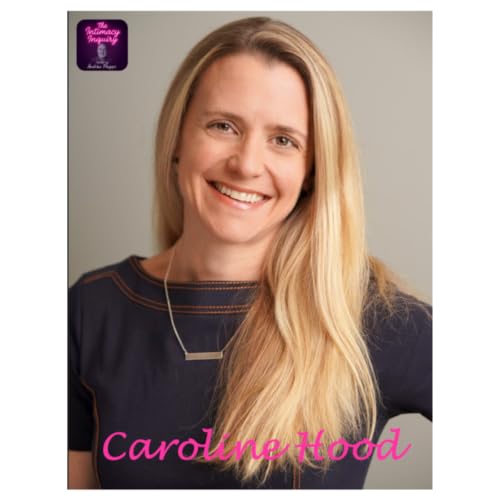
  • Sex Begets Sex | Caroline Hood on Reclaiming Desire, Pleasure, and Long-Term Love
    2026/07/28

    Caroline Hood grew up in a religious family and religious school, learning virtually nothing about sexuality except that it was something to be ashamed of. What stayed with her was a nagging suspicion that it couldn't be right: something so universal couldn't also be shameful. That suspicion became a career, a book, and a practice she calls Desire in Real Life, dedicated to the conversations women wish they could have with a trusted friend who happens to be a sex therapist.

    In Sex Begets Sex: Reclaiming Desire, Power, and Pleasure in Long-Term Love, Caroline challenges the assumption that desire must precede sex. Drawing on Emily Nagoski's research into spontaneous and responsive desire, she argues that physical and emotional intimacy form a loop, not a hierarchy, and that maintaining physical closeness is itself a buffer against the drift toward roommate, co-parent, and coworker that so many long-term couples experience.

    In this conversation with Andrew, Caroline covers a lot of ground. Why the gender archetypes around desire are serving nobody, including men. Why women's desire always seems to require an explanation while men's is validated without question. Why defining sex as penetration creates unnecessary barriers and diminishes female pleasure, given that around 80% of women orgasm through non-penetrative means. Why the most pleasurable sex reported by many people is not spontaneous but planned, communicated, and intentional.

    They also explore: the difference between touch that is a request for sex and touch that simply is; how to start the desire conversation outside the bedroom and before things reach crisis point; why mismatched libido is better understood by asking what need is actually being met; why the high and low libido labels are too static to be useful; and whether monogamy is a natural human state or a relatively recent social construct, drawing on Esther Perel and recent research from the Kinsey Institute.

    Caroline also talks about what writing the book did to her own relationship (spoiler: only good things), and why she believes the mundane, imperfect, ten-minute version of sex is just as important to a relationship as the two-hour tasting menu.

    Warm, practical, and genuinely freeing.

    Sex Begets Sex is available now. Caroline writes at Substack under Desire in Real Life.

    https://www.desireinreallife.com/

    続きを読む 一部表示
    1 時間 4 分
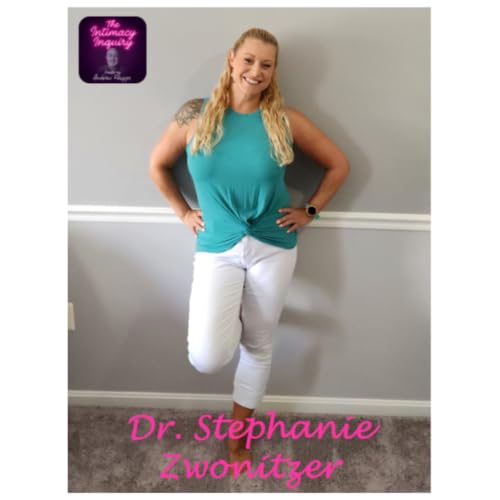
  • Functioning Is Not Thriving | Dr. Stephanie Zwonitzer on Hormones, Menopause, and Sexual Wellness
    2026/07/21

    Dr. Stephanie Zwonitzer is a doctor of nursing practice, certified nurse practitioner, and the founder of Revive Institute of Sexual Health, a cash-based clinic dedicated to hormone optimisation and sexual wellness. She also hosts the podcast Between the Sheets with Dr. Z. Her path into this work began in cardiac, surgical, and geriatric nursing, but it was urology and sexual medicine that changed everything: saving relationships, addressing erectile dysfunction and vaginal pain, and realising that dramatic change was possible for patients who had simply been told their bodies were done.

    In this conversation with Andrew, Stephanie traces the thread from a rural Wisconsin upbringing where sex education meant abstinence and essentially nothing else, through a clinical career that repeatedly exposed the same gap: nobody in mainstream medicine was connecting hormonal decline to quality of life, and nobody was treating sexual wellness as the essential part of overall health that it is.

    They cover a great deal of ground. Why erectile dysfunction is often one of the first signs of heart disease, and why it is always multifactorial. What happens to testosterone, estrogen, and progesterone from your 30s onwards, and how those changes affect everything from cognition and mood to pain during sex. Why hormone replacement therapy is still not taught in standard medical school training. Why women were not required to be included in US research studies until 1993. And why early hormone replacement may reduce the risk of dementia, osteoporosis, and cardiovascular disease.

    Stephanie and Andrew also explore what it means to redefine sex as pleasure rather than performance; the value of wellness tools and a self-pleasure practice; what providers can learn from the BDSM community about ongoing consent; and why a single yes is not a yes for life.

    She explains why she walked away from corporate medicine and ten-minute appointments to found Revive, a clinic where she takes as long as each patient needs, examines hormones in combination rather than in isolation, and has no intention of franchising.

    Practical, warm, and long overdue.

    Revive Institute of Sexual Health: revivish.com

    Between the Sheets with Dr. Z: https://podcasts.apple.com/us/podcast/between-the-sheets-exploring-sexual-health-wellness/id1760176031?uo=4

    https://www.instagram.com/betweenthesheetswithdrz/

    続きを読む 一部表示
    57 分
  • The Opposite of Love Is Indifference | Amanda Montoni on Trauma, Bipolar II, and Breaking the Cycle
    2026/07/14

    Amanda Montoni describes herself as the kind of person strangers tell their life story to in a grocery queue. At 32, married, newly sober, raising two children, and several months into her decision to go no contact with her mother, she has more than earned that description.

    Raised between South Carolina and El Paso by a young single mother, Amanda learned early to adapt herself to whatever environment she was in. Outwardly confident, top of her class, socially fluent; inwardly fighting an eating disorder and self-harm she kept hidden from everyone around her for five years. Her sense of identity was fragile, her sexuality was uncertain, and at 14 she was sent without warning from South Carolina to El Paso with no phone, no explanation, and no one who knew where she had gone.

    In this conversation with Andrew, Amanda traces the events that shaped her: the bullying that made her push down her attraction to girls; the older men who groomed her as a teenager and the distorted sense of power that made her believe she was in control; the unplanned pregnancy at 19 that changed the direction of everything; and the inpatient psychiatric treatment in 2017 that eventually led to a bipolar II diagnosis, and with it the most profound relief of her life.

    She describes the years that followed: the medication that finally stabilised her, the husband who did not flinch, and the slow, painful recognition that her mother was not going to change. She reflects on what it meant to go no contact without a confrontation, to notice the silence from the other end, and to arrive at something she simply calls indifference. Because the opposite of love is not hate, it is indifference.

    The conversation also moves through pansexuality and ethical non-monogamy; parenting as a third-generation estranged child who is actively choosing to do things differently; what it feels like to like yourself while still trying to meet yourself fully; and what she is building towards: finishing her degree, switching to zoology or biology, and eventually opening an animal rescue with her husband.

    One of the most unflinchingly honest conversations The Intimacy Inquiry has had.

    続きを読む 一部表示
    1 時間 19 分
  • Why Everything You Were Told About Female Sexuality Is Wrong | Natasha Senjanovic
    2026/07/07

    Natasha Senjanovic is an award-winning journalist, gender violence reporter, and the host and creator of Women Like Sex, a myth-busting, research-driven podcast dedicated to dismantling the misinformation, biases, and taboos that have long distorted understanding of female sexuality. A co-creator of the media training course I Wish I'd Known, she holds a regional Edward R. Murrow Award for feature reporting and spent years reporting from Rome before specialising in domestic and sexual violence journalism at Nashville Public Radio.

    In this conversation with Andrew, Natasha traces the thread from her European upbringing, free of puritanical religious shame, through years of reporting in Italy, to the pivotal moment in a Nashville newsroom when a rape retrial changed the direction of her career.

    She reflects on the chronic failures of media coverage of gender-based violence: the staggering gap between the statistics (Nashville alone sees 25-30,000 domestic violence investigations per year, against roughly 10 domestic homicides) and what actually makes the news; the loaded language that alibis perpetrators and re-traumatises survivors; and why terms like "she snapped," "monster," and "violence against women" are not neutral, but actively harmful.

    The conversation moves through the Epstein case and what it reveals about power protecting power; the criminalisation of marital rape (UK: 1991, Tennessee: 2012); how Saint Augustine helped reshape the church's definition of sex as procreative only; and why the anatomy of the clitoris was not fully mapped until 2005.

    Natasha and Andrew also explore how hypersexual myths about men damage male sexuality; why "foreplay" is a term worth questioning; the gendered double standards baked into everyday language; and the inextricable link between sexual inequity and intimate partner violence.

    Natasha shares the personal toll of gender violence reporting, how the Women Like Sex project helped her step back without stepping away, and her plans to train as a certified sex health educator, because she wants to do more than funnel expert voices. She wants to become one.

    Topics include: sexual shame and cultural conditioning; domestic violence statistics and the media blind spots that hide them; coercion as the most prevalent form of sexual assault; the Madonna-whore complex and its religious roots; consent education; unconscious bias in journalism; privilege, race, and newsroom culture; and what it will take to flip the script.

    Women Like Sex podcast: https://womenlikesex.com/

    I Wish I'd Known: https://www.pmja.org/contacts/natasha-senjanovic

    続きを読む 一部表示
    1 時間 35 分
  • Jennifer Douglas: Modeling at 43, Fighting Human Trafficking, and Embracing the "I Don't Give a F*ck" Attitude
    2026/06/30

    Jennifer Douglas, known as Inked Mom 3 to her many thousand Instagram followers, is a South Carolina-based model, wife, and mother of three who launched her modeling career at 43 after a boudoir shoot for her husband took an unexpected turn. She won the 2025 Best New Model award for a style she describes as raw and authentic: tattooed, entirely natural, and unapologetically herself.

    Jennifer's path to the camera ran through a childhood defined by emotional neglect and sexual abuse. Molested at 10 by a family friend, raised largely by herself from the age of six, she grew into adulthood carrying those wounds without ever being taught how to process them. What she did instead was pour herself into others: 13 years of passionate anti-human trafficking work, sparked by watching the film Taken, which led her to join a local task force, educate college communities about the signs of trafficking, and focus specifically on the protection of minors. polarisproject.org

    This conversation is honest about all of it. Jennifer talks about managing vicarious trauma through repeated breaks, about the reality that trafficking most often involves people the victim knows and trusts, and about the fact that no amount of education fully protected her own family: her eldest daughter was raped at 16 by an older boy at a party, a disclosure she shares with quiet candour.

    The modeling story is equally candid. She describes saying yes immediately to photography offers that followed her boudoir photos, with one significant exception: a terrifying experience with a fake photographer early in her career, involving an empty house, a husband locked outside, and a stranger banging on the door, that she shares as a direct warning to younger women navigating Instagram casting calls.

    Body image runs through the whole conversation. Jennifer is self-conscious about her breast size, wakes at 3am worrying about bookings, and admits she has cried over the gap between what she looks like and what the most heavily booked models look like. She also shares what her tattoos mean: each one tells a chapter of her life, and the one that reads "I am set free" came after she finally, through law enforcement contacts made during her trafficking work, found out what happened to the man who abused her as a child.

    The episode closes on her goals: more tattooed women in mainstream fashion and branding, and a platform that inspires women of any age and any body to embrace, in her words, an I-don't-give-a-fuck attitude toward who gets to be seen as beautiful.

    https://www.instagram.com/inkedmom3/

    https://inkedmomshop.printify.me/

    Note: this episode contains frank discussion of childhood sexual abuse, sexual assault, and adult themes. Listener discretion is advised.

    Available on Apple Podcasts, Spotify, YouTube, and via RSS.

    続きを読む 一部表示
    1 時間 8 分
  • Erika Shershun: Healing Sexual Trauma Through the Body, EMDR, and Reclaiming Touch
    2026/06/23

    Erika Shershun is a somatic psychotherapist and EMDR practitioner based in the San Francisco Bay Area, specialising in healing sexual trauma, PTSD, and CPTSD. After a career in the arts she retrained in somatic psychology, drawing on organic intelligence, brainspotting, somatic experiencing, and internal family systems. She is the author of the Healing Sexual Trauma Workbook and the Healing Sexual Trauma Guided Journal, with a new book for practitioners forthcoming from PESI.

    Erika's path to this work began with her own struggle to heal. After 17 years of talk therapy that addressed her depression but never touched the sexual trauma beneath it, a single bodywork training session triggered unexpected flashbacks and everything shifted. She returned to school to study somatic psychotherapy, pieced together the approaches that finally worked for her, and began teaching them to the survivors who arrived in her practice.

    The conversation opens with Erika reflecting on growing up with contradictory messages about female sexuality, and on the sexual assaults she experienced as a teenager that she did not recognise as assault at the time. She describes how the body stores what the mind pushes away, and why the unconscious protects a person from their trauma until they have enough resources to face it.

    Sexual trauma, Erika says, is not just a body-mind wound but a soul wound; one that tends to produce more symptoms and run deeper than most. She explains how EMDR combines integration with memory reconsolidation so that the negative beliefs survivors hold about themselves organically become positive ones when the process is complete.

    Much of the conversation focuses on practical healing: establishing safety and presence before deeper work begins, understanding what emotions reveal about needs, and formulating those needs as requests. Erika describes Betty Martin's Wheel of Consent and the body mapping exercise she uses to help survivors and their partners navigate touch with clarity and care.

    She is direct about the role of partners in healing: they need to regulate their own nervous systems, because the survivor cannot manage both. She shares a striking example of a client whose partner's anger during a flashback mid-sex set her recovery back significantly, and explains what genuine support actually looks like.

    Andrew and Erika also discuss the $160,000 average financial cost of sexual trauma per survivor according to CDC data, and where to begin if you have never done body-based work. Erika describes her orienting exercise, Coming Into Safety or Presence, the first chapter of her workbook, available free at healingsexualtrauma.com.

    https://erikashershuntherapy.com/healing-sexual-trauma/ link to Erika's excellent books

    Note: this episode contains frank discussion of sexual assault and trauma. Listener discretion is advised.

    Available on Apple Podcasts, Spotify, YouTube, and via RSS.

    続きを読む 一部表示
    59 分
  • Fran Frye on Rape Recovery, BDSM Healing, and Why Men Are Taught to Ignore Their Bodies
    2026/06/15

    Fran Frye https://www.franfrye.com/ is a certified sex educator, counselor, and clinician trained in compulsive sexual behaviours, and a somatic sex practitioner based in Charleston, South Carolina. She holds certifications from the Sexual Health Alliance, the American Board of Sexology, and the Somatic Institute. She also brings to this conversation something rarer: her own lived experience as a sexual assault survivor, a former military spouse, and a hospice volunteer.

    Fran describes a childhood spent finding meaning through connection with others, often the marginalised and overlooked, long before she understood why. After being raped by an acquaintance, with a friend's involvement complicating the dynamic further, Fran found that traditional therapy did not address her sexual trauma. It was through somatic work, specifically training at the Somatica Institute, that she felt truly heard for the first time.

    From there, Fran built a life around understanding why people hurt themselves and others. Working in food scarcity, domestic violence, rape crisis advocacy, and human trafficking support, she identifies a single recurring thread: dysregulation. She argues that men in particular are taught that their sexuality is acceptable but their emotions are not, leading the nervous system to route fear, stress, and loneliness through arousal, sometimes with damaging consequences.

    Fran is sharply critical of the addiction model as applied to sexual behaviour, arguing that labelling someone an addict can entrench the very shame that drives the behaviour in the first place. She introduces what she calls the fifth F, alongside fight, flight, freeze, and fawn, and explains how understanding the body's stress responses can change a person's relationship with their own sexuality.

    The conversation moves into somatic therapy more broadly: why talking about trauma often isn't enough, how the body holds what the mind cannot process, and why Fran believes reconnecting with physical sensation, including through weightlifting in her own case, was essential to her healing.

    Perhaps most strikingly, Fran speaks openly about her use of BDSM as a deliberate, consensual way of processing her assault, reframing an experience of powerlessness into one where she holds control. She and Andrew discuss why kink communities often communicate far more openly and consensually than conventional relationships, and why this openness can be transformative.

    Fran also reflects on staying in her marriage longer than she felt was right, what it taught her about safety, and how the years since her divorce have been spent deliberately exploring her own sexuality without rushing toward a new relationship. She and Andrew discuss whether humans are naturally monogamous or polyamorous, the cultural building blocks, like understanding jealousy and compersion, that Fran believes are missing for polyamory to be widely accepted, and how self-sabotage often shows up as a way of confirming our deepest fears about ourselves.

    The conversation closes with Fran's hopes for the future: writing about the people she meets through volunteering, advocacy for men's emotional and sexual wellbeing, and a particular interest in death doula work, supporting intimacy, touch, and connection at the end of life, something she says is too often ignored.

    This episode contains frank discussion of sexual assault, trauma, and adult themes. Listener discretion is advised.

    Available on Apple Podcasts, Spotify, YouTube, and via RSS.

    続きを読む 一部表示
    1 時間 10 分
  • From Strip Club to Sacred Work: Tantra, Menopause, and Desire with Maria Merloni
    2026/06/10

    What if everything you were taught about sex was designed to disconnect you from your own body? In this episode of The Intimacy Inquiry, Andrew Phipps sits down with Maria Merloni, psychotherapist, sex and relationship coach, and sacred spot massage practitioner, for one of the most honest and wide-ranging conversations the show has produced.

    Maria's story begins in a Catholic household where sex was never mentioned but nudity was ordinary. She became a nude model at university, then an exotic dancer, then a clinical social worker, and eventually a therapist specialising in sex, relationships, and somatic healing. Now 60, she says she is having the best sex of her life, a statement she backs up with both personal experience and clinical insight.

    The conversation moves across a remarkable amount of ground. Maria explains what men at strip clubs were really seeking when they broke down in front of her: not sex, but genuine connection, the same thing that brings people to dominatrices, OnlyFans creators, and therapists alike. She describes her journey toward what she calls her sacred work, including a course for women navigating perimenopause and post-menopause, built on the practice of self yoni massage, which she credits with eliminating her own vaginal dryness and restoring her libido after just a few weeks.

    Maria and Andrew explore why talk therapy so often fails to create real change, and how somatic techniques such as gentle reprocessing and EMDR work differently, rewiring the brain at a level where language cannot reach. Maria shares her own experience: years of unknowingly choosing partners with addiction issues, a pattern that only ended after she worked through the childhood trauma that was driving it. She explains how unhealed wounds do not disappear; they recruit new people to re-inflict them until something shifts at the cellular level.

    The pair dig into what tantra actually is, not the westernised caricature of exotic positions, but a philosophy that everything in the universe is sacred and connected, and that the deepest intimacy begins with presence. Maria describes simple practices, including eye gazing and synchronised breathing, that can transform a conversation or a sexual encounter in under two minutes.

    They also cover the psychology of erectile dysfunction, the real logistics of polyamory, why couples stop touching each other and what that costs them in oxytocin and closeness, and why redefining pleasure beyond a narrow heteronormative script opens up possibilities that many people close off prematurely, often in their forties or fifties, assuming their best years are behind them.

    This is a conversation for anyone who has ever felt that their desire was something to be managed or suppressed rather than understood and celebrated. Maria makes the case, calmly and from experience, that it is not too late. It may, in fact, be just beginning.

    Maria Merloni: mariamerloni.com Free five-minute guided yoni reconnection practice: mariamerloni.com/ritual

    Available on Apple Podcasts, Spotify, YouTube, and via RSS.

    続きを読む 一部表示
    1 時間