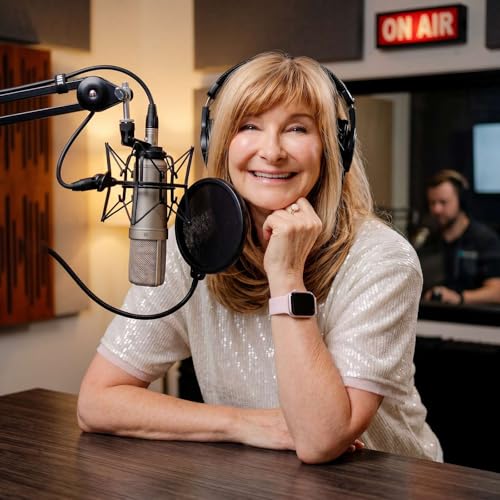
『Cheryl Cran Podcast』のカバーアート

Cheryl Cran Podcast

Cheryl Cran Podcast

著者: Cheryl Cran - Author of "What The Flux?" and "The Art of Change Leadership"
無料で聴く

Join Cheryl Cran a human potential enthusiast, founder of Nextmapping a future of all things consultancy, and author of 10 books. This podcast explores the future of leadership, the next frontier in human communication which is energy intelligence, and thought provoking episodes on how to elevate our consciousness and our behaviors as humans and as leaders. Cheryl's passion is to bring light and energy and ideas to others that help them navigate what's next with clarity and inspiration.

© 2026 Cheryl Cran Podcast
マネジメント マネジメント・リーダーシップ 個人的成功 経済学 自己啓発
エピソード
  • Energy Intelligence: The Leadership Skill Cheryl Has Been Nervous to Talk About — Until Now
    2026/06/29

    In Episode 7, Cheryl Cran introduces what she believes is the next frontier of leadership intelligence — and the one she's been practicing privately for years while hesitating to name publicly. Energy intelligence.

    If emotional intelligence was the leadership conversation of the last two decades, and spiritual intelligence the one quietly emerging behind it, energy intelligence is the skill Cheryl says is actually driving the leaders who make people feel seen, heard, and connected in ways that words alone can't explain. And she makes the case that in the AI era, energy intelligence isn't just an edge — it's the irreplaceable human skill.

    She's candid about why she hasn't led with this topic before. For most of her career, leadership rooms weren't ready to hear the word energy without dismissing it. But as social media, AI, and broader cultural conversations normalize concepts of presence, nervous system regulation, and intuitive awareness, Cheryl names that the time for this conversation is now — and that leaders who build this skill will lead in ways others can't.

    In this episode, Cheryl explores:

    What energy intelligence actually is — and what it's not

    The integrated model of mind, emotional body, and soul body, and how each carries its own energetic signature

    Why everyone has already experienced energy intelligence (walking into a room and feeling the tension, or the peace)

    How energy intelligence works together with metacognition to create deeper insight

    The coaching example — sensing what's unsaid, and the question that unlocks it

    How Cheryl reads the energy of an audience from stage, in real time, and adjusts accordingly

    Why energy intelligence is "intuition on steroids"

    The difference between a basic one-on-one and an uplevel one-on-one — and why energy reading is the bridge

    Why intimacy (professionally appropriate, boundaried intimacy) is now a leadership skill

    The boundaries reminder — energy intelligence without boundaries is not healthy leadership

    Why AI cannot do this, and why that matters for the future of work

    This is the episode for leaders who have always sensed there was more going on in their interactions than what the words were saying — and who are ready to trust and develop that knowing.

    "Energy intelligence is intuition on steroids. AI can't do this. Only we can do this as humans." — Cheryl Cran

    Try this week's practice: In your next one-on-one, go one layer deeper than usual. Instead of only covering what's on the task list, ask: How are things going for you overall? What's happening? How can I support you? Then listen — not just to the words, but to the energy underneath them. Notice what you sense without saying anything about it. That's energy intelligence beginning to develop.

    About Cheryl Cran

    Cheryl Cran is the author of What The Flux?, The Art of Change Leadership, Super Crucial Human, and more. For over two decades, she has helped leaders and organizations navigate change, lead through disruption, and build more human, more flexible, and more resilient teams.

    Connect with Cheryl

    www.cherylcran.com

    Referenced in this episode: Brené Brown on the felt presence of others in a room.

    New here? Start with Episode 1: Flux Isn't Here to Break Us — It's Here to Wake Us. And subscribe so you don't miss the next episode in the series.


    続きを読む 一部表示
    9 分
  • Triggers, Hypervigilance, and the Responsibility We Don't Like Talking About
    2026/06/22

    In Episode 6, Cheryl Cran takes on one of the most culturally loaded words in today's leadership conversation: triggers. And she does it the way only someone with two decades in change leadership can — with compassion, directness, and a willingness to name what most people are avoiding.

    The episode opens with a real question from a recent virtual keynote: "What do I do about a leader who insists I come into the office every day? It triggers me." Cheryl uses this question to open up a deeper conversation about the difference between being triggered and being in a circumstance we don't like — and why conflating the two has become a quiet form of avoidance in today's workplaces.

    She doesn't dismiss the concept of triggers. She honors it. But she also names what she believes mature leadership looks like in a culture that has, in her words, become hypervigilant about almost everything: the idea that triggers are the responsibility of the person being triggered, and that leadership in the era of flux requires us to move from hypervigilance (a fear-based response) to hyperawareness (a metacognitive one).

    In this episode, Cheryl explores:

    • Why the concept of triggers has expanded — and how expansion sometimes distorts meaning
    • The difference between being triggered and being in a circumstance we don't like
    • Why triggers are the responsibility of the person being triggered (and what that looks like in practice)
    • Generational differences around hybrid, virtual, and in-office work — and why location doesn't determine engagement
    • The clear distinction between hypervigilance (fear-based, protective, exhausting) and hyperawareness (metacognitive, agency-based, sustainable)
    • The AI example: how hypervigilance keeps us trapped on a treadmill of anxiety while hyperawareness returns agency
    • How Cheryl handles her own triggers — with herself first, then in conversation
    • A personal story about a trigger with a dear friend, and how decades-long trust made hard dialogue possible
    • Why leaders today must be aware both of their own triggers and of how what they say might trigger others
    • What it means to move from reaction to coaching — the plan shift from "what if employees call in sick" to "what's my contingency plan"

    This is the episode that will challenge some listeners and give others language they've been searching for. Either way, it's the kind of grown-up leadership conversation that's rarely had out loud.

    "Hypervigilance comes from fear. Hyperawareness is a form of metacognition." — Cheryl Cran

    Try this week's practice: The next time you feel triggered by something — a comment, a request, a situation — pause before reacting. Ask yourself: Am I in hypervigilance right now, or hyperawareness? What am I afraid of? What can I actually control? Then choose your response from awareness, not reaction.

    About Cheryl Cran

    Cheryl Cran is the author of What The Flux?, The Art of Change Leadership, Super Crucial Human, and more. For over two decades, she has helped leaders and organizations navigate change, lead through disruption, and build more human, more flexible, and more resilient teams.

    Connect with Cheryl

    www.cherylcran.com

    Agree? Disagree? Cheryl genuinely welcomes dialogue on this topic. Message her through her website or LinkedIn — this is a conversation that deserves more voices.

    New here? Start with Episode 1: Flux Isn't Here to Break Us — It's Here to Wake Us. And subscribe so you don't miss the next episode in the series.

    続きを読む 一部表示
    11 分
  • Change Isn't Here to Break You — It's Here to Awaken You
    2026/06/15

    In Episode 4, Cheryl Cran explores one of the most powerful reframes of the entire Flux, Flex, Flow series: that every major disruption in our lives — painful, unwanted, unchosen — has been quietly awakening us into who we're becoming.

    This isn't spiritual bypassing. It isn't rose-colored glasses. It's the lived experience of looking backward with honest eyes and recognizing a pattern: the disruptions shaped the direction. The hard moments wrote the next chapter. And the collective disruptions we're all navigating right now — politically, economically, technologically, personally — are doing the same work on a societal scale.

    Cheryl shares her own timeline of formative disruptions, from a childhood that taught her early independence, to a horse accident at 10, to losing her father at 20, to the recent experience of becoming a caregiver during her husband's health challenges. Each one, she names, was a wake-up call to a new version of herself.

    She then turns the lens outward: what if the disruptions happening across society right now — the mass awareness around nervous system regulation, sovereignty, trauma, AI, self-responsibility — are evidence of a collective awakening, not a collective breakdown?

    In this episode, Cheryl explores:

    • Why major disruptions almost always precede major growth — individually and collectively
    • The timeline exercise: how to map your own disruptions and see the pattern in your growth
    • How childhood instability, loss, and life-changing events shape our adult trajectory
    • Why mass awareness around psychology, sovereignty, and self-regulation is a gift of this era
    • The difference between being a victim of change and being a soulful participant in it
    • Why reframing isn't denial — it's expanding perspective to see from multiple angles at once
    • How leaders can stop blaming circumstances and start asking what is this change asking me to grow into?
    • The question Cheryl asks leaders in coaching that creates an immediate shift in thinking
    • Why society is in a maturation phase — and what that asks of each of us
    • The data behind the optimism: crime at decade lows, health breakthroughs, global philanthropy, cancer vaccines in development

    This is the episode for anyone who has ever wondered why this is happening to them — and is ready to ask a better question.

    "Change isn't here to break us. It's here to awaken us." — Cheryl Cran

    Try this week's exercise: Draw a timeline from birth to today, marked every five years. Plot the major disruptions you remember at each stage. Then go back through and ask: what happened as a result of that disruption? What did it awaken? What trajectory did it put you on? Notice the pattern.

    About Cheryl Cran

    Cheryl Cran is the author of What The Flux?, The Art of Change Leadership, Super Crucial Human, and more. For over two decades, she has helped leaders and organizations navigate change, lead through disruption, and build more human, more flexible, and more resilient teams.

    Connect with Cheryl

    www.cherylcran.com

    New here? Start with Episode 1: Flux Isn't Here to Break Us — It's Here to Wake Us. And subscribe so you don't miss the next episode in the series.

    続きを読む 一部表示
    11 分
adbl_web_anon_alc_button_suppression_t1
まだレビューはありません