エピソード

  • Ep. 83 - Fall Webworms: Not As Bad As They Look
    2026/09/30
    Every summer, large sacks of caterpillar silk appear in trees across much of North America. They’re the communal home of Fall Webworms, and they’re not pretty - full of caterpillars, their poop (frass), and dead leaves. But, y’know, those sacks are full of something else - fascinating nature facts! And in this episode, Bill and Steve dive into the messy but engrossing world of Fall Webworms (they put the gross into engrossing).This episode was recorded at Taylor Road Park in Hamburg, NY on September 28, 2026. LinksWild Ideas: The Podcast ArchiveEpisode NotesDo fall webworms prefer the canopy, forest edge, or forest interior?During the episode Steve wondered about where fall webworms hang out most often. Bill didn’t come across the info in his research prior to recording, but, afterwards, he found that since their webs are usually built near the end of branches, they seem to do better along forest edges, roadsides, river corridors, and other more open areas. One reason may be sunlight. Research has shown that fall webworm webs can become a whole lot warmer than the surrounding air when they are in the sun. So, living on an exposed branch or along a forest edge could give the caterpillars a useful heat boost. There is less evidence that they specifically prefer the very top of the canopy, so “outer branches and edge habitats” is probably the best way to describe it. How long do fall webworm moths live?Not very long. Adult fall webworm moths usually live for just about a week, with studies generally finding lifespans in the range of ~5–8 days. And the adults are strictly mating, egg-laying machines. They don’t even feed, living instead on energy stored during the caterpillar stage. Is “polyvoltine” an acceptable term for having multiple generations per year?When the guys were discussing voltinism (how many generations an insect has in a year) Steve guessed that the term for more than two generations a year was “polyvoltine”, and Bill shot back that, no, it was “multivoltine”. But then he looked into it after recording, and it turns out that Steve was not wrong. Both “multivoltine” and “polyvoltine” are used in entomology, although “multivoltine” seems to be more common in the fall webworm literature. So, Steve was correct, but people saying polyvoltine probably bugs the hell out of fall webworm researchers. Is permethrin related to beta-cypermethrin?Yes. They are closely related insecticides. Both belong to a group called synthetic pyrethroids, chemicals that interfere with the insect nervous system. Is the fall webworm’s web hydrophobic?Maybe, but Bill couldn’t find a study that directly tested whether fall webworm silk itself is water-repellent.Looking through the research, the safest answer seems to be: the web clearly helps protect the colony from weather (like rain), but whether the silk itself is truly hydrophobic has not been clearly demonstrated. Sponsors and Ways to Support UsThank you to Always Wandering Art (Website and Etsy Shop) for providing the artwork for many of our episodes.Support us on Patreon.Works CitedCannon, W.N. Jr. (1985) ‘Social feeding behavior of Hyphantria cunea larvae (Lepidoptera: Arctiidae) in multiple choice experiments’, The Great Lakes Entomologist, 18(2).Cao, L.M., Wang, X.Y., Petrice, T.R. and Poland, T.M. (2024) ‘A checklist of the predators and parasitoids of the fall webworm Hyphantria cunea (Drury) (Lepidoptera, Erebidae) from around the world’, ZooKeys, 1211, pp. 251–348.Chen, Q., Zhao, H., Wen, M., Li, J., Zhou, H., Wang, J., Zhou, Y., Liu, Y., Du, L., Kang, H., Zhang, J., Cao, R., Xu, X., Zhou, J.-J., Ren, B. and Wang, Y. (2020) ‘Genome of the webworm Hyphantria cunea unveils genetic adaptations supporting its rapid invasion and spread’, BMC Genomics, 21, 242.Fitzgerald, T.D. (2015) ‘Temporal and spatial foraging behavior of the larvae of the fall webworm Hyphantria cunea’, Psyche: A Journal of Entomology, 2015, 359765.Ge, X., He, S., Zhu, C., Wang, T., Xu, Z. and Zong, S. (2019) ‘Projecting the current and future potential global distribution of Hyphantria cunea (Lepidoptera: Arctiidae) using CLIMEX’, Pest Management Science, 75(1), pp. 160–169.Gomi, T. (2007) ‘Seasonal adaptations of the fall webworm Hyphantria cunea (Drury) (Lepidoptera: Arctiidae) following its invasion of Japan’, Ecological Research, 22(6), pp. 855–861.Jiang, H., Zhang, A.-Y., Tan, M.-T., Jiang, D. and Yan, S.-C. (2025) ‘The physical shelter constructed by the silk web of Hyphantria cunea: an important strategy to cope with high-temperature and pesticide stress’, Journal of Agricultural and Food Chemistry, 73(46), pp. 29435–29447.Li, H.-Y., Wei, K., Dang, Y.-Q. and Wang, X.-Y. (2026) ‘Climate warming and host plant species influence the potential voltinism of the invasive fall webworm Hyphantria cunea in China’, Pest Management Science, advance online publication.Liu, B., Zhang, W., Li, J., Sun, J....
    続きを読む 一部表示
    1 時間
  • Ep. 82 - Wild Ideas: Resurrected! (feat. Gordon Maupin)
    2026/06/30
    This episode, we’re stepping back to the golden age of natural history podcasting by resurrecting the format of the classic show Wild Ideas: The Podcast. Joining us on the trail is one of the OG hosts: the man himself, Gordon Maupin. It’s a 3-way team-up where each of us brings a heavy-hitting seasonal mystery to the table.First, Steve unravels the rule-breaking world of the Ambystoma polyploid salamander complex, where unisexual lineages are mixing up DNA from different species and blurring the lines of what makes a species a species. Then, Gordon shrinks things down to look at the world of duckweed ecology, a group that includes the smallest flowering plants in the world. Finally, Bill turns our eyes to the skies over the marsh to pull back the curtain on dragonfly migration, looking into the recent science that shows some dragonfly species are multi-generational continental travelers (as well as badass predators).Come listen in as Gordon and the guys answer the question, “What’s going on outside?” (Wild Ideas fans, that’s for you)This episode was reecorded at the Iroquois National Wildlife Refuge in Alabama, NY on May 13, 2026.Episode LinksCheck out the Iroquois National Wildlife Refige and their Bald Eagle Cam.Here’s the New York Times article about 7 Podcasts About the Joys of Bird Watching that includes a mention of our show.Episode NotesGetting The Great Egret’s Latin Name RightDuring a quick aside this episode, Gordon spotted a Great Egret and Steve tried to recall its scientific name, tentatively going with Erodea alba. He wasn't entirely wrong! The correct name is Ardea alba.While alba means "white," Ardea is Latin for "heron." It also ties back to the ancient myth by everyone’s favorite Roman poet Ovid, who wrote about a bird rising directly from the ashes of the burned city of Ardea. What’s the Deal With Axolotls?We wondered if the axolotl is in the same genus as the Jefferson and blue spotted salamander (Ambystoma) and yes they are!Species: A. mexicanum (Axolotl) Unlike most members of Ambystomatidae—which typically metamorphose into terrestrial adults—the axolotl exhibits a trait called neoteny (or paedomorphosis). This is where an organism retains juvenile or larval traits into adulthood. Axolotls retains its aquatic, larval features (like its signature feathery external gills) into adulthood and spends its entire life in the water Bill’s Hard Claim on ID’ing Jefferson Salamanders Bill said there is no way we could tell if it was a Jefferson salamander: is that true? Bill was basically right if we’re talking about visually confirming a female-looking salamander in a blue-spotted/Jefferson overlap zone. Many unisexual individuals cannot be confidently identified by sight, and genetic testing is the clean answer. But during the breeding season, a male with a swollen cloaca is not part of the all-female unisexual lineage, so that can help narrow things down. So, a male in breeding condition can sometimes be identified much more confidently than a female/unisexual-looking animal, but you need to have serious knowledge about species location, morphology, and breeding-season characteristics. The Jefferson Complex vs. the Bigger Unisexual Salamander SituationDuring the episode, Bill had a “wait, what are we even talking about?” moment while Steve was explaining the huge all-female/unisexual Ambystoma salamander lineage.Steve was talking about the big-picture version: a bizarre evolutionary group that can involve genomes from several mole salamander species, including Blue-spotted, Jefferson, Small-mouthed, Streamside, and Tiger Salamanders.Bill, though, was thinking what we hear more about in the Northeast and Great Lakes region: the “Jefferson complex,” or the Blue-spotted/Jefferson Salamander mess. Around here, that usually means you can’t usually ID a Jefferson Salamanders or a Blue-spotted Salamander down to species because the sally in front of you may belong to the all-female, polyploid lineage that can’t be confidently sorted out just by looking at them.So Bill’s question was basically: “Hold on. Is this identification nightmare only a Jefferson/Blue-spotted thing, or does it happen with the other species too?”And the answer is: yep. It can happen with the others too.The narrower Jefferson complex usually refers to the Blue-spotted/Jefferson part of the story, especially in places where those are the main overlapping species. But when scientists zoom out and include the other players (Small-mouthed, Streamside, and Eastern Tiger Salamanders) they usually refer to the whole thing as the unisexual Ambystoma lineage.So the practical field takeaway is this: in places where these species overlap, a female-looking Ambystoma salamander may be impossible to identify with confidence by appearance alone. Even experts may only be making an educated guess unless they use genetic testing. Measuring red blood cell size can help estimate ploidy (...
    続きを読む 一部表示
    1 時間 30 分
  • Ep. 81 - Keepin' Wetlands Wet: The Western NY Land Conservancy's Mission to Save Bear Lake
    2026/06/01
    Every now and then, a conservation opportunity comes along that you can't pass up. The Western NY Land Conservancy (WNYLC) is currently in a race to permanently protect the Bear Lake Preserve, 311 acres of undeveloped shoreline, mature forest, and an array of critical wetland habitats linked to the Lake.To break down what makes this property so special, the guys hit the trail with WNYLC Stewardship Director Josh Balisteri. He gives them a tour of the property, discussing the history and ecology of Bear Lake, the historical and global crisis of wetland loss, and why we need to start viewing the Great Lakes ecosystem through the lens of crucial "inland coasts."Head over to wnylc.org/bearlake to check out maps of the new preserve and support their work!This episode was recorded at Bear Lake in Stockton, NY (and Pomfret, NY) on May 18, 2026.Episode Notes and LinksLucy and Bear Lake:During the episode, Bill boldly threw out a bit of local lore suggesting that WNY’s favorite daughter, Lucille Ball, once stayed at a cottage on Bear Lake. He diligently searched online for any evidence that this was true, but came up empty. Lucy did grow up on the shores of nearby Chautauqua Lake in Celoron and spent many summers during the peak of her popularity escaping to Chenango Lake in eastern NY, but there is no official record of her hiding out at Bear Lake. Sorting Out Our Flight Paths: Later in the conversation, Bill referenced Darryl McGrath’s excellent book Flight Paths: A Field Journal of Hope, Heartbreak, and Miracles with New York's Bird People and misidentified Hemlock Lake as one of the state's first eagle hacking (establishment) sites. While Bill was correct in remembering that Hemlock Lake was mentioned in the book, he was confused about the context. In reality, Hemlock Lake played a far more poignant role: it was the home of the very last known native nesting pair of bald eagles in New York State. By the late 1970s, chemical contamination from DDT had devastated the population, and that lonely Hemlock Lake pair was all that remained of our national bird in the entire state. (The pioneering hacking program Bill was thinking of launched nearby at the Montezuma National Wildlife Refuge).Why the South Shore of Bear Lake Stayed Wild: A major piece of that puzzle comes down to local history: from the 1920s through the 1970s, the land was home to a vibrant YMCA camp, and local authors Bob and Anne Deming (who Josh mentioned as key people in aiding the effort to save Bear Lake) published a book mapping out the camp’s history. Originally inspired by a single chapter in their debut book, A History of Bear Lake (recently updated and re-released), they dove deeper into the archives to publish Camp in the Woods, a collection of photos and first-hand accounts from nearly 500 former campers and staff members. Find their books on Amazon: Bob and Anne Deming's Author & Book PageRead more about the project: New Book Recounts Stories from Y Camp in the WoodsSpecial thanks to Andrew Gaerte, the Western New York Land Conservancy’s Director of Development and Communications, for sharing this history with us!Find out more about the Western NY Land Conservancy, including the Bear Lake Project and their Western NY Wildway.Sponsors and Ways to Support UsThank you to Always Wandering Art (Website and Etsy Shop) for providing the artwork for many of our episodes.Support us on Patreon.Works CitedPeterjohn, W.T. and Correll, D.L., 1984. Nutrient dynamics in an agricultural watershed: the role of a riparian forest. Ecology, 65(5), pp.1466-1475.Radomski, P. and Goeman, T.J., 2001. Consequences of human lakeshore development on emergent and floating-leaf vegetation abundance. North American Journal of Fisheries Management, 21(1), pp.46-61.Schindler, D.E., Geib, S.I. and Williams, M.R., 2000. Patterns of fish growth along a gradient of shoreline development. Nature, 407(6801), pp.202-205.This episode’s photo is from the WNYLC’s Bear Lake Project page!
    続きを読む 一部表示
    1 時間 4 分
  • Ep. 80 - The Deer Are NOT Alright: Chronic Wasting Disease
    2026/04/30
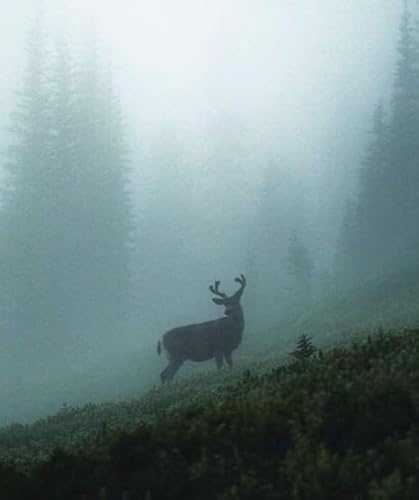
    Something’s not right in the woods, at least if you’re a white-tailed deer. In this episode, the guys dig into chronic wasting disease (CWD), a strange illness reshaping deer populations in many areas of the Lower 48 (and Scandinavia!). It’s not caused by a virus or a bacteria, but it is related to mad cow disease. They break down what it is, how it spreads, what’s happening inside infected animals, and why it’s so dang hard to contain. The deer are not alright… and there’s a reason.This episode was recorded on April 23, 2026 at Walton Woods Park in Amherst, NY (a suburb of Buffalo). Episode Notes and Links· Are there different CWD strains in a single animal? Chronic wasting disease isn’t a single, uniform pathogen. It’s more like a shifting swarm. Infected deer can carry multiple prion “strains” at once, meaning different misfolded shapes of the same protein that behave in slightly different ways. They could spread through the body differently, build up in different tissues, and cause disease at different rates. Lab experiments show this most clearly: when CWD prions are passed through model systems, what looks like one strain can split into multiple distinct variants, or reveal that a mixed population was there all along (e.g., Angers et al. 2010 PNAS; Béringue et al. 2012 Journal of Virology; Li et al. 2010 Journal of Virology). In actual deer, the picture is harder to pin down, but studies comparing prions from different tissues and individuals show real strain diversity and suggest that more than one strain can exist within a single animal (e.g., Angers et al. 2009 Journal of Virology; Moore et al. 2016 Emerging Infectious Diseases). The takeaway is that CWD behaves less like a single disease agent and more like a moving target: a cloud of protein shapes, some dominant, some hidden in the background, that can shift over time, giving the disease more chances to adapt, persist, and potentially jump into new hosts.· Does repeated exposure to CWD reduce incubation time in deer? Repeated exposure to CWD prions does likely shortens incubation time, mainly because prion diseases are strongly dose-dependent. Higher cumulative exposure, whether from a single large dose or many smaller ones over time, can both increase the chance of infection and accelerate disease progression. Experimental studies in deer and elk show that animals exposed to higher or repeated doses tend to develop symptoms faster than those exposed once at low levels. In the wild, this likely plays out through repeated contact with contaminated environments like soil, plants, and carcass sites. That said, factors like genetics and prion strain can still influence how quickly the disease develops in any given animal.· Is CWD the only prion disease that affects wildlife? CWD is the only prion disease currently thriving as a self-sustaining epidemic in wild populations. The others mostly sit at the edges and are livestock diseases that occasionally spill into wildlife or appear in captive/wild interface cases. For example, scrapie occasionally “leaks” into the wild (it has been found in bighorn sheep), but it doesn’t take over. It flickers at the edges of livestock systems. Nothing like the landscape-level, self-sustaining spread we see with CWD. That’s what makes CWD so concerning: it’s not just present in wildlife, it seems to be built for it.· Steve talked about the possibility of vampire bats and wild hogs spreading CWD. What’s the story? There’s currently no evidence that vampire bats are spreading CWD, but the wild hog story has gotten more interesting recently. Blood-feeding bats like the Common Vampire Bat (Desmodus rotundus) are often mentioned because prions can occur in blood at low levels, but there are no peer-reviewed studies showing bat-mediated transmission, nor any field patterns linking bats to CWD spread. So the bat idea remains speculative. Wild hogs (Sus scrofa), on the other hand, have moved beyond pure theory. A recent peer-reviewed study (e.g., Soto et al. 2025 Emerging Infectious Diseases) detected low levels of CWD prion activity in free-ranging pigs in endemic areas, suggesting they can pick up and carry prions after scavenging infected carcasses. Combine this with earlier work showing prions can survive digestion and still remain infectious (e.g., Nichols et al. 2009 PLoS ONE), it all points to hogs as plausible mechanical vectors: in other words, organisms that can move infectious material without necessarily developing the disease themselves. The takeaway: vampire bats are still a biologically interesting but unsupported idea, while wild hogs are emerging as potential “messy middlemen,” capable of redistributing prions across the landscape, even if they’re not a primary engine of CWD transmission, which is still driven by deer-to-deer contact and long-lived environmental contamination.·...
    続きを読む 一部表示
    1 時間 13 分
  • Ep. 79 - The Brown Tree Snake on Guam: Using Genetics to Unlock the Secrets of an Invasive Species
    2026/04/01

    The Brown Tree Snake (Boiga irregularis) has wreaked ecological havoc on Guam since its accidental release in the years following WWII, playing a major role in the extinction of endemic bird species and causing trophic cascades that have rewired how the island’s forests function. But how did a population of millions come from just a handful of snakes? And how does this species continue to thrive after eliminating so much of its prey base? A soon-to-be-released study looked into the genome of this invasive species and uncovered some intriguing possibilities. In this episode, the guys welcome their special guest, Dr. Christopher Osborne, to discuss his study and its implications for species management.

    This episode was recorded on March 15, 2026 at Rollin T. Grant Gulf Wilderness Park in Lockport, NY, a place Bill has (jokingly) called “the armpit of WNY” despite its deep history and the fact that he’ll absolutely encourage you to check it out.

    Episode Notes and Links

    In the beginning of the episode, Steve said we would definitely, 100%, without doubt, cover something called Lewontin’s paradox. Well, we skipped it! The main idea behind the paradox is that genetic variation varies little among species, but population size varies massively. We would expect large populations to have a lot of genetic diversity, but we often find that they don’t. Population size doesn’t always scale with genetic diversity.

    Sponsors and Ways to Support Us

    Thank you to Always Wandering Art (Website and Etsy Shop) for providing the artwork for many of our episodes.

    Support us on Patreon.

    Works Cited

    A single preprint!
    Osborne, C.A., Foote, B.M., Fleck, S.J., Waterman, H.M., Chang, S.L., Nafus, M.G., Bellinger, M.R., Gray, L.N. and Krabbenhoft, T.J., 2026. Genomic Structural Variation Rescues a Classic Biological Invader from a Population Bottleneck. bioRxiv, pp.2026-01.
    https://www.biorxiv.org/content/biorxiv/early/2026/02/02/2026.01.30.702330.full.pdf

    Photo Credit

    Brown tree snake, USDA/APHIS, Public Domain, https://www.fws.gov/media/brown-tree-snake

    続きを読む 一部表示
    1 時間 13 分
  • Ep. 78 - 3 Guys and A Gator (featuring Chip Campbell)
    2026/01/31
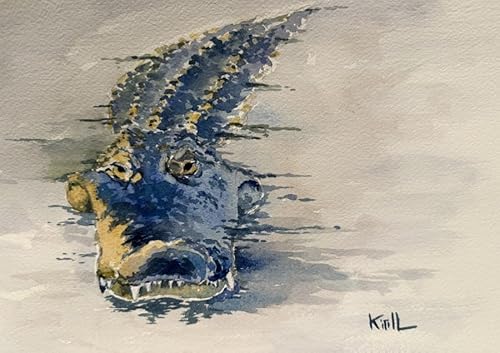
    It’s gator time, folks! It seems like we should’ve already covered this topic, but, nope, this is our first ever episode on the American Alligator (Alligator mississippiensis), and we’ve got two ringers to help: Daniel returns (our Field Guide host who moved to Florida last year) and he’s joined by his mentor in all things swamp-related, Chip Campbell. Chip spent twenty years running Okefenokee Adventures, leading interpretive tours in the Okefenokee National Wildlife Refuge, and his knowledge of alligator natural history and ecology runs deep.Thanks to our Patrons, this episode is also an on-the-road joint. The guys are deep in the Florida Everglades on a multi-day paddling trip, and they take a break at camp to talk with Chip about all things alligator — with a special focus on separating gator myths from reality.And, unfortunately for those of you crushing on Steve, this one’s 100% Steve-free.This episode was recorded on Dec. 31, 2025 at Watson’s Place campsite in Everglades National Park.Episode Notes and LinksAlligators, metabolism, and the “dog comparison”During the episode, Chip mentioned a study suggesting that several alligators could be maintained on roughly the same caloric intake as a single dog. We were not able to locate a study that makes that specific numerical comparison. However, the underlying idea is strongly supported by research on alligator physiology: American alligators have extremely low metabolic rates compared to warm-blooded mammals because they are ectothermic and do not spend energy maintaining body temperature. Classic physiological work shows that adult alligators can have daily energy expenditures that are only a small fraction of those of similarly sized mammals, making informal comparisons like this directionally accurate even if the exact ratio is anecdotal rather than experimental. Source: Coulson, R. A. (1989). Biochemistry and physiology of alligator metabolism in vivo. Integrative and Comparative Biology, 29(3), 921–934. https://doi.org/10.1093/icb/29.3.921Freshwater “sipping” — the study behind the observation The behavior Chip describes is documented in a study by Nifong and Lowers, which examined how coastal alligators use estuarine habitats. The authors note that after heavy rainfall, a thin layer of freshwater can temporarily sit on top of saltier water, and alligators will take advantage of this by drinking from the surface. This helps them manage hydration and salt balance in brackish environments, despite lacking the salt-excreting glands found in crocodiles. Source: Nifong, J. C., & Lowers, R. H. (2017). Reciprocal intraguild predation between Alligator mississippiensis and elasmobranchs in the southeastern United States. Southeastern Naturalist, 16(3), 383–396.Alligator growth vs. ageChip addressed the myth that alligators continue to grow throughout their life. Echoing what he reported, research on American alligators shows that although hatchlings and juveniles grow rapidly, their rate of growth slows substantially as they get older, and studies indicate they reach near-maximum body size well before the end of their lives. Long-term data suggest many alligators stop adding significant length by roughly 25–35 years of age, and more recent work has revised the classic idea of indefinite growth toward a pattern of determinate growth with a growth plateau in adulthood. Human harvest of alligators in LouisianaAs Chip said, Louisiana supports the largest wild harvest program for the American alligator in the United States, with more than 2,000 licensed hunters routinely harvesting an estimated 30,000–35,000 wild alligators annually under a regulated tagging system. In contrast, other states such as Florida have had regulated harvest programs with substantially lower annual take.” Sources: Joanen et al. (2021), Evaluation of Effects of Harvest on Alligator Populations in Louisiana, Journal of Wildlife Management; Louisiana Department of Wildlife and Fisheries Alligator Annual Report (2019–2020); Hines (SEAFWA) status report on Florida alligators.Fatal Alligator AttacksIn this episode, Chip discusses the history of fatal alligator-human conflicts, highlighting the 1973 Sharon Holmes incident as the first "fully confirmed" fatal attack in modern records. While the Holmes incident is often cited as the definitive first case, there was an earlier death that some consider to be the first modern fatality. Historical records show why Chip’s reference to the Holmes case being the first “fully confirmed” case is accurate:Sharon Holmes (1973): On August 16, 1973, 16-year-old Sharon Holmes was killed while swimming at Oscar Scherer State Park. This is widely cited as the first fully confirmed fatality because of the absolute nature of the evidence: the attack was witnessed by bystanders, and a subsequent necropsy of the 11-foot 3-inch alligator found conclusive physical remains. This event marked a turning point in ...
    続きを読む 一部表示
    1 時間 16 分
  • Ep. 77 - Mite-y Cool: The Amazing, Unseen World of Feather Mites
    2025/11/01

    In this episode, Bill and Steve dive into a tiny, bustling world - a world that’s hiding on the feathers of the birds we see every day. Joining them is Dr. Alix Matthews, postdoctoral research associate in the Department of Biological Sciences at the University at Buffalo, and she reveals the strange lives of feather mites — how these barely-visible hitchhikers feed and get around and whether or not they’re helping or hurting their avian hosts.

    This episode was recorded on September 4, 2025 at Walton Woods in Amherst, NY.

    Episode Notes and Links

    Check out Dr. Matthews’s website and research here.

    And watch a presentation on mites she did for Audubon Arkansas in October 2025.

    Sponsors and Ways to Support Us

    Gumleaf Boots, USA (free shipping for patrons)

    Thank you to Always Wandering Art (Website and Etsy Shop) for providing the artwork for many of our episodes.

    Support us on Patreon.

    Check out the Field Guides merch at our Teespring store. It’s really a great deal: you get to pay us to turn your body into a billboard for the podcast!

    Photo Credit

    Dr. Alix Matthews - https://matthewsalix.weebly.com/feather-mites.html

    続きを読む 一部表示
    1分未満
  • Ep. 76 - The Insect Apocalypse! (Part 2)
    2025/10/15
    It’s part 2 of our dive into the Insect Apocalypse, with our good friend Dr. Jason Dombroskie from the Cornell University Insect Collection!In this part, Jason fills us in on the drivers of the Insect Apocalypse and - most importantly - what we can do about it.This episode was recorded on August 21, 2025 at Rattlesnake Hill Wildlife Management Area in Dalton, NY.. Episode NotesDuring the episode, we made the claim that 40 million acres of the US is lawn, and that that area is equal to all of the country’s National Parks put together. True? Well, sort of. The claim that the U.S. has about 40 million acres of lawn—roughly equal to all our national parks combined—is only partly true. A NASA-funded study led by Cristina Milesi estimated that turfgrass covers about 128,000 km² (≈31 million acres) of the continental U.S., making it the largest irrigated “crop” in the country (Milesi et al., Environmental Management, 2005; NASA Earth Observatory). Later analyses and popular summaries often round that up to ≈40 million acres (e.g., Scienceline, 2011; LawnStarter, 2023). By comparison, the total land area of all officially designated U.S. National Parks is about 52.4 million acres, while the entire National Park System—which also includes monuments, preserves, and historic sites—covers about 85 million acres (National Park Service, 2024). So while lawns and parks occupy areas of similar magnitude, lawns do not actually equal or exceed the combined area of the national parks. Is it better to mulch leaves on your lawn or leave them be? Here’s what we found: It’s generally best to mulch your leaves with a mower rather than rake or remove them. Research from Michigan State University found that mowing leaves into small pieces allows them to decompose quickly, returning nutrients to the soil and reducing weeds like dandelions and crabgrass (MSU Extension, “Don’t rake leaves — mulch them into your lawn”, 2012). Cornell University studies similarly show that mulched leaves improve soil structure, moisture retention, and microbial activity (Cornell Cooperative Extension, “Leaf Mulching: A Sustainable Alternative”, 2019). However, in garden beds, wooded edges, or under shrubs, it’s often better to leave leaves whole, since they provide winter habitat for butterflies, bees, and other invertebrates that overwinter in leaf litter (National Wildlife Federation, “Leave the Leaves for Wildlife”, 2020). The ideal approach is a mix: mow-mulch leaves on grassy areas for turf health and leave them intact where they naturally fall to support biodiversity and soil ecology. Episode LinksThe Cornell University Insect Collection Also, check out their great Instagram feedAnd their annual October event InsectapaloozaFind out more about the recently discovered species of Swallowtail, Papilio solstitius, commonly known as the Midsummer Tiger Swallowtail- https://www.sci.news/biology/papilio-solstitius-13710.htmlSponsors and Ways to Support UsThank you to Always Wandering Art (Website and Etsy Shop) for providing the artwork for many of our episodes.Support us on Patreon.Works CitedBiesmeijer, J.C., Roberts, S.P., Reemer, M., Ohlemuller, R., Edwards, M., Peeters, T., Schaffers, A.P., Potts, S.G., Kleukers, R.J.M.C., Thomas, C.D. and Settele, J., 2006. Parallel declines in pollinators and insect-pollinated plants in Britain and the Netherlands. Science, 313(5785), pp.351-354. Boyle, M.J., Bonebrake, T.C., Dias da Silva, K., Dongmo, M.A., Machado França, F., Gregory, N., Kitching, R.L., Ledger, M.J., Lewis, O.T., Sharp, A.C. and Stork, N.E., 2025. Causes and consequences of insect decline in tropical forests. Nature Reviews Biodiversity, pp.1-17. Burghardt, K.T., Tallamy, D.W., Philips, C. and Shropshire, K.J., 2010. Non‐native plants reduce abundance, richness, and host specialization in lepidopteran communities. Ecosphere, 1(5), pp.1-22. Colla, S.R. and Packer, L., 2008. Evidence for decline in eastern North American bumblebees (Hymenoptera: Apidae), with special focus on Bombus affinis Cresson. Biodiversity and Conservation, 17(6), pp.1379-1391. Crossley, M.S., Meier, A.R., Baldwin, E.M., Berry, L.L., Crenshaw, L.C., Hartman, G.L., Lagos-Kutz, D., Nichols, D.H., Patel, K., Varriano, S. and Snyder, W.E., 2020. No net insect abundance and diversity declines across US Long Term Ecological Research sites. Nature Ecology & Evolution, 4(10), pp.1368-1376. DeWalt, R.E., Favret, C. and Webb, D.W., 2005. Just how imperiled are aquatic insects? A case study of stoneflies (Plecoptera) in Illinois. Annals of the Entomological Society of America, 98(6), pp.941-950. Edwards, C.B., Zipkin, E.F., Henry, E.H., Haddad, N.M., Forister, M.L., Burls, K.J., Campbell, S.P., Crone, E.E., Diffendorfer, J., Douglas, M.R. and Drum, R.G., 2025. Rapid butterfly declines across the United States during the 21st century. Science, 387(6738), pp.1090-1094. Gaona, F.P., Iñiguez-Armijos, C., Brehm, G., Fiedler, K. and ...
    続きを読む 一部表示
    1 時間 1 分