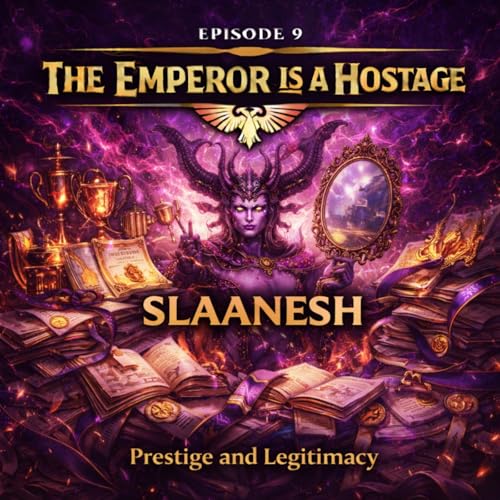
『The Emperor Is a Hostage: Universities and Truth』のカバーアート

The Emperor Is a Hostage: Universities and Truth

The Emperor Is a Hostage: Universities and Truth

著者: brian lucey
無料で聴く

概要

The modern university still functions, but what it no longer does is govern itself by truth.

The Emperor Is a Hostage is a long-form podcast about academia, knowledge, power, and the institutional machinery that keeps inquiry alive while stripping it of authority.Across multiple seasons, the podcast traces the machinery that keeps truth alive but silent: metrics, audit, prestige economies, managerial reform, and the quiet redistribution of risk and sacrifice. It examines why corruption emerges without villains, why competence often exits first, and why stability eventually replaces inquiry as the governing goal.

This is not a reform podcast.

No solutions are offered.

It is a diagnosis of institutional living death, and a field guide for understanding the system from the inside once illusion has failed.

Hosted on Acast. See acast.com/privacy for more information.

brian lucey
アート 哲学 文学史・文学批評 社会科学
エピソード
  • 1-11 Nurgle
    2026/02/07

    When you stop expecting improvement and learn to endure, you serve Nurgle—the god who celebrates resilience while the buildings literally fall apart.

    Nurgle doesn't arrive. You simply wake up one day too tired to care.

    This episode explores how academia's permanent crisis creates Nurglesque acceptance: the teaching evaluations that never change anything, the pile of ungraded papers that grows until three weeks becomes normal, the research agenda that quietly contracts from "transform the field" to "publish enough to not get fired." We examine how individual academics lower their expectations until survival becomes achievement, how departments develop workaround systems for broken processes, and how universities celebrate endurance while infrastructure decays.

    Nurgle offers relief from hope—you don't have to be excellent anymore, just present. But this relief is corruption. The casual contracts no one acknowledges. The committee meetings where the same issues appear year after year, unresolved. The acceptance that strategic plans are performative.

    From the comfort of formulaic paper structures to the fellowship of mutual complaint that changes nothing, this episode traces how exhaustion becomes wisdom—until we're too trapped to leave and too tired to fight.

    The god of sanctified decay doesn't rule through suffering. He rules through the relief of lowered expectations.


    More details are available in the book, https://www.amazon.com/dp/B0GCFWD29C

    Hosted on Acast. See acast.com/privacy for more information.

    続きを読む 一部表示
    43 分
  • 1-10 Tzeentch
    2026/02/07

    When complexity becomes virtue, academics serve Tzeentch—the god of strategic plans that generate more strategic plans. Change without progress.

    Tzeentch does not arrive like a conqueror. He arrives like a consultant, embedded in the strategic frameworks you thought were yours.

    This episode examines how academia's governance complexity creates Tzeentchian worship: the proliferation of committees that oversight other committees, the curriculum reviews that trigger more curriculum reviews, the strategic planning cycles that produce plans for more planning. We explore how individual academics learn to perform sophistication through process engagement, how departments dissolve into overlapping working groups, and how universities mistake elaboration for improvement.

    Tzeentch offers the pleasure of feeling intelligent—acknowledging complexity demonstrates expertise. But complexity compounds. IRB applications that obscure actual research. Citation networks manipulated for h-index gains. Every reform introduces new problems that justify further reform.

    From the labyrinth of reporting structures to the prophecy of "transformational change" that never arrives, this episode traces how adaptation becomes performance—until nothing actually changes, but everyone is perpetually planning.

    The god of necessary change ensures motion without destination.


    More details are available in the book, https://www.amazon.com/dp/B0GCFWD29C

    Hosted on Acast. See acast.com/privacy for more information.

    続きを読む 一部表示
    42 分
  • 1-9 Slaanesh
    2026/02/07

    After Khorne's output wars, Slaanesh asks: which papers actually matter? The pursuit of Nature-level prestige becomes an addiction without satisfaction.

    Slaanesh does not arrive in excess. He arrives in discrimination—the moment when institutions must distinguish excellent work from merely competent output.

    This episode explores how academia's prestige economy creates Slaaneshi worship: the endless revision cycles demanded by elite journals, the 27 robustness checks that never quite satisfy reviewers, the addiction to citation counts and impact factors. We examine how individual academics learn to perform excellence rather than inhabit it, how departments create caste systems around journal hierarchies, and how universities optimise entirely for visibility in top-tier venues.

    Slaanesh offers seduction through recognition—your work deserves to be seen. But recognition becomes positional. Each Nature paper raises the baseline. Each keynote invitation sharpens the hunger. The anxiety of being eclipsed never recedes.

    From the aesthetic torture of Reviewer 2's contradictory demands to the performance of brilliance at conferences, this episode traces how the pursuit of excellence detaches from sufficiency—until scholars compete not to be good, but to be seen as best.

    The god of refinement without rest makes success feel insufficient.


    More details are available in the book, https://www.amazon.com/dp/B0GCFWD29C

    Hosted on Acast. See acast.com/privacy for more information.

    続きを読む 一部表示
    36 分
まだレビューはありません