• Book Publishing, Editing, and Protecting Your Voice
    2026/07/21

    "You are the actor or actress in your story... but it's not just for you." — Lesley George

    Last week, bestselling publisher and confidence coach Lesley George reminded us that every person has a story with power, a voice with purpose, and a message that can create movement.

    This week, we continue that conversation by exploring what happens after you decide to write.

    We talk about the publishing journey, the fears many writers carry into the editing process, and why the right publishing team should protect your voice—not replace it.

    One of the most powerful moments in this conversation comes when Lesley shares a childhood experience with a teacher and a red pen that shaped the way she now works with authors. As a former English teacher, I found myself deeply connecting with her story because it reinforces something I have believed for years:

    Editing should never make a writer feel smaller.

    It should help their story become clearer while keeping their voice completely intact.

    We also explore legacy, community, authenticity, and why the stories we choose to share today may impact generations we will never meet.

    Whether you're writing your first book or wondering if your story is worth telling, this conversation is a reminder that your experiences matter—not only for you, but for the people whose lives may be changed because you chose to share them.

    In this episode, we discuss:
    • Common misconceptions about working with a publisher
    • Why your story is already worthy before anyone else reads it
    • Building trust between authors and publishers
    • The danger of self-editing too early
    • What makes a manuscript truly connect with readers
    • The importance of protecting an author's authentic voice
    • Lesley's unforgettable story about the red pen that shaped her philosophy as a publisher
    • Why stories build community and preserve legacy
    • How sharing your perspective can impact people you'll never meet
    • Why your story isn't just for you
    Memorable Quotes

    "Your story is already worthy."

    "Stories are legacy builders."

    "Stories build community."

    "Your perspective is your story."

    "You don't need permission for your perspective."

    "One rock thrown into a lake creates a ripple effect."

    "You are the actor or actress in your story... but it's not just for you."

    Connect with Lesley George

    Lesley George is a bestselling publisher, confidence coach, speaker, author, and founder of Mosaic Publishing.

    Website: https://www.themosaicinc.com

    Social Media Handles: Lesley George

    email: lesley@themosa8inc.com

    She is passionate about helping authors share their stories with confidence while protecting their authentic voices throughout the publishing process.

    You can also listen to her podcast:

    Mosaic Sparks with Lesley George

    If this conversation encouraged you, I'd love for you to follow The Edit, leave a rating and review, and share this episode with another writer who needs the reminder that their story matters.

    And remember...

    Your story without your voice is only words.

    続きを読む 一部表示
    32 分
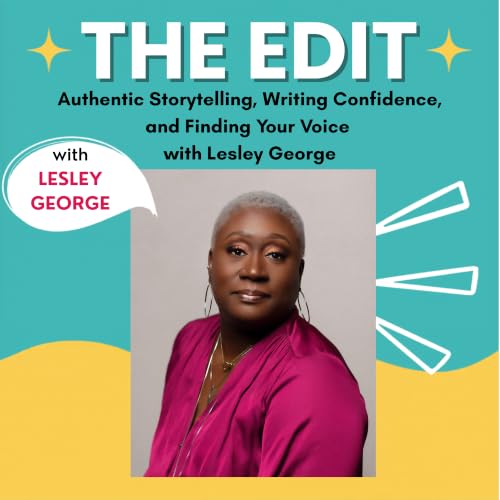
  • Authentic Storytelling, Writing Confidence, and Finding Your Voice with Lesley George
    2026/07/14

    "Every person has a story with power, a voice with purpose, and a message that can create movement when it is used with courage and clarity." — Lesley George

    What gives us permission to tell our stories?

    For many writers, it isn't a lack of ideas that keeps them stuck—it's a lack of confidence. We question whether our stories matter, whether anyone will care, or whether we're qualified to write the book that's been on our hearts.

    In this first half of my conversation with bestselling publisher, confidence coach, and founder of Mosaic Publishing, Lesley George, we explore the connection between confidence and storytelling, why authentic voice matters more than perfection, and how sharing our stories can create a ripple effect far beyond what we ever imagine.

    Lesley shares the philosophy behind her movement, The BRAGGBe Responsible for Amplifying God's Gifts—and explains why celebrating the gifts we've been given isn't arrogance at all. It's stewardship.

    We also discuss writing, publishing, authenticity, the role of AI, and why every writer deserves the freedom to tell their story in their own voice.

    Whether you're just beginning your first manuscript or wondering if your story is worth sharing, this conversation is a reminder that your voice matters.

    In this episode, we discuss:
    • Why confidence is one of the biggest obstacles writers face
    • The meaning behind Lesley's BRAGG philosophy: Be Responsible for Amplifying God's Gifts
    • Why every person's story has value
    • How authenticity creates deeper connections with readers
    • Why authors should resist sharing early drafts with too many people
    • The difference between confidence and arrogance
    • How AI fits into the writing process—and where authentic voice can never be replaced
    • Why your book should still sound like you when you stand on a stage years later
    • Building a legacy through honest storytelling
    • How writing your story gives others permission to share theirs
    Memorable Quotes

    "Be Responsible for Amplifying God's Gifts."

    "BRAGG has nothing to do with being arrogant. It's about showing up as who God created you to be."

    "Your story needs to come from you."

    "Authentic voice means you can get up anywhere in the world and be yourself."

    "When you write a book, you're leaving a legacy."

    Connect with Lesley George

    Podcast: Mosaic Sparks with Lesley George

    Website: https://www.themosaicinc.com

    Social Media Handles: Lesley George

    email: lesley@themosa8inc.com

    Follow Lesley on social media to learn more about her work as a publisher, confidence coach, speaker, and bestselling author.

    Coming Next Week...

    This conversation was simply too good to fit into one episode.

    In Part Two, Lesley and I continue our discussion by exploring what writers often misunderstand about publishing, why every story is already worthy, how to build a publishing relationship based on trust, and the childhood experience that forever shaped the way she works with authors today.

    You won't want to miss it.

    If you enjoyed today's episode, I'd love for you to follow The Edit, leave a rating and review, and share this episode with another writer who needs the reminder that their story matters.

    And remember...

    Your story without your voice is only words.

    続きを読む 一部表示
    34 分
  • How To Read Your Book Like an Editor
    2026/07/07
    "Easy reading is damn hard writing." — Nathaniel Hawthorne Finishing your first draft is a huge accomplishment—but it's not the finish line. It's the beginning of revision. In last week's episode, we celebrated typing The End. This week, we're opening that manuscript again and answering one of the biggest questions every writer eventually asks: "Where do I even start?" The answer may surprise you. Most writers immediately begin fixing grammar, rewriting sentences, and polishing paragraphs. But that's like choosing paint colors before you've decided whether the walls belong where they are. In this episode of The Edit, Holly walks you through a simple five-pass editing process that helps you step back, see your manuscript the way an editor does, and revise with confidence instead of overwhelm. Whether you're writing a memoir, nonfiction book, business book, or novel, these strategies will help you focus on the right things in the right order—saving time, reducing frustration, and creating a stronger book. In This Episode Why most writers start revising in the wrong placeThe "remodeling a house" analogy that changes the way you'll think about editingHow professional editors learn to see the big picture before fixing the detailsWhy trying to edit everything at once leads to overwhelmA practical five-pass revision process you can use with every manuscriptHow to protect your authentic voice throughout revisionWhy clarity is always more powerful than sounding impressiveThe difference between polishing words and strengthening your message The Five Revision Passes Pass One: Read Like a Reader Resist the urge to edit. Simply experience your manuscript as your readers will. Notice what works, what drags, what surprises you, and where your attention begins to wander. Pass Two: Look at the Big Picture Examine the structure of your book. Does every chapter serve a purpose? Is your message clear? Are ideas in the right order? This is where you strengthen the foundation before worrying about the details. Pass Three: Protect Your Voice One of the most important questions you can ask is: "Does this still sound like me?" During revision, it's easy to become more formal, over-explain ideas, or accidentally edit away the personality that makes your writing unique. Your readers connected with your perspective—don't lose it while trying to sound more "writerly." Pass Four: Read Through Your Reader's Eyes Shift your focus from yourself to the person holding your book. Ask: Where might they become confused?Where do they need another example?Where will they feel encouraged?Where are they most engaged?Does every chapter move them forward? Every chapter should take your reader somewhere emotionally, mentally, practically—or all three. Pass Five: Now It's Time to Edit Only after you've strengthened the structure, protected your voice, and improved the reader's experience is it time to polish: GrammarWord choiceSentence flowTransitionsReadabilityFinal proofreading Editing matters—but only after the book itself is solid. A Thought to Remember Revision isn't about making your writing sound smarter. It's about making your writing clearer. Sometimes the strongest revision isn't adding more words—it's removing the ones that don't serve the reader. Simple writing isn't shallow. Simple writing builds trust. Key Takeaways Read before you revise.Fix the big picture before the small details.Protect your authentic voice.Think like your reader.Save grammar and polishing for last.Connection matters more than perfection. Favorite Quote from This Episode "Your first draft proved that you could write the book. Your revisions are where you shape that book into something your readers will remember." Resources If this episode encouraged you, share it with another writer who has just finished a first draft. Chances are, they're asking the same question: "What do I do now?" You don't have to revise perfectly. You just have to know where to begin. Connect with Holly Totten Website: https://www.writelynotable.com https://calendly.com/gatheredwithpurpose/line-editing-30-min Email: writelynotable@gmail.com Podcast: The Edit – Writing Your Book Without Losing Your Voice If you're enjoying The Edit, please consider following the show, leaving a review, and sharing it with another writer. It helps more storytellers discover the podcast and reminds them that they don't have to navigate the writing journey alone. And remember… Your Story without Your Voice is Only Words.
    続きを読む 一部表示
    13 分
  • You Finished Your First Draft - Now What?
    2026/06/30

    Finishing your first draft is one of the biggest accomplishments in a writer's journey.

    Yet for many writers, those two words—The End—don't bring relief. They bring uncertainty.

    Now what?

    Do you start editing immediately? Rewrite the first chapter? Send it to beta readers? Hire an editor? Or quietly close the document because you're afraid of what you'll find?

    In this episode of The Edit, Holly walks you through what should happen after your first draft is complete—and why the space between finishing your manuscript and beginning revisions may be one of the most valuable parts of the entire writing process.

    You'll learn why stepping away from your manuscript is not procrastination, why your first revision should focus on the big picture instead of grammar, and how to know when you've reached the end of what you can effectively self-edit.

    If you've recently typed "The End" or hope to someday, this episode will help you approach your next steps with confidence instead of anxiety.

    In This Episode You'll Learn:
    • Why finishing your first draft deserves to be celebrated

    • The surprising reason you shouldn't begin editing immediately

    • How distance helps you become a better editor

    • What to do while your manuscript "rests"

    • How to read your own manuscript like a reader instead of a writer

    • The biggest mistake writers make during their first revision

    • What to focus on before worrying about grammar and punctuation

    • Why polishing too early often wastes valuable time

    • How to know when you've reached the limits of self-editing

    • The true role of a professional editor—and why good editors strengthen your voice instead of replacing it

    Key Takeaways

    Your first draft and your revisions have two completely different jobs.

    The first draft exists to capture your story.

    Revision exists to communicate that story as clearly and effectively as possible.

    Trying to do both at the same time often leads to frustration, perfectionism, and stalled progress.

    Instead:

    • Celebrate your accomplishment.

    • Step away long enough to gain a fresh perspective.

    • Read your manuscript before changing it.

    • Fix the structure before polishing the sentences.

    • Invite outside feedback when you've reached the limits of your own objectivity.

    Most importantly…

    Your story deserves thoughtful revision—but it also deserves to sound like you.

    Memorable Quote from This Episode

    "A first draft isn't the finish line. It's the beginning of turning your story into the book your readers were meant to experience."

    Featured Quote

    "The first draft is just you telling yourself the story." — Terry Pratchett

    Resources Mentioned
    • Self-editing

    • Revision strategies

    • Beta readers

    • Professional editing

    • Protecting your authentic writing voice

    Connect with Holly

    If this episode encouraged you, share it with another writer who's wondering what comes after typing "The End."

    And if you're enjoying The Edit, please subscribe, leave a review, and help more writers discover how to write, edit, and publish their stories without losing their voice.

    Email Holly at writelynotable@gmail.com OR visit her website https://www.writelynotable.com

    Remember:

    Your story without your voice is only words.

    続きを読む 一部表示
    18 分
  • What a Third-Grade Story Stand Taught Me About Writing, Editing, and Voice
    2026/06/23

    What can two third-grade girls, a card table, and a stack of handwritten stories teach us about writing?

    More than you might think.

    In this episode of The Edit, Holly shares a childhood memory that helped shape her beliefs about storytelling, editing, and authentic voice long before she knew those words would become part of her career.

    Back in the 1970s, Holly and her best friend, Anne Marie, opened a "Story Stand" in their neighborhood. Instead of selling lemonade, they sold stories—fiction, nonfiction, poems, and even custom-written tales based on customer requests.

    Looking back, Holly realizes that one simple summer taught her some of the most important lessons she's carried into her work as a writer, editor, and writing coach.

    In this episode, you'll discover:

    • Why writing is ultimately about connection
    • The real purpose of editing—and what it should never do
    • Why not every reader is the right reader
    • How encouragement can shape a writer's confidence
    • Why your authentic voice is your greatest writing asset

    Whether you're writing a book, a blog, a memoir, or simply trying to tell your story more clearly, this episode is a reminder that the lessons that matter most are often the ones we learn long before we realize we're learning them.

    Quote Featured in This Episode

    "What one loves in childhood stays in their heart forever."
    — Mary Jo Putney

    In This Episode

    Lesson 1: Writing Is Meant to Connect People

    • Stories create connection
    • Writing doesn't require permission, credentials, or publication
    • The power of sharing one human experience with another

    Lesson 2: Editing Should Strengthen a Story, Not Replace a Voice

    • What childhood story-sharing taught Holly about editing
    • The difference between improving a story and changing a writer
    • Why preserving voice matters

    Lesson 3: Not Every Reader Is the Right Reader

    • The baby bird story that never made it to the Story Stand
    • Understanding audience and reader reactions
    • Why criticism isn't always a sign that your writing failed

    Lesson 4: Encouragement Matters

    • The story of Mazie the Magical Horse
    • The importance of people who believe in our stories
    • How a single encouraging voice can change a writer's path

    Lesson 5: Your Voice Is Your Greatest Asset

    • Why sounding like yourself matters more than sounding like anyone else
    • The value readers truly connect with
    • The foundation of Holly's editing philosophy
    Memorable Takeaway

    "The thing that makes your writing valuable isn't that it sounds like a bestselling author. It's that it sounds like you."

    Connect with Holly

    If this episode resonated with you, please follow the podcast, leave a rating and review, and share it with another writer who needs the reminder that their voice matters.

    For writing coaching, editing services, and resources, visit:

    Writely Notable
    https://www.writelynotable.com

    You can email Holly at writelynotable@gmail.com

    Final Thought

    Your story without your voice is only words.

    続きを読む 一部表示
    10 分
  • 8 Lessons in Writing, Editing, and Publishing
    2026/06/19

    In this special bonus episode of The Edit: Writing Your Book Without Losing Your Voice, Holly takes a step back from her conversation with author Hadley Kibbe to explore the writing, editing, and publishing lessons hidden within Hadley's story.

    While Hadley's books were inspired by ranch life, motherhood, faith, and her son, the lessons behind her writing journey apply to every writer—whether you're working on a children's book, memoir, devotional, business book, blog, or personal story.

    Holly breaks down eight powerful lessons that every writer can use to create more authentic, meaningful work without getting trapped by perfectionism or self-doubt.

    If you've ever questioned whether your story matters, struggled to find your voice, or worried your writing isn't "good enough," this episode is for you.

    In This Episode
    • Why writing what you know is often the strongest place to start

    • The importance of knowing exactly who you're writing for

    • How your voice stays consistent even when your audience changes

    • Why perfection is often fear in disguise

    • The difference between writing with purpose and chasing polish

    • How ordinary life experiences become meaningful stories

    • Redefining success beyond sales, reviews, and rankings

    • Why sometimes, the best advice is simply: "Write the words"

    Key Takeaways

    ✔ Your life already contains stories worth telling.

    ✔ Specific writing connects more deeply than writing for everyone.

    ✔ Your voice can adapt to different audiences without losing authenticity.

    ✔ Perfect writing doesn't exist—but meaningful writing does.

    ✔ Purpose should guide every writing decision you make.

    ✔ The stories you consider ordinary may be exactly what someone else needs to hear.

    ✔ Success isn't always measured by numbers.

    ✔ Confidence comes after writing—not before it.

    Memorable Quotes from This Episode

    "The challenge isn't finding the story. The challenge is recognizing that your story really is enough."

    "When writers try to write for everybody, they often end up connecting with nobody."

    "Voice isn't about using the same words or even the same tone. Voice is about sounding like yourself regardless of who you're speaking to."

    "Perfection isn't the goal. Clear is the goal. Authentic is the goal. Meaningful is the goal."

    "Unfinished work can't help anyone."

    "The stories that feel ordinary to you may be extraordinary to someone else."

    "Success isn't always external. Success is sometimes the person you become while writing it."

    "Your story doesn't have to be extraordinary. It doesn't have to be perfect. It doesn't have to sound like anyone else's. It just has to sound like you."

    "Your story without your voice is only words."

    Mentioned in This Episode
    • Hadley Kibbe

    • Children's book writing

    • Devotional writing

    • Writing for a specific audience

    • Author mindset

    • Self-editing

    • Perfectionism in writing

    • Authentic voice

    • Purpose-driven storytelling

    Connect with Holly

    If this episode resonated with you, please consider sharing it with another writer, leaving a rating and review, and subscribing so you never miss an episode.

    writelynotable@gmail.com

    If you're working on a book and want help preserving your voice while strengthening your message, visit https://www.writelynotable.com for editing and writing coaching services.

    Rate & Review Shout-Out

    A special thank you to JenRoseRyan for the five-star review and for letting us know you're hooked on the show. Your support helps The Edit reach more writers and storytellers who need encouragement to share their voices with the world.

    続きを読む 一部表示
    13 分
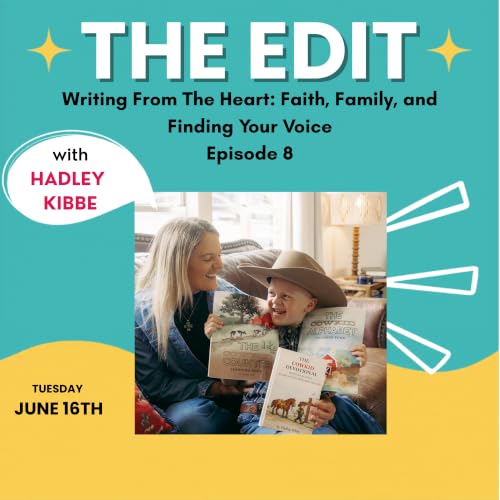
  • Writing From The Heart: Faith, Family, And Finding Your Voice
    2026/06/16
    What happens when a ranch-raised cowgirl, rodeo competitor, songwriter, photographer, wife, mother, and follower of Jesus decides to write books for her son? In this heartfelt conversation, Holly sits down with Hadley Ann Kibbe, a former student-turned-author whose life is deeply rooted in faith, family, and the Western way of life. Together, they explore the stories behind The Cow Kid Series, the lessons motherhood has taught her, and why perfection should never stand in the way of sharing your story. Hadley shares how her experiences growing up on a ranch, competing in rodeo, becoming a mother, and trusting God's plan shaped both her life and her writing. She also offers powerful encouragement to writers who feel called to share a story but are afraid it isn't ready, polished, or perfect. This episode is a reminder that the stories that matter most often come from the ordinary moments we live every day—and that your voice matters more than perfection ever will. In This Episode Growing up in the Western lifestyle and how it shaped Hadley's values The role faith plays in creativity, storytelling, and purpose How songwriting and photography became forms of ministry Competing in collegiate rodeo while pregnant and returning to competition as a new mother Why motherhood taught her to slow down and appreciate life's fleeting moments The inspiration behind The Cow Kid Series Writing books to help children learn both academics and faith The challenge of keeping your authentic voice while writing Letting go of perfection and trusting the purpose behind your words Building a legacy through stories that future generations can hold in their hands Advice for writers who feel called to share their story Memorable Quotes "There's never a perfect time. When God puts something on your heart, He's not looking for perfection. He's looking for you to follow your purpose." "The Lord's not looking for perfection. He's looking for purpose." "Writing those stories is never perfect because you weren't perfect in the moment." "If you're chasing perfection too much, you're getting in the way of the Lord's calling." "Just write the words." "When God puts something on your heart, He needs the story to be told." "It doesn't matter if it's told perfectly." What This Episode Teaches Many writers believe they need to be experts, have extraordinary experiences, or write perfectly before they share their stories. Hadley's journey shows the opposite. The stories that connect most deeply often come from everyday life—raising children, learning difficult lessons, honoring family traditions, and living faithfully through ordinary moments. When we stop chasing perfection and focus on purpose, our voice naturally comes through on the page. Whether you're writing a book, journaling your experiences, sharing your testimony, or simply trying to preserve family stories for future generations, this episode offers encouragement to trust the process and tell the story only you can tell. About Our Guest Hadley Ann Kibbe is a wife, mother, collegiate rodeo coach, songwriter, photographer, and author. Raised on a ranch and immersed in the Western lifestyle from childhood, she uses storytelling to share faith, family values, and the lessons learned from ranch life with the next generation. She is the author of: The Cow Kid Devotional The Cow Kid Alphabet The Cow Kid Counter Together, known as The Cow Kid Series. Connect with Hadley Hadley can be found through Facebook and TikTok, where she shares updates about her books, music, photography, and life. Holly has included links in the episode description for listeners who would like to connect with her or purchase her books. Facebook https://www.facebook.com/hadley.butler.14 TikTok https://www.tiktok.com/@hadleyannekibbe?lang=en Connect with Holly If today's conversation encouraged you, be sure to subscribe, leave a review, and share this episode with someone who has a story to tell. You can reach Holly at writelynotable@gmail.com OR https://www.writelynotable.com Remember: Your story without your voice is only words. Thank you for listening to The Edit: Writing Your Book Without Losing Your Voice.
    続きを読む 一部表示
    35 分
  • Editing While Writing vs. Editing After The Story Is Written
    2026/06/09

    Have you ever sat down to write and spent more time deleting words than actually putting them on the page?

    You're not alone.

    In this episode of The Edit, Holly explores one of the most common habits that keeps writers stuck: editing while they write. While it may feel productive, constantly revising, rewriting, and second-guessing every sentence can quietly prevent a story from ever being told.

    Holly discusses the difference between writing and editing, why trying to do both at the same time creates frustration, and how inviting your inner editor into the process too early can lead to fear, perfectionism, and self-doubt.

    Drawing on her experience as a writer and an editor, Holly shares a personal story about the role her mother played in helping her recognize when she had overthought her writing and lost her authentic voice.

    You'll learn:

    • Why writing and editing require different mindsets

    • How self-editing during drafting can create fear and hesitation

    • What first drafts are actually supposed to accomplish

    • The true role of a professional editor

    • Why many writers mistake editor overload for writer's block

    • A simple exercise to help you write more freely

    If you've ever felt stuck, frustrated, or unable to move forward with your manuscript, this episode will remind you that messy writing isn't bad writing—it's often where the best stories begin.

    Featured Quote

    "Start writing, no matter what. The water does not flow until the faucet is turned on."
    — Louis L'Amour

    Key Takeaways
    • Writing is creation; editing is refinement.
    • First drafts are meant to be messy.
    • Self-editing too early can silence your authentic voice.
    • Perfectionism often disguises itself as productivity.
    • A good editor strengthens your message without changing who you are.
    • Blank pages can't be edited, but messy pages can.
    • The strongest stories often begin with the freedom to write imperfectly.
    Voice Check

    Ask yourself:

    Am I trying to discover the story right now… or polish it?

    Those are two very different jobs.

    This Week's Writing Challenge

    Set a timer for five minutes and write without:

    • Rereading previous paragraphs
    • Fixing grammar
    • Changing wording
    • Hitting backspace

    Just write.

    Then ask yourself:

    • Was it easy or difficult?
    • Did anything surprise you?
    • Did your writing feel different when you stopped editing?
    Connect with Holly

    Enjoying the show?

    Subscribe, leave a review, and share this episode with another writer who may be stuck in the editing loop.

    Because your story deserves the chance to breathe before it gets polished.

    Email Holly at writelynotable@gmail.com or go to her website
    https://www.writelynotable.com

    Remember

    Your story without your voice is only words.

    続きを読む 一部表示
    10 分