エピソード

  • Around the World During the Cold War!
    2026/09/08

    In this short episode, Ankita unpacks the 1967 Hindi film Around the World starring Raj Kapoor, Rajshree, Mehmood, and Pran. In a reversal to his socialist image, Raj Kapoor plays a millionaire embarking on a world tour but there's a problem. He only has eight US dollars. The film is touted as a mindless film but Ankita argues that this is one of the most important Cold War films made in Bollywood.

    Enjoy!

    続きを読む 一部表示
    33 分
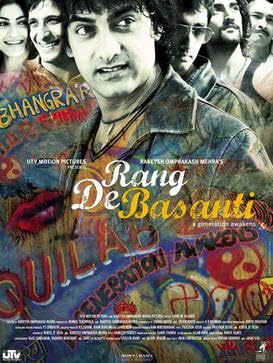
  • Special Episode: Rang De Basanti (2006), Rakeysh Mehra: 2006 vs 2026
    2026/08/02

    The student, the educator, the cinephile, and the rebellious Indian combine in this episode to unpack the relevance of the 2006 Hindi film Rang De Basanti. Ankita and Azhar do so via the Cockroach Janta Party led student protests unfolding in India. Consider this a tribute to revolutionaries like Bhagat Singh, the rebellious spirit of Indian masses, and India as well–the India which at one point aimed to be the symbol of decoloniality. The hosts extend their solidarity to the Indian students, complicate CJP, criticize mainstream Bollywood's cowardly right-wing turn while unpacking questions like:

    1) What is revolutionary optimism?

    2) What are the reasons behind the pessimistic belief that protests lead to nothing?

    3) Why are the Indian students protesting and hows does RDB blur the lines between fact and fiction?

    4) Why is RDB is still a relevant radical political film?

    References:

    https://www.bbc.com/news/articles/cly72e3zrjno

    続きを読む 一部表示
    1 時間 42 分
  • Haqeeqat (1964), Chetan Anand: Indo-China, Cold War, and Postcolonial Nation Building
    2026/07/01

    Ankita and Azhar unpack one of the finest war films in Bollywood history. Though set in 1962 during the Indo-China war, Haqeeqat (Reality) deals with the trauma of losing Jawahar Lal Nehru and perhaps his vision for a non-aligned India. Dharmendra, Balraj Sahni, Sudhir, Vijay Anand, Jayant, and Priya Rajvansh star. While the film can be seen as a cinematic revenge against China's aggression in 1962, it nonetheless opens the questions about war-labor, absurdity of human-made borders, illusion of nation, postcolonial sovereignty, ideal citizenry and more. Ankita and Azhar engage in a complex discussion of the film while lamenting the impossibility of such films being made in Bollywood today.

    続きを読む 一部表示
    1 時間 26 分
  • Postcolonial India, Jewish Bollywood, and Lessons for Today: Yahudi (1958), Directed by Bimal Roy
    2026/06/01

    Our latest episode dicusses one of the finest and heavily overlooked Hindi film Yahudi (English: The Jew) from 1958. Starring Dilip Kumar, Meena Kumari, Sohrab Modi, and Nazir Hussain, the film is a testament of postcolonial ethnic solidarity that shaped Bollywood. It is based on the play Yahudi Ki Ladki by the Urdu poet, playwright, and dramatist Agha Hashar Kashmiri, a classic in Parsi-Urdu theatre. Wajahat Mirza's dialogues are outstanding while Shankar Jaikishan's melodies haunt. Directed by the socialist Bengali filmmaker, Bimal Roy and produced by the Jewish-Indian sound enginner Savak Vacha, the film imagines Jewish persecution in Roman Empire to tell a story of love, empathy, and the sheer idiocy of religious and hyper nationalist hatred.

    For Azhar, this film is a healing balm to the Indian population traumatized and wounded by Partition and Ankita thinks it is time we bring back the amalgamation of socialism, literariness, and melodrama back to Bollywood!

    Hope you enjoy this episode!

    続きを読む 一部表示
    1 時間 16 分
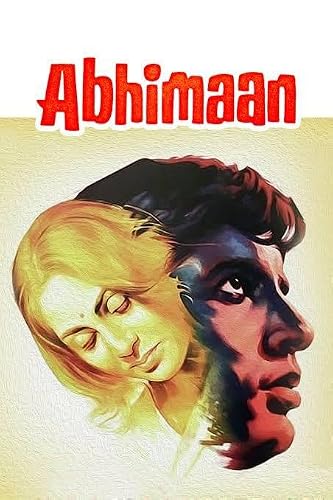
  • The Hubris of Capitalism: Abhimaan (1973). Directed by Hrishikesh Mukherjee
    2026/05/05

    Happy Karl Marx Day! In this episode Ankita is joined by Zane Merritt as they unpack the 1973 Hindi film Abhimaan.

    Dr. Merritt is a freelance musician and academic currently residing in Buffalo New York. He holds a PhD in western classical music composition from the State University of New York at Buffalo and a Masters' degree in classical guitar performance from Butler University. He has performed his own music and those of his colleagues internationally, performing solo concerts in Toronto, New York City, and Nagoya, Japan as well as appearing as a featured soloist with the Dubuque Symphony Orchestra and the Slee Sinfonietta. As an academic, he has taught courses on composition, music theory, and vernacular music such as The Beatles and Heavy Metal. He is currently the instructor of record for "Bollywood and South Asian Cinema" at the University at Buffalo.

    Abhimaan stars Amitabh and Jaya Bachhan along with the phenomenal Bindu and Asrani in pivotal roles. Ankita sees this film as a befitting response to western capitalist imperialism heightening during the cold war. Whether Mukherjee intended it or not, the film is a staunch critique of hyper individualism that capitalism promotes. Hope you enjoy this episode!

    Write to us at thedesigazepodcast@proton.me

    As always, subscribe to the podcast, and don't forget to leave us a review!

    続きを読む 一部表示
    1 時間 21 分
  • The Radical Possibilities of Melodrama: Roti (1974). Direced by Manmohan Desai
    2026/04/20

    In this episode, we discuss the 1974 blockbuster Hindi film Roti. The film stars Rajesh Khanna, Mumtaz, Pinchoo Kapoor, Sujit, Nirupa Roy, and Om Prakash along with the who's who of 70's Bollywood. We love Roti for its stellar soundtrack but even more for the subtle pro-China subtext during the cold war era. Manmohan Desai was an expert of Masala films (a mix of genres) and here, he brilliantly uses and abuses the many possibilities of melodrama to push for a more socialist aligned narrative during a time when India was determined to stay non-aligned. Was this a result of the anti-imperialist leadership of Indira Gandhi? Or could this film be a quiet rebellion when communist movemment in India was being deliberately crushed? Many readings are possible.

    Write to us at thedesigazepodcast@proton.me

    As always, subscribe to the podcast, and don't forget to leave us a review!

    続きを読む 一部表示
    1 時間 9 分
  • Rules of Engagement! Pardesi (1957). Directed by Khwaja Ahmad Abbas and Vasili Pronin
    2026/03/16

    We bring you the first ever Hindi film jointly produced by India and the Soviet Union–the 1957 film Pardesi (Khozhdenie Za Tri Moray or The Foreigner), starring Oleg Strizhenov, Nargis, Padmini, and Balraj Sahani along with a special appearance by Prithviraj Kapoor. Made in Russian and Hindi, this film is a testament of Indo-Soviet solidarity. It is based on travelogues of a 15th century Russian traveler Afanasy Nikitin who wrote a memoir called A Journey Beyond the Three Seas.

    Ankita and Azhar discuss the importance of watching this film today, its portrayal of East-West cultural engagagement and why this film matters especially today when US imperialism has gone berserk.

    Here is the blog post mentioned by Ankita

    Also, listen to this fanstastic episode on the Soviet film Letter Never Sent by Cold War Cinema podcast

    Write to us at thedesigazepodcast@proton.me

    As always, subscribe to the podcast, and don't forget to leave us a review!

    続きを読む 一部表示
    1 時間 10 分
  • Kharij, 1982, Mrinal Sen w Dr. Udita Mukherjee
    2026/02/22

    Two besties analyze Mrinal Sen's powerful 1982 Bengali film Kharij (English translation: The Case is Dismissed). Based on the 1974 novel of the same name, the film follows a family after thier child servant dies of carbon monoxide poisoning. Dr. Udita Mukherjee, a geoscientist and a Bengali film enthusiast joins Dr. Ankita Rathour in unpacking the film through a Marxist-feminist lens, providing crucial insights into their own lives and the labor abuse that still defines postcolonial India. Watch this essential film, a pioneering parallel cinema that shakes the bourgeoise comforts in best ways possible.

    Write to us at thedesigazepodcast@proton.me

    As always, subscribe to the podcast, and don't forget to leave us a review!

    続きを読む 一部表示
    1 時間 27 分