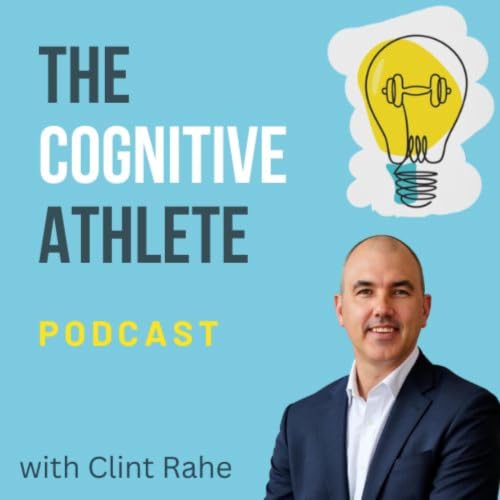
『The Cognitive Athlete Podcast』のカバーアート

The Cognitive Athlete Podcast

The Cognitive Athlete Podcast

著者: Clint Rahe - The Cognitive Athlete
無料で聴く

【Amazonプライム会員限定】今ならプレミアムプランが4か月 月額99円。

10月19日まで。※適用条件あり
Training your brain like an athlete. The Cognitive Athlete Podcast helps leaders, thinkers, and doers achieve sustainable peak performance without burnout. Hosted by Clint Rahe - leadership expert, speaker, and author of The Cognitive Athlete - the show blends neuroscience, psychology, and lessons from sport, the military, and business. Each episode delivers practical tools and stories to help you manage energy, sharpen focus, and build resilience so you can perform at your best when it matters most.Clint Rahe - The Cognitive Athlete 個人的成功 自己啓発
エピソード
  • The Recovery Trap: Why Waiting Until You’re Exhausted Is Already Too Late
    2026/10/04

    The Recovery Trap: Why Waiting Until You’re Exhausted Is Already Too Late

    “I’ll recover when this project is finished.”

    “I’ll slow down after this month.”

    “I’ve got leave coming up.”

    Sound familiar?

    The problem is, if your recovery strategy is to collapse when the work stops, you’ve probably left it too late.

    In the final episode of Season 4 of The Cognitive Athlete Podcast, Clint explores The Recovery Trap — the belief that we can keep pushing through intense periods and simply recover afterwards.

    After finishing a demanding three-week performance block involving interstate travel, late flights, workshops, a keynote and back-to-back delivery, Clint shares what he did differently this time.

    The result?

    Tired. But not depleted.

    In this episode:

    • Why recovery needs to happen during performance, not just after it
    • How micro-recovery can protect your capacity during demanding periods
    • Why saying “not now” can be a recovery strategy
    • How focus, batching and automation reduce cognitive load
    • The “let-down effect” and why people often crash when the pressure finally stops
    • Why travel needs to be treated as part of your performance load
    • How to plan recovery before you need it
    • Why every performance block should end with a review

    Sustainable performance isn’t about squeezing more out of yourself every day.

    It’s about knowing when to push, what to protect, what to say no to and when to recover.

    Recovery is not the reward for performance.

    It is part of the performance system.

    🎯 Take the free Cognitive Athlete Scorecard:
    https://thecognitiveathlete.scoreapp.com

    📖 Grab your copy of The Cognitive Athlete:
    https://amzn.to/4fVUHwZ

    🌐 Free tools and resources:
    https://thecognitiveathlete.com.au

    This is the final episode of Season 4: The Performance Traps.

    If an episode this season made you think of a leader, colleague or team, share it with them.

    And follow The Cognitive Athlete Podcast so you don’t miss what comes next.

    Protect your capacity. Perform when it matters. Recover properly. Then go again.

    続きを読む 一部表示
    13 分
  • The Resilience Trap: When Pushing Through Stops Being a Strength
    2026/09/27

    The Resilience Trap: When Pushing Through Stops Being a Strength

    There is a type of person every team loves.

    Reliable. Steady. Doesn’t complain. Picks up the pieces. Keeps delivering.

    And because they keep coping, everyone assumes they’re fine.

    Until one day, they’re not.

    Silence is not the same as capacity.

    In Episode 9 of The Cognitive Athlete Podcast, we explore The Resilience Trap — what happens when resilience gets confused with simply coping, and someone’s ability to carry the load becomes the reason we keep giving them more.

    Because their ability to carry the load is not proof that the load is reasonable.

    In this episode:

    • Why coping and resilience are not the same thing
    • How dependable people become the team’s default “safe pair of hands”
    • Why leaders mistake silence for capacity
    • When “build resilience” becomes an answer to a work-design problem
    • Why pressure without recovery becomes accumulated load
    • How to Map the Load, Talk to the People and Rebalance the Team

    Real resilience isn’t about tolerating pressure indefinitely.

    It’s the ability to absorb pressure, adapt, recover and perform again.

    So before you give your most dependable person one more thing, ask a different question:

    What is making this level of resilience necessary in the first place?

    🎯 Take the free Cognitive Athlete Scorecard:
    https://thecognitiveathlete.scoreapp.com

    📖 Grab your copy of The Cognitive Athlete:
    https://amzn.to/4fVUHwZ

    🌐 Tools, resources and more:
    https://thecognitiveathlete.com.au

    Follow The Cognitive Athlete Podcast so you don’t miss the final episode of Season 4:

    The Recovery Trap — Why Waiting Until You’re Exhausted to Recover Is Already Too Late.

    続きを読む 一部表示
    11 分
  • The Accountability Trap: When People Are Expected to Own What Has Never Been Made Clear
    2026/09/20

    The Accountability Trap: When People Are Expected to Own What Has Never Been Made Clear

    Leaders often say they want more accountability.

    More ownership.

    More follow-through.

    But accountability becomes very difficult when expectations are unclear, performance is hidden and conversations only happen when something has already gone wrong.

    In Episode 8 of Season 4, The Performance Traps, Clint Rahe explores why accountability is not something you demand from people after the fact. It is something you create through clarity, visibility, regular conversations and ownership.

    You will discover:

    • Why a KPI buried in a CRM is not the same as visible performance

    • The difference between managing performance and formal performance management

    • Why accountability should never arrive as a surprise

    • How a simple performance dashboard can create clarity

    • Why regular 1:1s make performance conversations more normal and less threatening

    • How coaching questions help people own the solution rather than hand the problem back to the leader

    • Why clear goals and visible measures can reduce cognitive load for both leaders and teams

    A good accountability system should make three things obvious:

    What does good look like?

    How am I tracking?

    What happens next?

    The dashboard creates visibility.

    The 1:1 creates the rhythm.

    The coaching conversation creates ownership.

    Because accountability is not about catching people out.

    It is about creating enough clarity that people know exactly what they are responsible for and can see whether they are delivering it.


    Take the Free Cognitive Athlete Scorecard

    Identify where your current performance system may be breaking down and where to focus next:

    https://thecognitiveathlete.scoreapp.com


    Grab a Copy of The Cognitive AthleteLearn how to think like an athlete and lead like a professional in the corporate world:

    https://amzn.to/4fVUHwZ


    More Resources

    Explore articles, tools, podcast episodes and resources:

    https://thecognitiveathlete.com.au/


    Follow The Cognitive Athlete Podcast so you do not miss Episode 9:

    The Resilience Trap — When Pushing Through Everything Stops Being a Strength.

    続きを読む 一部表示
    11 分
adbl_web_anon_alc_button_suppression_t1
まだレビューはありません