エピソード

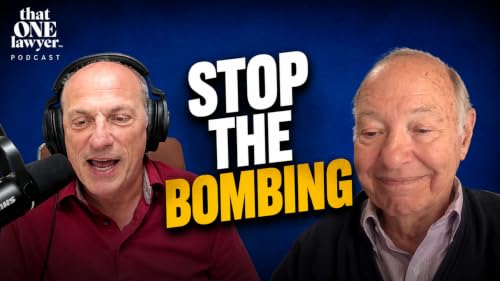
  • The Lawyer Who Got a Court Order to Stop the Bombing of Cambodia - Part 1
    2026/09/02

    Bert Neuborne entered Cornell at 16 expecting to become a doctor. Organic chemistry helped change those plans. A few years later, after Harvard Law School and three years on Wall Street, he took a one-year leave to work at the Civil Liberties Union.

    On his second day, Muhammad Ali walked through the door looking for legal help in his fight against the draft.

    Neuborne knew he had found his work.

    In Part 1 of his conversation with Neal Goldstein, Neuborne looks back at practicing civil liberties law during the extraordinary legal and cultural changes of the 1960s and 1970s. He discusses knowing civil rights worker Michael Schwerner, working alongside figures including Ruth Bader Ginsburg, and the period when constitutional lawyers could sometimes watch arguments that began around a lunch table become real changes in the law.

    He also tells the remarkable story of representing B-52 pilots and bombardiers who refused to continue bombing Cambodia without understanding why they were being ordered to do it. The case ultimately sent Neuborne across the country in search of Justice William O. Douglas and produced a temporary injunction stopping the bombing.

    Neuborne also explains the constitutional philosophy behind Madison's Music and why he believes the First Amendment makes more sense when its protections are read as parts of one coherent democratic story.

    It is a conversation about risk, constitutional power, finding meaningful work, and what one lawyer learned from spending decades testing the boundaries of American civil liberties.

    Follow or subscribe to That One Lawyer Podcast for Part 2 of Neal Goldstein's conversation with Bert Neuborne.

    続きを読む 一部表示
    27 分
  • The Cost of Calling Out Your Own Side as a Lawyer
    2026/08/26

    Eli Honig never planned on becoming a television legal analyst.

    Before CNN, he spent 14 years as a federal and state prosecutor. In this episode, Eli joins Neal Goldstein to talk about the unexpected career pivot that took him from the courtroom to television, the relationships that made that transition possible, and why the skills of a trial lawyer translate so naturally to explaining complicated legal cases to the public.

    They also get into a harder issue: what happens when political preference starts influencing legal analysis. Eli explains why he believes a lawyer's job is to call the law as he sees it, even when that conclusion puts him at odds with people who otherwise share the same professional world.

    The conversation becomes deeply personal as Eli discusses being the grandson of two Holocaust survivors and how his family's history shaped his understanding of justice, accountability, and preserving the stories of those who came before him.

    Eli also reflects on the prosecution of Adolf Eichmann, the importance his prosecutors placed on due process even for an infamous defendant, his path from New Jersey public schools to Harvard Law School, the mentors and relationships that changed his career, and what he wishes he understood earlier about setbacks and nonlinear professional paths.

    Follow or subscribe to That One Lawyer Podcast for more conversations about the people, relationships, choices, and experiences behind a life in the law.

    続きを読む 一部表示
    12 分
  • He Left School at 17. Then He Became a Top Lawyer.
    2026/08/19

    revor Sterling left school at 17 believing school simply wasn't for him. A career advisor gave him three options: warehouseman, tennis racket stringer, or postal clerk at a law firm.

    He chose the law firm.

    That decision changed everything.

    Trevor went from delivering legal papers to becoming a solicitor, senior partner at Moore Barlow, and the first Black senior partner appointed at a UK top 100 law firm.

    But his story is not simply about climbing the legal profession's ladder.

    Trevor joins Neal Goldstein to talk about growing up in Britain as the son of Jamaican parents from the Windrush generation, confronting racism and questions of belonging, and finding confidence in a profession he never imagined entering.

    He remembers the lawyers who saw potential in him before he fully saw it himself, including one whose letters he would photocopy and take home so he could practice speaking like him in front of a mirror.

    That experience shaped the way Trevor now thinks about mentorship, opportunity, and what lawyers owe the people coming behind them.

    Trevor also takes Neal inside nearly four decades of representing people after catastrophic injuries and major tragedies. They discuss what that work does to a lawyer, why adversity changed the way Trevor connects with clients, and the question that still guides his practice: Are you a lawyer first or a businessperson first?

    The conversation also turns to the barriers that remain inside the legal profession. Trevor discusses class, race, education, networks, and why becoming the first Black senior partner at a UK top 100 law firm was both an achievement and evidence of how much further the profession still has to go.

    That brings Trevor to the idea at the center of this episode:

    "don't just aspire to climb the ladder, be the ladder."

    Through the Be The Ladder Foundation, Trevor is now creating opportunities for young people who might otherwise struggle to see what is possible for them.

    Neal and Trevor also talk about authenticity, family, the Windrush scandal, and why Trevor chose to record his 89-year-old parents telling the stories of their lives in Jamaica while he still had the opportunity to ask.

    For any lawyer who has ever questioned where they belong, who helped them get there, or what they should do with their success once they arrive, this is a conversation worth hearing.

    Subscribe to That One Lawyer Podcast for more conversations about the people, choices, relationships, and experiences behind a life in the law

    CONNECT WITH NEAL / THAT ONE LAWYER™ • Watch The Conversation: https://youtu.be/enI66YnNxs0 •

    LinkedIn:https://www.linkedin.com/in/nealagoldsteinlaw/

    • Instagram: @nealagoldsteinlaw •

    Books:https://a.co/d/04x05SeK AND https://a.co/d/02TMpPNZ

    CONNECT WITH TREVOR STERLING •

    Trevor's LinkedIn:https://www.linkedin.com/in/dr-trevor-d-sterling-hon-causa-33841320/ •

    Firm's bio/profile: moorebarlow.com •

    Be The Ladder: www.BeTheLadderAwards.com

    続きを読む 一部表示
    37 分
  • Why Lawyers Sometimes Make Things Worse
    2026/08/12

    Roman Lifson built the kind of legal career many lawyers are taught to want. He became a trial lawyer, a partner, and a litigator handling cases from both the plaintiff and defense sides. Outside the courtroom, he found another demanding arena: competitive race car driving. But somewhere along that path, Roman began asking a harder question. What is being a lawyer actually costing us? In this episode of That One Lawyer Podcast, Neal Goldstein sits down with Roman for a deeply personal conversation about the pressures lawyers learn to normalize and the parts of themselves they often learn to hide. Roman's story begins in Moscow during the Soviet era. He immigrated to the United States with his family at 10 years old after they left almost everything behind. During the immigration process, Roman watched his father, a neurosurgeon, study as many as 12 to 16 hours a day to pass the exams that would allow him to practice medicine in America. That experience helped shape Roman's own ambitious path: college, law school, law firm, partnership, and decades of litigation. For years, Roman describes his life as intensely linear. Choose the destination, put on the blinders, and keep moving toward it. Eventually, his perspective changed. Roman and Neal explore what happens when lawyers become so conditioned to professional performance that admitting uncertainty, fear, or failure starts to feel dangerous. Lawyers can comfortably talk about wins, successful careers, families, homes, and vacations. Roman argues that it becomes much harder to tell another person where we failed, what we're ashamed of, or what we're afraid of. In a profession built around competition and identifying weaknesses, vulnerability can feel like a liability. Roman believes some of that conditioning begins in law school. He describes legal education as teaching students to solve everything "from the neck up." Analyze the problem. Find the answer. Respond quickly. Never appear uncertain. Those habits can follow attorneys throughout their careers. The conversation also examines Roman's relationship with his wife, Hallie, and how their work together changed his understanding of authentic connection, emotional expression, and the relationships lawyers need when professional competence isn't enough. That perspective has also changed the way Roman practices law. Clients often arrive already carrying anger, fear, distrust, and hurt. Roman believes lawyers have a choice. They can help clients move through that conflict, or they can pick up the baton and escalate the war. As Roman says, lawyers are supposed to be problem solvers. Sometimes they become problem creators. That realization connects two seemingly different parts of his life: litigation and racing. On a racetrack, Roman competes intensely while trusting the drivers around him with his safety. Everyone wants to win, but everyone also understands what can happen when competition overwhelms judgment. For Roman, there's a lesson there for lawyers. This conversation isn't about abandoning ambition or pretending litigation isn't adversarial. It's about examining whether the habits that make lawyers successful professionally can sometimes make it harder to stay connected to themselves and the people around them. And whether success is still success when nobody feels safe enough to talk about what it costs. Subscribe to That One Lawyer Podcast for conversations about the people, relationships, pressure, and experiences behind a life in law.

    CONNECT WITH ROMAN LIFSON: https://www.mythicadventuretravel.com/liberating-lawyers-for-life

    https://www.cblaw.com/roman-lifson/ https://hallie-lifson.mykajabi.com/magdalene-womb-temple

    CONNECT WITH NEAL GOLDSTEIN / THAT ONE LAWYER PODCAST: YouTube: https://www.youtube.com/@UC9V41LAfvZS-7AmQKduNp5Q

    IG: @nealagoldsteinlaw LinkedIn:https://www.linkedin.com/in/nealagoldsteinlaw/

    続きを読む 一部表示
    47 分
  • Lawyers Build Networks. But Who Actually Shows Up?
    2026/08/05

    Lawyers spend years building networks. But Steve Fretzin learned that having a network and having people who actually show up are two very different things.

    Steve joins Neal Goldstein for a conversation about business development, family, survival, loyalty, and the relationships behind professional success.

    At 26, Steve survived a plane crash that left him severely injured and his girlfriend with a traumatic brain injury. During his recovery, lifelong friends and family stepped in to care for him. But people Steve had thought of as little more than associates also unexpectedly showed up.

    That experience reinforced a lesson that runs throughout Steve's life and career: relationships matter long before you know how much you are going to need them.

    Steve shares how growing up with a lawyer father shaped his work ethic and eventual career, and how his mother's serious health problems forced him to take on adult responsibilities at a young age.

    Neal and Steve also examine how those lessons translate to the legal profession.

    Have lawyers confused networking with relationship building? Are online connections creating genuine relationships or simply creating the appearance of relevance? Why do so many attorneys allow client relationships to disappear as soon as the legal matter ends?

    Steve explains why business development should not be treated as something lawyers are simply expected to figure out, and why younger lawyers need to understand both the practice of law and the business of law.

    The conversation also returns to Steve's father, the advice he carried with him, and the recordings Steve was fortunate enough to preserve before his father died.

    One piece of advice captures much of the episode: "If you can't make a sale, make a friend."

    Follow or subscribe to That One Lawyer Podcast for more conversations about the people, relationships, resilience, and experiences behind a life in law.

    続きを読む 一部表示
    49 分
  • He Started Law School at 45. Everyone Said He Was Too Late
    2026/07/22

    Most people assume the path to becoming a lawyer starts early.

    Rick Metzgar proves otherwise.

    After spending nearly two decades in mortgage banking, raising a family, and building a successful career, Rick enrolled in law school at 45 while continuing to work full time.

    In this episode, Rick shares how a difficult divorce first exposed him to the legal system, why that experience stayed with him for years, and what finally convinced him it was time to pursue law.

    Neal and Rick discuss first-generation law students, working through imposter syndrome, balancing family responsibilities, the realities of night law school, the cost of legal education, and why empathy and character remain essential qualities for great lawyers.

    Whether you're already practicing law or simply wondering if it's too late to pursue something bigger, this conversation offers an honest perspective on purpose, resilience, and the long road to becoming a lawyer.

    Follow and subscribe for more conversations about the people behind the legal profession.

    続きを読む 一部表示
    47 分
  • The Money Myth Young Lawyers Believe
    2026/07/16

    Are young lawyers chasing the wrong definition of success?

    In this special replay episode of That One Lawyer Podcast, Neal Goldstein revisits one of his favorite conversations with attorney, entrepreneur, and author Kara Vaval.

    A young lawyer wanted to enter personal injury law after hearing stories about lawyers making hundreds of thousands—even millions—of dollars. But Kara explains why comparing yourself to someone else's income can become one of the biggest obstacles to building a satisfying legal career.

    Together, Neal and Kara discuss:

    • Why chasing someone else's version of success often leads to disappointment.
    • The danger of believing everything you hear about lawyer income.
    • Building a practice around your values instead of comparisons.
    • Why mindset often determines long-term success more than talent.
    • How honest self-reflection creates a more fulfilling legal career.

    Whether you're a law student, a new lawyer, or a seasoned attorney rethinking your career, this conversation offers a refreshing perspective on what success actually looks like.

    続きを読む 一部表示
    14 分
  • I Almost Didn't Go... Here's Why I'm So Glad I Did
    2026/07/01

    I Almost Didn't Go...

    In this first edition of That One Lawyer Unplugged, Neal Goldstein shares a personal story about almost skipping a New York Law School alumni event—and why showing up reminded him that relationships are built one conversation at a time.

    This isn't an episode about networking.

    It's about overcoming hesitation, reconnecting with people, and remembering that meaningful relationships don't stop being important just because we've reached a certain point in our careers.

    続きを読む 一部表示
    14 分