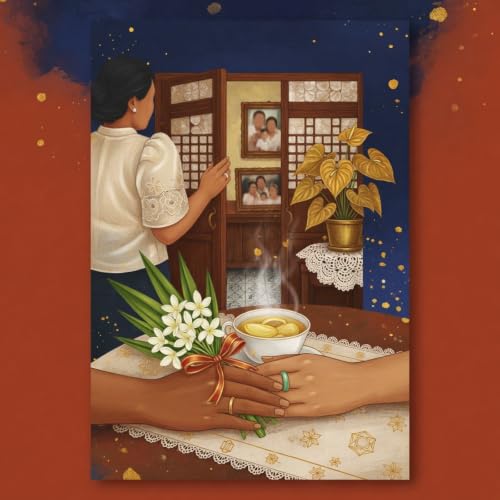
『Tagalog for Meeting the In-Laws』のカバーアート

Tagalog for Meeting the In-Laws

Tagalog for Meeting the In-Laws

著者: Blake
無料で聴く

Tagalog for Meeting the In-Laws is a Tagalog family etiquette podcast for non-Filipino spouses and partners entering Filipino families—po/opo, kinship terms, and first-visit hosting etiquette. We own po/opo usage, kinship terms, table and hosting etiquette, and first family visit scripts. Practical Tagalog for in-laws—not general tourist Tagalog. Search Tagalog for Meeting the In-Laws on Spotify and Apple Podcasts for weekly po/opo, kinship, and family visit Tagalog episodes. Audio for this show is produced with AI assistance. Episodes are researched, scripted, and reviewed for accuracy before release.

Become a supporter of this podcast: https://www.spreaker.com/podcast/tagalog-for-meeting-the-in-laws--7167969/support.© 2026 Let's Work This Sh*t Out
語学学習
エピソード
  • Tagalog for Meeting the In-Laws main episode for 2026-07-21
    2026/08/25
    In this episode of Tagalog for Meeting the In-Laws, we ease the nerves of first meetings with your Filipino partner's family by focusing on respectful language that feels natural. You'll learn why po and opo form the core of polite exchanges, how to greet elders smoothly, answer questions without hesitation, and navigate dinner table moments with confidence. From kinship terms to handling offers of seconds, these practical patterns help you fit right in without overthinking every reply.

    Key takeaways:
    - Use po at sentence ends like "Salamat po" or "Kumusta po kayo" to show respect instantly
    - Reply with opo for yes answers, such as "opo, chicken po," to keep conversations clear and polite
    - Address parents as nanay, tatay, or mom/dad plus po, and adjust for siblings with kuya or ate
    - Follow etiquette like waiting for elders and accepting dishes with both hands while saying the name plus po
    - Manage second helpings with "salamat po, konti na lang" and offer help via "tulong po ako"
    https://www.spreaker.com/podca...

    📩 Have questions or want to share your experience? Reach out at tagalog@senseofthisshit.com.
    💛 Join Our Supporters Club ($3 a month) 💛 Ad-free listening + early episodes — help keep independent media alive. Click Here: https://www.spreaker.com/podca...
    続きを読む 一部表示
    5 分
  • Tagalog for Meeting the In-Laws main episode for 2026-07-14
    2026/08/18
    In this episode of Tagalog for Meeting the In-Laws, discover the precise phrases that help non-Filipino partners navigate first visits with confidence and respect. Many freeze at the doorway or dinner table, unsure how to signal regard without sounding awkward. This main episode delivers three practical scripts drawn from real family patterns: proper greetings using po or opo with elders, kinship terms that replace names to honor roles, and hosting lines that let you offer help gracefully. Learn to say magandang hapon po with tito or tita, address ate or kuya at the table, and invite everyone with kain na po tayo while responding salamat po and offering tutulungan ko po kayo. These tools keep conversations flowing and show you value family structure from the first moment.

    Key takeaways:
    - Greet elders smoothly with po and titles to set a respectful tone
    - Use kinship terms like kuya, ate, lolo, and lola to avoid confusion
    - Handle meals by offering help and following group etiquette

    Practice each line twice daily before your trip so the words come naturally. 📩 Have questions or want to share your experience? Reach out at tagalog@senseofthisshit.com. Support the show: https://www.spreaker.com/podca...
    続きを読む 一部表示
    5 分
  • Navigate Non-Filipino Partners: Po Opo Kinship Terms & Hosting Etiquette
    2026/07/11
    In this episode, non-Filipino partners learn targeted Tagalog tools to navigate first visits with Filipino in-laws confidently. We focus on po and opo placement, kinship terms that shift from given names to Nanay or Tatay, and table etiquette that signals respect during shared meals. You will hear exactly when to add po after Jose or Maria, how to switch to Tito po and Lola po once you observe family patterns, and why opo keeps yes-or-no answers polite. Practical hosting steps include offering food to elders first with Kain po tayo, passing dishes with both hands, replying Opo salamat po, and excusing yourself smoothly with Excuse po. These habits reduce tension fast and let you join conversations instead of second-guessing every move.

    Key takeaways:
    - Add po after names or kinship terms like Nanay po and Tito po
    - Use opo for polite affirmatives and no po for negatives with elders
    - Offer food to the oldest first, pass with both hands, and clear your plate
    - Listen for the terms the family already uses before repeating them

    📩 Have questions or want to share your experience? Reach out at tagalog@senseofthisshit.com.
    💛 Join Our Supporters Club ($3 a month) 💛 Ad-free listening + early episodes — help keep independent media alive. Click Here: https://www.spreaker.com/podca...
    続きを読む 一部表示
    5 分
adbl_web_anon_alc_button_suppression_t1
まだレビューはありません