• 6% Email Reply Rate Through Hyper-Targeted 50-Person Lists: James @ Hunter.io
    2026/02/18

    Cold email isn’t dying. Lazy marketing is.

    In this episode of TLDR, I spoke with James Milsom, Head of Marketing at Hunter.io, about what’s actually working in cold outreach right now.


    Here’s some uncomfortable truths:
    😟 Campaigns sent to 1,000+ recipients average ~2% reply rates
    😟 71% of decision-makers ignore emails because they’re irrelevant
    😟 Open rates and click rates? Mostly noise. Replies are what matter


    The problem really isn’t the channel.

    Marketing is changing and lazy volume-first tactics are getting taxed.
    It’s that most teams are still optimizing for volume - more contacts, more sends, more automation, instead of better segmentation, better offers, better sequencing.

    James breaks down:


    ➡️ Why cold email should run 3-4 week structured experiments

    ➡️ How to A/B test offers, not just subject lines

    ➡️ Why layering LinkedIn with email nearly doubles effectiveness

    ➡️ Why email verification is an important step (but most teams skip this)


    At this point, you can’t just blast your TAM and hope 2020 tactics still work.
    Buyers are smarter. Inboxes are harsher. Attention is expensive.

    So you can either tighten your targeting, or accept 2% reply rates.


    Hosted on Ausha. See ausha.co/privacy-policy for more information.

    続きを読む 一部表示
    50 分
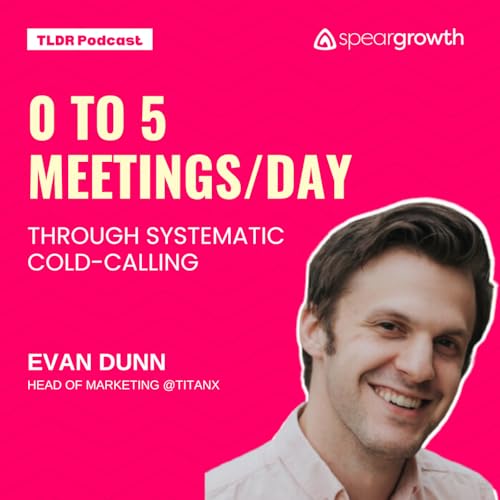
  • 0 to 5 Meetings/Day Through Systematic Cold Calling: Evan @ TitanX
    2026/01/22

    Most marketers still treat cold calling like it’s not their job.
    And that’s a problem that needs to be fixed.

    In this episode of TLDR, Evan Dunn shares how he took an outbound program from 0 to 5 meetings/day - not by just hiring more SDRs, but by applying demand gen-level experimentation to outbound.

    Why does this matter for marketers?

    Because the fastest path to offer clarity isn’t waiting on demo form fills.
    It’s picking up the phone & talking to real buyers.

    Evan breaks down:

    • How he used cold calls to find PMF gaps and rebuild positioning

    • Why outbound conversations beat other tools for finding your real competitors

    • How he rewired a marketing org to own outbound (without losing attribution)

    • The cold call stack + strategy that was used

    “Founder-led sales works not because founders are great sellers, but because they’re closest to the feedback loop. Marketers need to get that close again.”

    If you’re a marketer struggling to differentiate, this episode is a must-listen.


    Hosted on Ausha. See ausha.co/privacy-policy for more information.

    続きを読む 一部表示
    42 分
  • 56% CPL Reduction With Better Ads Infrastructure: Srikrishna @ Factors.AI
    2026/01/15

    LinkedIn Ads used to be niche and expensive.
    Now it's mainstream and expensive.

    In this episode of TLDR, Srikrishna (CEO of Factors.ai) and I were discussing how the change in LinkedIn Ads is massive:

    B2B ad spend on LinkedIn jumped from 3-5% to 20-25%. Everyone finally realized it's the only way to reach decision-makers at scale.

    But here's the catch: if everyone's doing it, then the old playbooks are not going to work anymore.

    You’ll have to start thinking about changing your approach.

    And this is exactly how Alaan Pay was able to drop their CPL by 56%.

    Not through better creative or copy. Through better & improved infrastructure.

    Most companies are still uploading 100K contacts and hoping for the best.

    But in this episode, Sri explains what actually works now:

    1. Build smarter audience lists: Don't just use Apollo or Sales Navigator filters. Layer in intent signals: G2 competitor page views, website behavior, email engagement. Segment into TOFU, MOFU, BOFU - not one massive list.

    2. Distribute ads strategically: SQLs should see 10x more impressions than cold accounts. Show case studies to SQLs, competitor comparisons to closed-lost deals. Stop wasting the budget showing ads to existing customers.

    3. Implement CAPI (Conversions API): Feed website conversion data back to LinkedIn's algorithm. Most companies only send CRM data (super limited). Factors is one of 4 LinkedIn CAPI partners globally.

    If you run LinkedIn ads or plan to, this is a must-listen.


    Hosted on Ausha. See ausha.co/privacy-policy for more information.
    続きを読む 一部表示
    46 分
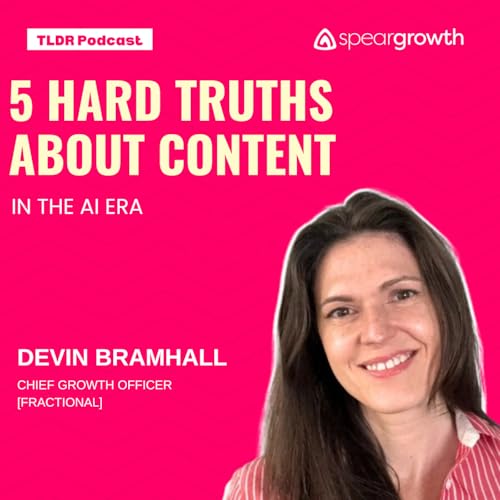
  • 5 Hard Truths About Content In The AI Era: Devin, Fractional Growth
    2025/12/11

    Most writers are worried AI will take their jobs.
    But Devin says CMOs should be way more worried.

    In this episode of TLDR, I sat down with Devin; ex-CEO of Animals, consultant to B2B brands, and all-around content strategist; to talk about what’s really breaking in B2B content, and why the old playbooks are falling apart.

    Tune in to hear us break down:

    • The real reason most B2B content is bad

    • Why the playbook era is over

    • How SEO isn’t dead, but it’s changing fast

    • Why CMOs are at risk

    • The new content org model

    • Why the biggest problem isn’t AI or SEO shifts, it’s leadership

    If you're a CMO rethinking your content bets, a founder trying to build a smarter growth engine, or just someone who enjoys a brutally honest take on today's marketing, you’ll want to hear this one.


    Hosted on Ausha. See ausha.co/privacy-policy for more information.

    続きを読む 一部表示
    1 時間 10 分
  • 20% MQL to SQL Conversion With Engagement Scoring: Jon @ LifecycleX
    2025/10/09

    Lead scoring is BS.

    At least that's what I thought before talking to Jon Farah.

    Here's the thing - I've seen too many companies do this: Marketing teams sit in a room.
    "Website visit = 1 point.
    eBook download = 10 points.
    Demo request = 50 points."

    Why those numbers? Because they “sound good.” 🤷‍♂️

    Then sales gets these "qualified" leads and goes... "Why am I calling someone who never asked for a demo?"

    But Jon just changed my mind.

    He showed me how one of his clients converts 20% of top-of-funnel leads into sales-ready leads.

    The difference?

    Most companies only track fitness scoring (job title, company size). Jon adds engagement scoring across multiple channels:

    • Email opens and clicks

    • Page visits (weighted differently - homepage ≠ demo page)

    • Social signals via Phantom Buster App

    • Lead magnet downloads

    Then here's where it gets interesting:

    Instead of one generic nurture sequence, they create personalized journeys.

    Downloaded a lead magnet? You get educational content about the problem.
    Visited the demo page 3 times? You get competitive comparisons and some "why us" content.

    They even have a whole stage for lost opportunities.
    That 80% who didn't close? They get re-engaged with relevant content. Jon believes you can squeeze an extra 5% back into the pipeline this way.

    Yea, I'm definitely implementing this for Chosenly someday 😏


    Hosted on Ausha. See ausha.co/privacy-policy for more information.

    続きを読む 一部表示
    47 分
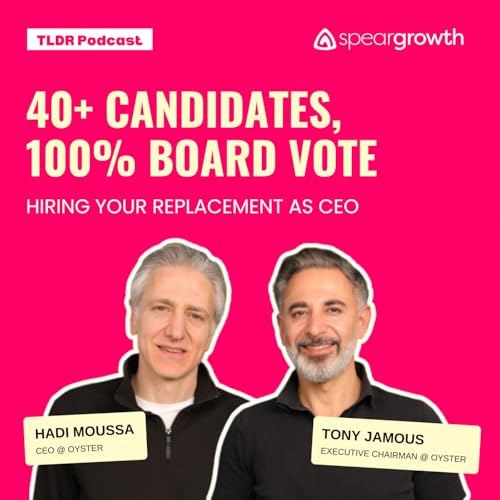
  • 38 MQLs In One Month With Founder Branding: Tony @ Oyster
    2025/09/11

    We just had one of the best-dressed guests on our podcast!

    And while we didn't get to go deep into grooming tips, we did get to talk a lot about building a founder brand.


    38 MQLs (in 1 month), with >10% of revenue tied to the founder brand.

    That’s the ROI Tony Jamous gets from showing up as the founder of Oyster.

    When Oyster launched, they didn’t have a product yet. What they did have was a belief: distributed work was the future.

    So Tony started posting on LinkedIn about remote leadership, hiring globally, and building Oyster in public.

    Those posts turned into:

    • Demand gen → prospects already knew Oyster before the product shipped, so the sales cycle was shorter.

    • Trust at scale → Tony’s voice made Oyster credible in a crowded space.

    • Inbound magnet → the 38 leads were sourced directly from his content, no ad spend required.

    • Revenue impact → over 10% of sales can be traced back to his personal brand.

    The way he runs it is surprisingly lightweight:
    ✅ One dedicated person on his team to run this
    ✅ A monthly call where Tony just answers questions, which ends up being the primary source of his content
    ✅ A mix of tactical insights, authentic stories, and raw behind-the-scenes moments

    The lesson? People buy from people. Your face, your values, and your voice make your product more trustworthy.

    Tony’s advice: don’t overthink it. Experiment. Share what feels authentic. And let your audience tell you what resonates.


    Hosted on Ausha. See ausha.co/privacy-policy for more information.

    続きを読む 一部表示
    34 分
  • 96% More Traffic & 2x Deals With Programmatic SEO: Usman @ Omniscient Digital
    2025/07/18

    With programmatic SEO you can create 100s of pages at once.


    When I started my career, I saw companies like Zapier, Canva and AirBnB see great success with this, so I dreamt of implementing this.


    But when I tried learning, I only got vague information like:

    1. Find keywords that scale (eg: "Hire fitness influencers in Dubai", "Top beauty creators with high engagement”)

    2. Build a data base with relevant data about each

    3. Publish your pages in bulk


    Technically, this is exactly what you need to do. But it's not nearly enough information to implement anything.

    In this episode, Usman and I go in depth discussing the nuances. Things like:

    "How do you structure programmatic SEO if you were starting from scratch? What would your step one, two, three be?

    "Who do you think really owns the programmatic program?"

    "Who wrote the content for the pages?"

    “How much do you need to coordinate with the engineering/product teams?”

    "How did you deal with indexation issues when making so many pages live at once?"

    "What did the internal linking strategy look like?"

    "When you do this and find a few pages that could rank better with manual tweaks (but would break the template), what do you do?"

    "How do you prioritize which set of pages to build first?”


    I don't know of any resource on the internet where you'll get this information in such depth.

    Usman walks us through the specifics of him implementing a programmatic strategy for MoreDash.

    There they saw 96% more traffic & 2x deals,

    all in 8 months.

    If your product has untapped data and there’s consistent search demand in your category, don’t sleep on this play.


    Hosted on Ausha. See ausha.co/privacy-policy for more information.

    続きを読む 一部表示
    53 分
  • 2x engagement, 7x RSVPs, With Monetization: Harsh @ SaaStock
    2025/07/10

    2x engagement. 7x meetup turnout.

    All from simply asking people to pay!


    Most people worry that monetizing a community will kill engagement.
    Harsh proved the opposite.

    He added a small membership fee, and in just 2 weeks:

    • Engagement doubled

    • Webinar attendance spiked

    • IRL meetups jumped from 20 people to 150+

    All because people actually had skin in the game

    This did not involve any massive research project.
    He just surveyed 20 members, asked why they would or wouldn’t pay, and used that to shape the offer.

    “Once people started paying, they started showing up, because now it felt premium. Simple as that.”

    If you’re running a community and afraid to charge for it, this episode will change your mind.


    Hosted on Ausha. See ausha.co/privacy-policy for more information.

    続きを読む 一部表示
    46 分