• 004: Good to Great | Jim Collins | Your Best People Watching What You Let Go | Jeffrey Scott Stanton
    2026/05/21
    Episode 4 of The Leadership Series with Jeffrey Scott Stanton draws from Good to Great by Jim Collins, one of the most rigorous studies ever conducted on what separates organizations that make the leap to sustained excellence from those that stay trapped at merely good. Collins and his research team spent five years studying this question, and the answer they found was not strategy, charisma, or timing. It was discipline: disciplined people making disciplined choices in a consistent direction over time.Jeffrey Scott Stanton is a coach, consultant, advisor, and former Executive Vice President of Learning and Development at Douglas Elliman Real Estate. In this episode, he takes the discipline framework from Good to Great and runs it through the most revealing test of any leader's standards: what happens when something should not have been allowed to continue, and was.This is the episode that answers the question Episode 3 ended with. Once you have had that conversation, what does it anchor to? The answer is the standard. And whether that standard is real or just a statement is the most important measurement in any organization.IN THIS EPISODE, JEFFREY COVERS:1: Why every organization operates with two sets of standards simultaneously: the stated ones and the real ones, and why the real ones always govern behavior2: Culture drift: how each small act of tolerance compounds into an organization that no longer reflects what the leader thought they were building3: Status quo bias: the psychological pull toward inaction when standards are violated, and why the cost stays invisible until it is not4: The performance exemption: why allowing high producers to operate under different rules destroys culture on three levels simultaneously5: Why the person being exempted is often the first to leave when a better opportunity appears6: The three things a standard needs to remain real: behavioral clarity, consistency, and recognition7: Maya's story: a leader who managed around behavior for months and watched three of her strongest developing team members leave for an environment where expectations meant something equally for everyone8:mThe flywheel from Good to Great applied to culture: how a standard-based culture gets built through consistent, often invisible moments compounded over timeTIMESTAMPS: [00:00] Cold open: the standard you have not enforced yet, and what every person in the room registered when you did not[02:00] Jeffrey's background and the book: what five years of research in Good to Great actually found[03:43] Two sets of standards in every organization: the stated ones and the real ones[05:36] The client response time scenario: how three top performers quietly renegotiate a standard for the entire team[07:05] Culture drift: what you tolerate becomes the standard, and it almost never feels dramatic when it is happening[08:14] Status quo bias: why the relief of avoidance is immediate and the cost is invisible until it is not[10:28] The performance exemption and what it does on three levels: to the person, to the team watching, and to future recruits[13:50] What high-character performers feel before you ever explain the culture to them[19:22] The three things a standard needs to stay real: behavioral clarity, consistency, and recognition[24:21] The hedgehog concept applied to standards: when enforcement stops feeling like friction and starts feeling like clarity[27:22] Maya's story: quiet conversations, a bending standard, and three developing team members who left[30:05] What happened after Maya finally held the line: the high performer adjusted, not left[32:11] The flywheel applied to culture: consistent effort in a consistent direction, compounded over time[34:32] Three closing diagnostic questions every leader should ask today[37:26] Preview of Episode 5: trust, accountability, and why accountability without trust creates compliance instead of commitmentHOST Jeffrey Scott Stanton: Jeffrey Scott Stanton is a leadership coach, consultant, and former Executive Vice President of Learning and Development at Douglas Elliman. He is the host of The Leadership Series on J Squared Podcast Productions, where leadership principles are broken down and applied in real organizations, real teams, and real pressure.Connect with Jeffrey: LinkedIn: https://www.linkedin.com/in/jeffreyscottstanton/Instagram: https://www.instagram.com/jeffreyscottstantonNetwork: J Squared Podcast Productions: https://www.jsquaredpodcast.com/FOUNDING SPONSORS: 1: Wise Agent | https://wiseagent.com/jsquared - The all-in-one CRM that helps real estate agents manage contacts, automate follow-up, and grow their business.2: Subi | https://www.oksubi.com/ - Your AI transaction genie. From contract to close, your work is my command.3: The CE Shop | https://j2.theceshop.com/ Use the discount code jsquared for an additional 35% off
    続きを読む 一部表示
    39 分
  • 003: Crucial Conversations | Kerry Patterson | The Leadership Talk You Keep Avoiding | Jeffrey Scott Stanton
    2026/05/21

    Episode 3 of The Leadership Series with Jeffrey Scott Stanton draws from Crucial Conversations by Kerry Patterson, Joseph Grenny, Ron McMillan, and Al Switzler, and applies it to the leadership situations where communication matters most: the conversations every leader has been putting off.

    Jeffrey Scott Stanton is a coach, consultant, advisor, and former Executive Vice President of Learning and Development at Douglas Elliman Real Estate. His career has been built inside high-pressure sales environments where communication is the primary lever of performance. In this episode, he brings that experience to the hardest conversations in leadership: the ones that feel less urgent than they actually are.

    This is where vision from Episode 2 meets the test. Because vision only matters if you are willing to have the conversations required to protect it.

    IN THIS EPISODE, JEFFREY COVERS:
    1: What a crucial conversation actually is and why these conditions make most people communicate defensively
    2: Why the most dangerous conversations are the quiet, low-urgency ones that should have happened months ago
    3: The Fool's Choice: the false binary leaders create before any hard conversation, choosing between honesty and the relationship
    4: What accumulates on both sides while a leader waits: resentment building on one side, assumptions filling the silence on the other
    5: The Why Trap: why most leaders get forced into hard conversations by a triggering event rather than choosing them proactively
    6: How to create safety before delivering a hard message, and why a message cannot land when someone has already shut down
    7: The second conversation: the internal narrative running in the other person's mind while you are talking
    8: A practical four-point framework for preparing any difficult conversation before you walk in the room

    TIMESTAMPS:
    [00:00] Cold open: the conversation you already know you need to have
    [02:00] How Episodes 1, 2, and 3 build on each other — and who this series is built for
    [04:00] The most dangerous conversations are the quiet, low-urgency ones leaders keep postponing
    [06:00] The Fool's Choice: the false binary between honesty and the relationship
    [08:00] What and thinking looks like in a real brokerage conversation
    [10:00] What accumulates while a leader waits, and how drift spreads across the team
    [12:00] The Why Trap: why reactive conversations are always more expensive than proactive ones
    [14:00] Safety versus comfort: what safety actually means before a difficult conversation
    [16:00] Two things that create safety: mutual purpose and mutual respect
    [18:00] The second conversation: addressing the internal narrative before it takes hold
    [20:00] The NLP principle: the meaning of communication is the response you get, not the response you intended
    [24:00] Real listening in high-stakes conversations: how to hear what is not being said
    [27:00] Unscheduled pressure moments and the two tools that work when preparation is not available
    [31:00] The four things to write down before any difficult conversation
    [33:00] Closing reflection: your conversations matter more than you ever know

    HOST Jeffrey Scott Stanton:
    Jeffrey Scott Stanton is a leadership coach, consultant, and former Executive Vice President of Learning and Development at Douglas Elliman. He is the host of The Leadership Series on J Squared Podcast Productions, where leadership principles are broken down and applied in real organizations, real teams, and real pressure.

    Connect with Jeffrey:
    LinkedIn: https://www.linkedin.com/in/jeffreyscottstanton/
    Instagram: https://www.instagram.com/jeffreyscottstanton
    Network: J Squared Podcast Productions: https://www.jsquaredpodcast.com/

    FOUNDING SPONSORS:
    1: Wise Agent | https://wiseagent.com/jsquared - The all-in-one CRM that helps real estate agents manage contacts, automate follow-up, and grow their business.

    2: Subi | https://www.oksubi.com/ - Your AI transaction genie. From contract to close, your work is my command.

    3: The CE Shop | https://j2.theceshop.com/ Use the discount code jsquared for an additional 35% off

    続きを読む 一部表示
    35 分
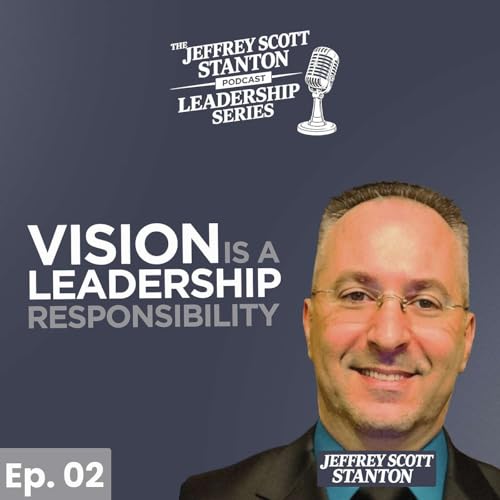
  • 002: Start With Why | Simon Sinek | Vision as Leadership Responsibility | Jeffrey Scott Stanton
    2026/05/21

    Episode 2 of The Leadership Series with Jeffrey Scott Stanton draws from Simon Sinek's "Start With Why" and applies it to one of the most common and costly leadership failures in real estate: the absence of clear, consistent, believable vision.

    Jeffrey Scott Stanton is a coach, consultant, advisor, and former Executive Vice President of Learning and Development at Douglas Elliman Real Estate. His work spans behavioral strategy, leadership development, and performance enablement in high-paced sales environments. In this episode, he brings those experiences directly into the conversation around vision because this is something he has watched organizations lose people over, and something he has seen transform culture when done with intention.

    Most leaders understand that vision matters. Few understand what it actually requires to sustain one. This episode closes that gap.

    IN THIS EPISODE, JEFFREY COVERS:
    1: Why vision is a daily leadership responsibility, not an annual kickoff speech
    2: The difference between busyness and momentum, and how active organizations can be completely directionless
    3: Why independent contractors need clarity and credibility, not authority and control
    4: The hidden cost of drift: how organizations fragment slowly, without a single dramatic event
    5: The brokerage that lost three of its strongest agents in three weeks, over confusion, not compensation
    6: How vision functions as a daily decision-making filter in meetings, recognition, and recruiting
    7: Why repetition is the mechanism through which vision moves from something said to something believed
    8: The four questions every leader should ask regularly: Is my vision clear? Is it repeated? Is it rewarded? Is it believable?

    TIMESTAMPS:
    [00:00] Cold open: vision, confusion, and what leaders lose when clarity is absent
    [02:00] Vision is not a slogan, not a speech, and not motivation
    [04:00] Jeffrey's background and how The Leadership Series is designed
    [06:00] Why leading independent contractors requires trust and clarity over authority
    [08:00] The fastest test for whether vision is actually present in your organization
    [10:00] The hidden cost of drift: how organizations fragment slowly without a single dramatic event
    [12:00] The brokerage that lost three top agents in three weeks, over confusion, not compensation
    [14:00] Criticism without clarity destroys credibility — the reactive leadership trap
    [16:00] Mid-roll spotlight:
    [18:00] Why top producers stay for momentum, not splits — and what happens when they believe in the vision
    [20:00] Where leaders unintentionally fail: stating vision without translating it into behavior
    [22:00] How to communicate vision consistently without sounding repetitive
    [24:00] The four questions: clear, repeated, rewarded, believable
    [27:00] Vision without standards is fantasy: what you reward defines what you actually believe
    [30:00] Closing reflection and preview of Episode 3

    HOST Jeffrey Scott Stanton:
    Jeffrey Scott Stanton is a leadership coach, consultant, and former Executive Vice President of Learning and Development at Douglas Elliman. He is the host of The Leadership Series on J Squared Podcast Productions, where leadership principles are broken down and applied in real organizations, real teams, and real pressure.

    Connect with Jeffrey:
    LinkedIn: https://www.linkedin.com/in/jeffreyscottstanton/
    Instagram: https://www.instagram.com/jeffreyscottstanton
    Network: J Squared Podcast Productions: https://www.jsquaredpodcast.com/

    FOUNDING SPONSORS:
    1: Wise Agent | https://wiseagent.com/jsquared - The all-in-one CRM that helps real estate agents manage contacts, automate follow-up, and grow their business.

    2: Subi | https://www.oksubi.com/ - Your AI transaction genie. From contract to close, your work is my command.

    3: The CE Shop | https://j2.theceshop.com/ Use the discount code jsquared for an additional 35% off

    続きを読む 一部表示
    32 分
  • 001: On Becoming a Leader | Warren Bennis | The Foundation of Intentional Leadership | Jeffrey Scott Stanton
    2026/05/20
    The Leadership Series with Jeffrey Scott Stanton launches with Episode 1, grounded in the foundational ideas of Warren Bennis's landmark work, On Becoming a Leader. This is not a book summary. Jeffrey takes Bennis's core premise, that leadership is not a title but a discipline built through daily practice, and runs it through the lens of real organizations, real teams, and real pressure.Jeffrey Scott Stanton is a coach, consultant, advisor, and former Executive Vice President of Learning and Development at Douglas Elliman. He has spent his career building leaders in high-paced, high-stress sales environments, and in this episode, he brings that experience directly to you.This episode sets the foundation for the entire series: what leadership actually is, how it differs from production, why most leaders struggle not from lack of knowledge but from lack of consistency, and what it means to lead with intention rather than react from habit.IN THIS EPISODE, JEFFREY COVERS:1: What leadership actually is, and why it has nothing to do with production volume or tenure2: The critical difference between a boss and a true leader, and why that distinction matters more in real estate than almost any other industry3: Why leading independent contractors requires credibility and trust over authority and control4: How self-leadership, specifically emotional discipline and calendar intentionality, determines your effectiveness before you ever lead anyone else5: The consistency gap: why most leaders are clearer in their own minds than they are to their teams6: Why tolerating behavior that undermines your standards quietly becomes the standard itself7: The over-involvement trap, and how rescuing people from problems actually limits their growth and yours8: What it means to shift from being the solution to building the conditions where solutions happen without you9: How misalignment between stated values and daily behavior erodes trust slowly, and how to close that gap10: The identity shift that has to happen when leadership scale demands you stop being the hero and start being the architectTIMESTAMPS: [00:00] Cold open: what leadership really requires (key quotes)[00:57] Show intro: The Leadership Series and what this podcast is built for[01:28] What this show is and what it is not: leadership as discipline, not tactics[02:33] The foundational text: On Becoming a Leader by Warren Bennis[04:05] Jeffrey's background: from producer to leader, and what that transition taught him[05:06] Defining leadership: influence over direction, behavior, and standards[05:59] The difference between a boss and a true leader[06:48] Why leading independent contractors changes everything[07:38] How leadership shows up in small moments, not big ones[09:45] Leadership lives in daily behavior, not vision statements[10:49] Self-leadership: emotional discipline and calendar as leadership documents[11:57] Emotional regulation vs. emotional suppression as a leader[12:41] The consistency gap and why confusion always gets interpreted as permission[13:37] Avoidance and the long-term cost of sidestepping difficult conversations[14:01] The over-involvement trap: when helping becomes limiting[15:29] Building capability vs. creating dependency[17:07] When effort stops being the answer: the shift to alignment[18:58] Vision without systems: why people fail when they're guessing, not lacking effort[19:44] Personal story: becoming the bottleneck in your own organization[20:07] Being needed vs. being effective: the hardest leadership realization[22:05] Predictability and consistency as performance drivers[23:19] Leadership at scale: centering alignment over self[25:34] Making space for leadership instead of squeezing it into margins[28:36] Clarity as the goal: not control, not constant direction[29:21] Identity shift: from hero to architect[30:01] Leadership as service[30:26] Your assignment before the next episode[31:09] What is coming next: vision as a leadership responsibilityHOST Jeffrey Scott Stanton: Jeffrey Scott Stanton is a leadership coach, consultant, and former Executive Vice President of Learning and Development at Douglas Elliman. He is the host of The Leadership Series on J Squared Podcast Productions, where leadership principles are broken down and applied in real organizations, real teams, and real pressure.Connect with Jeffrey: LinkedIn: https://www.linkedin.com/in/jeffreyscottstanton/Instagram: https://www.instagram.com/jeffreyscottstantonNetwork: J Squared Podcast Productions: https://www.jsquaredpodcast.com/FOUNDING SPONSORS: 1: Wise Agent | https://wiseagent.com/jsquared - The all-in-one CRM that helps real estate agents manage contacts, automate follow-up, and grow their business.2: Subi | https://www.oksubi.com/ - Your AI transaction genie. From contract to close, your work is my command.3: The CE Shop | https://j2.theceshop.com/ Use the discount code jsquared for an additional 35% off
    続きを読む 一部表示
    32 分