• Success Leaves Clues: Ep 309 - Is AI Helping You Think or Thinking for You? with Karla Congson, CEO of Agentiiv
    2026/10/15
    How do you use AI for business without handing over your judgment?Start with a business problem, identify the workflow that needs to change, and keep people responsible for defining the problem and checking the results. In Episode 309 of Success Leaves Clues, Robin Bailey and Al McDonald sit down with Karla Congson, Founder and CEO of Agentiiv, to explore practical AI adoption, human-led leadership, and the curiosity required to reinvent your career.After more than 20 years in corporate marketing and senior leadership, Karla became an entrepreneur and later began learning AI and prompt engineering at 50. She shares why she sees reinvention as walking toward an opportunity with the expertise you already have, and why staying curious matters as much as becoming an expert.Karla explains the difference between using AI to expand your capabilities and falling into “cognitive surrender,” gradually allowing technology to take over your judgment. Her approach puts humans in the lead: asking better questions, challenging assumptions, reviewing outputs, and involving other experts when needed.Through client examples, she explores how AI agents can support research, marketing, and communications while helping teams improve quality and reduce external costs. She describes how the Canadian Marketing Association created 70 playbooks in a year through a process combining AI-generated drafts with human expertise and review. The conversation also covers how to measure AI ROI through business outcomes, why adoption should begin with workflows, and where risk and governance belong in the process. Along the way, Karla shares why rest, relationships, and protecting your capacity to think are essential to entrepreneurial success.For entrepreneurs and business leaders exploring AI, this episode offers a practical starting point: solve a meaningful problem, preserve human judgment, and stay willing to learn.You’ll hear about:How Karla moved from corporate marketing into entrepreneurship and AIWhy experienced leaders still need the curiosity of a beginnerWhat cognitive surrender means and how it can show up at workWhy Karla advocates for humans in the lead when using AIHow expert AI agents can support teams and challenge assumptionsHow the Canadian Marketing Association combined AI with human review to create 70 playbooksWhy AI ROI should include quality, business outcomes, and employee capacityHow to identify your first AI use case through business problems and workflowsWhy AI governance and risk management belong in adoption decisionsWhat Karla hopes her entrepreneurial journey teaches her daughtersWe talk about:00:00 Welcome and meet Karla Congson, Founder and CEO of Agentiiv 01:34 Moving from corporate expertise into entrepreneurship and AI 05:06 Making learning feel exciting instead of threatening 07:36 AI superpowers, cognitive surrender, and human judgment 14:32 Using AI to extend expertise and validate your thinking 17:01 Managing the pressure to do more as technology accelerates 19:13 Why rest and relationships support entrepreneurial success 23:09 Measuring AI ROI through meaningful business outcomes 23:33 How the Canadian Marketing Association uses AI and human review 25:56 AI results in an aviation and infrastructure communications team 28:39 How AI personas can challenge assumptions and support critical thinking 30:43 Where business leaders should start with AI adoption 34:09 Managing AI risk and governance 37:35 Building a legacy through curiosity and lifelong learning 41:15 Connect with Karla CongsonConnect with KarlaLinkedIn: https://www.linkedin.com/in/karlacongson/ Website: https://agentiiv.com/blog Connect with UsLinkedIn: Robin Bailey and Al McDonald Website: Aria Benefits and Life & Legacy Advisory Group
    続きを読む 一部表示
    37 分
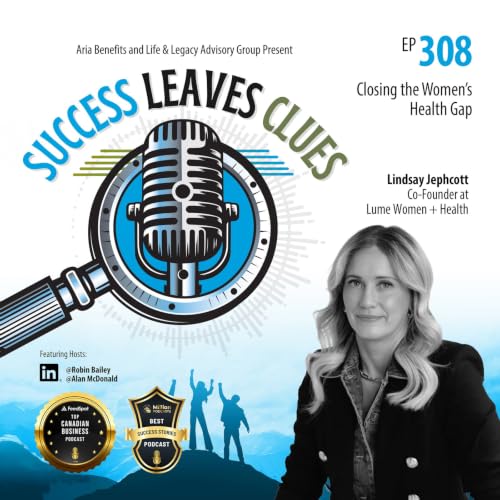
  • Success Leaves Clues: Ep 308 - Closing the Women’s Health Gap with Lindsay Jephcott, Co-Founder at Lume Women + Health
    2026/10/08

    What happens when an investor sees an overlooked healthcare need and decides to build a business around it?


    In this episode of Success Leaves Clues, Robin Bailey and guest co-host Kim Seipt sit down with Lindsay Jephcott, Co-Founder of Lume Women + Health, to explore the women’s health gap and the entrepreneurial journey behind a company working to address it.


    Lindsay explains how her background as an investment executive helped her recognize an underserved market in women’s midlife health. Together with three physician co-founders, she set out to create a menopause clinic despite warnings that women would not want to talk about aging. As the team listened to patients, that initial concept evolved into a broader executive medical offering focused on women’s preventive care and healthy aging.


    She shares why menopause deserves attention from employers, how greater visibility is helping change the conversation, and why women should feel empowered to seek answers about their health. The discussion explores Lume’s approach to connecting different areas of care rather than treating each concern in isolation.


    Lindsay also opens up about the realities of building a company from scratch: navigating rejection, checking your ego, choosing complementary partners, and learning when to act quickly versus when to pause. With a team of 30 at the time of recording, she reflects on how founders’ responsibilities change as a business grows.


    The conversation closes with her ambitions for physician education, research, advocacy, and a future where the next generation of women can find the care and answers they need.


    You’ll hear about:

    • How Lindsay’s investment background led her into women’s healthcare
    • Why the women’s health gap represents an overlooked business opportunity
    • How menopause became a bigger conversation in workplaces and public life
    • Why Lume evolved from a menopause clinic into broader preventive care
    • How listening to patients helped shape the company’s direction
    • What founders should discuss before entering a business partnership
    • Why resilience, humility, and thoughtful decision-making matter when building a company
    • How Lindsay hopes to create lasting change through education, research, and access


    We talk about:

    00:00 Meet Lindsay Jephcott of Lume Women + Health

    02:18 Recognizing the women’s health gap through an investor’s lens

    08:03 Investment and innovation in women’s healthcare

    08:42 Why the conversation about menopause is changing

    12:22 Women’s midlife health and a more connected approach to care

    18:41 Choosing business partners and sharing leadership

    21:17 Building founder resilience and responding to patient needs

    23:32 Growing a team of 30 and delegating responsibilities

    24:51 Making thoughtful decisions and navigating a career transition

    30:56 Creating a legacy through education, research, and access


    Connect with Lindsay

    • LinkedIn: https://www.linkedin.com/in/lindsay-stollery-jephcott/
    • Website: https://www.lumewomenshealth.com/team/lindsay-stollery-jephcott

    Connect with Us

    • LinkedIn: Robin Bailey and Kim Seipt
    • Website: Aria Benefits and Caledon Hills Private Wealth


    続きを読む 一部表示
    32 分
  • Success Leaves Clues: Ep 307 - Your Employees Are Quiet. Is Your Culture Really Healthy? with Sarah Pazzano, Director of People at Jarvis Consulting Group
    2026/10/01

    What does a people-first culture look like beyond the words on a company website?


    In this episode of Success Leaves Clues, Robin Bailey sits down with Sarah Pazzano, Director of People at Jarvis Consulting Group, to explore how leaders can build a workplace where employees feel safe, supported, and able to grow.


    Sarah explains that a people-first culture requires investment in employee development, psychological safety, and leadership grounded in transparency and empathy. She shares how employee engagement surveys, participation levels, and voluntary turnover can help reveal whether those values are showing up in everyday work. One warning sign leaders may overlook: employees who stop raising concerns.


    Her perspective comes from a career that began in pharmaceutical packaging operations, moved into the startup world, and led to a deliberate investment in HR education. Sarah also reflects on two years working remotely from Paris and how that experience reshaped her thinking about flexibility, connection, and work-life balance.


    The conversation closes with Jarvis’s mission to equalize opportunity and maximize potential. Sarah explains why hiring primarily from resumes can overlook newcomers, recent graduates, and people returning after a career break, and why curiosity, learning, and thoughtful questions deserve a closer look.


    You’ll hear about:

    • How Sarah found her path from pharmaceutical packaging to people operations
    • Why authentic networking can open the door to a career change
    • How HR education and hands-on experience complement each other
    • What a people-first culture requires in everyday practice
    • Why employee silence and low survey participation deserve attention
    • How HR and managers can build psychological safety in hybrid teams
    • What working remotely from Paris taught Sarah about work-life balance
    • How hiring for potential can uncover talent a resume overlooks


    We talk about:

    00:00 Meet Sarah Pazzano of Jarvis Consulting Group

    01:03 From pharmaceutical packaging to startup people operations

    03:53 Networking advice for a career change

    06:02 Pursuing HR education and finding meaningful work

    10:16 HR designations versus hands-on experience

    13:12 What a people-first culture actually looks like

    16:37 Building psychological safety in hybrid teams

    19:21 Working remotely from Paris and rethinking work-life balance

    24:37 Hiring for potential beyond resumes and credentials

    29:52 Creating pathways for Canada’s overlooked talent


    Connect with Sarah

    • LinkedIn: https://www.linkedin.com/in/sarahpazzano/
    • Company LinkedIn: https://www.linkedin.com/company/jarvisconsulting/
    • Website: https://www.jrvs.ca/

    Connect with Us

    • LinkedIn: Robin Bailey and Al McDonald
    • Website: Aria Benefits and Life & Legacy Advisory Group


    続きを読む 一部表示
    32 分
  • Success Leaves Clues: Ep 306 - How to Build a Brand Through Storytelling and Relationships with Jake Karls
    2026/09/24

    What does it take to turn a homemade snack into a brand stocked by more than 11,000 retailers?


    In this episode of Success Leaves Clues, Robin Bailey and guest co-host Christine Vigna sit down with Jake Karls, co-founder and rainmaker of Mid-Day Squares. Jake launched the company in 2018 with his sister Leslie and brother-in-law Nick, making bars in a Montreal condo kitchen and delivering orders themselves.


    Jake shares how inviting customers behind the scenes helped the founders build a community around the brand. He recalls an early turning point when Mid-Day Squares reached its first-year sales goal of $250,000 in just three months. Today, he says the company’s Montreal facility produces roughly 170,000 to 175,000 bars a day.


    The conversation explores why Jake stepped down as CMO after realizing management was not his strength. As Mid-Day Squares’ rainmaker, he now focuses on storytelling and building relationships that can lead to retail, investment, hiring, and other opportunities over time.


    Jake also speaks candidly about the burnout that forced him to reconsider his pace. He explains why rest is now part of how he sustains his work, and how regular therapy sessions help the three founders navigate difficult decisions while protecting their relationship as family.


    You’ll hear about:

    • How Mid-Day Squares grew from hand-delivered samples to thousands of retail locations
    • Why the founders chose to share the difficult parts of building the company
    • What a personal response to a customer problem can mean for a brand
    • Why Jake stepped away from the CMO role and became the company’s rainmaker
    • How long-term relationships have helped Mid-Day Squares find partners and investors
    • What burnout changed about Jake’s approach to work and rest
    • How the founders use regular therapy sessions to communicate through conflict
    • Why Jake wants the next generation to feel confident sharing their own stories


    We talk about:

    00:00 Christine’s customer experience and Jake’s personal response

    04:31 The early days of Mid-Day Squares in a Montreal condo

    09:00 The founders’ belief in the business and an early sales milestone

    11:47 Why the company shares its entrepreneurial journey openly

    12:18 Jake’s experience with burnout and the lesson he learned about rest

    21:35 Why Jake moved from CMO to the rainmaker role

    23:07 Building friendships and business relationships over time

    29:16 Working with family and addressing conflict

    30:07 Why the founders committed to regular therapy sessions

    38:14 The legacy Jake hopes to leave through Mid-Day Squares


    Connect with Jake

    • LinkedIn: https://www.linkedin.com/in/jake-karls-653106ba/
    • Personal Instagram: https://www.instagram.com/jakekarls_
    • Instagram: https://www.instagram.com/middaysquare
    • Facebook: https://www.facebook.com/MidDaySquares
    • Website: https://www.middaysquares.com/

    Connect with Us

    • LinkedIn: Robin Bailey and Al McDonald
    • Website: Aria Benefits and Life & Legacy Advisory Group


    続きを読む 一部表示
    39 分
  • Success Leaves Clues: Ep 305 - How to Turn Marketing Into a Business Growth Driver with Alison Simpson, Retired President & CEO, Canadian Marketing Association
    2026/08/27

    What separates marketing that looks impressive from marketing that creates measurable business growth?


    In this episode of Success Leaves Clues, Robin and Al sit down with Alison Simpson, recently retired President and CEO of the Canadian Marketing Association, to explore marketing leadership, brand and culture alignment, business transformation, career growth, and the courage to act before certainty arrives.


    Alison explains why marketing leaders must speak the language of revenue, profit, customer lifetime value, and market share if they want to influence business strategy. She shares how a customer growth strategy at Holt Renfrew contributed to a 21% annual sales increase and attracted 270,000 loyalty program members in its first year.


    The conversation also explores the subtle language that reveals when employees no longer feel connected to a brand, why leaders build trust by taking responsibility when something fails, and how accountability can strengthen psychological safety throughout an organization.


    Drawing on a career that has spanned agency leadership, iconic brands, startups, corporate marketing, and the Canadian Marketing Association, Alison shares the principles that shaped her success: say yes when you are 70% ready, choose clarity over certainty, build relationships before you need them, and treat your career as a landscape rather than a ladder.


    She also reveals what completing 65 marathons and ultramarathons taught her about preparation, resilience, ego, and the essential difference between something that is hard and something that is harmful.


    You’ll hear about:

    • How employee language reveals a growing divide between brand and culture
    • Why customer-facing employees are critical to delivering a brand promise
    • How leaders build trust by publicly taking responsibility for mistakes
    • Why marketing needs more than a symbolic seat at the leadership table
    • How to translate marketing activity into measurable business outcomes
    • The strategy that helped generate a 21% annual sales increase at Holt Renfrew
    • Why 70% certainty can become a competitive advantage
    • How to distinguish relationship-building from collecting contacts
    • What endurance racing teaches leaders about preparation and resilience
    • Why ambition, kindness, and integrity are not competing priorities
    • How Alison became the first female CEO in the CMA’s history
    • Why the strongest careers are landscapes rather than ladders


    We talk about:

    00:00 Al’s Great Cycle Challenge for SickKids

    01:13 Meet Alison Simpson and her unconventional career journey

    03:23 How Alison became an endurance athlete

    05:01 Running 250 kilometres across the Sahara Desert

    06:39 The early warning signs of brand and culture misalignment

    09:00 Experiencing the customer journey before leading the team

    12:45 How accountability builds trust throughout an organization

    16:43 Why marketing still fights for strategic influence

    18:05 Speaking the language of revenue, profit, and business growth

    24:04 How businesses can measure marketing ROI

    26:14 Rewirement and saying yes before you feel ready

    31:08 Travel, meaningful experiences, and a priceless family memory

    35:11 Is this hard, or is it harmful?

    41:22 Ambition, integrity, and building a career without a ladder


    Connect with Alison

    • LinkedIn: https://www.linkedin.com/in/alisonksimpson/

    Connect with Us

    • LinkedIn: Robin Bailey and Al McDonald
    • Website: Aria Benefits and Life & Legacy Advisory Group


    続きを読む 一部表示
    44 分
  • Success Leaves Clues: Ep 304 - Stop Managing, Start Coaching with Christine Vigna, Chief People Officer at Dejero
    2026/08/20

    What if the greatest thing a leader could give their team was not an answer, but the space to discover one?


    In this episode of Success Leaves Clues, Robin Bailey and Al McDonald sit down with Christine Vigna, Chief People Officer at Dejero, to explore leadership coaching, employee empowerment, workplace culture, governance, and the connection between employee experience and business performance.


    Christine explains why Dejero developed its leaders to become better coaches instead of simply better managers. By moving decisions away from leadership bottlenecks and empowering employees to solve problems, the company has strengthened engagement, accelerated development, improved customer experiences, and achieved employee retention two to three times longer than the average stay in the technology sector.


    She also shares why culture cannot be separated from business performance, how ego quietly erodes psychological safety, and why confident leaders create space for other people’s ideas rather than needing to be the smartest person in the room.


    This conversation offers a human-centered approach to leadership that does not sacrifice accountability or results. It shows how thoughtful coaching, consistent governance, and trust can help people perform at their best while building a stronger, more scalable organization.


    You’ll hear about:

    • How employee experience influences customer experience and revenue
    • Why governance supports scalable, consistent decision-making
    • The question leaders should ask before sacrificing long-term capability
    • How coaching became a driver of business performance at Dejero
    • Why managers become bottlenecks when every decision flows upward
    • How leadership coaching improves autonomy, engagement, and retention
    • Why performance challenges should never surprise an employee
    • How Dejero achieved retention two to three times the technology-sector average
    • The difference between confidence and ego in leadership
    • How executive behaviour shapes psychological safety and workplace culture
    • Why coaches help people uncover answers instead of supplying them
    • How to move forward without perfect information or perfect conditions


    We talk about:

    00:00 Intro

    01:13 Meet Christine Vigna, Chief People Officer at Dejero

    02:26 Connecting people, customer support, and corporate governance

    05:00 Are you solving today’s problem at tomorrow’s expense?

    06:16 A customer experience lesson from Mid-Day Squares

    09:34 Why governance becomes easier when people see progress

    12:41 Aligning business strategy with human-centered practices

    14:02 Developing better coaches instead of better managers

    15:38 How coaching improved engagement, performance, and retention

    21:21 Why every leader can benefit from coaching

    24:46 How managers unintentionally become decision-making bottlenecks

    28:57 Why ego quietly destroys culture and psychological safety

    32:49 Moving forward without perfect conditions or complete information


    Connect with Christina

    • LinkedIn: https://www.linkedin.com/in/christinemvigna/
    • Website: https://www.dejero.com/leadership/christine-vigna/

    Connect with Us

    • LinkedIn: Robin Bailey and Al McDonald
    • Website: Aria Benefits and Life & Legacy Advisory Group


    続きを読む 一部表示
    34 分
  • Success Leaves Clues: Ep 303 - You Don’t Have to Be Ruthless to Be Successful with Scott Vanderwel, CEO at PointsBet Canada
    2026/08/13

    Do successful leaders need to be ruthless, or can kindness, character, and high performance coexist?


    In this episode of Success Leaves Clues, Robin and Al sit down with Scott Vanderwel, CEO of PointsBet Canada, for a candid conversation about people-first leadership, strategic growth, employee empowerment, and building a successful company without compromising who you are.


    Scott was brought in to build PointsBet Canada before Ontario’s regulated online gaming market officially opened. Starting with a team of three, an emerging industry, and no established Canadian brand presence, he had to determine where the company could compete, how it would earn trust, and which opportunities were worth pursuing.


    He shares how PointsBet used strategic partnerships with organizations including Maple Leaf Sports & Entertainment, Curling Canada, the NHL Players’ Association, the NBA, and the NFL to establish credibility in a rapidly evolving market. Scott also explains why being ready on day one, controlling the company’s technology, and focusing on in-play betting gave PointsBet a meaningful point of differentiation.


    But the heart of this conversation is not betting. It is leadership.


    Whether you are a CEO, entrepreneur, people leader, executive, or emerging leader, this conversation is a powerful reminder that success is not only measured by what you build. It is also measured by how you treat people while building it.


    You’ll hear about:

    • How Scott Vanderwel built PointsBet Canada from the ground up
    • What leaders learn inside a startup that established businesses cannot teach them
    • How strategic partnerships helped an unfamiliar brand earn trust
    • Why choosing what not to pursue is essential to business strategy
    • How PointsBet differentiated itself through proprietary technology
    • Why geographic focus helped the company concentrate its resources
    • Why strategy means little if you cannot move people toward it
    • Why Scott’s team believes he should run a CEO school
    • How leaders can inspire people to contribute their “extra 25%”
    • Scott’s personal definition of success and stakeholder balance
    • Why you do not have to be ruthless to become successful
    • How to make difficult people decisions while preserving dignity
    • How regulated gaming can create greater consumer protection
    • The example Scott hopes to leave for the next generation of leaders


    We talk about:

    00:00 Al McDonald’s Great Cycle Challenge for SickKids

    00:56 Meet Scott Vanderwel, CEO of PointsBet Canada

    02:23 Building PointsBet Canada before Ontario’s market opened

    05:02 Creating a market-entry strategy in a brand-new industry

    06:08 Earning trust through major Canadian sports partnerships

    08:13 The skills Scott carried from Rogers into the CEO role

    13:09 Choosing where to compete and where not to play

    16:00 How in-play betting became a competitive advantage

    18:27 Why starting with Ontario gave PointsBet greater focus

    21:08 Why Scott’s team says he should run a CEO school

    23:24 Creating the conditions for people to do their best work

    28:18 Scott’s personal definition of success

    33:12 The mentors who shaped Scott’s leadership

    35:13 Why successful leaders do not have to be ruthless

    40:56 Making difficult decisions with consistency and humanity


    Connect with Scott

    • LinkedIn: https://www.linkedin.com/in/scottyvanderwel/
    • Website: https://join.pointsbet.ca/

    Connect with Us

    • LinkedIn: Robin Bailey and Al McDonald
    • Website: Aria Benefits and Life & Legacy Advisory Group
    続きを読む 一部表示
    37 分
  • Success Leaves Clues: Ep 302 - The Moneyball Strategy Changing How Companies Hire with Andrew Tai, Co-Founder at Deeply Talented
    2026/08/06

    Will AI replace recruiters, or will it make the best recruiters even more valuable?


    In this episode of Success Leaves Clues, Robin and Al sit down with Andrew Tai, Co-Founder at Deeply Talented and creator of Detra, an AI recruiting teammate helping enterprise recruiting teams work more efficiently without losing the human connection at the heart of hiring.


    After building, scaling, and exiting his first company, Andrew returned to entrepreneurship with a different perspective. Success, he explains, is rarely an overnight event. It is a collection of hard-earned repetitions, difficult seasons, imperfect decisions, and the willingness to keep moving when the outcome is uncertain.


    Andrew shares why AI will not replace the judgment, chemistry, trust, and connection required to hire great people. Instead, it can handle the repetitive work recruiters often have too little time to perform properly, from reviewing large volumes of applications to identifying qualified candidates who fall outside a rigid checklist.


    Whether you are a recruiter, HR leader, entrepreneur, hiring manager, or business leader navigating the future of work, this conversation offers a practical and optimistic perspective on using AI to strengthen human judgment, not replace it.


    You’ll hear about:

    • The leadership lesson Andrew learned after building and exiting his first company
    • Why most overnight successes are actually ten-year journeys
    • How to appreciate the good old days while you are still living them
    • Navigating the storms and sunshine of entrepreneurship
    • Why AI will never replace human connection in recruiting
    • The recruiting tasks AI can perform faster and more consistently
    • How overwhelmed recruiters can overlook excellent applicants
    • Why rigid job requirements can eliminate people capable of doing the work
    • How AI can help companies take a Moneyball approach to recruiting
    • The difference between demographic bias and recruiting shorthand
    • How AI can challenge assumptions and expose gaps in hiring criteria
    • Why recruiters remain responsible for judgment and final decisions
    • What Andrew learned from hiring people who did not check every box
    • How to make peace with decisions made using the information available at the time
    • The danger of waiting for perfect conditions before beginning


    We talk about:

    00:00 Introduction to Andrew Tai and the future of AI in recruiting

    03:00 Leadership lessons from building and exiting a company

    06:23 Why most overnight successes take ten years

    08:09 Surviving the storms and sunshine of entrepreneurship

    10:02 Will AI replace recruiters?

    13:34 Human connection as recruiting’s enduring advantage

    17:09 The hiring mistakes successful companies continue to make

    19:00 How AI rediscovered a rejected candidate who was later hired

    21:17 Why the best candidate may not meet every requirement

    23:00 The Moneyball approach to finding overlooked talent

    27:12 Recruiting bias, merit-based screening, and responsible AI

    32:19 How an AI teammate can challenge a recruiter’s assumptions

    35:21 Taking chances on candidates with potential

    39:43 The proverbial trees Andrew is planting through entrepreneurship

    42:06 Building a company to model resilience for his daughters

    43:13 Why waiting for perfect usually means never beginning

    46:12 How to connect with Andrew Tai and Deeply Talented


    Connect with Andrew

    • LinkedIn: https://www.linkedin.com/in/ahytai/
    • Website: https://www.deeplytalented.com/

    Connect with Us

    • LinkedIn: Robin Bailey and Al McDonald
    • Website: Aria Benefits and Life & Legacy Advisory Group
    続きを読む 一部表示
    38 分