『Sticky Notes: The Classical Music Podcast』のカバーアート

Sticky Notes: The Classical Music Podcast

Sticky Notes: The Classical Music Podcast

著者: Joshua Weilerstein
無料で聴く

【Amazonプライム会員限定】今ならプレミアムプランが4か月 月額99円。

10月19日まで。※適用条件あり
Sticky Notes is a classical music podcast for everyone, whether you are just getting interested in classical music for the first time, or if you've been listening to it and loving it all your life. Interviews with great artists, in depth looks at pieces in the repertoire, and both basic and deep dives into every era of music. Classical music is absolutely for everyone, so let's start listening! Note - Seasons 1-5 will be returning over the next year. They have been taken down in order to be re-recorded in improved sound quality! アート エンターテインメント・舞台芸術 音楽
エピソード
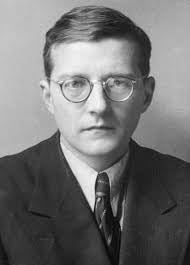
  • Shostakovich Symphony No. 6
    2026/09/17

    Dmitri Shostakovich: "I have set myself a task fraught with tremendous responsibility, to express in sound the immortal image of Lenin as a great son of the Russian people and as a leader of the masses. I have received numerous letters from all over the Soviet Union with regard to my future symphony. The most important advice contained therein was to make considerable use of musical folklore."

    In the massively consequential year of 1939, Shostakovich used these words to launch his Sixth Symphony. The piece was meant to have soloists and a chorus alongside the orchestra — perhaps a nod to his Second and Third Symphonies, which were essentially propaganda pieces. Shostakovich even promised to use the poem "Vladimir Ilyich Lenin" by Vladimir Mayakovsky as the basis for his choral text.

    The Soviet public eagerly awaited this new symphony, which was inevitably going to be compared with his Fifth Symphony — the piece that had brought Shostakovich back into the Soviet government's good graces, and which remains one of his most popular works even as it's also one of his most complex and nuanced pieces beneath its relatively conservative surface.

    But whether Shostakovich ever actually planned to write this gigantic "Lenin" symphony is highly doubtful, since no sketches of it have ever turned up. Instead, Shostakovich pivoted publicly to describing his new symphony this way:

    "The musical character of the Sixth Symphony will differ from the mood and emotional tone of the Fifth Symphony, in which moments of tragedy and tension were characteristic. In my latest symphony, music of a contemplative and lyrical order predominates. I wanted to convey in it the moods of spring, joy, youth."[6]

    As you can see, Shostakovich wasn't actually saying much about the content of the symphony — if anything at all. He was leaving things deliberately ambiguous, and, fittingly, ambiguous is a pretty good description of this highly enigmatic symphony.

    Everything about this symphony is slightly off. It's in three movements, not the typical four, and it opens with a massive slow movement; the two remaining movements are fast and significantly shorter, together lasting less than the first movement alone. It was written in 1939 — supposedly a year of military triumph for the Soviet Union, given the Stalin pact with Hitler that allowed Hitler to invade Poland and launch World War II — and yet there is not a hint of military triumphalism in it.

    In short, this symphony confused a lot of people and has always received mixed reviews, whether from musicologists trying to fit it into the traditional "everything in Shostakovich is about Stalin" narrative, or from Soviet critics of the time trying to fit it into Socialist Realist aesthetics. In the end, descriptions of Shostakovich always attempt to put him into a box — silent dissident, Soviet stooge, hero, coward, etc. The truth, of course, is complicated, and this symphony is a great example of the eternal enigma that is Dmitri Shostakovich.

    Today, on this Patreon-sponsored episode, I'll take you through this wonderful symphony from a musical perspective, trying to parse its unusual form, its unusually lyrical first movement, and the wild, madcap dash of the final two movements. Join us!

    続きを読む 一部表示
    1 時間 3 分
  • Grieg: Peer Gynt
    2026/09/03

    Grieg's Peer Gynt suites are among the best-known and best-loved works of classical music in the world. They are practically embedded into popular culture, being used in a dizzying number of cartoons, advertisements, and films. In the classical music world, as with Beethoven's 5th symphony, they have almost become a cliché, and they are often performed on so-called Pops concerts. The two big hits from Peer Gynt, Morning Mood and In the Hall of the Mountain King, are instantly recognizable to the general public, even if they don't know who wrote the music or where it comes from. And where all this music comes from is really interesting, and is going to be one of the main topics of this show. Because the famous music from Peer Gynt comes from the two suites that Grieg took from his massive score of incidental music to Henrik Ibsen's play in verse, Peer Gynt. The two suites together take about 45 minutes to perform, but Grieg actually wrote an extra hour's worth of music! He then extracted, for his suites, the music that he felt would stand on its own without the text, and this was quite a good decision, as they are certainly his most popular pieces and have etched his name into the classical music pantheon forever. But what about the rest of that music? What about the play itself? Today, on this Patreon-sponsored episode, we'll tell the story of the origins of Peer Gynt, both from Ibsen and from Grieg, and then we'll go through the nearly 2 hours of incidental music, most of it in a bit of a cursory way (which frankly is perfectly appropriate for Grieg, whose music abounds with naive simplicity and gorgeous tunes), but all the way through we are going to tell the wacky, wonderful, and way-ahead-of-its-time story of Peer Gynt, all through the music that Grieg wrote. On the show today you'll hear some of the most famous music in the world, and then some music that only the most passionate of connoisseurs have encountered. So, in essence, my kind of show. Join us!

    続きを読む 一部表示
    1 時間 8 分
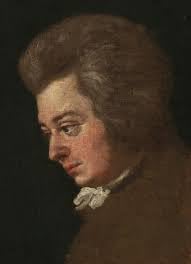
  • Mozart Clarinet Concerto
    2026/08/20

    When it comes to a piece like the Mozart Clarinet Concerto, a few words or phrases regularly come up: the concerto is described as "mellow" or Mozart's "swan song," but most often it is described as "perfect." Such a perfect piece as Mozart's Clarinet Concerto must have been hugely popular during Mozart's lifetime, right? It must have been played all over, by all the virtuoso clarinetists of the day. Well, that is not even close to the case. At the age of 35, Mozart was kind of old news in the economically depressed, repressed, and censored city of Vienna in 1790. There were very few concerts during this period, and Mozart's popularity had waned severely. The clarinet concerto, one of a wealth of brilliant (and yes, perfect) pieces Mozart wrote in the final year of his life, was performed once by the man for whom Mozart wrote it, Anton Stadler, before Mozart's death, but the location and the program of that concert are forgotten. The manuscript of the concerto is lost, which means we actually don't know a lot about it, especially considering it wasn't actually written for a standard clarinet, but for a basset clarinet (we'll get to that later). The piece was written just about two months before Mozart's death and was his last completed work, though there's absolutely no evidence that Mozart knew he was dying when he wrote it. All in all, there's actually a lot of mystery surrounding this perfect piece, and yet, when we hear the luminous music that Mozart wrote, all of this falls away. There is truly a kind of perfection to this music, a golden quality that is inescapable. There is no clarinet concerto that is performed more often or more recorded, and it remains a perennial favorite for clarinetists and orchestras around the world. Today, on this Patreon-sponsored episode, we'll talk about all these mysteries surrounding this concerto, Anton Stadler, the basset clarinet, and of course, the wonderful music itself, though, as always, Mozart sometimes defies description. Join us!

    続きを読む 一部表示
    52 分
adbl_web_anon_alc_button_suppression_t1
まだレビューはありません