『Sport in History』のカバーアート

Sport in History

Sport in History

著者: British Society of Sports History
無料で聴く

【Amazonプライム会員限定】今ならプレミアムプランが4か月 月額99円。

10月19日まで。※適用条件あり

The Sport in History Podcast brings you the latest research with interviews and talks with leading sports historians and up-and-coming researchers into Sports History. The podcast is a British Society of Sports History (BSSH) production from the UK's leading society for the history of sport.. You can find us on all social media platforms and major podcast platforms here.


Likewise, Click through to the BSSH website for further information on our events and to find out how to join the British Society of Sport History: https://www.sportinhistory.org/

Hosted on Acast. See acast.com/privacy for more information.

British Society of Sports History
エピソード
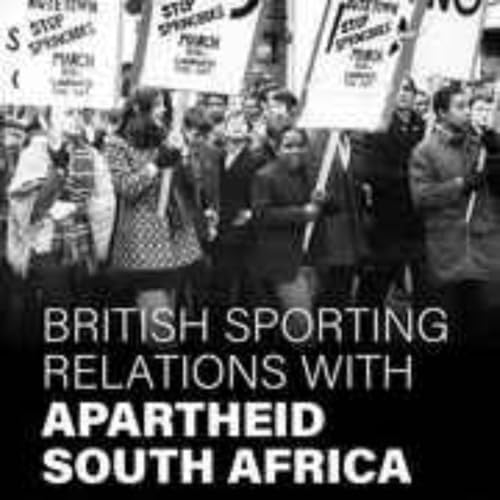
  • Matthew Llewellyn and Toby Rider on The Monday Club, British Conservative Politics and the boycott of Apartheid sport
    2026/09/01
    In this paper, we explore specific elements of the right-wing British response to the sporting boycott of apartheid South Africa. Starting in the early 1960s, and intensifying as the anti-apartheid campaign to end British sporting contacts with South Africa began to unfurl, right wing politicians, groups, media, and members of the public, tended to connect their opposition to the sports boycott with a broader critique of contemporary British society. For a generation of beleaguered white Britons who felt victimised by the rapidly changing social landscape of post-imperial Britain, we argue, the sport boycott animated fears that white culture was under attack by pernicious, alien, and radical forces (i.e., the liberal media and clergy, student radicals, and subversive minorities). Some of the most influential speakers to articulate this view came from the right wing of the Conservative Party and were members of a powerful political pressure group called the Monday Club. Founded in 1961 in opposition to Harold Macmillan’s apparent commitment to the post-war consensus, the Monday Club developed a growing tolerance and sympathy for white South Africa and Britain’s sporting relations with the pariah state. From the mid-1960s onwards, we intend to show, the Club rallied in opposition to anti-apartheid efforts to disrupt sporting links, and did so by frequently interpreting the actions of the anti-apartheid movement as part of a wide-ranging liberal attack on core Conservative values, white culture, and the historical foundations of British society. Matthew P. Llewellyn, Ph.D., was born and raised in Cardiff, Wales. He earned his undergraduate degree at Cardiff Metropolitan University and his Master’s degree at the California State University, Long Beach. He followed this by completing a Ph.D. in the Historical and Philosophical Aspects of Sport and Physical Activity at the Pennsylvania State University. He has published numerous papers in refereed journals including Modern British History, Journal of Policy History, Journal of Southern African Studies, South African Historical Journal, Contemporary British History, and the International Journal of the History of Sport, as well as numerous textbook chapters. He has published nine books and edited collections, including British Sporting Relations with Apartheid South Africa: The Politics of Racism and Anti-Racism, 1948-1994 (Oxford University Press, 2024). He currently serves as editor of the Journal of Olympic Studies, a co-director of the Center for Sociocultural Sport and Olympic Research (CSSOR), and is a professor in the department of kinesiology at the California State University, Fullerton.Dr. Toby C. Rider was born and raised in East Sussex, England. He earned his undergraduate degree at the University of Birmingham and his Master’s degree at the University of Brighton. He followed this by completing a Ph.D. in the sociocultural study of sport and exercise at The University of Western Ontario in London, Canada. An award winning author, Toby’s research interest focuses on the dynamic historical role of sport in international relations, politics, race, and empire. He has published multiple articles in peer reviewed journals, contributed several chapters to scholarly books, and presented his research at numerous conferences. He is the author of Cold War Games: Propaganda, the Olympics, and U.S. Foreign Policy (University of Illinois Press, 2016), co-editor of Defending the American Way of Life: Sport, Culture, and the Cold War (University of Arkansas Press, 2018), and Sport and Apartheid South Africa: Histories of Politics, Power, and Protest (Routledge, 2022), and co-author of British Sporting Relations with Apartheid South Africa: The Politics of Racism and Anti-Racism, 1948-1994 (Oxford University Press, 2024). In addition to this, Toby is the Co-Director of the Center for Sociocultural Sport and Olympic Research and the Associate Editor of the journal of Olympic Studies.This podcast is a British Society of Sports History (BSSH) production from the UK's leading society for the history of sport.. You can find the podcast on all social media & major podcast platforms here.Likewise, Click through to the BSSH website for further information on our events and to find out how to join the British Society of Sport History: https://www.sportinhistory.com/ Hosted on Acast. See acast.com/privacy for more information.
    続きを読む 一部表示
    52 分
  • Samuel Clevenger on the Biopolitics of the Garden City Movement and Physical Culture
    2026/07/08

    Join us as Max Portman talks to Samuel M Clevenger, assistant professor in the department of Kinesiology at Towson University, as they discuss his most recent book 'Physical culture and the biopolitics of the international garden city movement: Planning healthy recreation', published by Palgrave MacMillan in 2025.


    Max and Sam cover a multitude of different areas discussing how sport and physical culture played a key and very understated role in the garden city movement. They discuss how the movement came to pass and how the garden city movement, space and urban planning have all played crucial roles in our understanding of how urban areas are constructed, how and where we engage in sports and physical culture and how class plays a key role in it all.


    They also cover other places that fit into certain ideals of urban planning such as Bournville and Saltaire and how sport plays an important, but understated role within the make-up of urban planning.


    One of historians and academics with an interest in physical culture, urban planning and the usage of space in making up society.

    This podcast is a British Society of Sports History (BSSH) production from the UK's leading society for the history of sport.. You can find the podcast on all social media & major podcast platforms here.


    Likewise, Click through to the BSSH website for further information on our events and to find out how to join the British Society of Sport History: https://www.sportinhistory.com/

    Hosted on Acast. See acast.com/privacy for more information.

    続きを読む 一部表示
    1 時間 23 分
  • Lisa Jenkel on The Discourse and Depiction regarding Jewish Athletes and Jewish Sports in the English Press, 1890-1945
    2026/06/30

    “For centuries the Jewish race in Britain has absorbed British culture ... But not all connect Jews with any marked leanings towards our own national amateur sports and pastimes” [Leeds Mercury, 1926, “The Jew as Amateur Sportsmen”]


    Statements like these can be found manifold in English newspapers during the late nineteenth and early twentieth century. While Anglo-Jewry grew significantly during these decades, so did the press reporting – in general as well as regarding coverage of Jewish athletes and sports. Articles about “the Jew” in sports can be found in mainstream newspapers like the Daily Mail, local publications such as the Leeds Mercury, far-right propaganda papers by the British Union of Fascists and, on the opposite pole of the discursive spectrum, the Jewish Chronicle. At the heart of this societal discourse was the notion of the “unsportive Jew”, rhetorically creating an outgroup in a society that closely interconnected values and norms with sports. The discourse and its social impact were complex. With some rare exceptions, the depiction of Jewish athletes and sports in mainstream newspapers was seldom openly hostile or derogatory. These underlying notions were covered behind an apparent civility. However, a close analysis reveals a net of interwoven narratives, racialisations and stereotypes about Jews that diachronically evolved over decades and were transferred onto the realm of sports with its physical as well as cultural connotations. The discourse was by no means solely focused on physicality and physical activity but was strongly impacted by the normative nature ascribed to English sports. This is not surprising since sport was considered inherently “British” based on the norms and values associated with it. The continuous discursive depiction of Jews as an outgroup in a social realm that had distinctly nationalised connotations, abetted the perception of Jews as an outgroup beyond sports and placed them outside the “imagined community” of English (sports) society.


    Lisa Jenkel is a PhD student at the University of Basel in Switzerland and a curator at the FC St. Pauli-Museum in Hamburg, Germany. Her research is located at the intersection of sports history with Jewish and Women’s studies. Employing discourse analytical methods, she examines the cultural and societal influence sport had on these groups and vice versa. Lisa has recently finished her thesis on Anglo-Jewish sports history, the content of which will be presented in this seminar.

    This podcast is a British Society of Sports History (BSSH) production from the UK's leading society for the history of sport.. You can find the podcast on all social media & major podcast platforms here.


    Likewise, Click through to the BSSH website for further information on our events and to find out how to join the British Society of Sport History: https://www.sportinhistory.com/

    Hosted on Acast. See acast.com/privacy for more information.

    続きを読む 一部表示
    43 分
adbl_web_anon_alc_button_suppression_t1
まだレビューはありません