In this episode of The Expert APProach: Conversations in Uro-Oncology, host Joy Maulik, CRNP, sits down with Melissa Kestler, DNP, FNP-BC, for a thoughtful discussion centered on advanced practice provider (APP) leadership, clinical growth, and the evolving role of APPs in urologic oncology.
Kestler shares her professional journey into urology, reflecting on how curiosity, mentorship, and a willingness to step outside of traditional role expectations helped shape her career. What stands out in her story is not just the acquisition of clinical skills, but the intentional development of confidence—particularly in procedural competency and independent clinical decision-making. She emphasizes that growth in this field often requires APPs to advocate for their own training opportunities while also being supported by forward-thinking physician partners.
A central theme of the conversation is the importance of practicing at the top of one’s license. Kestler highlights how APPs can meaningfully expand access to care, improve efficiency, and enhance patient outcomes when they are empowered to take on more advanced responsibilities. This includes not only clinic-based care but also procedural work, care coordination, and longitudinal patient management. She underscores that this evolution is not about replacing physicians, but about strengthening the care team in a way that meets the increasing demands of modern health care.
Maulik and Kestler also explore the realities of navigating complex patient populations in uro-oncology. From managing treatment adverse events to supporting patients through emotionally and physically taxing diagnoses, Kestler speaks to the depth of the APP–patient relationship. Education emerges as a recurring pillar—ensuring patients understand their disease, treatment options, and expectations is just as critical as the treatments themselves.
Leadership is another key focus. Kestler discusses how APPs are increasingly stepping into leadership roles, whether formally through administrative titles or informally through mentorship, program development, and clinical innovation. She encourages APPs to seek out these opportunities, noting that leadership does not always require a title—it often begins with initiative, consistency, and a commitment to improving care delivery.
The conversation also touches on interdisciplinary collaboration. Kestler reinforces the value of strong partnerships between APPs, physicians, nurses, and administrative teams, particularly in complex fields like uro-oncology where coordinated care is essential. These collaborative models not only improve patient outcomes but also help reduce provider burnout by distributing responsibilities more effectively.
Ultimately, this episode paints a clear picture of a field in transition—one where APPs are no longer seen solely as support roles, but as integral contributors to both clinical excellence and healthcare innovation. Kestler’s insights serve as both a roadmap and an encouragement for APPs looking to expand their impact, reminding listeners that growth in this space is driven by curiosity, collaboration, and a willingness to lead.


 8 分
8 分 7 分
7 分 13 分
13 分 8 分
8 分 5 分
5 分 45 分
45 分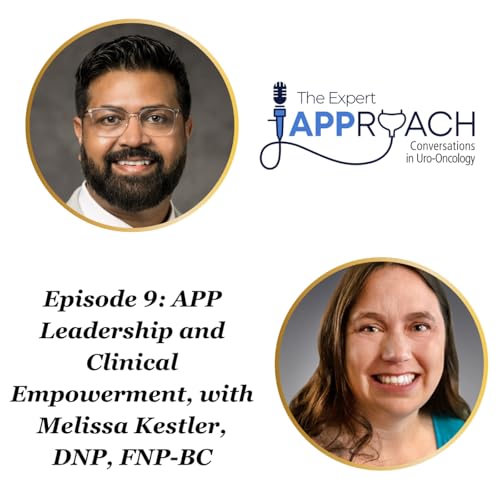 2026/04/1025 分
 8 分
8 分