• Full AI Keynote – Shane Gibson Speaker on Sales and Sales Leadership with AI
    2025/05/28
    By Shane Gibson Keynote AI Speaker and Sales Author This is podcast is my full AI Sales Keynote that I delivered in Montreal, Quebec (Canada) at the MicroAge Innovation Conference almost a year ago. This conference was a business growth focused conference for IT Channel MSPs and MSSPs across Canada. There’s a few stats that needed updating but I decided to share it with my podcast listeners anyway. AI has changed a lot in 12 months, but surprisingly most sales leaders and sales pros are still not operating with a full AI Sales Mindset. You can find the entire AI Keynote Video further down in this post. There was a moment in Montreal at the MicroAge innovation conference that said it all. I looked out at the audience after they watched a video of “me” speaking, except it wasn’t me. It was a hyper-realistic avatar built using HeyGen, speaking in my voice, moving like me, and even delivering my message in French, Mandarin, (or any of 30 languages). The audience responded with a mix of fascination and discomfort. Some were clearly inspired. Others were visibly uneasy yet still found the humour in it. That one experience summed up exactly where we are with artificial intelligence right now: intrigued and impressed, but also a little unnerved. We’re fascinated by what AI can do, but we’re also questioning where it will take us. And as sales professionals, we’re asking the biggest question of all. Is AI going to help us or replace us? AI in Sales: Help or Replace? The question I hear most often from sales leaders and salespeople is whether AI will assist us or replace us. My answer is simple. It will do both. AI is already replacing parts of our jobs. Writing proposals. Following up on leads. Translating languages. Analyzing client behavior. These used to be tasks only humans could perform. Now, they’re being done by machines faster, cheaper, and in many cases, better. Salespeople who insist on not using the tools to do this stuff are spending hours on tasks while they’re competitors and increasing real live face time with clients. So the real question becomes: Will you be replaced by AI or will you be empowered by it? Automation Isn’t the Threat. It’s the Opportunity. AI can’t replicate your emotional intelligence, your ability to tell stories, or your intuition when navigating a tough negotiation. But it can do a lot of the heavy lifting. AI tools can research your prospects before your first meeting. They can draft personalized outreach messages. They can track buying signals and recommend your next move. While you’re sleeping, AI can be generating follow-up content, qualifying leads, and building momentum in your pipeline. That doesn’t make you less relevant. It makes you more available to do what matters most: building relationships, solving problems, and creating trust. How I Use AI in My Sales Practice Here’s what I’m doing right now with AI in my own business: HeyGen lets me create a digital version of myself to deliver sales pitches and onboarding videos in dozens of languages.Fathom and Quso.ai transcribe live meetings, highlight key themes, and generate content from conversations in minutes.ChatGPT is my co-pilot when writing follow-up messages, crafting value propositions, or brainstorming client-specific strategies. In fact I know use 5+ custom AI assistance in my sales process. DAILY.AI-powered CRMs give me real-time insights and tell me which accounts are warming up and which ones need more attention. Every tool I use frees up more time for strategic thinking and human connection. What I Said on Stage and Why It Matters Here are some of the quotes from my keynote that got the biggest reactions. These aren’t just soundbites. They’re starting points for the way we all need to think about selling with AI: “It’s not going to be AI or you. It’s going to be AI and you, or just AI.”“If your job is to deliver brochures and follow a script, AI already does that better.”“We’re not competing against each humans anymore. We’re competing against people who are using AI.”“Every seller today must ask, what part of my work should be automated and what must remain human?”“Empathy, trust, and creativity. These are your superpowers. AI can’t touch them.”“Sales leaders need to stop controlling and start coaching their (AI) augmented teams.”“AI is the intern who never sleeps and always has new ideas.”“Adapting isn’t optional. You either drive the change or it drives you.”“The threat isn’t AI. The threat is being left behind.”“If you’re waiting for a better time to adopt AI, you’re already behind.” What Sales Leadership Looks Like in the Age of AI Sales leadership today isn’t about checking activity metrics and handing out quotas. It’s about building a team that can think, adapt, and collaborate, with AI as a partner. Everyone on your sales team should be working in tandem with an AI Assistant. The modern sales leader...
    続きを読む 一部表示
    1分未満
  • Sales Leadership Versus Sales Management – Podcast
    2025/02/11
    Sales Leadership Podcast Summary with Mike Curliss, President of Maximizer, and Shane Gibson Keynote Sales Speaker and CEO of Professional Sales Academy. This is part 2 of our series with Mike Curliss – you can listen to Part 1 on AI for Sales here. (Please note this post was written by humans and augmented with AI) Here’s the podcast summary: The debate between sales leadership and sales management has been ongoing for decades. Which is more important? Which drives results? The reality is, it’s not an “either or scenario.” Success in sales leadership requires a balance of both. I recently sat down with Mike Curliss, President at Maximizer, to break down the nuances between these two roles, and how top-performing sales organizations leverage both effectively. The Core Differences Between Sales Leadership and Sales Management Sales managers focus on systems, process, and daily execution. They build and maintain structure, keep teams accountable, and drive short-term results. Their world is the next 90 days. They’re the front line, ensuring every rep stays on track. Sales leaders, on the other hand, are visionaries. They look beyond the immediate quarter and set a strategic course for the future. They develop people, influence product direction, and anticipate market shifts. Leadership is about crafting and communicating a vision that inspires and aligns the team with the company’s long-term objectives. The best sales leaders operate in both modes and have the competency tool kit to survive and thrive. Whether you have a formal leadership title or not, balancing management and leadership is crucial. Why You Can’t Choose One Over the Other Organizations that over-index on sales management often create a culture of micromanagement. Reps check boxes, follow rigid scripts, and focus solely on KPIs, but lack inspiration. They meet quotas, but they don’t innovate or push boundaries. On the flip side, organizations that lean too heavily into sales leadership without strong management systems often struggle with execution. There’s vision, but no roadmap and no sales playbook. Great ideas fizzle without action. The winning formula? A blend of both. As Mike Curliss put it, “As a manager, you build the process box. As a leader, you shape the vision and ensure that box fits into the bigger picture.” The Role of CRM and AI in Bridging Leadership and Management Technology, when used correctly, can enhance both sales management and leadership. CRMs provide structure, consistency, and visibility into key performance metrics, helping managers keep the team accountable. But AI-driven tools like Gong, Fathom, and Maximizer go a step further—they provide insights that empower leaders to make informed strategic decisions. For example, in the Maximizer CRM AI can surface patterns in lost deals, highlight underutilized opportunities, and identify coaching moments. With the right data, a sales leader can proactively pivot strategies rather than react to missed targets. People work for the managers they like and trust, not AI. – Mike Curliss, President – Maximizer Why Many Sales Leaders Feel Overwhelmed (And What to Do About It) Many sales leaders today wear too many hats. They need to input on product roadmaps, collaborate with marketing, coach their teams, and hit aggressive revenue targets—all with fewer resources. What’s the solution? Either add people or optimize process. In today’s economy, adding headcount isn’t always an option. This is why leveraging sales technology effectively becomes a game-changer. Leaders must drive efficiency through AI-driven CRM systems and automation while ensuring they invest in the right coaching and development for their people. Should Top Salespeople Be Promoted to Managers? One of the most controversial topics in sales leadership is whether high-performing sales reps should be promoted into management. The assumption is that if they can sell, they can teach others to do the same. The reality? Many top salespeople excel because they are self-motivated, competitive, and independent—qualities that don’t always translate into being great managers. Effective sales managers and leaders are process-driven, team-focused, and highly communicative. Instead of automatically promoting the top rep, look for people who are already mentoring their peers, following process rigorously, and demonstrating strategic thinking. These are the future leaders of your organization. The Power of Proactive Leadership A reactive sales leader waits for directives from the C-suite. A proactive sales leader anticipates challenges, drives innovation, and influences company strategy. Proactive leaders: Build a talent pipeline before they need it.Align sales strategy with market trends before they become problems.Develop sales managers who drive change from the front lines.Implement AI-driven tools to enhance efficiency rather than replace human connection. The best sales ...
    続きを読む 一部表示
    1分未満
  • AI Sales Podcast – AI on the Prize with Maximizer CRM
    2024/08/22
    An in depth discussion on AI for Sales Leaders with Keynote AI Speaker Shane Gibson and Mike Curliss, VP Sales Maximizer. In today’s sales leadership environment, the role of the VP of Sales has transformed significantly, driven by the broad application of technology, data, and AI. As AI continues to reshape the sales profession, sales leaders who harness its power strategically can gain a substantial edge over their competition. This blog post is a summary of this AI for sales podcast transcript. We talk about how sales leaders can leverage AI to boost their success, outlining the essential strategies, tools, and insights discussed in a recent podcast with Shane Gibson (that’s me) and Mike Curlis, VP of Sales at Maximizer CRM. Maximizer has a robust AI tools for sales leaders that they are presently rolling out. (Please note this post was written by humans and augmented with AI) Here’s the podcast summary: The Changing Role of Sales Leaders The VP of Sales role is no longer just about managing a sales team and driving revenue. Today’s sales leaders must be part CTO, part coach, and part strategist, navigating a complex environment that demands a deep understanding of technology, data, and human behavior. This shift in sales competency means that sales leaders need to be equipped with higher levels of technological intelligence (TQ) and emotional intelligence (EQ) to remain effective in their roles. Mike Curlis points out that sales leaders now face the challenge of integrating a proliferation of sales technologies into their processes. With AI becoming a key component of these tech stacks, the ability to effectively implement and utilize AI tools can make the difference between success and failure. However, the sheer volume of available tools and data can be overwhelming, making it crucial for sales leaders to be strategic in their approach. AI as a Game-Changer in Sales Leadership AI SaaS companies and consulting firms are aggressively promoting the technology as a powerful tool that can significantly enhance the effectiveness of sales leaders. The question is “Is AI living up to the sales tech hype?” According to Forrester Research, sales leaders who effectively employ AI are twice as likely to hit their quota compared to those who do not. Moreover, AI-powered CRM systems can increase win rates by 20-25%, while non-AI users spend 20-40% more time on administrative tasks. But how exactly does AI contribute to these impressive gains? The answer lies in AI’s ability to automate routine tasks, provide deep insights, and enable more informed decision-making. By leveraging AI, sales leaders can free up time to focus on high-impact activities like coaching their teams, building relationships with key clients, and developing long-term strategies. How Maximizer CRM Equips Sales Leaders with AI Tools Maximizer CRM is at the forefront of integrating AI into sales processes, offering tools designed specifically to empower sales leaders. Here’s how Maximizer CRM is presently equipping sales leaders with AI (some of these functions are part of their roadmap and others are fully deployed): Exception Reporting: AI identifies what’s moving and what’s not in your sales pipeline, surfacing critical information that allows sales leaders to take timely action before it’s too late.Activity Analysis: AI tracks hundreds of daily activities like emails, calls, demos, and social posts, providing insights into what’s working and what’s not, and connecting activities to outcomes.Sales Call Preparation: AI helps sales teams prepare for calls by providing relevant research and generating insightful questions tailored to the prospect’s industry and business challenges.AI-Enhanced Leaderboards: These leaderboards use AI to highlight key performance indicators and flag potential issues, allowing sales leaders to focus their attention where it’s needed most.Proactive AI Actions: AI prompts sales reps to take the right action at the right time, reducing the need for micromanagement and enhancing overall team performance. Key Insights from the Podcast Here are the top 10 takeaways from the podcast discussion between Shane Gibson and Mike Curlis: The Evolution of Sales Competency: Sales leaders need to be tech-savvy, emotionally intelligent, and capable of coordinating with various departments like marketing and finance.AI as a Competitive Advantage: Sales teams powered by AI have a significant edge, with higher win rates and greater efficiency.The Importance of TQ: Technological intelligence (TQ) is now as critical as traditional sales skills. Sales leaders must stay ahead of the curve by continuously learning and integrating new technologies.Remote Sales Management: With remote work becoming the norm, sales leaders must use AI to manage and coordinate global teams effectively.Customer Expectations: Today’s buyers are more informed and demand value-added interactions. AI helps sales teams deliver ...
    続きを読む 一部表示
    1分未満
  • Channel Sales Podcast: Unveiling the Secrets to Effective IT and Channel Sales Training: A Conversation with Julian Lee
    2024/07/19
    I’m excited to share insights from my recent interview with Julian Lee, Publisher of echannelnews. We delved into IT sales training and Channel Sales Training, discussing the strategies that help sales development programs that help move the sales needle in the right direction. Here’s a comprehensive summary of our conversation, packed with actionable insights and top takeaways – please note that this post is based upon the podcast transcript and was written with the assistance of AI and humans! I am going to be delivering a new keynote on AI for Business Growth at the next ChannelNext West Conference in Whistler, British Columbia on October 21st and 22nd 2024. Here’s the sales podcast summary: The Importance of Coaching in Tech Sales One of the key topics we touched upon was the critical role of coaching in sales. Coaching is not just about auditing or ensuring compliance with KPIs; it’s about sitting next to your sales reps, listening to their conversations, and guiding them on how to seize opportunities they might miss. This hands-on, side-by-side approach can transform average performers into sales stars. Without this, even the best sales training programs can fall short. Teaching Traditional and Modern Sales Techniques Julian and I discussed the evolution of sales techniques. While traditional methods like objection handling and closing strategies are still relevant, today’s sales environment demands more. Authenticity, empathy, and uncovering the truth behind a customer’s objections are crucial. Selling cybersecurity exemplifies this; if you’re not truthful with your customers, you’re not only risking the deal but also their trust and security. Hybrid Sales Training Approaches In our discussion, we highlighted the effectiveness of hybrid training models. These combine self-directed learning with in-person coaching. Online sales courses with quizzes and implementation documents, followed by in-person sessions, ensure better retention and application of knowledge. This method is especially effective in IT sales training, where continuous learning and adaptation are vital. The Role of Technology and AI in Sales Technology plays a pivotal role in modern sales training. Tools that automate processes, prioritize leads, and provide customer insights allow salespeople to focus on what they do best – selling. However, while technology equips us with powerful tools, the differentiator remains our people skills. AI and automation are now ambient, but the human touch in sales is irreplaceable. Embracing Empathy and Authenticity in Sales Empathy and authenticity are not just buzzwords; they’re essential for building lasting relationships with clients. Teaching these values starts within the company. Sales leaders must create an empathetic environment that reflects in their team’s interactions with clients. Role-playing exercises and holding space without judgment are effective ways to cultivate these skills. Overcoming Common Sales Objections A common objection to sales training is time. Companies often struggle to take their sales teams offline for training. Our solution is a blend of asynchronous learning and in-person coaching, minimizing downtime while maximizing impact. Assessing the current sales process and highlighting the cost of missed opportunities can also help justify the investment in training. Building an MSP Sales Playbook A well-structured sales playbook is a cornerstone of successful sales teams. It should include ideal client personas, effective approaches, core objections and responses, and critical questions for client interactions. This playbook not only guides new hires but also ensures consistency and efficiency across the team. Top 10 Takeaways from the Interview Coaching Over Auditing: True coaching involves hands-on guidance, not just monitoring KPIs.Hybrid Training Models: Combining self-directed learning with in-person coaching yields the best results.Importance of Empathy: Cultivating empathy within the team translates to better client relationships.Leveraging Technology: Use technology to streamline processes and focus on human interactions.Authenticity Matters: Being truthful and transparent builds trust and long-term success.Continuous Learning: Regular training and updates keep sales teams sharp and adaptable.Sales Playbook: A detailed playbook provides a roadmap for consistent and effective sales practices.Handling Objections: Address the time objection by integrating asynchronous learning and justifying the ROI.People Skills as Differentiators: In an AI-driven world, human interaction is the key differentiator.Management Buy-In: Ensure that sales leaders are committed to the training and development of their teams. Check out Julian’s eChannelNews Podcast here Watch the video from ChannelNext West: Effective IT and Channel Sales Training are about more than just imparting knowledge. It’s about fostering a culture of continuous learning, empathy, ...
    続きを読む 一部表示
    1分未満
  • AI Podcast – Collaborating with AI to Enhance Human Capabilities in Sales and Marketing
    2024/05/21
    This is episode 2 of 3 for the “AI and EI for Business Success” series with Keynote AI Speaker and sales author Shane Gibson and Nick Usborne of Nickusborne.com and BeMoreHuman.ai. This podcast is formatted as a collaborative discussion where we delve into the integration of artificial intelligence (AI) and emotional intelligence (EI) in business. You can find episode 1 here: “The Marriage of AI and Messy Humans.“ In this episode, we focus on the concept of collaborating with AI, exploring how it can augment human capabilities rather than replace them. We discuss practical applications, benefits, and strategies for effectively partnering with AI in various business contexts. This is a lengthy episode so with the assistance of AI (Vidyo.ai and ChaptGPT 4o) we pulled the top 10 takeaways from the podcast that you can expect to get from listening to the podcast: AI Podcast: Top 10 Key Points for Marketers and Sales Leaders: 1. Collaborating with AI to Enhance Human Capabilities AI should not be viewed as a replacement for humans but as an assistant or partner. This approach amplifies human effectiveness by taking on tasks that are time-consuming or challenging for humans, such as sentiment analysis and summarization. “AI is here to amplify our strengths, not replace us. It’s about creating an effective partnership where AI handles the grunt work, and we focus on the creative and strategic aspects.” – Shane Gibson 2. AI’s Role in Ideation and Judgment AI can assist in the ideation process by providing feedback on ideas. For instance, Bob Bly, a renowned copywriter, uses AI to evaluate the potential of promotional ideas, which helps him refine his concepts by removing biases and enhancing objectivity. “It’s fascinating how AI can be a sounding board for our ideas, offering an unbiased perspective that helps us refine and improve our concepts.” – Nick Usborne 3. Summarizing and Analyzing Large Sales and Marketing Data Sets with AI AI excels at summarizing large volumes of information quickly. Whether it’s a book, customer service transcripts, or interviews, AI can distill key points and insights, saving significant time and effort for humans. Both Adobe Acrobat and ChatGPT 4o are great tools to help you quickly summarize and pull out vital information from dense time consuming documentation. “Imagine the hours saved when AI summarizes a 300-page document in minutes. It allows us to focus on applying those insights rather than gathering them.” – Nick Usborne 4. Using Meta.ai for Sentiment Analysis for Marketing and Sales Sentiment analysis helps marketers and sales professionals understand customer emotions and feedback. By analyzing reviews and comments, AI can identify common sentiments and language used by customers, which can then be mirrored in marketing materials to enhance relatability and effectiveness. In the podcast Shane walks through Nick’s formula for uncovering sentiment from the voice of community on platforms like Facebook and Twitter using Meta.ai and then turning that sentiment into marketing content and campaigns. “By tapping into the emotional language of our customers, we can create more impactful and resonant marketing messages.” – Nick Usborne 5. Improving Proposal Writing and Client Communication with AI Tools like Fathom.video can transcribe and analyze sales meetings, pulling out key points and client needs. This data can be fed into AI tools like ChaptGPT to draft tailored proposals that resonate with the client’s specific language and requirements, improving the chances of closing deals. “Using AI to draft proposals means we can respond faster and more accurately to client needs, increasing our chances of success.” – Shane Gibson 6. AI Enhanced Efficiency and Speed in Business Processes AI can significantly reduce the time required for repetitive tasks, such as creating proposals or marketing campaigns. This allows professionals to focus on higher-value activities that require human creativity and judgment. “With AI handling repetitive tasks, we can dedicate more time to strategic thinking and innovation.” – Nick Usborne 7. The Importance of Human Judgment in AI Collaboration While AI can handle many tasks, human oversight is crucial to ensure the output is aligned with the desired outcomes. Humans need to refine and polish AI-generated content, adding the nuances that only human experience can provide. “AI gives us a head start, but it’s the human touch that polishes the final product and makes it truly effective.” – Shane Gibson 8. The Role of AI in Professional Self-Discovery Using AI can help professionals identify their own strengths and weaknesses. By offloading routine tasks to AI, individuals can focus on what they do best, enhancing their unique skills and expertise. “AI can act as a mirror, showing us where we excel and where we can improve, ultimately helping us to become better professionals...
    続きを読む 一部表示
    1分未満
  • ChatGPT 4o Hosts Podcast and Interviews Shane Gibson, Keynote AI Speaker, on the Future of Sales
    2024/05/15
    As a podcaster, sales geek, and AI enthusiast, I am excited to share my first podcast where I have ChatGPT 4o host and interview me on my latest keynote, “AI and the Future of Sales.” That’s right… the guest host of this podcast episode is an AI. As a keynote speaker and author, I have been delivering keynotes on AI for sales since 2018 – 6 years ago I would not have conceived being interviewed by an AI for my own podcast as being possible in such a short time. Video: ChatGPT 4o Hosts Podcast and Interviews Shane Gibson, Keynote AI Speaker This is arguably one of the first times an artificial intelligence, specifically OpenAI’s ChatGPT-4o, has conducted a podcast interview – it’s definitely the first for a sales podcast. My goal with this pioneering approach was not only to showcase the capabilities of modern AI but also to show how we can creatively leverage technology in impactful ways as sales professionals. In this unique episode, I share with the interviewer (ChatGPT-4o) how AI is transforming sales, helping evolve skill sets required for success, and also dig into the future trends that will shape the industry. Here are the key takeaways from this interview: Will AI Help Sellers or Replace Them? AI will both help and replace sellers. It’s about leveraging AI to automate and augment our intelligence while doubling down on human skills, aptitudes, and creativity. If sales professionals focus on rote activities and administrative tasks, AI will replace them. However, those who embrace AI to enhance their capabilities will thrive. The Changing Sales Landscape I discussed the significant decrease in sales positions over the past few years. Despite fewer opportunities, these positions offer better pay for those who are qualified. This shift can be attributed to the convergence of trends, including AI and automation, multi-channel selling, and the growing need for technical skills. “The skill set that got us here is not going to be the skill set that gets us to where we want to go in our sales career.” – Shane Gibson Adapting to a Multi-Channel Approach Today’s buyers use over twenty channels to make decisions. I emphasized the importance of adapting to this multi-channel approach by understanding the nuances of each platform and leveraging AI tools to automate and optimize communication across these channels. “We are now looking at a 20-plus channel universe for a business-to-business buyer.” The Competency Map for Modern Sales Professionals In “Real Results in a Virtual Economy,” my co-author Denis Cauiver and I developed a competency map for modern sales professionals. Key competencies include: Traditional Selling Skills: Rapport building, objection handling, and closing.Right-Brain Sales Skills: Creativity, problem-solving, communication, and empathy.Technical Intelligence (TQ): Understanding and utilizing technology, creative prompt writing, and curiosity about new tools.Emotional Intelligence in Digital Platforms: Adapting communication styles to different channels.Social Networking: Building community and adding value both online and offline. “Doubling down on creativity and right-brain selling skills is crucial in an AI-driven world.” Right-Brain Selling I explained that right-brain selling focuses on creativity, empathy, and innovation—skills that are harder for AI to replicate. As AI automates analytical and process-oriented tasks, sales professionals must excel in these human-centric areas to remain relevant. “These are the right-brain sales skills around creativity and connecting and working outside of the box, breaking the rules, humor, kindness, giving.” Ensuring Inclusion in New Job Growth With AI expected to make millions of jobs redundant but also create new opportunities, I highlighted the importance of combining technical knowledge with emotional intelligence and core people skills. Sales professionals who embrace continuous learning and adaptability will be well-positioned to benefit from new job growth. “It’s about combining technical knowledge and the willingness to learn new tech tools with emotional intelligence and core people skills.” The Ironman Analogy Using the Ironman analogy, I illustrated how AI can amplify sales professionals’ abilities. By leveraging tools like Fathom, which listens to Zoom calls and provides detailed summaries, salespeople can improve their listening skills, create more client-centric proposals, and significantly increase their productivity. “It’s not about hiring a robot; it’s about taking your humanness and stacking on technology to amplify who you are and what you’re good at.” AI’s Transformative Potential Many salespeople use AI for basic tasks like content creation and data analysis. However, I pointed out that AI’s true potential lies in making salespeople smarter. AI can provide data-driven insights, coach salespeople on who to call and when, and enhance overall ...
    続きを読む 一部表示
    1分未満
  • AI Podcast – The Marriage of AI and Messy Humans
    2024/05/09
    This week’s weeks podcast episode is part one of a podcast series on using AI and Emotional Intelligence for Business Success. Joining me is Nick Usborne from BeMoreHuman.ai. Unlike our regular sessions, these podcasts are a collaborative exploration rather than a conventional interview, focusing on how AI impacts sales and marketing through emotional intelligence. Our topic on this AI Podcast focuses on The Marriage of AI and Messy Humans and why the imperfect human element is vital for successful AI use in sales and marketing. As always, I’d like acknowledge that both the video and audio editing as well as some of the blog content you’re reading was created with the assistance of AI. Our Top 10 AI for Business Insights from Shane Gibson and Nick Usborne In this podcast we discussed a lot of AI implications, challenges and tactics for sales, marketing, and business. With that said here were the 10 big takeaways: Leverage AI for Productivity, Not Replacement: Utilize AI to handle repetitive tasks, freeing up human creativity for strategic thinking and relationship building. This approach ensures that AI enhances rather than replaces human roles, leading to more effective and emotionally intelligent business practices.Balance Automation with Human Insight: While AI can streamline processes and increase efficiency, it’s crucial to maintain a balance where human insight plays a key role. Emotional intelligence cannot be replicated by AI, making it essential for tasks requiring empathy and deeper understanding.Be Transparent About AI Use: Transparency in using AI tools builds trust with customers. Clearly communicate when AI is being used, helping customers understand the context and ensuring they don’t feel deceived by thinking they were interacting with a human when it was AI.Develop AI-Enhanced Personalization: Use AI to analyze data and personalize marketing and sales efforts without losing the unique voice of the brand. This helps in avoiding the “sameness trap,” where brands lose their distinctive appeal by relying too heavily on generic AI outputs.Focus on Emotional Intelligence Training: Invest in developing the emotional intelligence of your team. This training helps in understanding and managing one’s own emotions and effectively responding to the emotions of others, which is critical in customer interactions.Utilize AI for In-Depth Analysis: Employ AI for complex data analysis, allowing human workers to engage more in decision-making and strategic planning based on insights provided by AI. This partnership can lead to more informed and nuanced business strategies.Encourage Human-AI Collaboration: View AI as a collaborative partner rather than just a tool. This mindset encourages ongoing interaction with AI systems to refine outputs and ensure they align closely with human expectations and business goals.Guard Against Over-Automation: Monitor the extent of automation to prevent a reliance on AI that could detract from customer experience. Excessive automation, especially in customer-facing roles, can lead to a decrease in customer satisfaction and brand loyalty.Promote AI Literacy Among Staff: Ensure that all team members understand the capabilities and limitations of AI. This knowledge empowers them to use AI more effectively and identify opportunities for its application within their specific roles.Innovate Responsibly with AI: Always consider the long-term impacts of integrating AI into business practices. Responsible innovation involves assessing potential ethical concerns and societal impacts, ensuring that AI deployment aligns with broader corporate responsibility goals. Join us for our next who AI Podcasts in the series where we will discuss “How to Collaborate with AI” and “How to Lead and Execute with AI. Here’s the Video of our AI Podcast Episode: About Shane Gibson Keynote AI Speaker on Sales Shane Gibson is an international keynote speaker, author and trainer focused on B2B Sales, Social Selling, and AI Sales Technology. He has spoken to over 200,000 people on stages across five continents. His clients include Ford, Coast Capital, Wesgroup Equipment, US Bank (Elavon), The Canadian Armed Forces and hundreds of other organizations globally. About Nick Usborne Nick has worked as a copywriter for over 35 years, and have been training digital writers for over 20. His work has included running in-house seminars and training events for companies and organizations in North America and Europe. Today he trains freelance writers how to combine AI with Emotional Intelligence. Nick has recently expanded on that program to create a AI for marketing training series for marketing groups within companies and organizations. The post AI Podcast – The Marriage of AI and Messy Humans appeared first on Shane Gibson's Podcast – Social Selling – B2B Sales and Influence.
    続きを読む 一部表示
    1分未満
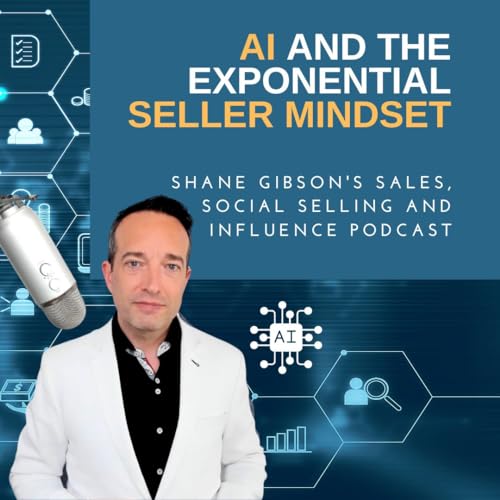
  • AI for Sales Podcast – the Exponential Selling Mindset
    2024/04/22
    AI for Sales – The Power of an Exponential Mindset in Sales Organizations Most of my sales keynotes have been focused on AI over the past six months. There’s a huge interest in investing in AI sales tools but many organizations are missing the exponential sales mindset and organizational DNA required to truly benefit. A quick disclaimer: Parts of this sales podcast summary were written with the assistance of AI and then edited by me. In this sales podcast episode hosted by Shane Gibson (that’s me), w delve into the importance of this mindset in conjunction with AI technology. The exponential mindset itself is just as crucial as the technology when it comes to driving sales success. Linear Thinking vs Exponential Thinking in Sales Organizations There’s a big contrast between linear thinking and exponential thinking within sales organizations. While linear thinking revolves around improving customer satisfaction, exponential thinking is all about building customer communities and leveraging network effects. It also is often focused on growing in one direction incrementally versus expanding in multiple directions and channels at once. In the past this was of course a recipe for fragmented attention and sales disaster – today with AI sales tools this is possible. Here’s the Youtube version of this AI for Sales Podcast: Here are some of the key differences between linear and exponential sales strategies: Market Approach: Linear companies market where the customer already is, while exponential companies leverage omni-channel expansion to seek out new and untapped opportunities.System Management: Linear companies dedicate their efforts to building and managing systems, while exponential companies prioritize automation and scalability of systems.Partnerships: Linear companies tend to form traditional industry partnerships, while exponential companies actively seek out uncommon alliances outside their usual channels.Market Outlook: Linear companies anticipate market trends, whereas exponential companies seek to disrupt and create market change.Sales Departments: Linear companies typically operate with siloed sales departments, while exponential companies foster a sales culture that permeates the entire organization.Training: Linear companies focus on training individuals, while exponential companies prioritize collective team learning and sharing of best practices.Evolution: Linear companies evolve incrementally, while exponential companies continually reinvent and disrupt themselves.Decision-Making: Linear companies possess hierarchical decision-making processes, whereas exponential companies empower distributed decision-making across the organization. The Mindset and Behaviors of Exponential Sellers: Differentiated Buying Experience: Exponential sellers focus on creating a differentiated buying experience, going beyond simply providing a better one.Value per Customer Interaction: Exponential sellers prioritize adding more value per customer interaction, rather than simply making more calls.Selling to the Entire Buying Network: Exponential sellers understand the importance of selling to the entire buying network, not just the decision maker.Proactivity and Leadership: Exponential sellers take a proactive stance and lead the sales process, rather than simply reacting to customer inquiries.Discovery Conversations: Exponential sellers prioritize powerful discovery conversations that uncover broader solutions, rather than solely focusing on closing deals.Continuous Networking and AI: Exponential sellers continuously network and leverage AI technology to identify new opportunities and expand their pipeline.Value-driven Follow-ups: Exponential sellers focus on adding value through follow-ups, going beyond persistent follow-ups that may lack substance. Amplifying Results with an Exponential Mindset and AI-Powered Sales Tools Combining an exponential mindset with AI-powered tools has the potential to produce extraordinary results for salespeople and sales organizations. Core sales strategies we need to employ and then embed AI into include: Focus on the Top 20%: Concentrating efforts on the top 20% of accounts that drive 80% of results maximizes efficiency and effectiveness. Selling to the Entire Buying Network: By engaging with the entire buying network, salespeople gain valuable insights and influence that can significantly impact sales outcomes. Mastering Discovery Conversations: Developing the ability to conduct powerful discovery conversations uncovers broader solutions and opens up new avenues for growth. Continuous Networking and AI: Embracing a proactive approach to networking and leveraging AI technology allows salespeople to continuously expand their pipeline and discover new opportunities. Automation and Augmentation: Automating mundane tasks and augmenting them with AI capabilities frees up valuable selling time, enabling salespeople to focus on high-value activities. The key message here is ...
    続きを読む 一部表示
    1分未満