『SCOTUS Takes Up Mandatory Immigration Detention, the Forced-Labor Tariffs Go to Trade Court & Tennessee's Failed Execution』のカバーアート

SCOTUS Takes Up Mandatory Immigration Detention, the Forced-Labor Tariffs Go to Trade Court & Tennessee's Failed Execution

SCOTUS Takes Up Mandatory Immigration Detention, the Forced-Labor Tariffs Go to Trade Court & Tennessee's Failed Execution

無料で聴く

ポッドキャストの詳細を見る

【Amazonプライム会員限定】今ならプレミアムプランが4か月 月額99円。

10月19日まで。※適用条件あり
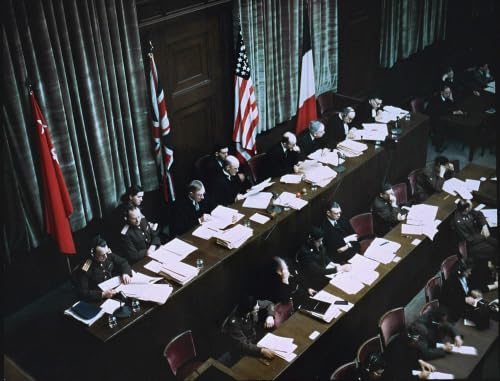
This Day in Legal History: The Nuremberg VerdictsOn October 1, 1946, the International Military Tribunal at Nuremberg delivered its sentences on the surviving leaders of Nazi Germany. Of the 22 defendants, 19 were convicted and three were acquitted. Twelve were sentenced to death, three to life imprisonment, and four to prison terms of 10 to 20 years. Hermann Göring killed himself the night before his scheduled execution. Martin Bormann, tried in absentia, was never found to face his sentence. The other death sentences were carried out on October 16.The legal achievement of Nuremberg was the decision to hold a trial at all. The Allies could have simply executed the Nazi leadership; some officials argued for exactly that. Instead, at the urging of figures like U.S. Justice Robert Jackson, who left the Supreme Court to serve as chief prosecutor, they built a court, allowed defense counsel, admitted evidence, and let the outcome turn on proof. The acquittals mattered as much as the convictions: they showed the tribunal was deciding cases, not ratifying a foregone conclusion. Nuremberg also established principles that still anchor international law, most importantly that “following orders” is not a defense to crimes against humanity, and that individuals, not just states, can be held criminally responsible for aggression and atrocities.The significance of October 1, 1946 is the idea in today’s opening quote, from Jackson’s opening statement: that even when dealing with the worst crimes imaginable, the state submits to legal process rather than acting on raw power. That idea, that the government must work through courts and procedure, especially when it is detaining, removing, or putting people to death, runs through every story we cover today.The Supreme Court has agreed to decide whether the administration can detain millions of immigrants for the entire length of their deportation proceedings without a bond hearing. In July 2025, the Department of Homeland Security issued guidance saying that immigrants who entered the country illegally are subject to mandatory detention with no bond hearing while their cases proceed, a process that can take months or years. The legal fight is about which section of the immigration statute applies. The law has one provision that requires detention for “applicants for admission,” historically understood to mean people arriving at the border. A separate provision governs people already living in the country and generally lets them ask an immigration judge for release on bond. The administration’s new position is that anyone who entered without inspection remains an “applicant for admission” no matter how long they’ve lived here, which would move them into the mandatory-detention category. The case the Court took involves Ricardo Aparecido Barbosa da Cunha, a Brazilian national who authorities say entered illegally two decades ago and applied for asylum in 2016. The Second Circuit ruled against the government. And according to the reporting, appeals judges in nine of the eleven federal circuits to consider the question have concluded that detention without a bond hearing violates federal law. That makes the administration’s position an outlier among the lower courts, which is part of why the Supreme Court stepped in. The stakes are very large. A bond hearing doesn’t guarantee release; it just means a judge decides whether a person is a flight risk or a danger. If the Court sides with the administration, millions of long-term residents could be held without that individualized review for the length of their cases. The Court will hear it in the term that opens Monday.US Supreme Court to hear clash over Trump’s immigration detention policy | Reuters · Yahoo News · National Immigration ForumThe U.S. Court of International Trade heard arguments in a challenge to the President’s “forced labor” tariffs, and opponents say the case is a test of whether he can rebuild the tariff power the Supreme Court took away in February. Imposed in late July, the tariffs range from 10% to 12.5% on goods from 60 trading partners, including the European Union and China, and they cover more than 99% of goods imported into the United States. The stated justification is that those countries have failed to stop imports made with forced labor. Four small businesses and 25 Democratic-led states sued, and their three cases were consolidated before a three-judge panel with appointees of Presidents Trump, Obama, and Biden. Their argument is that the trade statute the administration relied on requires country-specific findings of unfair trade practices, reached through a real investigation. In their telling, “forced labor” is a pretext: a label stretched over nearly all imports from 60 countries to recreate the broad, global tariff authority the Supreme Court rejected when it struck down the emergency-powers tariffs. The legal question is how closely courts will examine...
adbl_web_anon_alc_button_suppression_t1
まだレビューはありません