『Read Me A Nightmare』のカバーアート

Read Me A Nightmare

Read Me A Nightmare

著者: Angelique Fawns
無料で聴く

概要

Season 2 of "Read Me A Nightmare" shifts its focus to conversations with writers, editors, and creators working in and around dark fiction — about craft, career, and the realities of making stories in the world.Visit www.fawns.ca to learn more. Please --if you enjoy the episode, leave a review!

angeliquemfawns.substack.comAngelique Fawns
アート 文学史・文学批評
エピソード
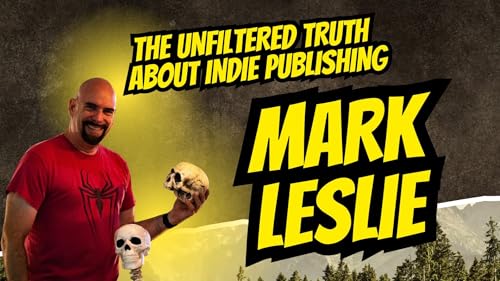
  • The Unfiltered Truth About Indie Publishing with Mark Leslie
    2026/03/08
    Mark is a writer, an editor, a professional speaker, and a book nerd with a passion for craft beer.He’s also an ambassador for the Canadian publishing industry and my mentor.Prefer video? Watch this interview on YOUTUBE. It’s worth your while… I include a clip where I failed to hit record on our 1st attempt at this interview. My expression and shock might be priceless. I met Mark Leslie several years ago when we took the same short story webinar. When he found out about my short story blog, he invited me onto his podcast.Here is my first chat ever with Mr. Leslie:Since then, we’ve become fast friends, and I bump into him all over the continent at writing conferences.All sorts of goodies in this podcast…You can learn more about Mark over at markleslie.caAngelique: You’ve said failure is just a data point and writers shouldn’t be afraid of it. What do you mean by that in publishing?Mark: I’ve been in this industry for a long time, and I’ve failed thousands of times. I’ve screwed up, done the wrong thing, and made mistakes constantly. But if it weren’t for those mistakes, I wouldn’t have learned. Sometimes, if something works accidentally, you think you knew what you were doing, and that can actually teach you the wrong lesson. Failure gives you information. It shows you what didn’t work, and that helps you adjust.Angelique: A lot of writers look for the magic formula. Is there one?Mark: No. There’s no magic bullet. There are good strategies, yes, but every single book is different, even for the same author. Every platform is different. Every reader is different. You can’t just copy what someone else did and expect the same result. You have to learn and adjust it according to what you’re writing, who you’re serving, and how you’re releasing it. A hundred authors can do all the so-called right things, and only a tiny percentage may still hit that perfect timing where everything aligns.Angelique: So writers shouldn’t just chase whatever seems to be working for everyone else?Mark: Exactly. Too many indie authors act like a bunch of ten-year-olds playing soccer, all chasing the ball around. They’re following the latest trend without thinking strategically. You have to think more like Wayne Gretzky, skating to where the puck is going to be. You have to figure out where your puck is, and your puck is going to be different from someone else’s. Most of the time it still won’t work, but every once in a while you’ll get a hit. That’s part of the game.Angelique: Is publishing really that unstable, even when something works?Mark: Absolutely. You can have a good year and still be broke the next year. There’s no guarantee in writing. You have to be able to pivot. I put out maybe three books a year on average, and they don’t all make money. Some books are successful, some do okay, and some are complete duds. So I’m playing the odds. I’m not waiting ten years and hoping one book becomes a blockbuster. I’m producing the books that are meaningful to me and releasing them with passion.Angelique: How important is talent compared to persistence?Mark: Talent matters, but it’s only one part of the equation. Persistence is huge. The writers who don’t quit are the ones who win. You’re going to get bad reviews, rejection, disappointing sales, and things that make you want to stop. But if you quit, that’s the end. You have to keep going.Angelique: How should writers handle negative reviews and readers who don’t connect with the work?Mark: You have to remember that not every reader is your reader. My mother never liked my writing because she was a romance reader and I didn’t write romance. That didn’t mean my books were bad. It just meant she wasn’t the ideal reader for me. The same is true with reviews. Some people are simply not the right audience. That’s okay. What matters is finding the people who do love what you write.Angelique: Why does having a body of work matter so much in publishing?Mark: Because one book rarely gives you enough leverage. When you spend money marketing one book, the math is tough. Maybe people click, maybe a few buy, but the return can be small. When you have more books, even if they’re not all in the same series, a reader who likes one can go looking for the others. That’s where the value of a backlist comes in. If someone discovers you and enjoys your writing, they may go buy more of your books. That’s one of the best reasons to keep building a body of work.Angelique: Does the backlist only matter if you write in series?Mark: Series make it easier, but no, it’s not only about series. If a reader connects with your voice or your storytelling, they may want more from you regardless. I’ve done that myself as a reader. I’ve read one book by an author and immediately gone out and bought everything else they wrote. That’s the power of a body of work.Angelique: For writers with anthologies or story collections, should ...
    続きを読む 一部表示
    32 分
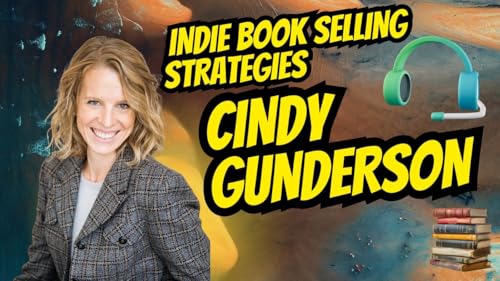
  • Indie Book Selling Strategies with Cindy Gunderson
    2026/03/01
    Okay, my fellow writers and readers,You are in for a treat. This remarkable woman is one of a kind. She’s authentic, friendly, and gave me so much actionable advice.And inspiration.And hope.Cindy has managed to create a thriving business without losing her sense of humor or fun. Her latest a-ah moment? She’s giving away her audiobooks for free on YouTube.FOR FREE. (Check it out)Though it’s completely counterintuitive, this is driving more sales for her. (Listen to learn more.) If you like YouTube, here is our interview in video form.And can you believe she initially grew her business to gangbuster numbers by using free social media marketing?Yup.I was lucky to meet Cindy at Superstars last year. (If you wonder about the benefits of cons, the connections and people you meet are worth every penny.)Here’s her official bio:Cindy Gunderson is a voice actress, content creator, and award-winning author. Since she has commitment issues, she writes sci-fi and fantasy, plus contemporary romance and women’s fiction under the pen name Cynthia Gunderson.After 25+ years of performing, voiceover and commercial work, instructing piano and vocal performance, and directing children’s theater, she turned to audiobook narration and production. She’s narrated, mastered, and produced over fifty-five audiobooks since 2020 in her home studio and has created a massive audio listener following/community on TikTok, YouTube, and other various audiobook platforms.Cindy’s first novel, Tier 1, was awarded First Place in Science Fiction at the 2021 CIPPA EVVY Awards, and her women’s fiction novel, Yes, And, was honored with the Indie Author Award’s first place prize for best adult novel in the state of Colorado, 2023.Let’s get real here. All we have to do is look at her titles and cover art to be drawn in.How clever is that title? You can listen to it here.Or this one:(Listen to it here)Okay, I could do this all day. So go ahead and click play on the podcast (link at top) or our YouTube interview. Here are some highlights below.If you want to learn more about Cindy,Her website is here: https://cindygundersonaudio.comMost of my content is free, but there is another tier for those who want to take their short story writing to the next level. AF: How many books did it take until you started to see some traction in your career?CG: It took me until I had 12 books out before I was making some money, and over 40 before I hit six figures. AF: Let’s talk about the day-to-day. Writing full-time is hard. What’s your routine—CG: I’m still figuring it out. Life variables change—kids’ schedules, my husband’s schedule—so what works one year doesn’t work the next. I’ve leaned into curiosity. My favorite phrase is, “I don’t have to do it forever.” I’ll try a routine, and if I hate it, I change it.AF: So what are your productivity goals?CG: What got me to six figures isn’t what will get me to the next level. I maxed out what I could do alone, so now I have two assistants, and we’re moving toward expanding the business. AF: What are they doing for you?CG: One is international—she helps with audio editing and content creation. The other does formatting, promo submissions, admin, Shopify tasks, and she’ll be helping more with book maintenance and my YouTube channel. Delegation is a whole skill set.AF: I heard you say it took five years to get to six figures—was that right?CG: Almost four years.AF: And is that gross or net?CG: Gross. Net depends on ad spend. The first year I hit six figures, I barely spent on ads because social media drove sales. That changed in the last 6–8 months—TikTok slowed down, platforms shifted—so I leaned harder into paid ads.AF: I love your social media posts where you pretend to be thinking like one of your main characters. Do those actually drive sales?CG: Yep. They used to drive more on TikTok than they do now, but they still work. My strategy shifted: social media used to be my sales strategy; now it’s connection, reader retention, superfans. Paid ads are more of a straight sales engine. And honestly, all the pieces work together—social, ads, Amazon, Meta, YouTube—you don’t always know which one “caused” the sale. Once I stopped trying to control it perfectly, it worked better.AF: When you say paid ads, what do you mean?CG: Mostly Facebook and Amazon right now. I also do promos by discounting—Chirp deals, Barnes & Noble promos. BookBub deals were okay for me, but expensive and stressful, so I don’t submit much anymore. Audio promos have been huge for me.AF: Where do most of your sales come from? Are you in KU?CG: I was wide for ebooks and doing Draft2Digital, but when social sales slowed, I talked to others and tried going back into KU. It was a huge boost. My audio is still wide, though. AF: Which audio platforms?CG: Audible, Chirp, Nook, Kobo, audiobooks.com—everywhere. And also free on YouTube.AF: Doesn’t free hurt paid?CG: Not in my ...
    続きを読む 一部表示
    31 分
  • From Expertise to Authority
    2026/02/15
    Learn more about Matty at The Indy AuthorPrefer to watch? I really enjoyed this conversation with Matty and though her new ventures focuses on helping entrepreneurs and those approaching retirement establish the next phase of their career, her advice works perfectly for authors hoping to grow their platforms.Like me! When I find an author who has managed to make this a full-time gig, I am all ears!!!If you’d rather focus on short stories— which is the main thrust of this platform, and where I am BUILDING authority — check out this podcast with my mentor, Mark Leslie Lefebvre and Matty Dalrymple where we talk about short story strategies.Now back to building authority from expertise!Here are some of the highlights from my chat with Matty:Angelique: Your project is called From Expertise to Authority. What’s the difference between those two?Matty: Expertise is what you know. Authority is when other people recognize you as someone to listen to on that topic. A lot of people—especially later-career professionals—have deep expertise, but they haven’t built the visibility, relationships, and platforms that turn that into authority. Authority isn’t just knowledge. It’s knowledge plus reach plus trust.Angelique: You work with a lot of experienced professionals, not just new writers. What are they usually trying to figure out?Matty: Many of them already have a book out. They’re retired or transitioning careers and want to stay engaged, share what they know, and be seen as leaders in a new or adjacent field. Their question isn’t “How do I publish?” It’s “How do I become known as a go-to voice in this space?” That’s the shift from simply having written something to building authority around a topic.Angelique: You emphasize starting simply. Why is that so important?Matty: Because it’s much easier to add than to take away. If you launch with a complicated system—paid tools, elaborate production, lots of deliverables—you can trap yourself in work that isn’t sustainable. I learned this with transcripts for my podcast. I started offering heavily edited transcripts, and when I had to stop for time reasons, it felt like I was taking something away from my audience. If I’d never offered them, no one would have missed them. Start lean. Build only what proves useful.Angelique: You talk about the three steps to building authority. Can you walk us through them?Matty: Sure.* Showing Expertise– This is where you share what you know. Written content is powerful here: newsletters, articles, posts that demonstrate your knowledge. You’re showing people your thinking.* Growing Connections and Trust – Now people get to know you. Your voice. Your perspective. This often happens through podcasts, interviews, and conversations where your human presence comes through.* Being an Authority – This is where people pay for access to your expertise. Courses, consulting, editorial services, coaching, client work. You’re not just sharing knowledge—you’re applying mastery to help others directly.Angelique: For someone with a strong niche—like mine in paid, no-fee short fiction markets—how do they grow without going broader?Matty: You don’t necessarily have to widen the niche. Instead, deepen your relationship layers. You’re already doing expertise-based work through written guidance. You’re building personality-based connections through conversations like this. The next step is exploring authority-based offerings—paid newsletters, consulting, editorial feedback, submission strategy help. That lets you be deeply meaningful to a specific audience rather than vaguely useful to a huge one.Angelique: You’re big on repurposing content. How does that fit into building authority?Matty: It’s essential. Every piece of content should do multiple jobs. An article can also be a podcast episode if you read it aloud. That article might become a chapter in a future book. An interview becomes both relationship-building and source material for your ideas. When you think holistically, you’re not creating ten separate things—you’re creating one idea that moves through multiple formats. That’s how you grow authority without burning out.Angelique: Let’s talk platforms. Why do you like newsletter ecosystems like Substack for this stage?Matty: Because you own the relationship. You have the email addresses. If a social platform changes or disappears, you can take your audience with you. It’s also low-cost, which matters when you’re in the building phase and not expecting immediate profit. It lets you experiment without heavy financial pressure.Angelique: How do in-person events factor into authority building?Matty: They’re powerful for two reasons. First, you observe your audience—what resonates, what doesn’t, what problems people actually talk about. Second, you build real relationships. You meet peers, speakers, organizers. Those connections lead to invitations, collaborations...
    続きを読む 一部表示
    31 分
まだレビューはありません