エピソード

  • Fixing the Employee Experience (with Tiffani Bova)
    2026/09/22
    While the podcast team is taking a Radical Sabbatical, Kim is interviewing authors of the books that have had a big impact on her in the past two years. Today, employees working in organizations both large and small are faced with incredible pressure to integrate AI into their workflows both to save costs and to do more. But many of those same employees express fears, “am I just training robots to put me out of a job?!” While it can be tempting for leaders in the C-suites to use AI to “finally get the upper hand on these whiny/needy/entitled employees!”, they risk damaging their core mission, specifically providing value to their customers. In fairness, those same leaders in the C-suite are rightly under pressure to integrate these new tools or risk getting wiped out by more nimble competition. So, what’s the best way to go about this? In this episode, Kim Scott speaks with Tiffani Bova about her latest book The Experience Mindset. In this conversation, they explore the critical relationship between employee experience and customer experience, emphasizing the importance of self-reflection, effective feedback mechanisms, and the necessity of training employees. The discussion also highlights the disconnect between executives and employees regarding training and feedback, illustrated through real-world examples like the 'Undercover Boss' show. Ultimately, the conversation underscores the need for organizations to prioritize employee engagement and actionable feedback to foster a positive workplace culture and drive business success. They discuss specifics such as the importance of addressing workplace irritations, the need for effective management training, and the significance of streamlining processes to enhance productivity. Tiffani especially stresses the critical role of office culture in fostering open communication and the necessity of training managers to improve employee satisfaction. The discussion also highlights the impact of automation and technology in optimizing processes and the importance of aligning incentives to encourage growth and innovation. They explore the intersection of technology and human experience, particularly focusing on the role of AI in the workplace. They discuss the importance of understanding the human element in technology adoption, the balance between tech and human interaction, and the critical role of company culture in driving business success. The conversation highlights real-world examples of AI implementation, the challenges of technology overload, and the necessity of fostering a cohesive culture that aligns with organizational values. Guest Background: As both a practitioner and academic Tiffani Bova offers a unique perspective and has helped lead the tech industry through several evolutions over her nearly 30-year career as Salesforce’s former Growth and Innovation Evangelist, and previously as a Research Fellow at Gartner and a sales, marketing and customer service executive for start-ups and Fortune 500 companies. She is the author of two Wall Street Journal bestsellers: GrowthIQ and The Experience Mindset. At The Futurum Group, she runs the research and strategy organization, while working closely with the entire leadership team to develop and scale its data and intelligence platform and insights for its clients. She also leads the team’s efforts within the technology and telecom channels, demonstrating the power and performance of connected go-to-market strategies and alliances. While at Gartner, her forward-looking insights and guidance helped some of the largest technology companies in the world including Microsoft, Cisco, Salesforce, Hewlett-Packard, IBM, Oracle, SAP, AT&T, Dell, Amazon-AWS, expand their market share and grow their revenues. She was a trusted advisor to multiple senior executives who were responsible for shifting from on-premise to as-a-service business models resulting in new billion-dollar divisions. In the late 90’s and early 2000s she was a pioneer of cloud computing, she previously led direct and indirect sales, marketing and customer service for two of the largest web-based start-ups in the US and spearheaded a newly formed division of a Fortune 500 company to $300 million in revenue over two and a half years. Tiffani has been featured in Harvard Business Review, Fortune, Fast Company, Bloomberg, MSNBC-TV, Yahoo Finance, INC and Forbes. She is also the host of the podcast What’s Next! with Tiffani Bova. More info here: https://www.tiffanibova.com/ [links for YouTube description] (Bio) https://www.tiffanibova.com/biography/ (book: The Experience Mindset) https://www.tiffanibova.com/the-experience-mindset/ (how to contact) https://www.tiffanibova.com CHAPTERS (00:44) Introduction to the Experience Mindset (02:19) Self-Reflection and Critical Feedback (04:56) The Importance of Employee Experience (05:39) Understanding Employee Feedback (07:23) The Undercover Boss Example (11:25) The Value of ...
    続きを読む 一部表示
    1 時間
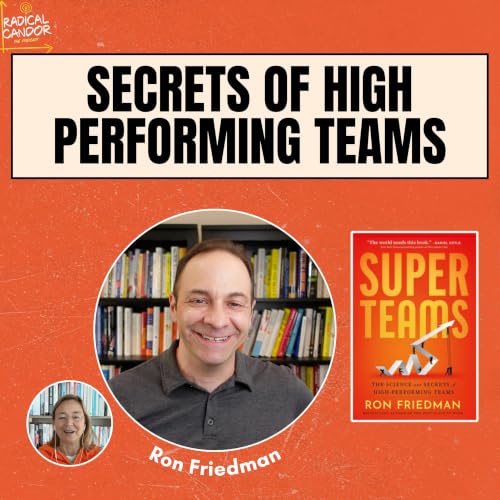
  • The Science Behind High-Performing Teams (with Ron Friedman)
    2026/09/16
    While the podcast team is taking a Radical Sabbatical, Kim is interviewing authors whose books have had a big impact on her over the past two years. In this episode, Kim Scott speaks with Ron Friedman, PhD. Ron has written extensively about the sciences of building high-performing teams. Ron’s latest book is Superteams: The Science and Secrets of High-Performing Teams. They discuss the importance of the creative process, the role of restoration in productivity, and the key strengths that distinguish super teams from average teams. The conversation delves into effective meeting strategies, communication norms, and the significance of laughter in fostering team cohesion. Ultimately, they emphasize the need for customized approaches to team dynamics and the value of building supportive relationships within teams. They also explore the dynamics of effective teamwork, the importance of maintaining focus in a distracted world, and the role of hobbies in enhancing productivity. They discuss the attributes of great teammates, the significance of productive disagreement, and the necessity of effective feedback for continuous improvement. The dialogue emphasizes that super teams thrive on collaboration, shared goals, and a culture of open communication. Guest Background: Ron Friedman, PhD, is an award-winning psychologist who helps leaders build high-performing teams. He is the bestselling author of The Best Place to Work and Decoding Greatness, and the founder of Superteams, Inc., where he delivers keynotes, workshops, and executive advisory to senior leaders around the world. An expert on human motivation, Friedman has served on the faculties of the University of Rochester, Nazareth College, and Hobart and William Smith Colleges. He contributes regularly to Harvard Business Review, and his work has been featured in The New York Times, Financial Times, Bloomberg, NPR, CBS, FOX, NBC, Fast Company, The Washington Post, Forbes, and Inc. To learn more about his work, visit SuperteamsInc.com. CHAPTERS (00:41) Introduction to Super Teams (01:45) The Creative Process and Incubation (04:12) Restoration and Productivity (06:27) Research Behind Super Teams (07:50) Key Strengths of Super Teams (09:00) Meetings: The Double-Edged Sword (11:24) Effective Meeting Strategies (12:51) Customizing Team Dynamics (15:06) Communication Norms and Email Management (18:05) The Role of Laughter in Teams (20:57) Building Relationships Through Support (23:00) Navigating Humor and Inclusivity (26:52) Time Affluence and Productivity Strategies (30:08) Staying Focused in a Distracted World (32:51) The Power of Hobbies and Side Hustles (36:10) Attributes of Great Teammates (39:10) Building Effective Teams (41:40) The Importance of Productive Disagreement (45:02) Mastering Feedback for Improvement Connect with the Radical Candor team: ⁠⁠⁠⁠⁠⁠Website⁠⁠⁠⁠⁠⁠ ⁠⁠⁠⁠⁠⁠LinkedIn⁠⁠⁠⁠⁠⁠ ⁠⁠⁠⁠⁠⁠YouTube⁠⁠⁠ Keywords Super Teams, productivity, creative process, meetings, team dynamics, communication, laughter, leadership, time management, workplace culture focus, hobbies, teamwork, feedback, productivity, super teams, attributes, disagreement, communication, leadership Learn more about your ad choices. Visit megaphone.fm/adchoices
    続きを読む 一部表示
    54 分
  • Ways to Manage - Back by Brain Science (with Caroline Webb)
    2026/09/09
    While the podcast team is taking a Radical Sabbatical, Kim is interviewing authors whose books have had a big impact on her over the past two years. In this episode, Kim Scott speaks with Caroline Webb about her latest book, Leadership Intelligence. They explore the principles of effective leadership: the importance of widening perspectives; the role of cognitive load in decision-making; and the significance of intrinsic motivation through competence and connection. The conversation also delves into the dynamics of disagreement, the necessity of feedback, and practical strategies for fostering a collaborative team environment. They review effective feedback techniques and the significance of public praise. Caroline also emphasizes the role of gratitude and giving praise in building strong workplace relationships, the importance of understanding stress and resilience in leadership, and how leaders can foster team resilience through structured conversations and practices. The discussion culminates in the introduction of the five C's of team resilience, emphasizing the need for communication, clarity, calm, connection, and capacity in creating a supportive work environment. Guest Background: Caroline Webb is a leadership coach, economist, and speaker known for being one of the world's leading experts in using insights from behavioral science to improve professional life. She is the author of Leadership Intelligence and of How To Have A Good Day, a global bestseller published in 20 editions and over 60 countries. She is also a Senior Advisor to McKinsey, where she was previously a Partner. She has been rated one of the top 50 leadership and management thinkers by Inc. magazine, and one of Thinkers50's top 50 executive coaches in the world. CHAPTERS (00:38) Introduction to Leadership Intelligence (03:24) Deliberate Wisdom: Widening Perspectives (06:29) Causal Maps and Driver Trees (09:27) Navigating Disagreements in Leadership (12:30) The Importance of Turn-Taking in Discussions (15:22) Lightening Cognitive Load for Better Leadership (19:19) Intrinsic Inspiration: Competence and Connection (22:21) The Power of Feedback in Engagement (30:29) Effective Feedback and Praise Techniques (32:57) The Importance of Public Praise (37:01) Cultivating Gratitude and Appreciation (37:32) Understanding Stress and Resilience (44:45) Building Team Resilience with the Five C's Connect with the Radical Candor team: ⁠⁠⁠⁠⁠⁠Website⁠⁠⁠⁠⁠⁠ ⁠⁠⁠⁠⁠⁠LinkedIn⁠⁠⁠⁠⁠⁠ ⁠⁠⁠⁠⁠⁠YouTube⁠⁠⁠ Learn more about your ad choices. Visit megaphone.fm/adchoices
    続きを読む 一部表示
    53 分
  • Get Situated for Success (with Angela Duckworth)
    2026/09/01
    While the podcast team is taking a Radical Sabbatical, Kim is interviewing authors of the books that have had a big impact on her in the past two years. In this episode, Kim Scott speaks with Angela Duckworth. Her first book Grit: The Power of Passion and Perseverance, is a #1 New York Times bestseller. Her second book is Situated: Find the People and Places That Bring Out Your Best. In this conversation, Kim interviews Angela about her new book, 'Situated.' They explore a deceptively simple three-box model that explains all of human behavior. Angela emphasizes the power of environment in shaping our thoughts and leading us to–or away from–the results we want. She and Kim discuss the limitations of willpower. Angela describes the two key ingredients of a good situation: challenge and support. Kim and Angela explore why it is important to seek managers and peers who both challenge and support us. They discuss the importance of feedback and why Ruinous Empathy is so damaging to both personal and professional growth. If you’re looking for one thing you can control to get better situated, Angela shares some practical advice on curating your personal space to foster positive habits and growth. Guest Background: Prof. Angela Duckworth, PhD, is the Rosa Lee and Egbert Chang Professor at the University of Pennsylvania and faculty co-director of the Penn-Wharton Behavior Change for Good Initiative. Prior to her career in research, Angela founded an academic enrichment program for low-income children that was profiled as a Harvard Kennedy School case study and today serves hundreds of students each year. She has also been a McKinsey management consultant and a math and science teacher at public schools in New York City, San Francisco, and Philadelphia. Angela co-founded Character Lab, a nonprofit dedicated to advancing scientific insights that help children thrive. Angela completed her undergraduate degree in Advanced Studies Neurobiology at Harvard, graduating magna cum laude. With the support of a Marshall Scholarship, she completed an MSc with Distinction in Neuroscience from Oxford University. She completed her PhD in Psychology as a National Science Foundation Graduate Fellow at the University of Pennsylvania. Angela's TED talk is among the most viewed of all time. CHAPTERS (00:00) Introduction to Radical Sabbatical and Angela Duckworth's New Book (03:23) The Snorkeling Incident: A Metaphor for Situational Awareness (05:58) Finding Your Best Situations: The Power of Environment (08:31) The Three Boxes Model: Understanding Behavior and Thoughts (11:13) The Role of Situations in Shaping Our Thoughts (14:16) Changing Your Situation vs. Changing Your Thoughts (17:10) The Limitations of Willpower and Self-Control (20:13) The Quest for Control: Understanding Human Nature (23:15) Creating Supportive and Challenging Situations (27:11) Understanding Radical Candor (32:56) Navigating Ruinous Empathy (33:19) The Dilemma of Short-Term Comfort vs Long-Term Growth (34:30) Feeding the Good Wolf: A Metaphor for Growth (36:40) Economic Disparities and Their Impact (39:23) Agency and the Power of Choice (43:09) Curating Your Personal Space for Better Outcomes Connect with the Radical Candor team: ⁠⁠⁠⁠⁠⁠Website⁠⁠⁠⁠⁠⁠ ⁠⁠⁠⁠⁠⁠LinkedIn⁠⁠⁠⁠⁠⁠ ⁠⁠⁠⁠⁠⁠YouTube⁠⁠⁠ Learn more about your ad choices. Visit megaphone.fm/adchoices
    続きを読む 一部表示
    52 分
  • Revolutionizing Meetings: From Sabotage to Strategy (with Rebecca Hinds)
    2026/08/18
    While the podcast team is taking a Radical Sabbatical, Kim is interviewing authors of the books that have had a big impact on her in the past two years. In this episode, Kim speaks with Rebecca Hinds, the author of Your Best Meeting Ever: 7 Principles for Designing Meetings That Get Things Done. They explore the evolution of meetings from wartime sabotage tools to the challenges and strategies for improving meetings in today's technology-driven workplace. They discuss the increasing time spent in meetings, especially post-pandemic, and present seven solutions to eliminate unnecessary meetings and to redesign the necessary ones. They discuss the impact of distractions, the importance of effective meeting structures, and the need for a culture that encourages open disagreement. The conversation also highlights the significance of asynchronous communication, preparation, and technology's role in enhancing collaboration. Ultimately, they emphasize the need for meetings to be engaging and aligned with natural rhythms to foster productivity and creativity. Guest Background: Rebecca Hinds, PhD, is the author of Your Best Meeting Ever: 7 Principles for Designing Meetings That Get Things Done. She is a leading expert on organizational behavior and the future of work. For more than 15 years, she has helped organizations rethink how work gets done, challenging outdated management playbooks and offering leaders a more ambitious and more human vision for the future. Rebecca has founded and led two first-of-their-kind research institutes dedicated to reinventing work. In 2022, she launched the Work Innovation Lab at Asana, building it into an influential source of practical workplace research. In 2025, she founded the Work AI Institute at Glean to help organizations navigate the next transformation of work. CHAPTERS (00:00) The Origins of Meetings as Sabotage Tools (02:45) The Evolution of Meeting Culture (05:14) Radical Meeting Solutions (08:20) Measuring Meeting Effectiveness (11:05) The Minimalism Approach to Meetings (14:06) Optimizing Meeting Flow and Communication (16:56) The Role of Tools in Meeting Efficiency (23:40) Managing Distractions in a Tech-Heavy World (25:58) The Importance of Effective Meetings (28:58) Creating a Culture of Open Disagreement (29:49) Building Strong Asynchronous Communication (32:01) The Role of Preparation in Meetings (36:51) Designing Engaging Meetings (38:47) Timing and Rhythm in Meetings (41:31) Leveraging Technology for Better Meetings Connect with the Radical Candor team: ⁠⁠⁠⁠⁠⁠Website⁠⁠⁠⁠⁠⁠ ⁠⁠⁠⁠⁠⁠LinkedIn⁠⁠⁠⁠⁠⁠ ⁠⁠⁠⁠⁠⁠YouTube⁠⁠⁠ Keywords meetings, productivity, communication, meeting culture, meeting effectiveness, meeting solutions, meeting minimalism, meeting flow, tools for meetings, workplace efficiency distractions, technology, meetings, asynchronous communication, open disagreement, engagement, timing, productivity, collaboration, AI Learn more about your ad choices. Visit megaphone.fm/adchoices
    続きを読む 一部表示
    49 分
  • Why some leaders are incorruptible, many get corrupted by power/money (with Rob Lalka)
    2026/08/04
    While the podcast team is taking a Radical Sabbatical, Kim is interviewing authors of the books that have had a big impact on her in the past two years. In this episode, Kim speaks with Rob Lalka, the author of The Venture Alchemists - How Big Tech Turned Profits Into Power. In this episode of Radical Sabbatical, Kim sits down with Rob Lalka, author of Venture Alchemist, to study what the founders of Facebook, Google, and the “PayPal Mafia” were saying and writing before anyone was paying attention to them. They explore what separates the leaders who stayed grounded from the ones who didn't. They ask a hard question: does it matter if a leader got corrupted by too much money and power or if they started out bad to the bone? Every leader (indeed, every one of us) has good and bad inside. The one that wins is usually the one that gets fed. The question is whether the venture capital model feeds the good — or does it feed the bad, setting founders up to be corrupted by their own success? Kim and Rob explore the contrasting origins of major tech companies like Facebook and Google. They discuss the implications of Mark Zuckerberg's early actions (for example, an IM while in college with a friend who asked him how he got access to people’s personal information and he replied “they trusted me, the dumb f–ks;”). What does it mean that Google’s founders started out thinking Google would have to be a non-profit so that advertising wouldn’t bias information but wound up selling trillions of ads? The conversation also delves into the impact of the PayPal Mafia and the controversial book by Thiel and Sachs, The Diversity Myth. Rob discusses the complexities of free speech and the implications of outlier behavior. He emphasizes the importance of moral leadership in corporate culture and critiques the philosophical influences of figures like Ayn Rand and Milton Friedman on business ethics. Rob expresses hope for the future, particularly through the potential of his students to create positive change in society. Books & Articles mention by Rob: George Packer - article in The Atlantic - The Venture-Capital Populist https://www.theatlantic.com/magazine/2026/06/david-sacks-crypto-ai-venture-capital/686941/ Max Chafkin - The Contrarian: Peter Thiel and the Rise of the Silicon Valley Oligarchs https://elmstreetbooks.com/book/9781984878557 Jimi Soni - The Founders: The Story of Paypal and the Entrepreneurs Who Shaped Silicon Valley https://www.amazon.com/dp/1501197266?lv=shuf&channelId=500&plpRedirect=mhFallback Guest Background: Rob Lalka is the author of The Venture Alchemists - How Big Tech Turned Profits Into Power. He is also the Albert R. Lepage Professor in Business and executive director of the Albert Lepage Center for Entrepreneurship and Innovation at Tulane University. He is on the board of directors of Blue Cross and Blue Shield of Louisiana, Public Democracy, Inc., and Venture For America in New Orleans. Previously, he served on the U.S. Secretary of State’s policy planning staff and in the State Department’s Office of Global Partnerships, was a director at Village Capital, and was a senior advisor at the Howard G. Buffett Foundation. CHAPTERS (00:40) Introduction to Alchemy and Venture Capital (03:04) The Power Dynamics in Business Models (05:33) Zuckerberg's Origin Story and Its Implications (07:40) The Contrast with Google's Founding Philosophy (09:47) The Role of Advertising in Business Models (12:43) The Historical Context of Business Practices (14:59) The Golden Spike and Economic Inequality (14:59) The Impact of the PayPal Mafia and Diversity Myth (22:00) The Controversy of Free Speech and Homophobia (25:07) Outlier Behavior and Its Implications (28:03) The Rape Issue and Its Consequences (30:27) Moral Leadership and Corporate Culture (33:08) Philosophical Influences on Business Ethics (40:30) Hope for the Future and the Role of Education Connect with the Radical Candor team: ⁠⁠⁠⁠⁠⁠Website⁠⁠⁠⁠⁠⁠ ⁠⁠⁠⁠⁠⁠LinkedIn⁠⁠⁠⁠⁠⁠ ⁠⁠⁠⁠⁠⁠YouTube⁠⁠⁠ Keywords venture capital, alchemy, business models, Zuckerberg, Google, advertising, economic inequality, PayPal Mafia, diversity myth, entrepreneurship free speech, outlier behavior, corporate culture, moral leadership, business ethics, philosophy, education, AI Learn more about your ad choices. Visit megaphone.fm/adchoices
    続きを読む 一部表示
    45 分
  • How Great Leaders Make Everyone Better (with Liz Wiseman)
    2026/07/15
    While the podcast team is taking a Radical Sabbatical, Kim is interviewing authors of the books that have had a big impact on her in the past two years. Building high-performance teams, especially in dynamic industries, can be one of the biggest challenges a leader faces. Sometimes passionate founders or senior leaders can go from passionate advocate to authoritarian autocrat. Left unchecked, this can lead to organizations underperforming in the long term and missed opportunities. So where is the balance? In this episode, Kim speaks with Liz Wiseman, the author of multiple New York Times bestsellers. Liz and Kim explore the pitfalls of authoritarian leadership, the power of multipliers, and how leaders can foster environments where everyone does the best work of their lives and builds the best relationships of their careers. Liz does point out that there are certain, limited instances where a top down, “command and control” approach is the right choice (for example, during an acute crisis), but these instances should be rare and targeted. They also discuss practical strategies for managing diminishing leaders and creating impact regardless of leadership style. They also talk about the importance of understanding power dynamics in leadership. Guest Background: Liz Wiseman is a researcher and executive advisor who teaches leadership to top organizations worldwide. She wrote the New York Times bestsellers Multipliers, The Multiplier Effect, and Wall Street Journal bestsellers Rookie Smarts and Impact Players. CHAPTERS (00:33) Introduction to Radical Sabbatical and Guest Liz Wiseman (02:06) The Flaws of Authoritarian Leadership (06:06) Diminishers vs. Multipliers: Leadership Styles (12:16) When Authoritarian Leadership is Necessary (20:27) The Balance of Command and Collaboration (23:36) The Impact of Leadership Styles (26:34) Navigating Innovation and Crisis (29:30) The Balance of Authority and Collaboration (32:35) Lessons from Great Leaders (36:38) Understanding Accidental Diminishers (45:03) The Impact of Perfectionism on Team Dynamics (46:09) Understanding Accidental and Intentional Diminishers (47:26) The Drive to Contribute: Empowering Impact Players (48:56) Leading Through Influence: The Role of Impact Players (51:06) Strategies for Thriving Under Diminishing Leadership (52:26) Multiplying Up: Turning Diminishment into Empowerment (55:47) The Power of Listening and Adapting (01:01:04) Leveraging Bosses' Strengths for Better Outcomes (01:03:01) Building Relationships on a Level Playing Field (01:03:55) Understanding and Sharing Power in Leadership Connect with the Radical Candor team: ⁠⁠⁠⁠⁠⁠Website⁠⁠⁠⁠⁠⁠ ⁠⁠⁠⁠⁠⁠LinkedIn⁠⁠⁠⁠⁠⁠ ⁠⁠⁠⁠⁠⁠YouTube⁠⁠⁠ Learn more about your ad choices. Visit megaphone.fm/adchoices
    続きを読む 一部表示
    1 時間 5 分
  • How to Raise Emotionally Resilient Kids — and Lead the Same Way (with Dr. Becky Kennedy)
    2026/07/07
    While the podcast team is taking a Radical Sabbatical, Kim is interviewing authors of the books that have had a big impact on her in the past two years. How can parenting skills help us become better team members and leaders in the workplace? Sure, you can’t “ground” your direct report when they screw up an important project, but the lessons of good parenting can certainly help us all be better at building effective and healthy teams. In this episode, Kim speaks with Dr. Becky Kennedy, the author of Good Inside, a New York Times #1 bestseller. Dr. Becky’s background as a clinical psychologist and years of experience working with families give her valuable insights into navigating the stresses of raising kids amid a busy work schedule. She has developed a loyal following among parents. Kim and Dr. Becky talk about how these two worlds overlap and, in some cases, where they don’t. For example, they talk about how “repair” and taking responsibility for handling something poorly can play a key role in increasing connection among team members. Guest Background: Dr. Becky is the clinical psychologist and mom of three behind the breakthrough parenting company Good Inside. She specializes in helping parents become sturdy leaders in their homes by sharing the skills and strategies parents need to raise resilient kids. Dr. Becky is a #1 New York Times bestselling author, a TED speaker, and the host of the chart-topping podcast Good Inside with Dr. Becky, and has amassed a global following of millions of parents. Dr. Becky received a BA in Psychology and Human Development, Phi Beta Kappa and summa cum laude, from Duke University and a PhD in Clinical Psychology from Columbia University. She has a certificate in Relational Psychotherapy from the Steven Mitchell Center. CHAPTERS (00:00) Introduction to Radical Kindness and Good Inside (03:02) Balancing Boundaries and Connection in Parenting (05:56) The Impact of Unfinished Business from Childhood (08:54) Curiosity as a Tool for Effective Communication (12:02) Connection Capital: Building Relationships with Kids (14:55) The Importance of High-Impact Moments (17:53) Repairing Relationships After Mistakes (20:56) Modeling Accountability for Children (24:09) Changing the Narrative Around Parenting and Guilt (27:06) Compassionate Criticism in Parenting and Work (29:04) Understanding Anger and Setting Boundaries (29:59) Compassionate Discipline: Balancing Boundaries and Understanding (32:24) Two Truths: Boundaries and Emotions (34:38) The Power of Belief: Encouraging Better Behavior (36:01) Redefining 'Nice': The Importance of Respectful Communication (39:31) Emotions as Information: Listening to Our Feelings (41:27) The Role of Emotions in Leadership and Parenting (44:32) Curiosity Over Fury: Navigating Emotional Responses (52:04) Preventing Bullying: Safety and Intervention Strategies Connect with the Radical Candor team: ⁠⁠⁠⁠⁠⁠Website⁠⁠⁠⁠⁠⁠ ⁠⁠⁠⁠⁠⁠LinkedIn⁠⁠⁠⁠⁠⁠ ⁠⁠⁠⁠⁠⁠YouTube⁠⁠⁠ Learn more about your ad choices. Visit megaphone.fm/adchoices
    続きを読む 一部表示
    56 分