エピソード

  • (Pop) Cultural Marxism, Episode 19: Ghost of Yotei - A Specter is Haunting Ezo
    2025/10/31

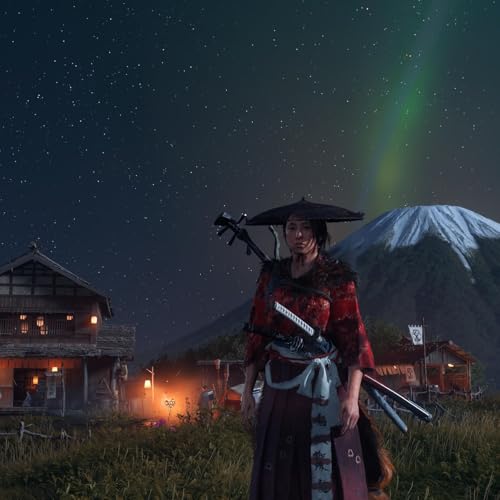
    In episode 19 of (Pop) Cultural Marxism, Isi and Ajay are joined by fellow BISR faculty Joseph Earl Thomas to discuss Ghost of Yotei, Sucker Punch Productions' much-anticipated sequel to Ghost of Tsushima. To kick off the episode, Isi and Ajay chat about recent cultural news and highlights, from the Japanese government calling on OpenAI to refrain from using anime and manga as training data, to the #SwiftiesAgainstAI campaign, to Paul Thomas Anderson's One Battle After Another (2025). Turning to Ghost of Yotei, Isi, Ajay, and Joseph consider where the game succeeds (its strong start, visual beauty, sharp soundtrack, and the satisfying chunkiness and texture of its combat scenes) and where it doesn't (its loadout system, simplistic puzzles, dearth of opportunities for stealth mode, and social and political quandaries its narrative and design raise). They explore the films and television shows that influenced Yotei—from Lady Snowblood and Samurai Champloo to the films of Takashi Miike, Akira Kurosawa, and Sergio Leone) and ask whether and where the game successfully incorporates cinematic techniques and conventions into its storyline. Along the way, they discuss the game's dicey depiction of the Ainu and the colonization of Hokkaido, consider whether the pleasure of open-world gaming has diminished or transformed in the years between Yotei and Tsushima, and interrogate the shape of the game's revenge plot.

    (Pop) Cultural Marxism is produced by Ryan Lentini.

    Learn more about upcoming courses on our website.

    Follow Brooklyn Institute for Social Research on Twitter / Facebook / Instagram / Bluesky.

    Show notes

    On Japan and OpenAI: https://www.ign.com/articles/japanese-government-calls-on-sora-2-maker-openai-to-refrain-from-copyright-infringement-says-characters-from-manga-and-anime-are-irreplaceable-treasures-that-japan-boasts-to-the-world

    One Battle After Another, directed by Paul Thomas Anderson (2025)

    Other Paul Thomas Anderson films mentioned: Phantom Thread (2017), Inherent Vice (2014), The Master (2012), There Will Be Blood (2007)

    Ghost of Yotei (Sucker Punch Productions, 2025)

    Ghost of Tsushima (Sucker Punch Productions, 2020)

    Way of the Samurai (Acquire, 2002)

    Tenchu (Acquire/K2/FromSoftware, 1998-2009)

    Samurai Champloo (2004)

    Forspoken (Luminous Productions, 2023)

    South of Midnight (Compulsion Games, 2025)

    Infamous (Sucker Punch Productions, 2009-2014)

    Blue Eye Samurai (2023)

    The Legend of Zelda: Ocarina of Time (Nintendo, 1998)

    Metal Gear Solid 3: Snake Eater (2004)

    Parul Sehgal, "The Case Against the Trauma Plot" (2021): https://www.newyorker.com/magazine/2022/01/03/the-case-against-the-trauma-plot

    Kuroneko, directed by Kaneto Shindo (1968)

    Lady Snowblood, directed by Toshiya Fujita (1973)

    Lady Snowblood: Love Song of Vengeance, directed by Toshiya Fujita (1974)

    The Samurai Trilogy, directed by Hiroshi Inagaki (1954-1956)

    続きを読む 一部表示
    2 時間 52 分
  • (Pop) Cultural Marxism, Episode 18: I Don't Know What You Did Last Summer
    2025/09/19

    In episode 18 of (Pop) Cultural Marxism, Isi and Ajay spend some time with a handful of big news items at the intersection of politics and media—from the Skydance-Paramount merger (and other instances of media market concentration) and its implications for American newsmedia (and its potential new gatekeepers); to Charlie Kirk's assassination, its aftermath, its mediations with mass cultural objects (like alleged HellDivers II bullet etchings or Nepalese protestors with One Piece flags); the culture industry's failure to perform even its therapeutic function; and the growing exclusivity of once-accessible arts venues and performance spaces! A wide ranging discussion of summer media diets follows, beginning with Isi's recent love affair with the Western genre. The two discuss their shared fondness for Sergio Leone and Ennio Morricone's many collaborations and the unmatched brilliance of HBO's Deadwood. Turning to the world of gaming, Ajay considers tragic endings (Expedition 33, the Death Stranding franchise), slow gaming (Herdling), and the relationship between gaming and choreography (Split Fiction). Also under consideration: what Joe Wright's miniseries, Mussolini: Son of the Century, gets right about the fascist imaginary; what Len Wiseman's Ballerina gets wrong about the appeal of John Wick; and what Foundation and The Sandman suggest about the challenges of adaptation and the culture industry's recent predilection for a 21st century spin on classical tragedy. Along the way, they return repeatedly to a longstanding PCM preoccupation with medium-specificity as well as the general bleakness seeping into the cultural reflections of this historical moment.

    (Pop) Cultural Marxism is produced by Ryan Lentini.

    Learn more about upcoming courses on our website.

    Follow Brooklyn Institute for Social Research on Twitter / Facebook / Instagram / Bluesky.

    続きを読む 一部表示
    2 時間 30 分
  • (Pop) Cultural Marxism, Episode 17: I Have Friends Everywhere
    2025/06/27

    In episode 17 of (Pop) Cultural Marxism, Ajay and Isi once again find themselves in the regrettable position of praising the Walt Disney Company. After chatting about recent cultural highlights (Clair Obscur: Expedition 33, a 40th anniversary screening of Kurosawa's Ran, and a Criterion retrospective on Johnnie To), they consider the popular and critical success of Andor's second season, and ask what it means to describe a pop cultural text as "politically timely." Their conversation turns to extratextual ecosystems (press junkets, interviews), Gilroy's deep engagement with cinematic depictions of fascism and rebellion (Army of Shadows, The Conformist), architecture and costume design, season 2 high points (the Ghorman Massacre, Mon Mothma's Senate speech), the politics of revolutionary alliances, and imperial bureaucracy. Finally, they consider how the show makes the transition—narratively, visually, musically—into the lore-dense timeline of Rogue One and A New Hope, and ponder its uncharacteristically fascistic final scene.

    (Pop) Cultural Marxism is produced by Ryan Lentini.

    Learn more about upcoming courses on our website.

    Follow Brooklyn Institute for Social Research on Twitter / Facebook / Instagram / Bluesky

    Shownotes:

    Clair Obscur: Expedition 33 (Sandfall Interactive) Ran, dir. Akira Kurosawa (1985) Exiled, dir. Johnnie To (2006) Ghost Dog: The Way of the Samurai, dir. Jim Jarmusch (1999) Battleship Potemkin, dir. Sergei Eisenstein (1925) The Battle of Algiers, dir. Gillo Pontecorvo (1966) Army of Shadows, dir. Jean-Pierre Melville (1969) Jean-Paul Sartre, "The Republic of Silence" (1944) The Conformist, dir. Bernardo Bertolucci (1970) Sergey Nechayev, "Catechism of a Revolutionary" (1869) Laleh Khalili, "The Politics of Pleasure: Promenading on the Corniche" Guy Debord, The Society of the Spectacle Bertolt Brecht and Walter Benjamin on Brecht's "Epic Theater" McKenzie Wark, The Beach Beneath the City McKenzie Wark, A Hacker Manifesto
    続きを読む 一部表示
    2 時間 2 分
  • (Pop) Cultural Marxism, Episode 16: Shine Bright Like a TIE Fighter
    2025/04/25

    In episode 16 of (Pop) Cultural Marxism, Isi and Ajay discuss the return of Tony Gilroy's Andor. Before departing for a galaxy far, far away, they stop by the world of gaming to chat about Hazelight Studio's latest co-op title, Split Fiction, and the impact of Trump's tariffs on the rollout of Nintendo's Switch 2. Turning to the first three episodes of Andor's second season, Isi and Ajay discuss the show's improbable presence in the Disney universe, the promises and perils of thinking with all-too-timely cultural objects, and formal and technical differences between seasons one and two. They then evaluate Gilroy's attempt to balance the tone and feel of the original trilogy with a plausible account of fascist and imperial rule–one that explores the minutiae of bureaucratic hierarchy, financial audits, counterinsurgency tactics, fascist youth culture, the exploitation of undocumented workers, communication blackouts, and the fragility of political resistance. Along the way, they discuss Gilroy's historical and filmic references, and the show's resonances with long-time PCM favorite, Franz Neumann's Behemoth.

    The Podcast for Social Research is produced by Ryan Lentini.

    Learn more about upcoming courses on our website.

    Follow Brooklyn Institute for Social Research on Twitter / Facebook / Instagram / Bluesky

    続きを読む 一部表示
    1 時間 53 分
  • (Pop) Cultural Marxism, Episode 15: Vampires!
    2025/03/21

    In episode 15 of (Pop) Cultural Marxism, Ajay, Isi, and Joseph explore vampires in media, across genre and time! Welcoming back Joseph after a few episodes away, the episode kicks off with a games roundtable on Monster Hunter: Wilds (Capcom, 2025) and Pentiment (Obsidian, 2022), among other things. Then the group quickly dives into all things vampire. From Capital to Castelvania, the conversation analyzes the psychosexual, political economic, Orientalist, literary, genre, social, and even epidemiological metaphors, allegories, and tropes that haunt vampire stories and have made the figure of the vampire of such perennial—if shifting—fascination. How have vampire stories changed over time? Why do vampire stories shift and blur genre and valence? Why is the vampire such a perennial stand-in, across so many fields, often at the same time? Objects in consideration include: Carmilla (Sheridan Le Fanu, 1872), Dracula (Bram Stoker, 1897), Interview with the Vampire (novel: Anne Rice, 1976; TV adaptation: Rolin Jones, 2022-present; film: Neil Jordan, 1994), The Vampire Chronicles and Lives of the Mayfair Witches (Anne Rice), Nosferatu (F.W. Munrau, 1922), Nosferatu (Robert Eggers, 2024), A Girl Walks Home Alone at Night (Ana Lily Amirpour, 2014), Buffy the Vampire Slayer (Joss Whedon, 1997-2003), Castlevania: Symphony of the Night (Konami, 1997), Castlevania (anime, Warren Ellis, 1997-2021), Castlevania: Nocturne (anime, Clive Bradley, 2023-present), True Blood (TV series, Alan Ball, 2008-2014), The Twilight Saga (films 2008-2012, based on the novels by Stephanie Meyer), Midnight Mass, What We Do In The Shadows, and many more! Discover how the erotic, the economic, the exotic and even the epidemic all collide in the tragedies, comedies, horrors, nightmares, and fantasies that prove the vampire is a potent if changing symbol for fears, desires, and delirium.

    続きを読む 一部表示
    2 時間 31 分
  • (Pop) Cultural Marxism, Episode 14: Things of the Year 2024 — Part II
    2025/02/07

    Isi and Ajay kick off episode 14 of (Pop) Cultural Marxism by paying tribute to the late, great American auteur David Lynch. They discuss the pleasures of Lynch's oneiric style, his keen eye for American mass culture (and the horrors it conceals), and recent re-watches of Twin Peaks and Dune. The two then reprise episode 13's review of 2024 pop culture. Along the way, they discuss year-end film releases (Brady Corbet's The Brutalist, Ridley Scott's Gladiator II, Robert Eggers' Nosferatu, Gints Zilbalodis' Flow), HBO's The Penguin, and recent gaming highlights (Kunitsu-Gami: Path of the Goddess) and lowlights (Indiana Jones and the Great Circle). Closing out the episode are pre-2024 cultural revisits, including Barry Lyndon, the Infernal Affairs trilogy, Jojo's Bizarre Adventure, The Case of the Golden Idol, Inside Man, and Koyaanisqatsi.

    The podcast was produced by Ryan Lentini.

    続きを読む 一部表示
    1 時間 49 分
  • (Pop) Cultural Marxism, Episode 13: Things of the Year 2024 — Part I
    2024/12/31

    In episode 13 of (Pop) Cultural Marxism, Ajay and Isi ruminate on a largely dismal year in pop culture. Kicking off with a discussion of unexpected developments in the world of health insurance, the conversation turns to a number of broad trends that characterized culture this year: AI, long production cycles, platforms—rather than cultural works—as objects of cathexis, IP art, and the use of IP as trans-media anchors. Along the way, they discuss social bandits, collective effervescence, Leiji Matsumoto's Interstella 5555: The 5tory of the 5ecret 5tar 5ystem, the Criterion Closet truck, Sony's push into the television space, Jon Chu's Wicked, and 2024's revealing box office numbers. In the second half of the episode, Ajay and Isi discuss the year's highlights (Metaphor: ReFantazio [GoTY], Elden Ring: Shadow of the Erdtree, Lies of P, Mati Diop's Dahomey, Shuchi Talati's Girls Will Be Girls, a performance of book 1 of The Odyssey by Joseph Medeiros, Edward Berger's Conclave, Todd Phillip's divisive Joker: Folie à Deux, the second season of AMC's Interview with the Vampire, and True Detective: Night Country) and lowlights (Denis Villeneuve's Dune 2, Luca Guadagnino's Challengers, and a whole lot of "just okay" television)—with more to come in a follow-up episode after the holidays!

    続きを読む 一部表示
    1 時間 50 分
  • (Pop) Cultural Marxism, Episode 12: Megalopolis — or, the Decline and Miraculous Resurrection of American Empire
    2024/11/15

    In episode 12 of (Pop) Cultural Marxism, Ajay and Isi tackle Francis Ford Coppola's Megalopolis (2024). Kicking off with a review of a few recent pop-cultural engagements—including an assemblage of classic vampire films (Coppola's Bram Stoker's Dracula (1992), among them), Mubi's restoration of The Fall (2006), Elden Ring: Shadow of the Erdtree, and a pair of streaming series about professional wrestling—the conversation turns to Coppola's reactionary would-be summa about an architect attempting to construct a techno-futuristic utopia on a plot of land in "New Rome," an alternate-world New York City as played against Roman and early American history. Along the way, Ajay and Isi discuss Neri Oxman's faux-ecological contributions to the film's central animating macguffin, the mysterious "megalon;" the film's antipathy for the marginalized masses; its protagonist as synthesis of Caesar, Robert Moses, Walter Gropius, and The Fountainhead's Howard Roark; accidentally timely narratives of the "good guy" billionaire pitted against the "bad-guy" billionaire; and the ecofascist inclination to marry the romanticization of nature with authoritarian techno-optimism. Among the topics at hand are Coppola's disturbing, "secretly autobiographical" efforts to reaffirm himself as auteur, his baffling postmodern pastiche, the classic right-wing themes of patriarchy as a sign of order and non-normative sexual expression as a sign of decline and decadence, the film's shocking ugliness, and how Megalopolis's strange incorporation of current events betrays "a baby boomer [having read] a bunch of airport history books."

    続きを読む 一部表示
    1 時間 28 分