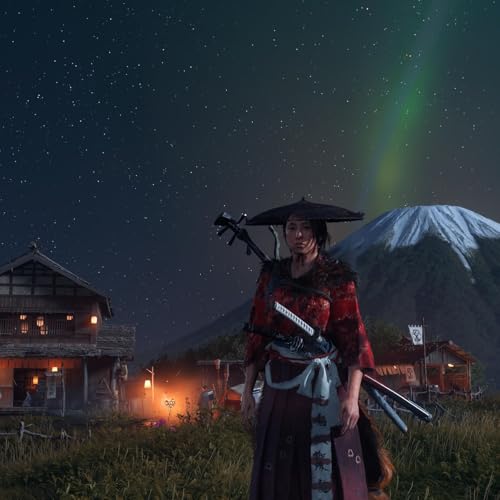
『(Pop) Cultural Marxism』のカバーアート

(Pop) Cultural Marxism

(Pop) Cultural Marxism

著者: Brooklyn Institute for Social Research
無料で聴く

このコンテンツについて

In (Pop) Cultural Marxism, a subseries of the Podcast for Social Research, BISR faculty Ajay Singh Chaudhary and Isi Litke (and special guests!) will be exploring the "fantastic form" of pop-cultural commodities—from film and television to toys and games to objects of every conceivable consumer variety.Copyright Brooklyn Institute for Social Research アート 社会科学
エピソード
  • (Pop) Cultural Marxism, Episode 19: Ghost of Yotei - A Specter is Haunting Ezo
    2025/10/31

    In episode 19 of (Pop) Cultural Marxism, Isi and Ajay are joined by fellow BISR faculty Joseph Earl Thomas to discuss Ghost of Yotei, Sucker Punch Productions' much-anticipated sequel to Ghost of Tsushima. To kick off the episode, Isi and Ajay chat about recent cultural news and highlights, from the Japanese government calling on OpenAI to refrain from using anime and manga as training data, to the #SwiftiesAgainstAI campaign, to Paul Thomas Anderson's One Battle After Another (2025). Turning to Ghost of Yotei, Isi, Ajay, and Joseph consider where the game succeeds (its strong start, visual beauty, sharp soundtrack, and the satisfying chunkiness and texture of its combat scenes) and where it doesn't (its loadout system, simplistic puzzles, dearth of opportunities for stealth mode, and social and political quandaries its narrative and design raise). They explore the films and television shows that influenced Yotei—from Lady Snowblood and Samurai Champloo to the films of Takashi Miike, Akira Kurosawa, and Sergio Leone) and ask whether and where the game successfully incorporates cinematic techniques and conventions into its storyline. Along the way, they discuss the game's dicey depiction of the Ainu and the colonization of Hokkaido, consider whether the pleasure of open-world gaming has diminished or transformed in the years between Yotei and Tsushima, and interrogate the shape of the game's revenge plot.

    (Pop) Cultural Marxism is produced by Ryan Lentini.

    Learn more about upcoming courses on our website.

    Follow Brooklyn Institute for Social Research on Twitter / Facebook / Instagram / Bluesky.

    Show notes

    On Japan and OpenAI: https://www.ign.com/articles/japanese-government-calls-on-sora-2-maker-openai-to-refrain-from-copyright-infringement-says-characters-from-manga-and-anime-are-irreplaceable-treasures-that-japan-boasts-to-the-world

    One Battle After Another, directed by Paul Thomas Anderson (2025)

    Other Paul Thomas Anderson films mentioned: Phantom Thread (2017), Inherent Vice (2014), The Master (2012), There Will Be Blood (2007)

    Ghost of Yotei (Sucker Punch Productions, 2025)

    Ghost of Tsushima (Sucker Punch Productions, 2020)

    Way of the Samurai (Acquire, 2002)

    Tenchu (Acquire/K2/FromSoftware, 1998-2009)

    Samurai Champloo (2004)

    Forspoken (Luminous Productions, 2023)

    South of Midnight (Compulsion Games, 2025)

    Infamous (Sucker Punch Productions, 2009-2014)

    Blue Eye Samurai (2023)

    The Legend of Zelda: Ocarina of Time (Nintendo, 1998)

    Metal Gear Solid 3: Snake Eater (2004)

    Parul Sehgal, "The Case Against the Trauma Plot" (2021): https://www.newyorker.com/magazine/2022/01/03/the-case-against-the-trauma-plot

    Kuroneko, directed by Kaneto Shindo (1968)

    Lady Snowblood, directed by Toshiya Fujita (1973)

    Lady Snowblood: Love Song of Vengeance, directed by Toshiya Fujita (1974)

    The Samurai Trilogy, directed by Hiroshi Inagaki (1954-1956)

    続きを読む 一部表示
    2 時間 52 分
  • (Pop) Cultural Marxism, Episode 18: I Don't Know What You Did Last Summer
    2025/09/19

    In episode 18 of (Pop) Cultural Marxism, Isi and Ajay spend some time with a handful of big news items at the intersection of politics and media—from the Skydance-Paramount merger (and other instances of media market concentration) and its implications for American newsmedia (and its potential new gatekeepers); to Charlie Kirk's assassination, its aftermath, its mediations with mass cultural objects (like alleged HellDivers II bullet etchings or Nepalese protestors with One Piece flags); the culture industry's failure to perform even its therapeutic function; and the growing exclusivity of once-accessible arts venues and performance spaces! A wide ranging discussion of summer media diets follows, beginning with Isi's recent love affair with the Western genre. The two discuss their shared fondness for Sergio Leone and Ennio Morricone's many collaborations and the unmatched brilliance of HBO's Deadwood. Turning to the world of gaming, Ajay considers tragic endings (Expedition 33, the Death Stranding franchise), slow gaming (Herdling), and the relationship between gaming and choreography (Split Fiction). Also under consideration: what Joe Wright's miniseries, Mussolini: Son of the Century, gets right about the fascist imaginary; what Len Wiseman's Ballerina gets wrong about the appeal of John Wick; and what Foundation and The Sandman suggest about the challenges of adaptation and the culture industry's recent predilection for a 21st century spin on classical tragedy. Along the way, they return repeatedly to a longstanding PCM preoccupation with medium-specificity as well as the general bleakness seeping into the cultural reflections of this historical moment.

    (Pop) Cultural Marxism is produced by Ryan Lentini.

    Learn more about upcoming courses on our website.

    Follow Brooklyn Institute for Social Research on Twitter / Facebook / Instagram / Bluesky.

    続きを読む 一部表示
    2 時間 30 分
  • (Pop) Cultural Marxism, Episode 17: I Have Friends Everywhere
    2025/06/27

    In episode 17 of (Pop) Cultural Marxism, Ajay and Isi once again find themselves in the regrettable position of praising the Walt Disney Company. After chatting about recent cultural highlights (Clair Obscur: Expedition 33, a 40th anniversary screening of Kurosawa's Ran, and a Criterion retrospective on Johnnie To), they consider the popular and critical success of Andor's second season, and ask what it means to describe a pop cultural text as "politically timely." Their conversation turns to extratextual ecosystems (press junkets, interviews), Gilroy's deep engagement with cinematic depictions of fascism and rebellion (Army of Shadows, The Conformist), architecture and costume design, season 2 high points (the Ghorman Massacre, Mon Mothma's Senate speech), the politics of revolutionary alliances, and imperial bureaucracy. Finally, they consider how the show makes the transition—narratively, visually, musically—into the lore-dense timeline of Rogue One and A New Hope, and ponder its uncharacteristically fascistic final scene.

    (Pop) Cultural Marxism is produced by Ryan Lentini.

    Learn more about upcoming courses on our website.

    Follow Brooklyn Institute for Social Research on Twitter / Facebook / Instagram / Bluesky

    Shownotes:

    Clair Obscur: Expedition 33 (Sandfall Interactive) Ran, dir. Akira Kurosawa (1985) Exiled, dir. Johnnie To (2006) Ghost Dog: The Way of the Samurai, dir. Jim Jarmusch (1999) Battleship Potemkin, dir. Sergei Eisenstein (1925) The Battle of Algiers, dir. Gillo Pontecorvo (1966) Army of Shadows, dir. Jean-Pierre Melville (1969) Jean-Paul Sartre, "The Republic of Silence" (1944) The Conformist, dir. Bernardo Bertolucci (1970) Sergey Nechayev, "Catechism of a Revolutionary" (1869) Laleh Khalili, "The Politics of Pleasure: Promenading on the Corniche" Guy Debord, The Society of the Spectacle Bertolt Brecht and Walter Benjamin on Brecht's "Epic Theater" McKenzie Wark, The Beach Beneath the City McKenzie Wark, A Hacker Manifesto
    続きを読む 一部表示
    2 時間 2 分
まだレビューはありません