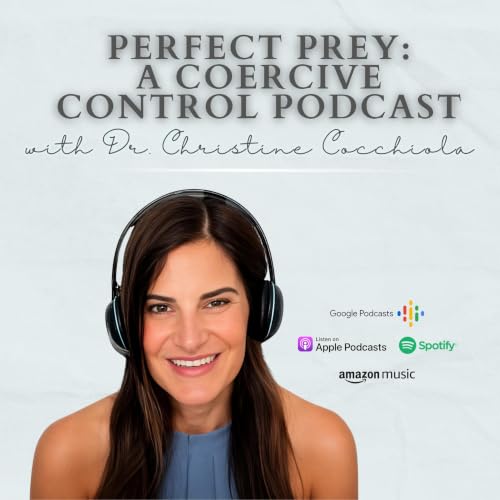
『Perfect Prey: A Coercive Control Podcast』のカバーアート

Perfect Prey: A Coercive Control Podcast

Perfect Prey: A Coercive Control Podcast

著者: Dr. Christine Marie Cocchiola
無料で聴く

【Amazonプライム会員限定】今ならプレミアムプランが4か月 月額99円。

10月19日まで。※適用条件あり
Dr. Christine Marie Cocchiola, DSW, LCSW is a Coercive Control Educator, Researcher, & Survivor. She has been an advocate since the age of 19, passionate about protecting children from abuse. Yet, even as a therapist, she didn't see the signs in her own relationship. How do we, as protective parents, support our children harmed by the coercive controller (aka Narcissistic Abuser)? Dr. Cocchiola's expertise provides the framework for supporting protective parents as they navigate parenting children harmed by the coercive controller. Protective parents can show their children a path to freedom.Dr. Christine Marie Cocchiola
エピソード
  • When Family Court Fails to Protect Children with Hope Hooton
    2026/09/11
    In this episode of Perfect Prey, Dr. Christine is joined by Hope Hooton, child safety advocate and mother, for a deeply important conversation about coercive control, domestic violence, family court, and the urgent need to prioritize child safety.Hope shares the heartbreaking story of her children, Alec and Lydia, and the devastating circumstances surrounding their deaths. She discusses the coercive control, domestic violence, and mental health concerns involved, as well as the warning signs and risk factors that she believes were not adequately recognized by the systems responsible for protecting her children.The conversation also explores how temporary custody decisions can have life-altering consequences when courts fail to fully examine allegations of domestic violence and coercive control. Hope explains what happened in her case and how her experience has shaped the advocacy work she does today.Rather than allowing her grief to be the end of Alec and Lydia’s story, Hope has turned it into a mission to help protect other children and families. She discusses the Alec and Lydia Act, her work with other protective and bereaved mothers, and the changes she believes are necessary to make child safety a true priority in family court.What We Cover• Hope’s story and the loss of Alec and Lydia• Coercive control and domestic violence• Warning signs and lethality risks in custody cases• The role of mental illness, psychosis, and perpetrator behavior• Family court failures and temporary custody orders• Why protective parents’ concerns can be minimized• The importance of recognizing patterns rather than isolated incidents• The Alec and Lydia Act and its focus on child safety• Hope’s advocacy and work alongside other mothers• Turning grief into meaningful systemic changeWhy This Conversation MattersChild safety should always be at the center of custody decisions. Hope’s experience raises important questions about how family courts assess risk, how coercive control is recognized, and what happens when serious concerns raised by protective parents are dismissed or minimized.This conversation is for survivors, protective parents, advocates, attorneys, clinicians, and anyone working toward safer outcomes for children navigating family court.About Hope HootonHope Hooton is a child safety advocate and mother dedicated to protecting children and advocating for family court reform. Following the deaths of her children, Alec and Lydia, Hope has devoted herself to educating others, supporting fellow mothers, and working toward legislation that strengthens protections for children and holds systems accountable.Connect with Hope Hooton📖 Book: Hope Hooton’s Book on Amazon🎙️ Podcast — Voices Against Filicide: Listen on Apple Podcasts🌐 Linktree: Hope Hooton’s Linktree▶️ YouTube: Hope Hooton on YouTube📸 Instagram: Hope Hooton on Instagram📘 Facebook: Hope Hooton on Facebook🎵 TikTok: Hope Hooton on TikTokConnect with Dr. Christine CocchiolaProtective Parenting Program: Protective Parenting ProgramWebsite: Coercive Control ConsultingYouTube: Dr. Christine Cocchiola on YouTubeTikTok: Dr. Christine Cocchiola on TikTokInstagram: Dr. Christine Cocchiola on InstagramTEDx: Dr. Christine Cocchiola’s TEDx TalkBooks: FRAMED: Women in the Family Court Underworld | Every Moment of Every DayIf this episode resonated with you, please share it with someone who needs to hear this conversation.— Dr. Christine Cocchiola & Hope Hooton 🩵
    続きを読む 一部表示
    30 分
  • When Coercive Control Doesn’t End After Separation with Jess Hill
    2026/08/28

    In this episode of Perfect Prey, I’m joined by award-winning journalist and author Jess Hill for an important conversation about coercive control, domestic abuse, victim-survivors, children, and post-separation abuse.

    We explore what coercive control looks like, why it can be difficult to recognize, and how perpetrators maintain power through psychological, emotional, financial, and other forms of abuse. We also discuss how abuse can continue after separation through stalking, harassment, legal systems, and family court.

    Jess and I examine the impact on children, the importance of recognizing coercive control when assessing risk, and her work toward criminalizing coercive control in Australia—while emphasizing that legal reform is only one part of creating meaningful change for victim-survivors.


    What we cover

    • What coercive control actually is—and why it is often misunderstood

    • How coercive control can be difficult to recognize while you are experiencing it

    • The psychological and emotional impact of living under coercive control

    • Why leaving an abusive relationship does not necessarily mean the abuse ends

    • Post-separation abuse, stalking, harassment, and continued control

    • How children experience and are affected by coercive control

    • The ways children can become part of an abusive dynamic

    • Family court and the challenges faced by victim-survivors navigating legal systems

    • Why understanding patterns of behavior matters when assessing risk

    • The importance of listening to victim-survivors and taking coercive control seriously

    • Jess’s work toward criminalizing coercive control in Australia

    • Law reform, prevention, and creating meaningful systemic change


    Why listen

    Coercive control is often misunderstood because it does not always look like what people expect abuse to look like. There may be no single incident that explains what is happening. Instead, control can develop through patterns of behavior that gradually restrict a person’s autonomy, freedom, relationships, and sense of self.


    This conversation is also about what happens after a victim-survivor leaves. Separation can become another stage of control, particularly when perpetrators use legal systems, children, stalking, or other mechanisms to maintain power.


    For survivors, protective parents, clinicians, attorneys, advocates, researchers, and anyone trying to better understand coercive control, this episode offers an important conversation about recognizing patterns, understanding risk, and creating systems that better protect victims and children.


    Guest bio

    Jess Hill is an award-winning Australian journalist and author focused on domestic abuse, coercive control, and gender-based violence. She is the author of See What You Made Me Do, a groundbreaking examination of domestic abuse and coercive control. Through her journalism, research, and advocacy, Jess has helped shape conversations around domestic violence, prevention, and law reform in Australia.


    Connect with Jess Hill:

    Instagram: @jessicahelenhill

    Website: www.jesshill.com.au

    Book: See What You Made Me Do available on Amazon

    Podcast: www.vwt.org.au/thetrap


    Connect with Dr. Christine:

    Protective Parenting Program: Protective Parenting Program

    Official site: www.coercivecontrolconsulting.com

    YouTube: www.

    TikTok: @dr.c_coercivecontrol

    Instagram: www.youtube.com/@DrCocchiola-coercivecontrol

    TEDxTalk: https://youtu.be/gp2qByKOue4?si=jJpjpRewxHD9JdYg

    Books:

    FRAMED: Women in the Family Court Underworld

    Every Moment of Every Day

    Available on Amazon.


    If this episode resonated with you, please share it with someone who needs to hear it, subscribe for more trauma-informed conversations, and consider leaving a review. Your support helps other survivors and protective parents find information, validation, and community.

    — Dr. Christine Cocchiola & guest Jess Hill


    続きを読む 一部表示
    53 分
  • Why Victims Stay: Understanding the "Cult of One" | Richard Grannon
    2026/07/31

    In this episode of Perfect Prey, I'm joined by Richard Grannon, author of A Cult of One, psychology educator, and internationally recognized voice on narcissistic abuse recovery.


    Together, we explore one of the most misunderstood questions surrounding coercive control: Why do victims stay? Richard offers a thought-provoking perspective on trauma, attachment, power, and the psychological mechanisms that keep people trapped in abusive relationships. We also discuss how these same dynamics impact children growing up in coercively controlling family systems and why healing requires far more than simply "walking away."


    This conversation challenges traditional ideas about codependency, explores the concept of the "cult of one," and examines how coercive control creates an environment where victims gradually lose trust in themselves while becoming increasingly dependent on the abuser.


    What we cover


    •The psychology behind coercive control

    •Why victims stay in abusive relationships

    •The "Cult of One" concept

    •Trauma bonding and attachment

    •Codependency versus subjugation

    •Why children align with abusive parents

    •Power dynamics in coercively controlling families

    •Ego resilience and recovery

    •Betrayal by family court and legal systems

    •Why understanding abuse is essential for healing


    Why listen


    Whether you're a survivor, protective parent, therapist, attorney, or advocate, this episode offers a deeper understanding of why coercive control is so difficult to recognize—and even harder to escape. Richard Grannon provides a fresh perspective on recovery while challenging long-held assumptions about abuse, trauma, and victimization.


    Guest Bio


    Richard Grannon is the author of A Cult of One, a psychology educator, speaker, and internationally recognized expert on narcissistic abuse recovery and complex trauma. With a background in behavioral psychology and over a decade of educating survivors worldwide, Richard helps people understand coercive control, establish healthy boundaries, and rebuild their lives after psychological abuse.


    Connect with Richard Grannon


    Website

    https://richardgrannon.com/

    YouTube

    https://www.youtube.com/@RichardGrannon

    Instagram

    https://www.instagram.com/richard.grannon/

    Facebook

    https://www.facebook.com/RICHARDGRANNON/

    X (Twitter)

    https://x.com/RichardGrannon


    Connect with Dr. Christine


    🩵 Protective Parenting Program

    https://www.coercivecontrolconsulting.com/services/for-parents/

    Official Website

    https://www.coercivecontrolconsulting.com/

    YouTube

    https://www.youtube.com/@DrCocchiola-coercivecontrol/videos

    TikTok

    https://www.tiktok.com/@dr.c_coercivecontrol

    Instagram

    https://www.instagram.com/dr.cocchiola_coercivecontrol/

    TEDx Talk

    https://www.youtube.com/watch?v=gp2qByKOue4&t=24s

    Books

    Framed

    https://url-shortener.me/c/FramedBook

    Every Moment of Every Day

    https://url-shortener.me/c/EveryMomentOfEveryDay

    If this episode resonated with you, please subscribe, share it with someone who may benefit, and leave a review. Your support helps bring trauma-informed conversations about coercive control to more survivors, professionals, and protective parents.

    —

    Dr. Christine Cocchiola & Richard Grannon


    続きを読む 一部表示
    45 分
adbl_web_anon_alc_button_suppression_t1
まだレビューはありません