エピソード

  • PART C: Character Design & Structuring | 1/2 - "The Transformation Game, Are You Still You?"
    2026/02/04

    What if your life were a story? Hosts Betty and Rita turn the lens on YOU with an interactive game that reveals your transformation journey. Grab a pen and discover whether you're The Rock, The Reflector, or The Butterfly.


    RECAPBetty and Rita explored character complexity through flaws and consequences, examining BoJack's heartbreaking lie to protect someone he cherished—a moment foreshadowing his capacity for change. The true test of depth? Understanding a character's transformation.INTRO

    After analyzing BoJack's psyche, today's episode is different—it's dedicated to YOU. Play along with their character transformation game, a trip down memory lane exploring personal growth and the golden nuggets of fiction.

    PART A - What Type of Rounded Character Are You?

    Betty introduces her mathematical formula to calculate your character arc through four questions: location changes, growth spurts, uncontrolled experiences, and deliberate decisions.

    The Three Types:

    • Score 1-4: "The Rock"
    • Score 5: "The Reflector"
    • Score 6-10: "The Butterfly"


    Lesson: No one is a static character. We all change.

    PART B - Why Transformation Matters in Fiction - The Parallel with Reality

    Transformation makes complexity meaningful. At life's end, we face brutal questions: How much did we make a difference? What memory did we leave—rainbows or hurricanes?

    Change is the only constant. From humans living 1,000 years (Methuselah at 969!) to marriage at 15 being standard, to today's 30 being "the new 15"—timelines shift across generations.

    The Takeaway: We are judged by our actions. People mold, break, mend, and transform. This metamorphosis is real.

    Why Character Arc Matters:

    1. Audience engagement
    2. Emotional connection
    3. Narrative depth


    PART C - Types of Character Transformation

    1. Quality:

    • Internal: Beliefs, values (L from Death Note)
    • External: Physical, status (Cinderella)

    2. Phase:

    • Flat Arc: Transforms others (Luffy, Aang)
    • Dramatic Arc: Extreme personal change (Eren from Attack on Titan)

    3. Consequential:

    • Positive: Becomes better (Pain)
    • Negative: Degenerates (Light Yagami)
    • Neutral: Balances out (Itachi, Korra)

    PART D - What Drives Character Transformation?

    Five Catalysts:

    1. Conflict (that's why parents die in anime)
    2. Personal revelation (lion discovering it's not a sheep)
    3. Confronting the past (horror movie staple)
    4. Pivotal moments (discovering powers, finding 1 million euros)
    5. Environmental change (isekai worlds)

    The Funny Debate

    Would you pick up a bag containing a million euros? Betty and Rita explore the moral, spiritual, and practical implications—with hilarious tangents about Nigerian superstitions, squid games, and whether that money might turn you into a yam! (LOL)


    CONCLUSION

    Next episode: BoJack Horseman's complex, neutral transformational journey. This was an introspective mirror reminding you how far you've come.


    OUTRO

    Share your score in the comments. Subscribe on YouTube, Spotify, Amazon, Apple Podcasts. Visit www.pagespodcasthq.com for more.

    Remember: The best things are often hidden in plain sight.


    続きを読む 一部表示
    1 時間 1 分
  • Part B: Character Design & Structuring | 2/2 — “The Rule of Depth” (The gold in Bojack’s character)
    2026/01/28

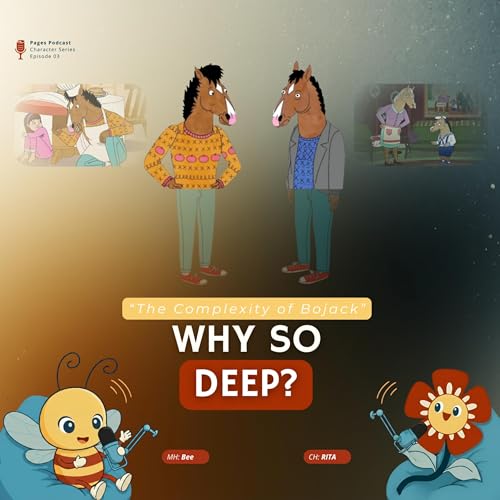
    If complexity is the hook, depth is the soul. In this episode, we dig beneath the wreckage of BoJack Horseman to uncover what transforms a character from interesting to unforgettable —from cartoon to cultural icon.


    RECAP

    A quick refresher on our journey so far: BoJack Horseman asthe living paradox—a horse who's also human, rejecting his identity while embodying it. We revisit the "Nay way, Jose" joke that reveals his rare moments of pride, and how physical contradictions create the foundation for complex, rounded characters that feel devastatingly real.


    INTRO

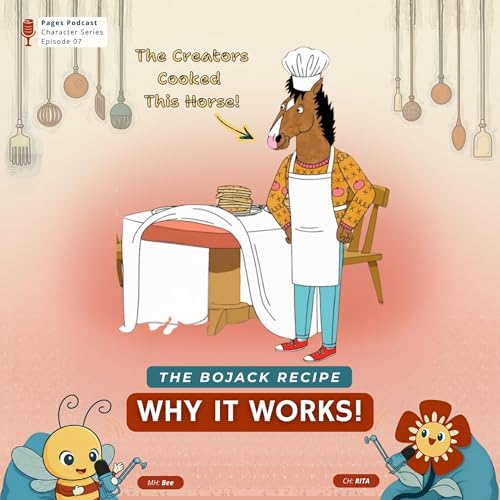
    While complexity makes characters interesting, depth makesthem real. The creators of BoJack Horseman didn't just follow this storytelling commandment—they mastered it, creating an industry standard for adult animation. Today we continue our anatomy of a legend, mining for the gold hidden beneath the dirt of character construction.


    PART A - What really is "depth" in Characters? and What it's not!

    We dissect the critical difference between complexity and depth. Why do some characters feel hollow despite massive screen time? We expose shallow stereotypes—the gay best friend, the angry Black woman, the fiery Latina—as examples of complexity without depth. Then we flip the script:simple characters like Lorelai Gilmore, Luffy, and Sheldon Cooper prove depth doesn't require complexity. Through witty dialogue, flashbacks, and transparent motivations, these characters reveal rich inner lives. The verdict: depth is about the "why" and "how" behind the "what"—the richness of a character's inner world and backstory.


    PART B - Utilising Depth in Character Design - The MajorPoints

    The technical masterclass: six essential tools for craftingdepth.

    • Understanding motivations—you can't explain "how" without knowing "why."
    • Exploring inner life through thoughts and perspectives, not just conflict.
    • Building backstories that shape personality and drive.
    • Adding relatable flaws and vulnerabilities tied to plot—no random honey allergies unless they serve the story.
    • Showing agency through action over inaction—even Studio Ghibli's ordinary protagonists actively shape their destinies.
    • Grounding characters in realistic relationships andbehavioral quirks that reveal rather than tell. Every detail must earn itsplace.


    PART C - How was Depth Added to Bojack's Character?

    The case study crystallizes. BoJack's childhood trauma doesn't just explain his behavior—it becomes the interpretive key. His pattern of running from shame (abandoning Herb, hiding from Kelsey) traces back to Secretariat's advice: "keep running forward, never look back." We witness the conscious effort to tie complexity to development, showing not justwhat BoJack does, but why and how his past shapes everycowardly decision. Then comes the transformative moment: BoJack lies to Hollyhock, telling her the dark voices will go away—a selfless act that foreshadows his capacity for change. This is depth in action: the audience understanding not just the character's actions, but the profound "whys" behind them.


    CONCLUSION

    Character depth isn't mandatory for every story, but forrounded characters, it's non-negotiable. The more time spent with a character of depth, the more we know and understand them—not through exposition, but through the intricate weaving of motivation, backstory, relationships, and behavioral truth.

    続きを読む 一部表示
    42 分
  • Part Two: Character Design & Structuring - "The Alchemy of Rounded Characters"
    2026/01/21

    The Alchemy of Rounded Characters: A BoJack Horseman Deep Dive


    What transforms a 2D cartoon horse into a cultural icon for human trauma? In this unflinching episode, we dissect the anatomy of complex character design through the lens of BoJack Horseman.


    🔑 KEY MOMENTS:

    PART A - Being Born BoJack Horseman

    We trace the devastating childhood of a horse born into emotional abuse, where crying was weakness and love was a sin. From his toxic parents to his hero Secretariat's tragic advice to "keep running forward," we see how trauma shapes identity.


    PART B - Introduction to the Rounded Character

    Discover how BoJack embodies living paradox: a horse who hates being a horse, a moral gray zone where good intentions breed terrible consequences. We break down the controversial Penny incident and Sarah Lynn's tragic arc—moments that force us to ask: "Could this be me?"


    PART C - Complexity as a Tool in Crafting RoundedCharacters - The BJ Case Study

    Episode spotlight on "Stupid Piece of Shit," where we ride shotgun through BoJack's self-destructive thought patterns. Learn how internal conflict creates empathy without excusing behavior—the secret sauce of anti-heroes.


    Discover the uncovenctional redemption arcs the show offers through Bojack’s character, how internal conflict creates empathy without excusing harm, and the brutal truth that change doesn’t erase consequences. This is character design at its most unflinching—a masterclass in creating rounded characters who feel painfully, uncomfortably real. .


    ⚠️ Content Warning: This episode contains discussions of emotional abuse, addiction, trauma, and problematic behavior.


    For detailed show note, check out the link:

    https://www.pagespodcasthq.com/e/s1e3_-part-two-character-design-structuring-the-alchemy-of-rounded-characters_unfiltered/


    Next Episode: Part 2 of the Rounded Character Saga—diving into character depth, development, and transformation.

    Full unedited version available at www.pagespodcasthq.com

    続きを読む 一部表示
    1 時間 2 分
  • Part One: Character Design & Structuring - ”The Memory Drift, Making it Stick!”
    2026/01/14

    SUMMARY NOTE:


    Recap & Intro:

    The Pages Podcast continues its deep dive into BoJack Horseman, exploring how creators Raphael Bob-Waksberg and Lisa Hanawalt high school friendship inspired masterpiece from whimsical sketches. This episode reveals the psychology behind unforgettable characters—connecting how we remember people in real life to how we remember fictional characters.


    PART A: Memory Of First Impression & Core Memories

    Research shows we form opinions about people in just 20-30 seconds, noticing disposition, facial expressions, body language, and speech patterns. The hosts interview friends about first impressions, discovering that what we notice reveals more about ourselves than others. Same way, memorable characters stick with you forever. The key insight: creating characters that are nearly impossible to forget requires combining distinct traits with consistent behaviors and impactful actions.


    PART B: Memory of First Appearance - The PhysicalLisa Hanawalt's artistic style proved so unique that no other animator could replicate it. Her anthropomorphic designs—humans with animal heads, no tails, upright posture—became the show's signature. But why animals? The creators showed that animal-human hybrids allow audiences to project themselves more easily than seeing actual human actors. BoJack being a horse wasn't arbitrary. There's a reason why a horse was perfect for a character like Bojack. The colorful, silly cartoon world became a "sneak attack" for delivering profound sadness. The lesson: distinct physical features must tie directly to the character's story and identity to become truly memorable.


    PART C: Establishing Memory - Naming & Career"BoJack Horseman"—simple, lazy naming that works brilliantly because it's consistent with his identity. The name, combined with his career as a former sitcom actor, creates layers of meaning. Even career choice of a character can be a major tool for creating a memorable character, as it connects to their identity. Every element—physical design, name, career—spins back to his backstory, revealing why fame and acceptance define his character.


    PART D: Psychology Of First EncounterDiscover the textbook formula for timeless character introduction and see BoJack's first appearance immediately establishes him as a "basket case protagonist." The show's realism shines through: characters age, get injured, change appearance across different life phases. Each era of BoJack's life marks a character arc, just like real people transform through life's stages.


    CONCLUSION:

    This masterclass in character design reveals that memorability isn't accidental—it's crafted through deliberate choices connecting physical appearance, naming, career, and introduction. The creators of BoJack Horseman understood that characters are the souvenirs audiences take home from stories. By making BoJack simultaneously unlikeable and painfully relatable, they created someone impossible to forget.


    What's Next?

    This is only Part One of the character design saga. The next episode promises to unlock even more secrets about crafting characters that resonate deeply with audiences.


    For detailed show note, check out the link:

    https://www.pagespodcasthq.com/e/s1e2_-part-one-character-design-structuring-the-memory-drift-_unfiltered/?token=a0d95e4a5e2192762d86d40842d7adc4

    続きを読む 一部表示
    1 時間 1 分
  • The Genesis of Characters: How High School Friendship Led to a Masterpiece
    2026/01/07

    This first episode explores the origins of BoJack Horseman and the power of character-driven storytelling. Below is detailed shownote

    INTRO

    We open with the story of how BoJack Horseman began: a simple email between Raphael Bob-Waksberg and Lisa Hanawalt, high school friends whose creative partnership would lead to one of the most acclaimed adult animated shows on Netflix. This intro explains why BoJack Horseman is the perfect case study for this series, with focus on the centrality of character in storytelling and how friendships and dreams can shape creative projects.

    ICEBREAKER HOOK

    The hosts reflect on the rarity and significance ofmaintaining childhood friendships into adulthood, using Raphael and Lisa’s relationship as a springboard. Listeners hear a range of perspectives from friends around the world, sharing how early bonds can influence life paths, careers, and personal growth. The segment is both relatable and thought-provoking, inviting the audience to consider their own lastingconnections.

    PART A – High School Friendship & Childhood Dreams

    Betty and Rita discuss the realities of keeping in touchwith high school friends, the impact of distance (both physical and emotional), and the difference between friendships of proximity and those built on shared dreams. The backstory of Raphael and Lisa’s friendship at Gunn High School in Palo Alto is explored, highlighting how their mutual passion for theater and art laid the groundwork for future collaboration. The segment underscores the importance of compatibility, shared interests, and perseverance in sustaining meaningful relationships.

    PART B – Storytelling and Childhood Dreams

    This chapter follows Raphael and Lisa as they pursue their respective dreams after high school, navigating the challenges of early careers in the arts. Their continued collaboration, even across cities, is a testament to dedication and adaptability. The hosts discuss the realities of creative careers, the role of luck (or grace), and the importance of consistency and risk-taking. The story of how BoJack Horseman was conceived—born from a period of uncertainty and a desire to work together again—serves as inspiration foraspiring creators.

    PART C – Where Do Story Ideas Come From?

    The hosts break down the sources of story inspiration,distinguishing between external (environment, observation) and internal (personal experience, imagination) origins. They debate the merits of plot-driven versus character-driven storytelling, ultimately advocating for a balanced approach tailored to the story’s message. The creative process behindBoJack Horseman is examined, showing how Lisa’s lifelong love of anthropomorphized animals and Raphael’s personal experiences combined to shape the show’s unique tone and characters.

    PART D – The Genesis of Characters and Why It Matters

    This section delves into the philosophical and practicalimportance of well-crafted characters. The hosts use examples from anime and literature to illustrate how poorly written characters can undermine a story, while memorable ones leave a lasting impact. The etymology of “character” is explored, connecting the concept to soul, individuality, and emotional resonance. The discussion emphasizes that great storytelling manipulates empathy, making audiences care deeply about the fates of fictional beings.

    PART E – Conclusion

    The episode wraps up by reflecting on BoJack Horseman’s cultural impact and the enduring relevance of character-driven narratives. The hosts preview future episodes, which will further dissect character design and archetypes, and encourage listeners to follow the podcast for more insights. The conclusion reinforces the idea that characters are not just vehicles for plot, but can themselves be the heart of a story...

    続きを読む 一部表示
    1 時間 3 分