エピソード

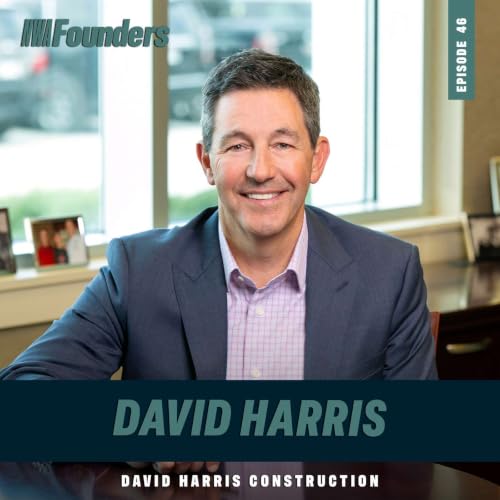
  • #46 - David Harris (David Harris Construction)
    2026/08/11

    David Harris is a fifth-generation Rogers, Arkansas native and founder of David Harris Construction, one of Northwest Arkansas's most respected custom and luxury home builders. In this conversation, David takes us through his unlikely path into homebuilding — starting with spec homes on the side while working for his father's real estate company, dabbling briefly in the llama business, and slowly falling in love with the craft of building homes for families in a region he's watched transform from a quiet small town into a nationally recognized market.

    David opens up about what it means to build a legacy business in Northwest Arkansas — from navigating the 2008 recession with a balanced portfolio of custom and spec homes, to sourcing world-class subcontractors, architects, and materials from Atlanta, Texas, London, and beyond to meet the demands of today's ultra-luxury buyers. He also shares what it's like to bring his two children into the business, the discipline behind his loyal subcontractor relationships, and why he still shows up to the office until 6:30 PM every evening — not for himself, but for the next generation.

    Highlights

    • 3:32 — "My least expensive home is now $950K": how David's price floor has shifted over his career
    • 10:11 — The llama business and other early entrepreneurial swings before construction took over
    • 13:09 — The origin of Shadow Valley: a golf course as a loss leader to attract relocating families
    • 29:08 — Building a team: why common sense and work ethic beat pedigree
    • 1:03:48 — Defining success: family, faith, and loving what you do — not the bottom line

    Key Takeaways

    1. Relationships are your competitive moat. David has kept some subcontractors for 30+ years — not by overpaying, but by paying on time, treating them with respect, and staying loyal. When things go wrong (and they always do in construction), that loyalty is what gets problems fixed.
    2. Know the gap in your market. Whether it's a price point no one else is hitting in a neighborhood or a type of buyer underserved by national builders, David's success comes from reading the market carefully and building to fill real demand — not just building what's easy or profitable.
    3. Balance is a strategy, not a weakness. Staying roughly 50/50 between custom and spec homes wasn't an accident. It protected David through the 2008 crash, gave him creative fulfillment, and kept his business resilient across multiple market cycles.


    続きを読む 一部表示
    1 時間 8 分
  • #45 - Allisha Watkins (Paradox)
    2026/07/21

    Allisha Watkins is the founder and CEO of Paradox Audio — a Rogers-native-turned-NWA-entrepreneur who spent 20 years in the corporate CPG world, including stints at Procter & Gamble and Mars Wrigley, before going out on her own. She launched Paradox in 2019 after watching the traditional holding-company agency model fail the brands it was supposed to serve — with opaque fee structures consuming upward of 50% of client budgets and no real accountability to growth. Allisha built Paradox to sit at a different intersection: not a retail brokerage, not a mega-agency serving Coca-Cola, but a full-service retail marketing partner purpose-built for challenger and emerging brands who need someone in their corner.

    After a co-founder departure at the end of 2023, Allisha rewrote the business from the ground up — new values, new service model, new team structure — and that reset is what finally lit the rocket. Today Paradox is an 80% retainer business with a no-asshole policy, a 90% client retention target, and a portfolio that spans Igloo, Health-Ade, Jinx Pet Food, Genius Gourmet, and a handful of brands being built from scratch, including a new beer brand and a Dollar General owned-label they took from naming all the way to shelf.

    Highlights

    0:10 — How a physical therapy student became a CPG marketer: the curiosity pivot that launched a 20-year agency and brand career
    10:34 — Why Allisha believes the holding-company agency model is structurally broken — and the moment she realized 50% of a client's budget was disappearing to fees
    22:18 — What a "challenger brand" actually means, and why Igloo and Harry's are textbook examples of companies choosing mindset over market share
    35:44 — The COVID boom, the supply chain crash, and how the aftermath forced Paradox to figure out exactly who they wanted to serve
    49:02 — Taking over as sole CEO in 2023: rewriting the vision, mission, and values — and implementing EOS as the operating backbone
    1:03:15 — The hardest part of ownership: carrying the weight of your people, and why the marketing is the easy part

    Key Takeaways

    Don't go dark — go smart. In uncertain economies, brands instinctively cut marketing spend. Allisha's counsel to every client right now is the opposite: show up clearly and consistently while competitors get quiet. The brands that hold their voice during downturns are the ones shoppers remember when things settle.

    The foundation comes before the plan. No media buy, influencer campaign, or retail launch will work sustainably without knowing your shopper's mindsets, motivators, and barriers. Paradox added research and brand development to its offering specifically because the tactics were running ahead of the strategy — and without the foundation, you're flying blind.

    Curiosity is the real competitive advantage. Allisha names it as one of Paradox's core values, but it shows up practically: asking why a category is declining, why a shopper buys, why a fee structure is the way it is. The brands and agencies that stop asking questions stop growing.

    続きを読む 一部表示
    1 時間 8 分
  • #44 - Alex & Lauren Blass (Blue Ribbon Industries)
    2026/07/07

    → Learn more about Greenwood Gearhart
    → Learn more about Cushman & Wakefield Sage Partners


    Summary

    Alex and Lauren Blass are the husband-and-wife team behind the Blass family office in Northwest Arkansas — a fourth-generation operation that spans Blue Ribbon Industries, commercial real estate, and master-planned development. Alex grew up in Little Rock and came to NWA for college, eventually joining Sage Partners and taking a bet on a small landscaping company that became the foundation for everything that followed. Over the next several years he scaled aggressively — sometimes too aggressively — building trucking, site work, dumpster, and topsoil businesses on top of multiple development deals, all while processing the loss of his mother.

    Lauren left a 15-year CPG agency career — most recently as SVP leading Coke North America's commerce marketing — after her health made clear something had to give. After a year-and-a-half sabbatical she stepped into the family business, and the combination of her strategic discipline and Alex's vision has resharpened the focus of every arm of the operation. Today their active projects include the Bellevue mixed-use buildings, NWA Industrial flex warehouses along I-49, the long-in-the-works Pinnacle Village mixed-use site, and Trade Winds — a 130-acre master-planned neighborhood in Springdale that broke ground three weeks before this recording.

    Highlights

    • 0:10 — How Alex got his start: the "crazy young guy" who approached Miss Hunt at Sage, bought a landscaping company with an SBA loan, and doubled revenue in year one
    • 7:34 — Why Alex says working together as a couple has been the hardest thing in 17 years — and also the best
    • 15:46 — The 18-month period where grief over his mother's cancer diagnosis drove Alex to launch five businesses simultaneously — and what it cost him
    • 35:22 — The design philosophy behind Bellevue: building something that looks like it has been there for 100 years in a market full of new construction
    • 51:18 — Alex's case for why Pinnacle can become the true downtown of NWA — and why TIF districts and shared parking structures are the key to getting there
    • 1:25:40 — Lauren on leaving her SVP career, the health wake-up call that forced the decision, and what she'd tell other women in the same position

    Key Takeaways

    1. Know your lane — and your partner's. Alex is the visionary who finds the workaround; Lauren is the strategist who makes it executable. The partnership only started working when they stopped trying to operate the same way and leaned into what each of them actually does best.
    2. Trust conviction over consensus. Alex called the demand for wrapped apartments in Pinnacle years before national developers would underwrite it. By the time the market agreed, construction costs had doubled. Local knowledge and gut conviction are worth acting on — even when the room says no.
    3. Slow, controlled growth beats fast, chaotic growth. Scaling too many businesses too quickly without the right team creates fires, not momentum. The Blasses learned this the hard way and rebuilt the entire operation around that lesson.
    続きを読む 一部表示
    1 時間 38 分
  • #43 - Donny Hubbard (Hubbard Clothing Company)
    2026/06/23

    → Learn more about Greenwood Gearhart
    → Learn more about Cushman & Wakefield Sage Partners


    What if a clothing company focused less on clothes and more on experiences?

    In this episode, Donny Hubbard shares the remarkable story of going from a self-described poor kid who struggled in school to becoming one of Northwest Arkansas’ most connected entrepreneurs and the founder of one of the region’s most recognizable retail brands. Donny Hubbard didn’t build Hubbard Clothing Co. through venture capital, viral marketing, or a perfectly mapped-out business plan. He built it through relationships, relentless hustle, and a genuine passion for serving people.


    Summary

    What makes this conversation so compelling is that it’s not really about clothing. It’s about mentorship, sales, community, and the power of showing up consistently over decades. Donny walks through the lessons he learned from influential mentors, the early days of making cold calls from the Yellow Pages, and the relationships that ultimately opened doors he never could have unlocked on his own.

    Along the way, he shares stories of launching his first store, navigating economic uncertainty, betting on himself with limited resources, and building a business rooted in trust. Whether you're a first-time entrepreneur looking for practical wisdom or an experienced founder reflecting on your own journey, Donny’s story is a reminder that sustainable success is often built one relationship at a time.

    For founders and business owners, this episode also offers a masterclass in personal branding. Hubbard Clothing Co. has become far more than a retail store—it has become a gathering place, a network, and a trusted name throughout Northwest Arkansas and beyond. Donny explains how authenticity, consistency, and genuine care for people have fueled growth for more than three decades.


    Highlights

    00:00 How Hubbard Clothing Co. curates experiences

    14:30 Turning point in Donny's business

    19:00 Starting a store in Louisville
    39:00 Developing the "Hubbard" Brand
    41:00 Balancing A.I. & Originality
    55:00 American vs. Italian suits
    1:02:00 Tailwater Club
    1:12:30 John Calipari's suit
    1:25:00 Scale and future of Hubbard Clothing Co.


    Key Takeaways

    1. Relationships compound over time - Many of Donny’s biggest opportunities came from relationships he built years—even decades—earlier. The people you invest in today may become your greatest advocates tomorrow.
    2. Mentorship can accelerate everything - From his first boss to industry leaders who invested in his growth, Donny’s story highlights how the right mentor can provide confidence, perspective, and opportunities that would take years to discover alone.
    3. Hard work still matters - There are no shortcuts around effort. Whether it was making 50 cold calls a day, driving across the state for meetings, or starting a business with limited resources, Donny's journey demonstrates that persistence and consistency remain timeless competitive advantages.

    Follow us on LinkedIn NWA Founders

    Follow us on Instagram @NWAFounders

    Follow us on YouTube NWA Founders

    For guest suggestions or inquiries nwafounders@gmail.com

    NWA Founders is a voice for Founders, Owners, and Builders driving growth in Northwest Arkansas, and is hosted by Cameron Clark and Nick Beyer.
    続きを読む 一部表示
    1 時間 38 分
  • #42 - Andrea Ritchie & Mary Mickel (AM Group)
    2026/06/09

    → Learn more about Greenwood Gearhart
    → Learn more about Cushman & Wakefield Sage Partners


    What would it look like for your company's message to actually connect with it's biggest stakeholder? The local public.

    AM Group founders Andrea Ritchie and Mary Mickel have built one of Northwest Arkansas’ most respected communications and public relations firms by helping organizations tell their stories better. In this conversation, they share how a chance friendship evolved into a business partnership, why communications should be part of every company’s growth strategy, and how authentic storytelling can shape everything from local restaurants to billion-dollar development projects.


    Summary

    Andrea and Mary walk through the early days of building AM Group, growing from a handful of clients to a rapidly scaling agency trusted by some of the region’s most influential organizations. They discuss the importance of understanding your audience, owning your narrative before someone else does, and why relationships remain one of the most valuable assets in business. Their experience spans hospitality, tourism, real estate development, technology, economic development, and community-building initiatives, giving them a unique perspective on what makes organizations stand out in a crowded marketplace.

    The conversation also offers an inside look at modern public relations in an era dominated by AI, social media, and nonstop information. Andrea and Mary explain why businesses can no longer rely on their products to "speak for themselves," how strategic communications influences growth, and why founders should view storytelling as a core business function rather than an afterthought.

    Perhaps most importantly, they share lessons on building a values-driven company, choosing the right business partner, scaling a team without losing culture, and creating a business that serves both clients and employees well. For founders at any stage, it's a thoughtful conversation about growth, relationships, community impact, and the power of telling the right story at the right time.


    Highlights

    00:00 What is AM Group?

    7:30 How much of PR is putting out client's fires?

    22:30 Landscape of PR & Communications in NWA
    27:00 Client success story: Experience Fayetteville
    41:00 Balancing A.I. & Originality
    55:00 Partnering with national brands coming to NWA
    69:30 What is the ROI on PR?


    Key Takeaways

    1. If you don't tell your story, someone else will - The most successful businesses are intentional about shaping their narrative. Whether you're launching a startup, expanding into a new market, or navigating growth, clear communication builds trust and prevents others from defining your story for you.

    2. Relationships are still the ultimate competitive advantage - AM Group's success has been built on authentic relationships with clients, journalists, community leaders, and partners. In a world filled with automation and AI, genuine human connection continues to create opportunities that technology can't replace.

    3. Growth requires both strategy and culture - As companies scale, systems and processes matter, but so do people. Andrea and Mary emphasize hiring great talent, creating a healthy culture, and building a business that supports both client success and employee well-being.

    Follow us on LinkedIn NWA Founders

    Follow us on Instagram @NWAFounders

    Follow us on YouTube NWA Founders

    For guest suggestions or inquiries nwafounders@gmail.com

    NWA Founders is a voice for Founders, Owners, and Builders driving growth in Northwest Arkansas, and is hosted by Cameron Clark and Nick Beyer.
    続きを読む 一部表示
    1 時間 22 分
  • #41 - Taylor Faught (TRS Healthcare)
    2026/05/26

    → Learn more about Greenwood Gearhart
    → Learn more about Cushman & Wakefield Sage Partners


    What does it actually look like to scale a business through uncertainty without losing your people, your values, or your long-term vision?

    In this episode, Taylor Faught, CEO of TRS Healthcare, shares the story behind building and scaling a healthcare staffing company from a regional family business into a national operation. From navigating explosive growth during COVID to leading through a more challenging, post-pandemic market, Taylor offers a rare look into what it takes to grow sustainably while staying grounded in relationships and purpose.


    Summary

    At the heart of the conversation is Taylor’s leadership philosophy: growth is only meaningful if it’s built on strong culture and clear values. Whether it’s transitioning to a fully remote workforce, maintaining team connection through intentional communication, or celebrating wins even in difficult seasons, Taylor emphasizes that people (not just performance) drive long-term success.

    The episode also unpacks the evolution of the healthcare staffing industry, from pre-COVID stability to pandemic-driven demand and today’s more competitive, transparent market. Taylor shares how TRS adapted by focusing on efficiency, automation, and speed while never losing sight of their core mission: improving patient care by placing the right people in the right roles.

    Finally, Taylor reflects on the deeper “why” behind the business. Through personal stories of how TRS nurses have impacted real lives (including his own) he reframes success beyond revenue. It’s about building something bigger than yourself, creating opportunities for others, and making a meaningful difference in moments that truly matter.


    Highlights

    00:00 What is TRS Healthcare

    7:00 State of the Healthcare industry today

    24:00 Why not scale more now?
    38:00 How TRS actually helps hospitals
    51:00 Alice Walton's impact in NWA


    Key Takeaways

    1. Focus beats expansion (especially when things are working) - One of the hardest decisions Taylor made was saying no—especially during COVID when opportunities were everywhere. Instead of chasing short-term revenue, he focused on long-term partners and sustainable growth. If you’re building, the question isn’t “Can we do this?” but “Should we?”

    2. Culture doesn’t happen by accident—especially in remote teams - From daily company-wide calls to camera-on meetings and annual in-person gatherings, TRS built culture intentionally. As Taylor put it, “You can still have a culture in a remote environment”—but only if you’re willing to lead it on purpose.

    3. Your business is only as strong as the people it serves and supports - Whether it’s nurses, clients, or internal team members, Taylor’s approach is simple: take care of people first. For younger founders, that’s your foundation. For seasoned founders, that’s your story—one worth telling clearly and often.

    Follow us on LinkedIn NWA Founders

    Follow us on Instagram @NWAFounders

    Follow us on YouTube NWA Founders

    For guest suggestions or inquiries nwafounders@gmail.com

    NWA Founders is a voice for Founders, Owners, and Builders driving growth in Northwest Arkansas, and is hosted by Cameron Clark and Nick Beyer.
    続きを読む 一部表示
    1 時間 2 分
  • #40 - Joe Ehrhardt (Teslar Software)
    2026/05/12

    → Learn more about Greenwood Gearhart
    → Learn more about Cushman & Wakefield Sage Partners


    What does it look like to build a software company in a highly regulated industry while remaining innovative?

    In this episode, Joe Ehrhardt, founder and CEO of Teslar Software, shares the story behind building one of the fastest-growing fintech companies serving community banks across the country. From early lessons in leadership and entrepreneurship to navigating the realities of scaling a software business, Joe offers a grounded look at what it takes to build a company that lasts.


    Summary

    Joe walks through the early days of Teslar Software, including how the company identified a major operational problem inside community banking and created technology that helps banks automate workflows, improve efficiency, and better serve customers. Rather than chasing trends, Teslar focused on solving practical problems for real people—something that ultimately became a competitive advantage as the company scaled. The conversation also highlights the importance of listening closely to customers and building products alongside them instead of for them.

    Beyond software and banking, this episode dives into leadership, company culture, and the challenge of growing a business without losing the mission that made it successful in the first place. Joe shares insights on hiring the right people, creating alignment inside a growing team, and why humility and consistency matter more than flashy leadership styles. For founders in Northwest Arkansas and beyond, there’s a refreshing honesty to the way he talks about growth—not as a straight line, but as a long process of learning, adapting, and staying committed.

    One of the most compelling parts of the conversation is Joe’s perspective on storytelling as a founder. As companies mature, founders often realize their role shifts from simply building products to communicating vision, culture, and purpose. Joe explains why telling the story behind the business matters—not just for customers, but for employees, future hires, partners, and the broader community.


    Highlights

    00:00 Working with Mark Cuban during PPP Forgiveness

    7:30 How to prepare for luck as a business owner

    18:00 College project turned company
    30:00 Why is innovation important for Teslar?
    44:00 Raising capital for expansion
    60:00 A deeper look at PPP Forgiveness
    1:21:30 A.I. Integration


    Key Takeaways

    1. The best businesses often solve “unsexy” problems exceptionally well - Teslar Software didn’t grow by chasing hype. It grew by improving operational pain points inside community banks. For younger founders, this is a reminder that huge opportunities often exist in overlooked industries. For seasoned founders, it reinforces the value of staying focused on customer problems instead of constantly pivoting toward trends.

    2. Company culture becomes more important as you scale - In the early days, culture happens naturally. As teams grow, culture has to become intentional. Joe’s approach highlights the importance of hiring people who align with the mission, communicate clearly, and care deeply about serving others well.

    3. Founders eventually become storytellers - At some point, building the company isn’t enough—you also have to explain why it matters. Whether you’re raising capital, recruiting talent, or building customer trust, your ability to tell the story behind the business becomes a leadership skill of its own.

    Follow us on LinkedIn NWA Founders

    Follow us on Instagram @NWAFounders

    Follow us on YouTube NWA Founders

    For guest suggestions or inquiries nwafounders@gmail.com

    NWA Founders is a voice for Founders, Owners, and Builders driving growth in Northwest Arkansas, and is hosted by Cameron Clark and Nick Beyer.
    続きを読む 一部表示
    1 時間 38 分
  • #39 - Are Traasdahl (Crisp, Arkade)
    2026/04/28

    → Learn more about Greenwood Gearhart
    → Learn more about Cushman & Wakefield Sage Partners


    What if one of the biggest business opportunities in the world was hiding inside a problem most people never think about?

    In this episode, Are Traasdahl, founder of Crisp and Arkade, shares the story behind building a company aimed at solving one of the most overlooked global challenges: food waste. With one-third of all food produced globally lost before it ever reaches consumers, Are saw not just a broken system, but a massive opportunity to rebuild it using data, technology, and AI.


    Summary

    Are walks through his journey from growing up in a small town in Norway to building and exiting multiple technology companies in the U.S., including early innovations in mobile content and programmatic advertising. But Crisp represents something different. Inspired by a trip around the world where he witnessed both massive food waste and deep food insecurity, he set out to build a data platform that connects the entire retail supply chain—what he calls a “supply web”—to reduce inefficiencies at scale.

    At the core of Crisp is a simple but powerful idea: if you can unify data across retailers, suppliers, and distributors, you can dramatically improve decision-making—from what gets stocked on shelves to how products are priced and distributed. What started with zero customers and tens of millions invested in technology quickly accelerated during the pandemic, growing to thousands of brands as the industry realized the need for better data visibility and collaboration.

    Beyond the business itself, Are shares a broader philosophy on building: focus on solving meaningful problems, be willing to invest ahead of the market, and commit to creating something that delivers value not just for customers—but for the world. His “triple bottom line” approach—good for the world, good for customers, and good for the business—offers a compelling framework for founders thinking about long-term impact.


    Highlights

    00:00 Why is Are building in NWA?

    4:00 Are's other companies (Thumbplay, Tapad)

    19:00 Crisp is solving food waste in the supply chain
    31:00 What makes Crisp different
    46:00 Are's vision for Arkade


    Key Takeaways

    1. Solve problems at scale—or rethink the problem entirely - Are didn’t choose a “cool” industry—he chose a massive one. The food supply chain isn’t flashy, but it’s a $10+ trillion ecosystem filled with inefficiencies. For young founders, this is a reminder: the biggest opportunities often live in overlooked industries. For seasoned founders, your story becomes more powerful when it’s tied to a problem that actually matters.

    2. You need to be 10x better—not just slightly better - Incremental improvements don’t drive change—especially in complex, B2B environments. Crisp’s success comes from building a fundamentally different system, not just optimizing an existing one. If you’re building something, ask yourself: is this truly different, or just marginally better?

    3. Build ahead of the market—and be willing to wait - Crisp invested tens of millions into technology before generating revenue. That’s uncomfortable—but it created a long-term advantage when the market caught up. Whether you’re early or experienced, there’s a tension here: can you see where things are going—and are you willing to build for that future before it’s obvious?

    Follow us on LinkedIn NWA Founders

    Follow us on Instagram @NWAFounders

    Follow us on YouTube NWA Founders

    For guest suggestions or inquiries nwafounders@gmail.com

    NWA Founders is a voice for Founders, Owners, and Builders driving growth in Northwest Arkansas, and is hosted by Cameron Clark and Nick Beyer.
    続きを読む 一部表示
    53 分