『NET WINS Podcast』のカバーアート

NET WINS Podcast

NET WINS Podcast

著者: Net Wins
無料で聴く

Forget the eye test and "empty stats." https://netwins.substack.com .I use Python and historical APIs to rebuild NBA history from the ground up. Home of the Net Wins rankings—where the data finally settles the GOAT debate. https://willf123.github.io/nba-net-wins/

netwins.substack.comWilliam Fiore
政治・政府
エピソード
  • Oscar Robertson
    2026/08/06
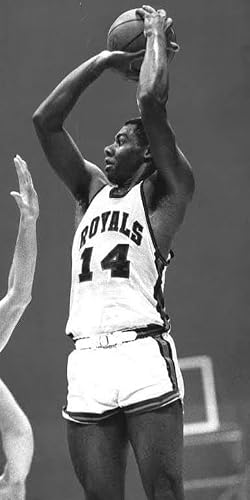
    161.5 career Net Wins. 28th all-time. One championship. One MVP. The Big O averaged 30.8 points, 12.5 rebounds, and 11.4 assists per game in 1961-62 the only player in NBA history to average a triple-double for an entire season until Russell Westbrook matched the feat 55 years later.Thanks for reading NET WINS! Subscribe for free to receive new posts and support my work.Oscar Robertson was the first selection of the 1960 NBA Draft, earned Rookie of the Year honors that season with the Cincinnati Royals, and averaged 30.5 points per game while leading the league in assists. He had just won a gold medal at the Rome Olympics and led the University of Cincinnati to back-to-back NCAA Final Fours. Measuring 6 feet 5 inches and weighing more than 200 pounds, Robertson was larger than most guards and used his size to gain position for scoring and rebounding. His jump shot was released far above his head with great efficiency, almost unblockable.The Career, Season by SeasonRegular season: 151.6 NW · Playoffs: 9.8 NW · Combined: 161.5 NW Average: 10.8 NW/season · Peak: 17.5 (1963-64)Thanks for reading NET WINS! This post is public so feel free to share it.The Triple-Double SeasonIn 1961-62, just his second year in the league, Robertson averaged 30.8 points, 12.5 rebounds, and 11.4 assists per game a triple-double average for an entire season. He remained the only player to do so for more than 50 years until Russell Westbrook matched his feat in 2016-17.The Net Wins formula captures exactly why this season was so remarkable. A triple-double average means positive production across every major category simultaneously: the points add directly, the 12.5 rebounds (a figure that would rank among the elite rebounders in the league in any era) add directly, and the 11.4 assists add directly. The formula sees Robertson’s 1961-62 as a 13.3 NW season genuinely elite, though not his career peak, because his efficiency that year (47.8% FG) left room for the fgmiss penalty to reduce his total.His peak by Net Wins was actually 1963-64: 17.5 NW, 31.4 PPG, 9.9 RPG, 11.0 APG the season he won his only MVP. It ranks among the top 20 single-season figures in the 47-season database.Five Seasons Near Triple-Double AveragesThe 1961-62 season gets all the attention, but Robertson averaged at least 9 rebounds and 9 assists per game in five separate seasons while scoring 30+ per game in six.* 1960-61: 30.5 / 10.1 / 9.7 — within reach of a triple-double average in his rookie season* 1961-62: 30.8 / 12.5 / 11.4 — the historical season* 1962-63: 28.3 / 10.4 / 9.5 — near-triple-double again* 1963-64: 31.4 / 9.9 / 11.0 — MVP year, his highest Net Wins* 1964-65: 30.4 / 9.0 / 11.5 — his highest assist averageHis offensive prowess changed the point guard stereotype from simply a passer and floor general to a scorer and offensive weapon. Before Robertson, point guards passed. After him, point guards did everything.The Cincinnati Years: 116.5 NW, Zero ChampionshipsRobertson spent ten seasons with the Cincinnati Royals and produced 116.5 Net Wins an average of 11.7 per season that would rank as an elite career for most players. He won zero championships.The obstacle, consistently, was Bill Russell’s Boston Celtics. For five seasons the Royals stumbled against Bill Russell’s Celtics in the playoffs. The Celtics won eight consecutive championships from 1959 to 1966. Robertson was at the peak of his powers during most of that run and had no path through Boston.Prior to the 1970-71 season, the Royals stunned the basketball world by trading Robertson to the Bucks for Flynn Robinson and Charlie Paulk. Many observers believed it was coach Bob Cousy’s jealousy of Robertson that led to the trade. Robertson had just broken many of Cousy’s passing records. The relationship had soured irreparably.The trade was among the most lopsided in NBA history in Milwaukee’s favor.Milwaukee and the ChampionshipTraded to the Milwaukee Bucks in 1970, Robertson joined forces with dominant center Lew Alcindor (later Kareem Abdul-Jabbar). The combination was explosive. The Bucks racked up 66 wins.Robertson’s 1970-71 season: 11.9 NW, 19.4 PPG, 5.7 RPG, 8.2 APG at age 32. Not his statistical peak, but a genuine elite performance on the best team in basketball. The Bucks became just the second team to sweep the Finals, ending in a 118-106 victory in Game 4 in Baltimore.After ten seasons of producing at an elite level for a franchise that couldn’t build around him, Robertson finally had his championship. He was 32. It had taken his entire prime.The Off-Court Legacy: Free Agency Exists Because of Oscar RobertsonThe playing career is extraordinary. The off-court legacy may be more significant.Robertson served as president of the NBA Players Association from 1965 to 1974, making him the first African American man to head a nationwide labor union in professional sports.In 1970, as NBPA president, he filed a class-action antitrust lawsuit against the NBA ...
    続きを読む 一部表示
    8 分
  • What NBA Skills Age the Worst — and What Lasts Forever
    2026/08/03

    Every NBA offseason comes with the same tired assumptions. A 34-year-old scorer is a ticking time bomb. A 36-year-old point guard is over the hill. Front offices treat the downswing like a cliff, operating on the assumption that skills universally erode the second a player hits their late twenties.

    It sounds intuitive, but is it actually true? And does father time treat every basketball skill the exact same way?

    Thanks for reading NET WINS! Subscribe for free to receive new posts and support my work.

    To find out, we mapped aging curves for nine distinct basketball skills using 46 years of NBA data, filtering down to players with at least 40 games and 20 minutes a night. The results show a clear split between what fades fast, what holds steady, and what actually gets better with age.

    Data: NBA regular season statistics 1980-2026. Sample: 9,162 qualifying player-seasons (minimum 40 games, 20 minutes per game). Decay rates calculated via linear regression on league average per-game production by age, ages 27-39. Survivorship bias affects ages 36+: fewer players qualify at older ages, and those who do are disproportionately elite. All statistics from the Net Wins database.

    © 2026 Will Fiore. Net Wins formula and all written content are original works. All rights reserved.


    This is a public episode. If you would like to discuss this with other subscribers or get access to bonus episodes, visit netwins.substack.com
    続きを読む 一部表示
    7 分
  • Kevin Durant
    2026/08/02

    198.3 career Net Wins. 14th all-time. Two championships. One MVP. The most efficient high-volume scorer in the history of this database, A 7-foot player with a guard’s skill set and a relentlessness that produced elite production across four organizations over 19 seasons.

    Thanks for reading NET WINS! Subscribe for free to receive new posts and support my work.

    Kevin Durant was selected second overall by the Seattle SuperSonics in the 2007 NBA Draft, and the franchise relocated to Oklahoma City the following season, becoming the Thunder. He was 19 years old, 6-foot-10, and immediately one of the most gifted offensive players the league had ever seen. He was the NBA’s youngest scoring champion in history at age 21, averaging 30.1 points per game in 2009-10.


    This is a public episode. If you would like to discuss this with other subscribers or get access to bonus episodes, visit netwins.substack.com
    続きを読む 一部表示
    7 分
adbl_web_anon_alc_button_suppression_t1
まだレビューはありません