

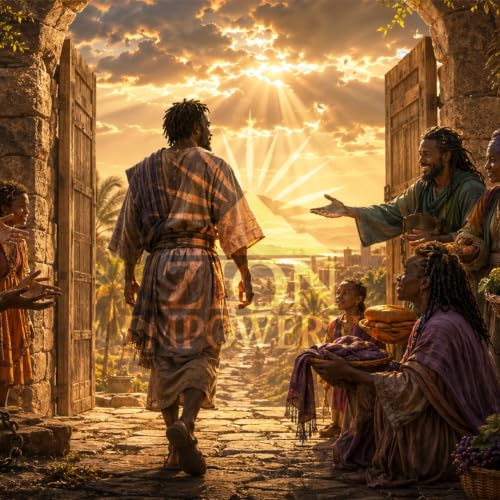
MORE THAN A CLEAN SLATE
カートのアイテムが多すぎます
カートに追加できませんでした。
ウィッシュリストに追加できませんでした。
ほしい物リストの削除に失敗しました。
ポッドキャストのフォローに失敗しました
ポッドキャストのフォロー解除に失敗しました

MORE THAN A CLEAN SLATE
-
ナレーター:
-
著者:
MORE THAN A CLEAN SLATE
Re’eh | Deuteronomy 15:7–15 + 2 Corinthians 5:17–21
What does a second chance really require?
We often imagine freedom as an open door: the debt is canceled, the chains are removed, and yesterday no longer controls the account. But Re’eh asks a harder question:
What is in their hand when they walk out?
In Deuteronomy 15, Torah commands Israel not only to release the person in the seventh year, but:
“When you send him forth free from you, you must not send him forth empty-handed.”
That command moves this lesson beyond charity and into restoration. Torah begins with the heart—do not harden it—then moves to the hand—open it—and finally returns to memory:
Remember Egypt.
Israel must remember how God treated them when they were freed and allow that memory to shape how they participate in another person’s freedom.
In 2 Corinthians 5, Paul approaches the same mystery through reconciliation:
God was reconciling the world to himself, “not counting their trespasses against them.”
Something happens to the ledger.
Forgiveness says: Yesterday will not become your permanent identity. Release says: Yesterday will not become your permanent debt. Reconciliation says: Yesterday will not own tomorrow. New creation says: Something can exist now that the old account could never have produced.
This study also explores the rabbinic understanding of “whatever he lacks”—the idea that biblical generosity is concerned not merely with giving something, but with seeing the actual person, protecting their dignity, and asking what restoration requires.
In this episode:
- Why Torah addresses the heart before the hand
- Re’eh — learning to truly see
- Why generosity cannot be defined only by the giver
- The difference between release from bondage and the capacity to live free
- Why God tells Israel to remember Egypt
- Paul’s radical language of “not counting”
- How forgiveness releases both the debtor and the person holding the ledger
- Why blessings placed in our hands may be intended for somebody else’s new beginning
Reflection Question
What account are you still keeping that God may be asking you to release?
And perhaps the deepest challenge of Re’eh:
What God does for us becomes something God intends to do through us.
You received reconciliation. Carry reconciliation. You experienced release. Practice release. You received mercy. Become an ambassador of mercy.
You walked out of your Egypt. Do not become somebody else’s Pharaoh.
A clean slate removes what was written before. Biblical reconciliation also asks whether someone has been given what they need to write what comes next.